I just switched from ghostty to warp because with multiple tabs open and multiple Claude code sessions working in parallel it was taking too much time for me to figure out where or what i was doing in each session, with warp at least I could rename the tabs, sounds a bit silly but I’m also enjoying warp so far
I’m gonna give it a try on lazygit and yazi, maybe having a tile with file changes and able to view the files is what I was missing. Thank you for sharing
@bcherny This will definitely simplify some of my skills. Looking forward to give it a try and see how it will handle my workflow working on a multi repo application
@marclou "Now I just think", that's the shift. Shipped my first app this week and the bottleneck was never code, it was clarity on what to build. AI made that painfully obvious.
As a dad of 3, days blur together. I couldn't remember what happened last Tuesday, imagine last year.
So I started writing down one moment each day — just one sentence.
After one week, just reading those few sentences back brought me so much joy.
So I decided to build this app in public: https://t.co/7lweZD4ESO
#buildinpublic #indiehacker #dadlife
4 Ways to Debug an Elixir Application
Debugging is a crucial technique for investigating issues and gaining a deeper understanding of what's happening in your code, especially when exploring a new framework or language.
Here are 4 methods to debug an Elixir application:
👇🧵
@tferriss@FoundersPodcast 1. Any Charlie Munger's episodes, @FoundersPodcast has a lot of passion for Charlie's work which is clear during the episodes
2. Paul Graham (How to do Great Work)
3. Christopher Nolan, my first episode of the podcast, got me hooked
@thejustinwelsh Their books are my favourite readings
@jasonfried is one of my biggest inspirations for how to write, and @dhh is a great inspiration for dealing with technology; Rails, the initiatives of leaving the cloud and https://t.co/oSt74UZwVE, are amazing.
My #1 Habit for Remote Working to Save My Time and My Colleagues Time
Every week, I have a considerable amount of meetings on my calendar. As you grow in your career, you get more responsibilities and, inevitably, more meetings.
Avoiding some, especially ad hoc ones, could save you much brain energy in dealing with context-switching and breaking your flow.
Here's the #1 habit I have been cultivating over the last year to save time, inspired by @tferriss's podcast episode with @SamCorcos.
Async Video Messaging
In the episode, Sam Corcos discusses their company's culture of transparency by recording all their meetings (or most of them, including 1on1s); that was a bit extreme, but there were lots of valuable insights.
I began recording videos more frequently, sharing my screen to walk through solutions, and showing code.
Sharing the video message allows my colleagues to watch at their best convenience, adjust playback speed, and quickly revisit any part of the video. It decreases the amount of those "quick" 15-30-minute meetings for syncing up on work or screen sharing some code.
Moreover, the video stays there in your virtual library. You can share with more people. You can share with more people months later, saving you time and the time to recall something you were working on months before.
I miss the office interactions when I had the opportunity to turn to my colleagues to ask something quick or bump into each other in the coffee machine and be able to say, can we chat about that task/project later? Can I show you this or that on my machine?
Unfortunately, the remote version of those interactions can make you end your day feeling that you haven't achieved anything.
I highly recommend that episode.
And you, what are your tips or habits to save time in this remote work life?
3 Things I Learned Writing Online Every Day For 30 Days In A Row
30 days ago, I signed up for @dickiebush & @Nicolascole77's cohort-based course, Ship 30 for 30.
During that time, I wrote & published 30 Atomic Essays, learned the fundamentals of Digital Writing, made friends, and expanded my knowledge in a new programming language.
It was a rewarding and challenging journey, significantly boosting my enthusiasm for continuing to write online.
Here are the 3 biggest lessons I learned from writing and publishing consistently for 30 days:
1. Consistency is Key
Starting is easy, but maintaining momentum for 30 days demands significant energy. Some days, I published just before bed, considering it was still part of the previous day.
The key lesson: keep going.
2. Flexibility in Topics
Adopting a new habit is challenging, especially when establishing multiple habits simultaneously. Although my goal was to write online for 30 days, I also aimed to learn and write about Elixir.
There were days when I struggled to find topics on Elixir, yet I remained dedicated to this theme. Despite not working with Elixir professionally, I'm exploring its potential for my projects.
Balancing this with time for family, hobbies, or relaxation proved demanding but enlightening.
3. Start the Year Strong
It's only the beginning of February, and I've already completed a cohort-based course and published 30 pieces online. Ending this course, I feel a strong sense of accomplishment.
This experience has left me excited for the future, eager to continue building with Elixir and Phoenix, and curious about where writing online will lead me.
Let me know if you have been thinking about getting started writing online. I'm happy to share more about the experience and what I learned.
I am looking forward to the next 30 days and beyond.
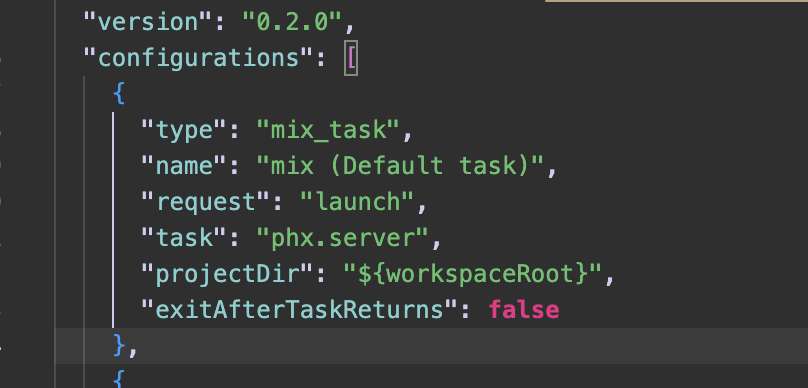
4. vscode debugger
The VSCode debugger enhances your debugging experience by allowing you to inspect code and visually set breakpoints within the application from the IDE.
To debug a Phoenix application, I had to add `exitAfterTaskReturns`.