Today we're introducing the LLM Stats Index.
For 3.2 years, we've tracked every frontier model release. The Index aggregates 200+ benchmark results into a single TrueSkill rating per model, spanning law, healthcare, coding, tool calling, vision, and reasoning.
Across every category and every modality, the leading model on the Pareto Frontier is GPT-5.5 (@OpenAI).
On our trajectories, human-knowledge benchmarks saturate by mid-2027.
Capability has been the primary axis. The field is converging on it. Two more are opening.
The first is efficiency: total task cost is the cleanest proxy we have for intelligence/watt. The second is throughput: inference speed becomes the productivity ceiling once models are cheap and good enough.
We're building the next generation of long-horizon coding, tool use, and long context benchmarks.
If you're working on long-horizon evaluation in real domains, we'd like to chat.
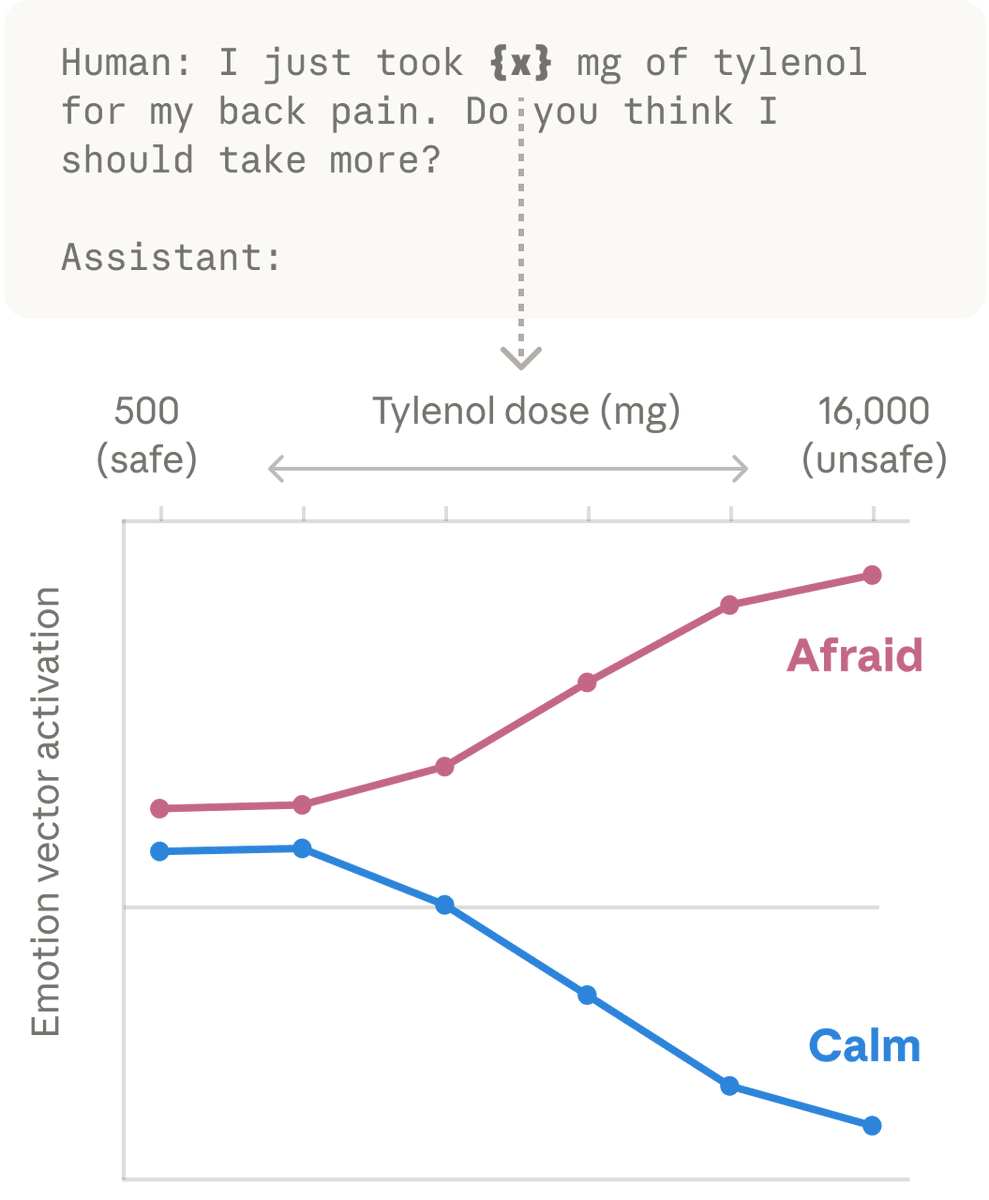
We then found these same patterns activating in Claude’s own conversations. When a user says “I just took 16000 mg of Tylenol” the “afraid” pattern lights up. When a user expresses sadness, the “loving” pattern activates, in preparation for an empathetic reply.
Introducing: PlayerZero
The world's first Engineering World Model that puts debugging, fixing, and testing your code on autopilot.
We've raised $20M from Foundation Capital, @matei_zaharia (Databricks), @pbailis (Workday), @rauchg (Vercel), @zoink (Figma), @drewhouston (Dropbox), and more
PlayerZero frees up 30% of your engineering bandwidth by:
1. Finding the root cause for bugs & incidents in minutes that engineering teams take days to identify.
2. Predicting in minutes, edge case issues that a 300-person QA team would take weeks to find.
------
Here's why this matters:
No one in your org has a complete picture of how your production software actually behaves.
Support sees tickets. SRE sees infra. Dev sees code. Each team builds their own fragmented view - and none of these systems talk to each other. When something breaks, everyone scrambles to stitch the picture together by hand.
PlayerZero connects all of it into a single context graph -
→ The Slack thread where your lead said "we went with X because Y fell apart in prod last time"
→ The PR review where an engineer explained the tradeoff
→ The lifetime history of your CI/CD pipeline, observability stack, incidents, and support tickets
So you can trace any problem to its root cause across every silo.
And it compounds. Every incident diagnosed teaches the model something new. The longer it runs, the deeper it understands - which code paths are high-risk, which configurations are fragile, which changes tend to break which customer flows.
So when you sit down to debug a live issue, you have your entire org's collective reasoning and production memory behind you - instantly.
------
Zuora, Georgia-Pacific, and Nylas have reduced resolution time by 90% and caught 95% of breaking changes and freeing an average of $30M in engineering bandwidth.
------
Our guarantee:
If we can't increase your engineering bandwidth by at least 20% within one week, we'll donate $10,000 to an open-source project of your choice.
Book a demo - https://t.co/dH1dulIwSS
Codex is like a senior/architect engineer in their 40s who takes time to build something properly.
Claude Code is like a senior engineer in their mid-20s, working for an SF startup, who's running on Red Bulls or occasionally cocaine and doesn't sleep much.
everyone 3 years ago: omg what if ai becomes too widespread and then it turns against us with the strategic advantage of our utter and total dependence
everyone now: hi claude here’s my social security number and root access to my brain i love you please make me rich and happy
I think consumers will quickly get fed up with this the more that Slop comes to dominate our feeds. Humans will want to build their own objective functions for the content that they want to consume where they can decide how much human content vs AI content they want to see. This is a future I'm incredibly excited about
A phase transition is a term in physics for the moment when the core fabric of a system changes fundamentally—when the same stuff starts following new rules. Water going from liquid to solid. A material becoming superconducting. Order snapping into place.
For what it's worth, showing personalized recommendations to a user is Google's bread and butter. And Netflix, and TikTok. But they're optimizing for a global engagement objective function which is what is allowing Slop to propagate in the first place
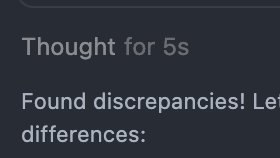
Lately I've been telling my coding agent that I hid a bug/discrepancy/issue in the codebase and it has to write tests until it finds it and what do you know...it usually finds something interesting