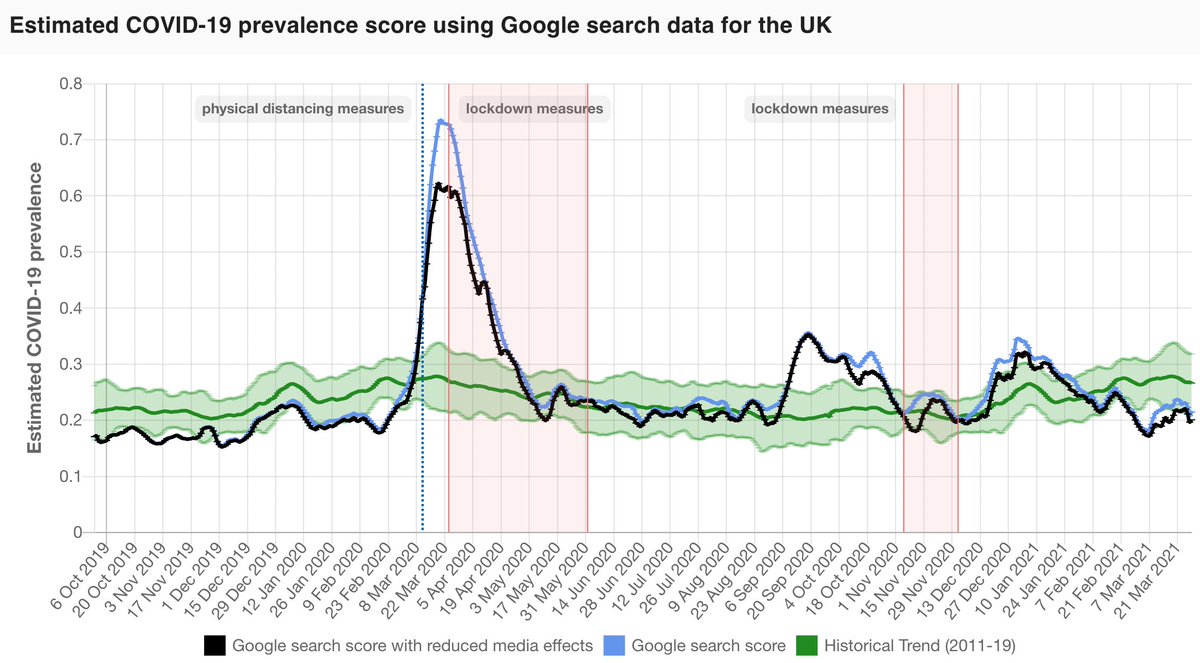
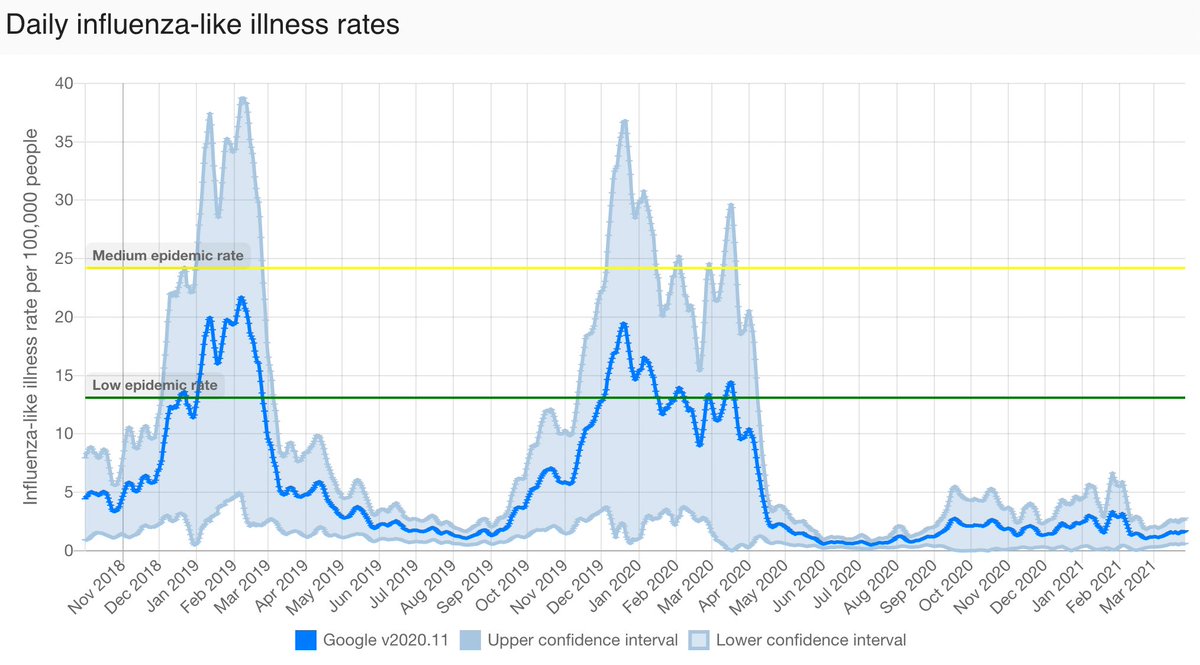
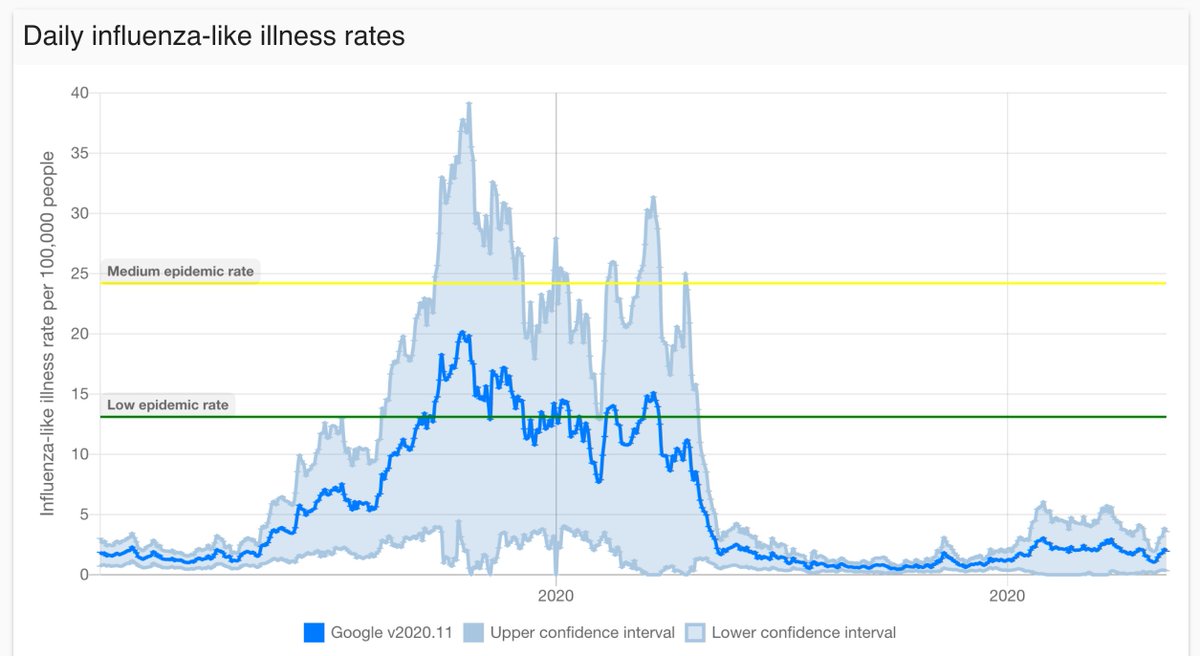
Flu detector estimates influenza-like illness prevalence based on @Google search activity. Used by @UKHSA. Created by @lampos et al. Funded by @isenseIRC.
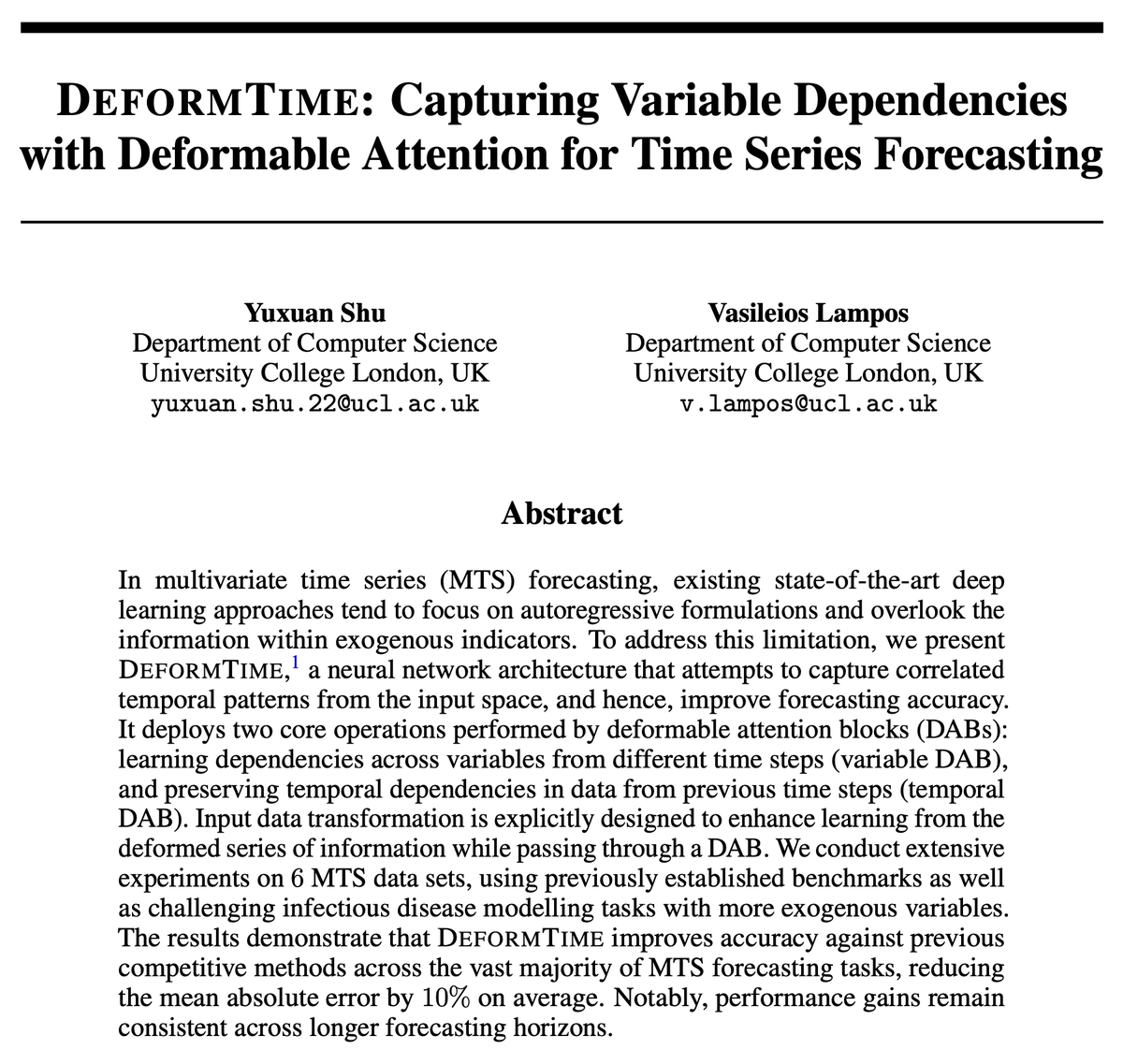
Excited to share our new paper preprint titled "DᴇғᴏʀᴍTɪᴍᴇ: Capturing Variable Dependencies with Deformable Attention for Time Series Forecasting".
Paper: https://t.co/MqDA5ntrCh
Code: https://t.co/fTpXkkSjOW
Great work by my PhD student @yuxuan_shu!
New paper out @PLOSCompBiol!
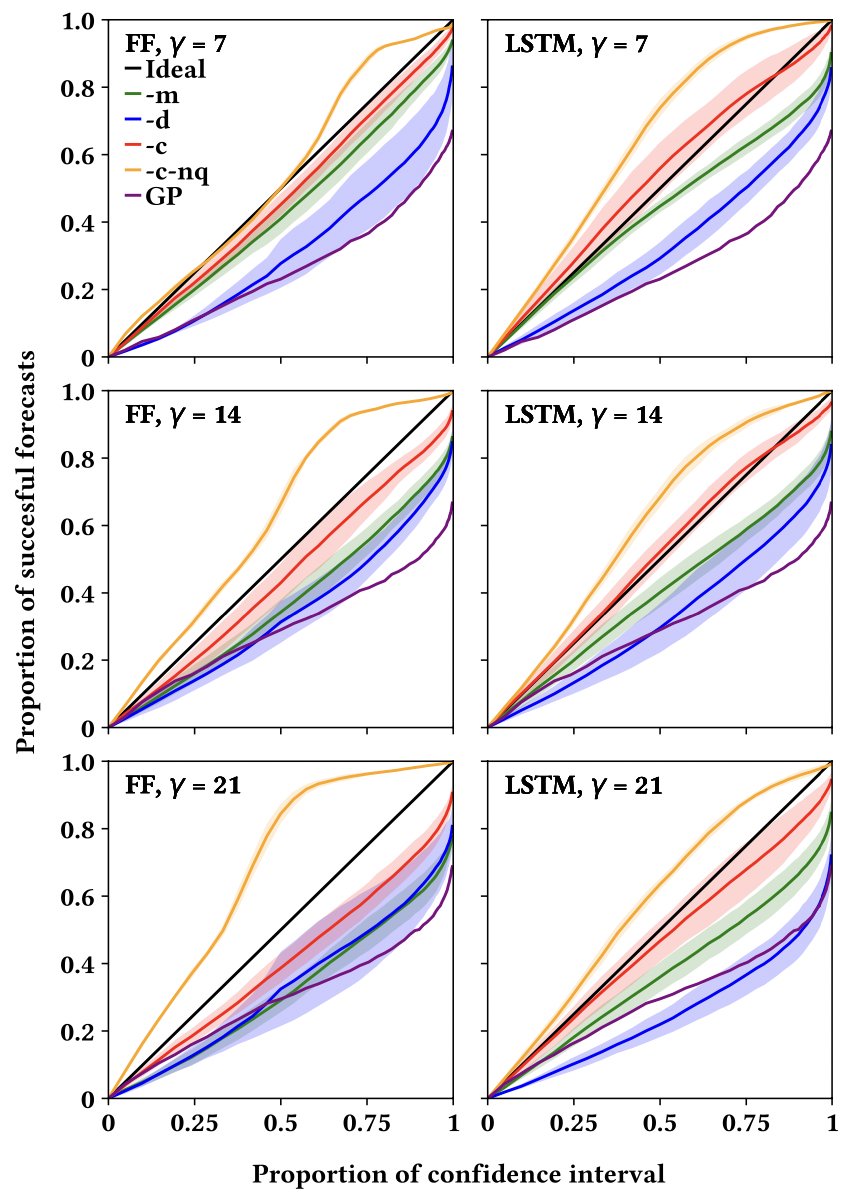
Title: "Neural network models for influenza forecasting with associated uncertainty using Web search activity trends"
Link: https://t.co/02b8GMWg4M
#flu#Google#forecasting#uncertainty (1/n)
Based on Web search activity, this is (probably) the first flu season in England during the COVID-19 pandemic.
Link: https://t.co/PRSd7SGn9w
Caveat: The lack of flu-related data in recent years means no model retraining. So, we cannot be entirely certain about what we see here.
Final call for PhD students who would like to join my team @uclcs & @ai_ucl. Topics should combine digital information + AI (machine learning, NLP) + health. More information at https://t.co/OwEn1OnFhP.
My group @uclcs has fully-funded PhD positions (inclusive of tuition fees and stipend). If you are interested in developing machine learning (AI) methods for epidemiology or healthcare, this might be for you!
More info: https://t.co/T8Ajcy2qNk
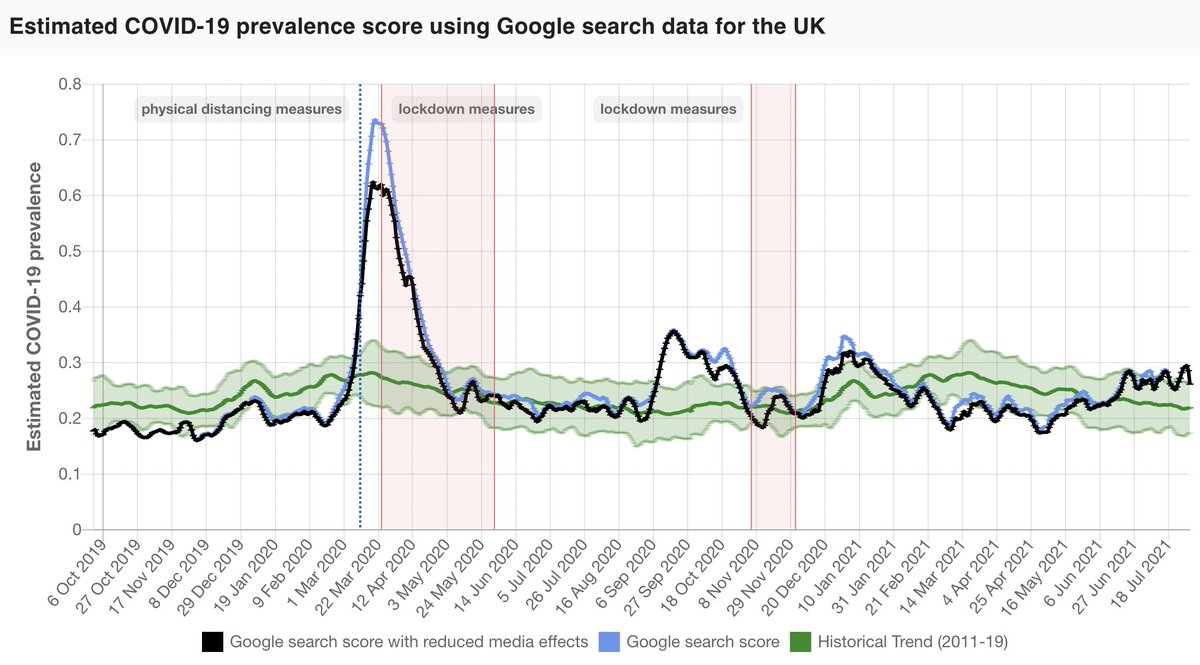
According to our COVID-19 score from web search activity (up to July 31), there has been an increase in the past weeks that consistently exceeds the expected seasonal average. UK scores seem to be more stable compared to England’s. #covid19#DeltaVariant
https://t.co/4uEY2ywR59
In this preprint, led by Michael Morris, we describe and assess a method for estimating the epistemic and aleatoric uncertainty of neural network forecasts for influenza prevalence using web search activity.
https://t.co/n9VbY3Cexi
Don’t want to spread negative energy, but our #COVID19 score estimates based on #Google search activity (https://t.co/4uEY2ywR59) indicate an increase for England. The UK signal is similar but not quite the same. Both scores are below their seasonal expected range.
In case you were wondering about influenza-like illness circulation in England, there has been ~none during 2020/21 according to our model that estimates flu rates as a function of web search activity. #flu#AI#PublicHealth
https://t.co/U3xx5FoAGU
Our paper titled “Tracking COVID-19 using online search” is now published in Nature Digital Medicine (@Nature_NPJ).
https://t.co/GCrkC8vgkI
We show how Google search data can be used to develop complementary public health surveillance methods for #COVID19.
A thread! 👇
1/
Final chance to apply! The deadline is on Monday (11 January). Come join us to collaborate on some really interesting —and potentially impactful— modelling work on #COVID19!
Flu rates for England this December are significantly lower compared to data from the past decade at least (@rcgp & @PHE_uk).
Our flu rate estimates based on web searches corroborate this.
But is this a good thing or an additional concern to #COVID19?
https://t.co/en2jrd9N69
Flu detector indicates that flu circulation in England remains low. The estimated rate for flu-like illness based on Google search activity is currently ~1.4 per 100K people. The estimated rate using traditional syndromic surveillance by the @RCGP is 1.2.
https://t.co/bQWaOtvet0
We’ve launched a website @uclcs to display our current COVID-19 prevalence scores based on Google search data in the UK and England.
https://t.co/4uEY2ywR59 1/
This 👇 is an interesting observation. However, @fludetector was retrained using recent flu rates from the @rcgp to remove (to an extent) a COVID-19-like illness effect.
Older models that have not been retrained during the COVID-19 era are affected.
See: https://t.co/9zxSMsIC2y
The estimated flu rate (based on Google searches @fludetector) for England now (1.2 per 100K people) is 12 & 6 times lower than it was in 2019 & 2018, respectively. That’s the outcome of non-pharmaceutical interventions and flu vaccinations. Astonishing!
https://t.co/A5CerPY3p9
We have updated our @fludetector���s machine learning model for flu prevalence in England using data from @RCGP and Google that encompass the first #COVID19 wave. Our (tentative) estimates show that currently there is no significant flu circulation.
Link: https://t.co/v7md79CRSa
Come join us at @uclcs to work on #COVID19 models using web search. A 2-year research fellow post, funded by a generous @GoogleHealth donation, is now available. Feel free to send me an email for more info ([email protected]).
Link: https://t.co/6lNEu0qhG6
#AI#NLProc#health
Exciting news! Our research will be supported by this great @Googleorg initiative. It will help us expand on our current work on modelling #COVID19 using web searches (e.g. https://t.co/KfS2W4FrLF). Very soon I will be advertising a 2-year research fellow post @uclcs. Stay tuned!