Such an interesting finding.
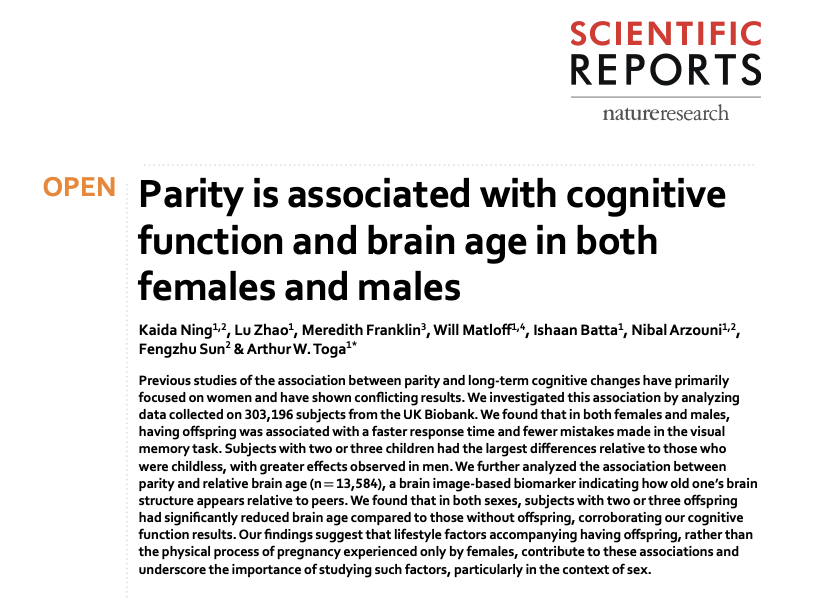
Men (and women) with 2-3 children had better cognitive function and a younger estimated brain age than their childless peers.
Why might that be?
Healthier daily habits (e.g., less-frequent alcohol/tobacco use and more regular meal times), connection to broader social and community activities, or even the fact that children act as a longer-term support network later in life are all potential explanations.
Two years of aerobic exercise made the hearts of out-of-shape 50-year-olds behave like hearts up to 20 years younger.
Researchers randomized 61 sedentary adults, average age 53, to two years of real training or gentle yoga, then measured heart stiffness the hard way: a catheter threaded straight into the heart. The trained group's fitness rose 18% and the main chamber went from stiff to elastic, taking in more blood at lower pressure. "20 years younger" describes the size of the stiffness improvement, not a literal age, but the effect was real.
The heart stiffening long blamed on age is partly the cost of sitting, and in middle age it's still reversible.
Most exercise and aging studies can't answer a basic question: is muscle deterioration from aging itself, or just from decades of moving less? A new Nature Aging study solved this by recruiting older adults who moved as much as people in their twenties.
The researchers from Amsterdam UMC and Maastricht University recruited four distinct groups: young adults in their twenties, older adults whose daily step counts and high-intensity activity matched the young group, older adults who had trained consistently for years (three structured hour-long sessions per week for over a year), and older adults with early physical impairment.
They took muscle biopsies before and after a one-hour cycling session, then measured over 24,000 gene transcripts, 135 metabolites, and 1,383 lipid species.
By matching activity levels between young and older groups, any molecular differences couldn't be blamed on the older adults simply moving less. This isolated aging from inactivity for the first time at this molecular depth.
Key findings:
• The defining molecular signature of muscle aging is an energy crisis. Comparing young adults to activity-matched older adults, 1,106 genes were downregulated with age. These genes build the mitochondrial machinery that produces cellular energy: ATP synthase, cytochrome c oxidase, and NADH dehydrogenase subunits. Mitochondria are the power plants of cells, converting nutrients into ATP, the energy currency cells use to function. When these genes decline, cells lose their ability to generate energy efficiently.
• NAD+ levels declined and triglycerides accumulated inside aging muscle. NAD+ is a molecule required for energy production and cellular repair. Lower NAD+ means less capacity to convert fuel into usable energy. Triglycerides are stored fats, their accumulation inside muscle indicates unburned fuel piling up as the tissue loses its ability to process it.
• More than half the molecular signature of muscle aging was absent in trained older adults. Specifically, 57.1% of age-related gene downregulation and 55.9% of upregulation were missing in the trained group. Their muscle resembled young adults far more than their chronological age would predict.
• The changes training preserved were specifically the energy metabolism ones. Genes like NDUFS1 and COX5A, which were depleted in normally active and impaired older adults, sat at youthful levels in the trained group across all five mitochondrial respiratory complexes. The single most prominent feature of muscle aging turned out to be the single most preventable.
• Being generally active was not enough. Structured training was the difference. The normally active older adults walked as much as young adults, and their energy metabolism genes declined anyway. What preserved the youthful molecular profile was structured, sustained training. Filling a step counter and being genuinely trained are not equivalent at the molecular level.
• Roughly half of muscle aging persisted regardless of training. Changes in genes controlling synaptic transmission (how nerves communicate with muscle) and WNT signaling (a pathway regulating tissue maintenance and stem cell function) appeared in all older adults, trained or not. This unavoidable half is where drugs will have to work.
• The fittest muscle mounted the largest inflammatory response to exercise. All groups activated stress and immune genes after exercise, including IL6, IL1B, and TNF. But the magnitude scaled with fitness. Trained older adults most closely resembled young adults in their response, followed by normally active, with impaired older adults showing the most blunted response. The stress response to exercise appears to be the mechanism of adaptation, not damage to be minimized.
This raises a concern about anti-inflammatory longevity strategies. If the inflammatory stress response is how exercise produces its benefits, chronically suppressing inflammation may blunt the adaptation that exercise depends on. It doesn't mean inflammation is beneficial in general, but the timing and context matter.
A separate discovery: the proteasome appears to regulate NAD+. The proteasome is the cellular machinery that breaks down damaged proteins. When researchers inhibited it, NAD+ levels rose in both muscle and liver cells to a degree comparable to NAD+ precursor supplements. This opens a new route to understanding NAD+ decline that operates through protein turnover rather than just supplying more raw material.
The study draws a clear line between what lifestyle can address and what will require therapeutics. The energy metabolism decline, mitochondrial deterioration, and NAD+ depletion that define muscle aging are largely preventable through structured training. The synaptic and signaling changes that persist in all older adults represent the unavoidable half where drugs will need to work.
The decisions made about structured training in midlife determine which molecular trajectory muscle follows in later decades. Half of muscle aging is optional. The other half isn't. Knowing which changes belong to each category is knowing where behavior ends and biology takes over.
Your brain has an overnight clean-up crew while you sleep & exercise might help it work better. 🧠😴 🏋️♀️
Watch Dr James Broatch from Victoria University explain it on the Nine Today Show this morning https://t.co/CLHXCV6hDA,
and read the full study 👉 https://t.co/JUdwNEI2Yc
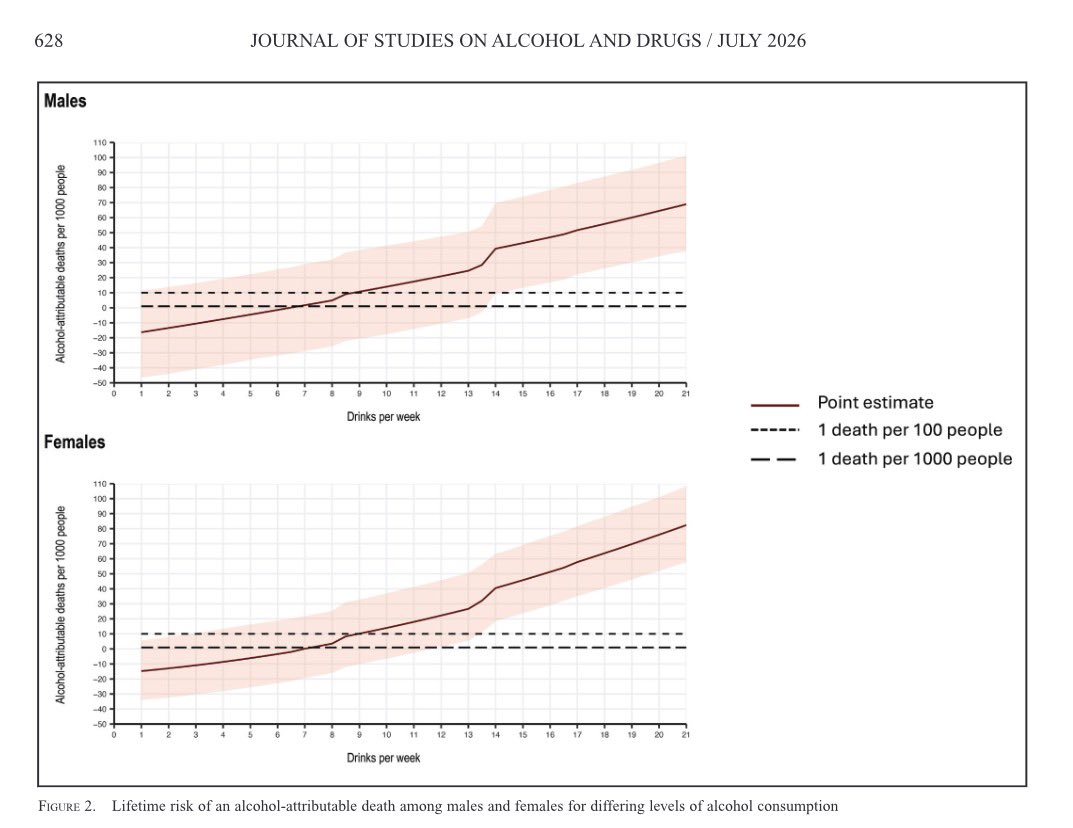
🚩🚩El mito de que “una copa al día es buena para la salud” acaba de recibir otro golpe.
Un nuevo análisis de 7.200 estudios científicos encontró que:
❌ 0 beneficios netos para la salud.
📈 Desde 1 copa al día el riesgo ya empieza a aumentar.
🚨 2 copas al día = 1 de cada 25 personas morirá por una causa atribuible al alcohol a lo largo de su vida.
El alcohol no tiene una dosis “saludable”.
An 81-year-old has the aerobic capacity of a 25-year-old.
His VO2max tested at 52.8 mL/kg/min—the highest ever recorded in an octogenarian, matching the 70th percentile for healthy males aged 20–30. Two weeks earlier, he set the world record for 50 kilometers in the 80+ age category. A new case study has significant implications for our understanding of aging.
Published in Frontiers in Physiology, researchers examined this Spanish master athlete after he ran 50 kilometers in 4 hours 47 minutes at 10.5 km/h. The study aimed to identify which physiological systems enable exceptional endurance performance in advanced age.
VO2max typically declines 5–10% per decade after age 30. By age 80, most individuals have lost 50–70% of peak aerobic capacity. This athlete retained oxidative capacity comparable to healthy adults three decades younger. The question was where in the oxygen cascade those capacities were preserved.
Researchers measured limiting factors across the entire O2 transport chain: pulmonary gas exchange, cardiac output, arterial-venous O2 difference, and muscle oxidative capacity using near-infrared spectroscopy during arterial occlusions.
Peak cardiac output was 15.3 L/min during cycling exercise, lower than young elite endurance athletes but remarkably preserved for age. Maximal heart rate decline is inevitable with aging, driven by sinoatrial node remodeling that can't be trained away. The compensatory mechanism was stroke volume.
Arterial-venous O2 difference reached 16.4 mL/dL, reflecting fractional O2 extraction around 75% in the vastus lateralis. That's near-maximal peripheral extraction, indicating skeletal muscle mitochondrial oxidative capacity remained largely intact despite eight decades of aging.
Near-infrared spectroscopy measurements during repeated arterial occlusions quantified in vivo muscle oxidative capacity. The recovery rate constant (kHIGH) was 4.67 min⁻¹ in well-oxygenated conditions and 4.59 min⁻¹ under low O2 availability (kLOW), suggesting both high oxidative capacity and minimal resistance to O2 diffusion.
Those values indicate preserved mitochondrial density and function at the tissue level. The similarity between kHIGH and kLOW shows O2 diffusion capacity wasn't limiting—the muscle could reoxygenate rapidly even when delivery was compromised.
Lactate threshold occurred at 10.5 km/h, exactly matching his 50-km race pace. That means he ran the entire world record distance at threshold intensity—the upper boundary of steady-state aerobic metabolism before lactate accumulation accelerates.
Maximal fat oxidation was 0.55 g/min, occurring at 84% of VO2max. Most endurance athletes reach peak fat oxidation at 55–65% VO2max. This athlete maintained high fat oxidation rates well into intensities where carbohydrate typically dominates, preserving glycogen during ultra-endurance efforts.
Running economy was 237.5 mL/kg/km. For context, elite younger marathoners typically range from 180–220 mL/kg/km. The higher oxygen cost per kilometer reflects biomechanical inefficiencies that accumulate with age—neuromuscular decline, reduced tendon elasticity, altered gait mechanics.
Despite less efficient running mechanics, the preserved VO2max and high fractional utilization compensated. The ability to sustain threshold pace for nearly five hours while oxidizing predominantly fat created the metabolic foundation for the performance.
The athlete started running at age 66 with no prior endurance training background and began competing at 70. Fifteen years of consistent high-volume training produced adaptations across every component of the oxygen transport chain, even starting in the seventh decade.
Cardiac output adaptations require years of sustained stimulus. Mitochondrial biogenesis responds to repeated bouts of aerobic exercise. Capillary density increases with chronic endurance training. None of these adaptations happen quickly, but the data show they remain trainable well into advanced age.
Most aging studies compare sedentary older adults to younger active individuals, confounding biological aging with detraining. Master athletes isolate the aging variable by maintaining training volume across decades. This reveals which declines are inevitable and which are activity-dependent.
The age-related VO2max decline in master endurance athletes is approximately 5–7% per decade after age 45, roughly half the rate observed in sedentary populations. The difference represents the portion of aerobic capacity loss that's preventable through sustained training stimulus.
Maximal heart rate still declines at roughly 0.7 beats per minute per year regardless of training status. That's a central limitation that can't be overcome. But stroke volume, peripheral O2 extraction, and mitochondrial oxidative capacity respond to training even in octogenarians.
The decisions about training volume, intensity distribution, and consistency made during the sixth and seventh decades determine oxidative capacity during the eighth and ninth. Mitochondrial function doesn't passively decline—it responds to stimulus across the entire lifespan.
This case study demonstrates that exceptional endurance performance in advanced age depends on preservation of the final steps of the oxygen cascade: muscle O2 diffusion capacity, mitochondrial oxidative function, and the ability to sustain high fractional utilization of VO2max.
Starting endurance training at 66 and setting a world record at 81 contradicts the assumption that elite performance requires lifelong training. The physiological systems governing aerobic capacity remain sufficiently plastic in the seventh decade to produce world-class adaptations within 15 years.
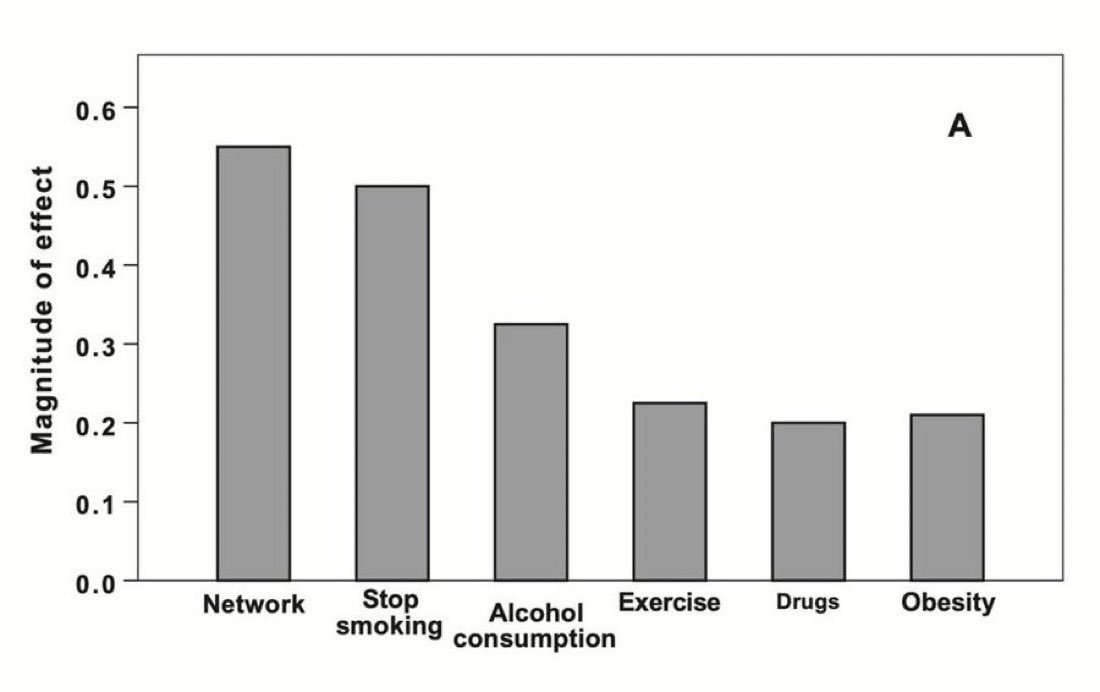
🫂🎯TUS AMIGOS DETERMINAN TU SALUD
🫂Tener una buena red social (familia y amigos) es el principal reductor de mortalidad.
🚩🚩Incluso con mayor efecto que dejar de fumar, de beber alcohol…
👨⚕️Una vez más me recuerda: las personas son lo más importante.
Consistent with the broader body of research, this study found that training with a moderate proximity to failure (20% velocity loss) produced the greatest strength gains, whereas training closer to failure (40% velocity loss) elicited the largest increases in muscle size.
Take-home message: Proximity to failure appears to be goal-dependent. Training closer to failure becomes increasingly important when the primary objective is maximizing hypertrophy, whereas strength development may be optimized by stopping sets somewhat further from failure.
https://t.co/v7OmQSlFO3
The optimal carb loading strategy for endurance 🔋
This new study investigated the effects of three carbohydrates intakes on muscle glycogen concentration in endurance trained athletes 🔍
1️⃣ 6 g/kg/day
2️⃣ 8 g/kg/day
3️⃣ 10 g/kg/day
Each carb load lasted 48hrs (e.g. 2-days of 10 g/kg) and was completed at the end of a 5-day training period 🗓️
Results 📊
🔋 Muscle glycogen concentration was significantly greater with 10 g/kg (635.5 ± 78.0 mmol/kg)
👉 vs. both 6 g/kg (460.9 ± 100.7) and 8 g/kg (506.1 ± 124.0)
📈 There was also a strong positive correlation between carb intake and skeletal muscle glycogen concentration
✅ There were also no effect of carb intake on body mass or GI symptoms (except fullness)
There is a linear dose-response relationship between carb intake and muscle glycogen concentration 📈
The best carb loading approach appears to be 10 g/kg over a two day period ✅
Reference:
https://t.co/aVQfDPqeZg
Subscribe to Performance Nutrition Digest FREE to receive your daily study breakdown, straight to your inbox or via the Substack app 📥
https://t.co/kPsQssm5ut
Performance Nutrition Digest is powered by Healthspan Elite⚡️
https://t.co/V0YqjzPGsK
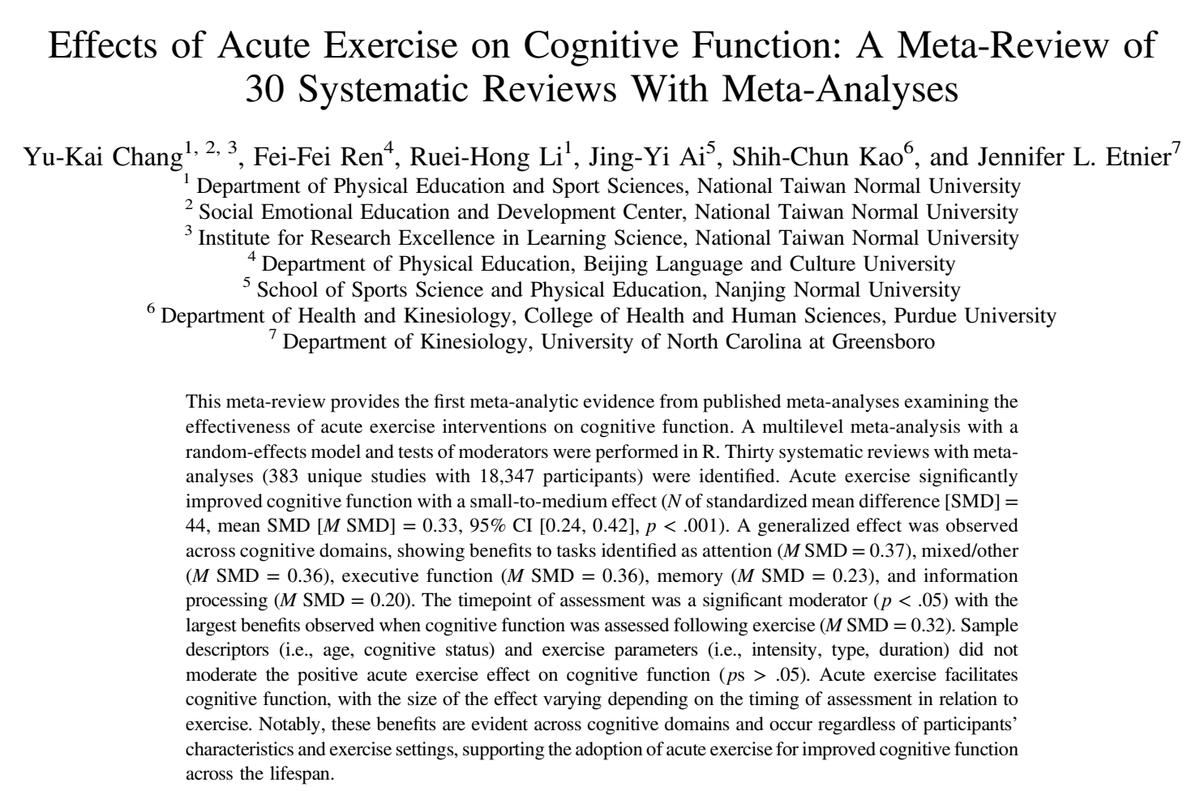
The brain does its best work right after movement.
Across hundreds of studies, even one bout of exercise sharpened attention, memory, processing speed, and executive function.
The boost is strongest after exercise, not during it.
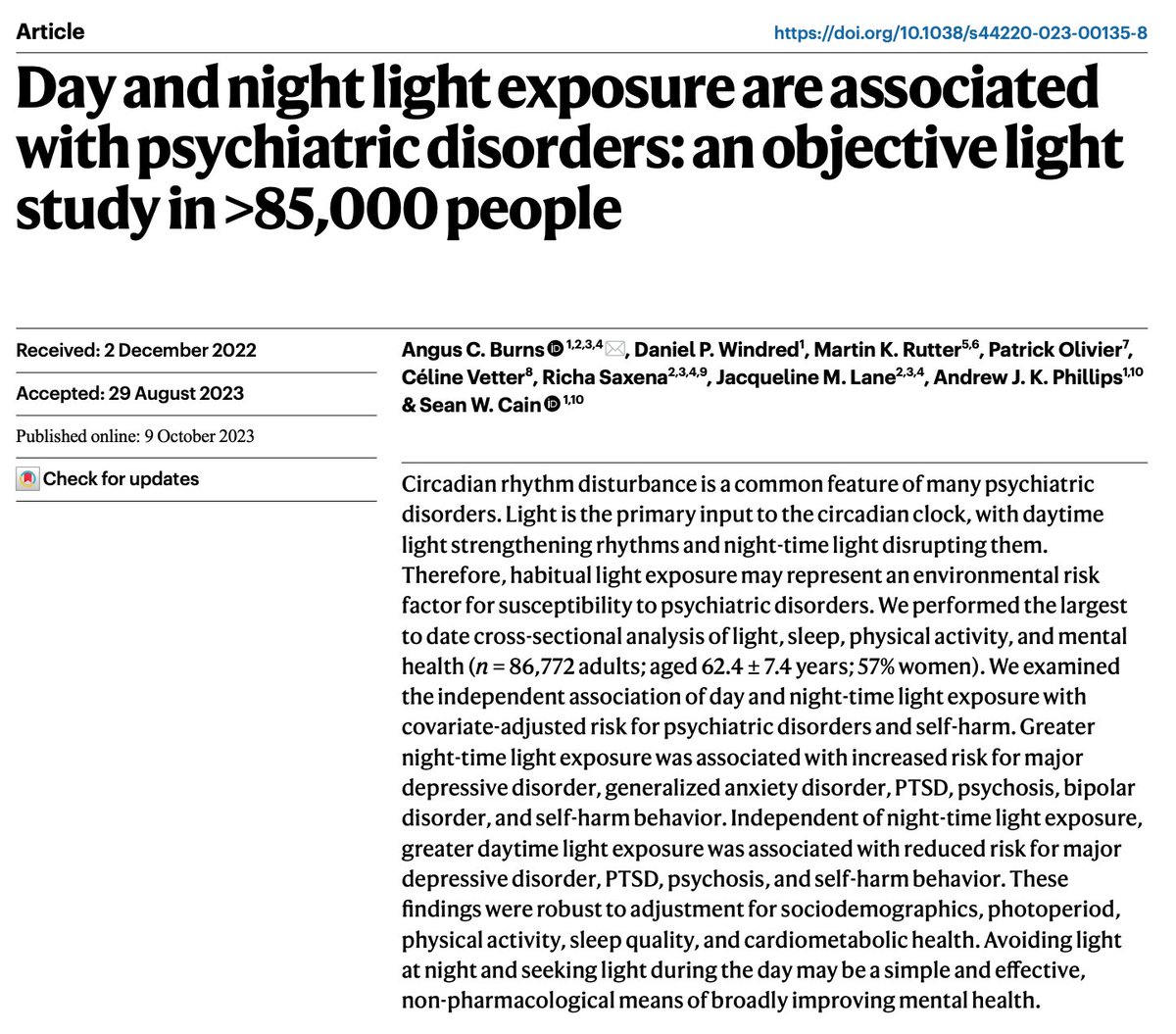
We were built for bright days and dark nights.
Among 86,772 adults, more light at night was linked to higher odds of depression, anxiety, PTSD, psychosis, bipolar disorder, and self-harm.
Respecting our natural rhythms is one of the lowest hanging fruits for mental health.
Athletes often use supplements for performance and recovery, yet labels do not always reflect what is inside. Contamination and hidden banned substances pose genuine doping risks. This blog outlines how quality assurance programmes safeguard athletes. Click here: https://t.co/XLZ3JmJYED
Cycling associated with less risk for dementia. More than walking.
In study of 500K people, cycling had lowest risk of dementia and Alzhemier's disease as well as greater hippocamal volume.
It may be due to a likely greater brain engagement for cycling.
https://t.co/3I9NTqVcB8
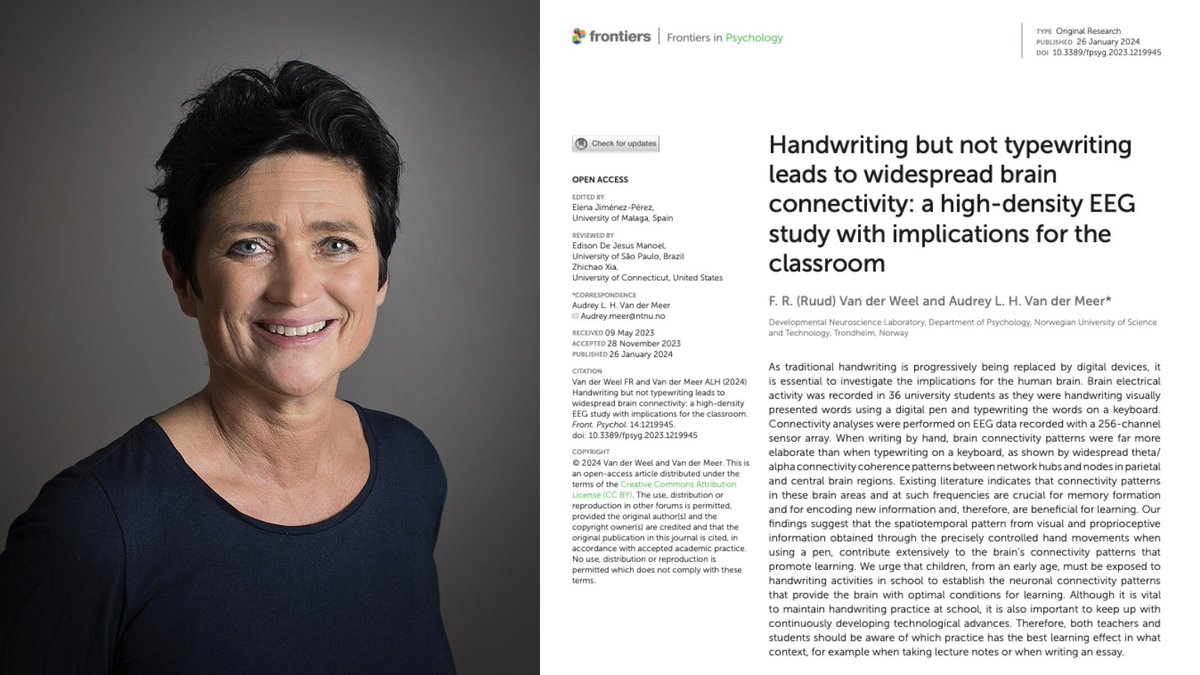
A Norwegian neuroscientist spent 20 years proving that the act of writing by hand changes the human brain in ways typing physically cannot, and almost nobody outside her field has read the paper.
Her name is Audrey van der Meer.
She runs a brain research lab in Trondheim, and the paper that closed the argument was published in 2024 in a journal called Frontiers in Psychology. The finding is brutal enough that it should have changed every classroom on Earth.
The experiment was simple. She recruited 36 university students and put each one in a cap with 256 sensors pressed against their scalp to record brain activity. Words flashed on a screen one at a time.
Sometimes the students wrote the word by hand on a touchscreen using a digital pen, and sometimes they typed the same word on a keyboard. Every neural response was recorded for the full five seconds the word stayed on screen.
Then her team looked at the part of the data most researchers had ignored for years, which is how different parts of the brain were communicating with each other during the task.
When the students wrote by hand, the brain lit up everywhere at once.
The regions responsible for memory, sensory integration, and the encoding of new information were all firing together in a coordinated pattern that spread across the entire cortex. The whole network was awake and connected.
When the same students typed the same word, that pattern collapsed almost completely.
Most of the brain went quiet, and the connections between regions that had been alive seconds earlier were nowhere to be found on the EEG.
Same word, same brain, same person, and two completely different neurological events.
The reason turned out to be something nobody had really paid attention to before her work. Writing by hand is not one motion but a sequence of thousands of tiny micro-movements coordinated with your eyes in real time, where each letter is a different shape that requires the brain to solve a slightly different spatial problem.
Your fingers, wrist, vision, and the parts of your brain that track position in space are all working together to produce one letter, then the next, then the next.
Typing throws all of that away. Every key on a keyboard requires the exact same finger motion regardless of which letter you are pressing, which means the brain has almost nothing to integrate and almost no problem to solve.
Van der Meer said it plainly in her interviews.
Pressing the same key with the same finger over and over does not stimulate the brain in any meaningful way, and she pointed out something that should scare every parent who handed their kid an iPad.
Children who learn to read and write on tablets often cannot tell letters like b and d apart, because they have never physically felt with their bodies what it takes to actually produce those letters on a page.
A decade before her, two researchers at Princeton ran the same fight using a completely different method and ended up at the same answer. Pam Mueller and Daniel Oppenheimer tested 327 students across three experiments, where half took notes on laptops with the internet disabled and half took notes by hand, before testing everyone on what they actually understood from the lectures they had watched.
The handwriting group won by a wide margin on every question that required real understanding rather than surface recall.
The reason was hiding in the transcripts of what the two groups had actually written down.
The laptop students typed almost word for word, capturing more total content but processing almost none of it as they went, while the handwriting students physically could not write fast enough to transcribe a lecture in real time, which forced them to listen carefully, decide what actually mattered, and put it in their own words on the page.
That single act of choosing what to keep was the learning itself, and the keyboard had quietly skipped the choosing and skipped the learning along with it.
Two studies. Two countries. Same answer.
Handwriting makes the brain work. Typing lets it coast.
Every note you have ever typed instead of written went into your brain through a thinner pipe. Every meeting, every book highlight, every idea you captured on your phone instead of on paper was processed at half depth.
You did not forget those things because your memory is bad. You forgot them because typing never woke the part of the brain that would have made them stick.
The fix is the thing your grandmother already knew.
Pick up a pen. Write the thing down. The slower road is the faster one.
🚨Just IN: If you've used ChatGPT for writing or brainstorming in the last 6 months, your creative ability may already be permanently damaged.
A controlled experiment just proved the effect doesn't reverse when you stop using it.
3,302 creative ideas. 61 people. 30 days of tracking.
Researchers split students into two groups. Half used ChatGPT for creative tasks. Half worked alone. For five days, the ChatGPT group outperformed on every metric. Higher scores. More ideas. Better output. AI was making them better.
Then day 7. ChatGPT removed. Every creativity gain vanished overnight. Crashed to baseline. Zero lasting improvement.
But that's not the bad part.
ChatGPT users' ideas became increasingly identical to each other over time. Same content. Same structure. Same phrasing. The researchers called it homogenization. Everyone using ChatGPT started producing the same ideas wearing different clothes.
When ChatGPT was removed, the creativity boost disappeared -- but the homogenization stayed. 30 days later, same result. Their creative range had been permanently compressed.
Five days of use. Permanent damage 30 days later.
A separate trial confirmed it. 120 students. 45-day surprise test. ChatGPT users scored 57.5%. Traditional learners scored 68.5%. AI reduces cognitive effort. Less effort means weaker encoding. Weaker encoding means less creative raw material.
You're not renting a productivity boost. You're financing it with your originality.
The interest rate is permanent.
Recent research shows that regular music listening after age 70 is linked to a nearly 40% lower risk of developing dementia.
A large-scale study led by Monash University tracked more than 10,800 older adults and found a strong association between consistent music engagement and better long-term brain health. Those who reported always listening to music (compared to never, rarely, or only sometimes) had a 39% reduced risk of dementia and a 17% lower chance of milder cognitive impairment. They also scored higher on tests of overall cognition and episodic memory—the ability to recall everyday events.
Playing a musical instrument was tied to a 35% lower dementia risk, while combining listening and playing offered additional benefits, with a 33% reduced dementia risk and 22% lower cognitive impairment risk. The protective effects appeared strongest in people with higher education levels (over 16 years).
Lead author Emma Jaffa and senior author Professor Joanne Ryan highlight that these observational findings suggest music could be a simple, enjoyable, and accessible way to support cognitive resilience in later life. While the study cannot prove cause and effect, it adds to growing evidence that engaging multiple brain regions through music may help buffer against age-related decline.
The research, based on long-term follow-up data, underscores music's potential as a low-cost lifestyle factor in an aging world where dementia remains challenging to prevent or treat.
[Jaffa, E., et al. (2025). "What Is the Association Between Music-Related Leisure Activities and Dementia Risk? A Cohort Study." International Journal of Geriatric Psychiatry, 40(10), e70163. DOI: 10.1002/gps.70163]











![Rainmaker1973's tweet photo. Recent research shows that regular music listening after age 70 is linked to a nearly 40% lower risk of developing dementia.
A large-scale study led by Monash University tracked more than 10,800 older adults and found a strong association between consistent music engagement and better long-term brain health. Those who reported always listening to music (compared to never, rarely, or only sometimes) had a 39% reduced risk of dementia and a 17% lower chance of milder cognitive impairment. They also scored higher on tests of overall cognition and episodic memory—the ability to recall everyday events.
Playing a musical instrument was tied to a 35% lower dementia risk, while combining listening and playing offered additional benefits, with a 33% reduced dementia risk and 22% lower cognitive impairment risk. The protective effects appeared strongest in people with higher education levels (over 16 years).
Lead author Emma Jaffa and senior author Professor Joanne Ryan highlight that these observational findings suggest music could be a simple, enjoyable, and accessible way to support cognitive resilience in later life. While the study cannot prove cause and effect, it adds to growing evidence that engaging multiple brain regions through music may help buffer against age-related decline.
The research, based on long-term follow-up data, underscores music's potential as a low-cost lifestyle factor in an aging world where dementia remains challenging to prevent or treat.
[Jaffa, E., et al. (2025). "What Is the Association Between Music-Related Leisure Activities and Dementia Risk? A Cohort Study." International Journal of Geriatric Psychiatry, 40(10), e70163. DOI: 10.1002/gps.70163]](https://pbs.twimg.com/media/HHfCzkmW0AA1mCK.jpg)





