I organized an intervention to stop Elon from starting SpaceX. Here is the story...
Twenty five years ago, Elon and I sat in a car on a dark stretch of Long Island highway, two neurodiverse geeks staring at the night sky and wondering what came next. We had both experienced substantial exits and felt the weight of possibility ahead of us.
When I joked about 'space' while gazing upward, neither of us imagined we were planting the seed for what would become the largest IPO in history. We spent the next two hours debating why space was so hard. In the end, rockets are fuel and metal. We also debated where to go, and it was crystal clear that Mars was the only real destination.
Upon returning to NYC, we embarked on a global tour of space, meeting space agencies and luminaries worldwide. This opened our eyes to an industry stuck in bureaucratic thinking. If things continued at that pace, it was clear that we would never explore space in our lifetime.
So, we launched Life to Mars to show the world that two ambitious young men (29 and 30 years old), could send life to Mars without any government backing or support. We planned to send and grow plants on Mars, though some were pushing us to send mice.
We had a $50 MM budget that rested on our purchase of two Russian ICBMs for $7 MM each. We assumed one ICBM would fail, and we would learn and fix everything before launching again. When Elon went back to actually buy the ICBMs, the Russians tripled the price, bringing out launch costs from a total of $14 MM to $42 MM.
Our ambitious Life to Mars plan was no longer viable.
As you might imagine, Elon was not pleased. So, he decided to start SpaceX and create his own Mars rockets. Now, this is a crazy idea, both now and at the time, so I organized a large panel of top space experts, and we ambushed him at the Georgian Hotel one morning. It was set up like an intervention for an alcoholic, but for space.
Elon looked me in the eye when leaving the room and said, "I am going to do this." The intervention failed. Elon was committed. The rest is history.
I am excited to see this IPO after 25 years of hard work. What SpaceX has done is a testament to human will and overcoming insurmountable obstacles. It's nothing short of amazing.
Congratulations, E. Amazing.
Two of our worst VC stories:
1. A Sequoia partner passed on Cloudflare because he didn’t think a woman could lead a security infrastructure company. Seriously. 🙄
2. I got introduced to @pmarca. Meeting got scheduled for a Monday, which should have been a clue. I thought it was just a casual meeting. He thought it was a pitch and brought the whole @a16z partnership team. Hilarity ensued. 🤪 At one point one of them said: “You don’t seem very prepared.” Which was true because I wasn’t. I framed the rejection letter they sent.
I was once pitching in a board room at a top 3 VC firm for a $15M Series A.
12 people in the meeting. One of the GPs fully fell asleep. Out cold for 30+ minutes. Nobody acknowledged it. Everyone just kept going.
I kept presenting my Series A slides to an unconscious man in a Herman Miller chair and somehow that was considered normal. That's venture capital.
You might fly across the country to perform for people who may or may not be conscious.
It's a dance.
And sometimes you lead and sometimes you follow and sometimes your partner is unconscious.
If you're raising right now, just know: every founder has a story like this. The process is weird. The power dynamic is weird. You're not crazy for thinking it's weird.
No one talks about it because they want to continue raising. But I'm happy to stick my neck out there.
It is weird.
A day in the life of a VC in 2026:
9am: Board meeting. My main value-add is aggressively pushing for Anthropic/OpenAI usage in non-engineering functions. Briefly ponder how I became an SDR for foundation model companies.
1pm: Lunch with another VC. We discuss how startups can find "blue ocean" away Anthropic/OpenAI. We conclude we should probably just invest the rest of our funds directly into Anthropic/OpenAI.
3pm: Pitch meeting. Me: "Do you run on Anthropic or OpenAI?" Founder: "Both." Debating internally whether a company reselling Anthropic/OpenAI with a 10% gross margin is a good investment but hey, at least they're in the "token flow".
4:30pm: Deep due diligence. I ask Claude if it plans to build this exact startup natively in its next release. Same to ChatGPT. They both say yes. I pass on the deal.
6pm: Urgent call from a portco CTO: "We need an intro to upgrade our Anthropic tier!" I immediately agree to help them spend more of the venture dollars we just invested in them, on Anthropic.
8pm: Brainstorming next guests for the podcast. Thinking I should probably just try to get some folks from Anthropic and OpenAI.
The brute force modelling of "neurons + synapse" by using @nvidia GPUs , whereby the computation unit is a neuron and 'weights' are the neurons will consume 100 KiloWatts per one rack. One rack is 32 GPUs (4 servers with 8 H100 GPU's each server). There are clusters of tens of thousands of GPUs out there.. with incredible computation power. But those are literally a teeny fraction of a 20 watt human brain.
Decades ago, I studied 'multi state per node' neural networks based on analog state silicon. I wonder if those will finally now get enough attention and capital to move the field forward. Certainly the programming models will be extraordinarily hard to standardize so maybe these will be impractical wrt commercial scaling, but the infrastructure costs post the B100 are looking daunting due to electricity consumption, even with liquid cooling.
Suppose there were 10 shares and you had 1. Now they print 90 more shares and give you 1.
You have more shares!
1 → 2 📈
But you have less ownership.
1/10 → 2/100 📉
And that’s how inflation works. People are misled into thinking they’re getting richer, while getting poorer.
I hope you find the time to listen to this conversation I had with @tferriss on a wide range of topics, from the scallop business to domain names, life lessons and what I hope is a novel perspective!
Let me know what you think!
Personally, I suck at efficiency (doing things quickly). Here’s my coping mechanism and process for maximizing efficacy (doing the right things):
1) Wake up at least 1 hour before you have to be at a computer screen. E-mail is the mind killer.
2) Make a cup of tea (I like pu-erh) and sit down with a pen/pencil and paper.
3) Write down the 3-5 things—and no more—that are making you most anxious or uncomfortable. They’re often things that have been punted from one day’s to-do list to the next, to the next, to the next, and so on. Most important usually = most uncomfortable, with some chance of rejection or conflict.
4) For each item, ask yourself:
– “If this were the only thing I accomplished today, would I be satisfied with my day?”
– “Will moving this forward make all the other to-do’s unimportant or easier to knock off later?”
5) Look only at the items you’ve answered “yes” to for at least one of these questions.
6) Block out at least 2-3 hours to focus on ONE of them for today. Let the rest of the urgent but less important stuff slide. It will still be there tomorrow.
7) TO BE CLEAR: Block out at least 2-3 HOURS to focus on ONE of them for today. This is ONE BLOCK OF TIME. Cobbling together 10 minutes here and there to add up to 120 minutes does not work.
8) If you get distracted or start procrastinating, don’t freak out and downward spiral; just gently come back to your ONE to-do.
Congratulations! That’s it.
This is the only way I can create big outcomes despite my never-ending impulse to procrastinate, nap, and otherwise fritter away my days with bullshit.
If I have 10 important things to do in a day, it’s 100% certain nothing important will get done that day. On the other hand, I can usually handle 1 must-do item and block out my lesser behaviors for 2-3 hours a day.
"I have this theory that 99% of work that you do is useless. You still have to do it because it's iterating your way to the 1% that is useful. But, in an ideal world, if you are omniscient, you would just cut to the 1%."
@naval
Remember that this moment is not your life, it’s just a moment in your life. Focus on what is in front of you, right now. Ignore what it 'represents' or it 'means' or 'why it happened to you.'
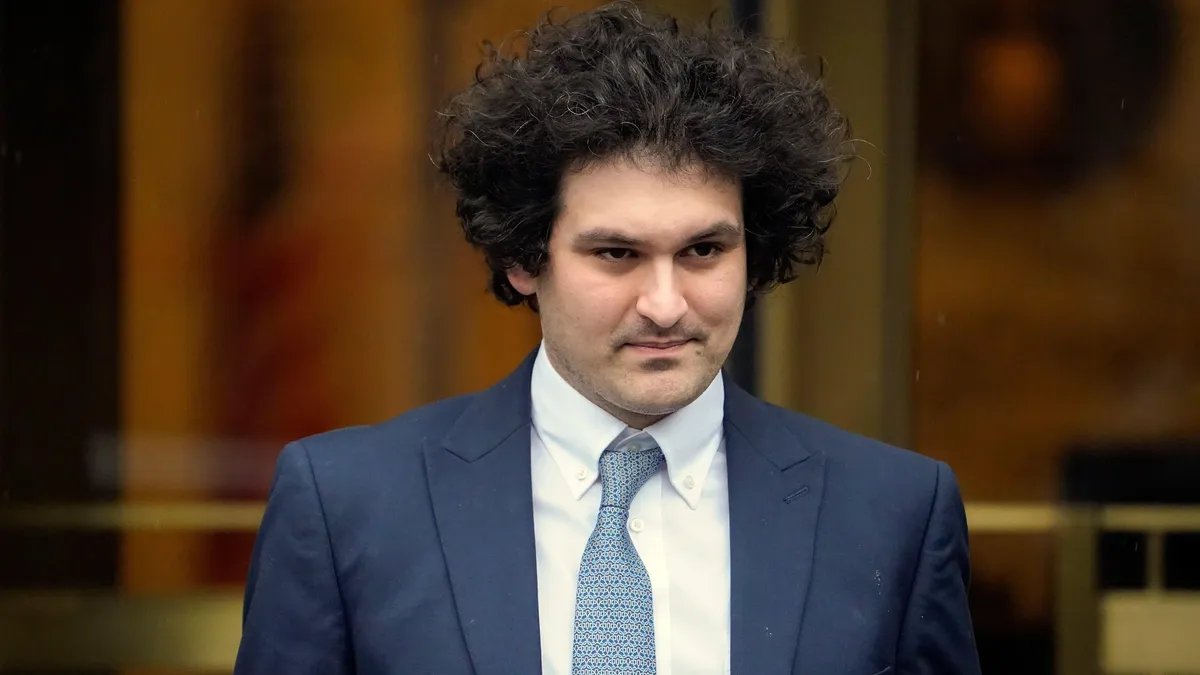
As an engineer at Alameda Research, I had my entire life savings stolen from me by my former boss: Sam Bankman-Fried.
Now, after months of recuperation from the craziness of the FTX collapse, I’m ready to tell my story.
Let’s start at the beginning:
(1/25) 🧵
#SBF#FTX