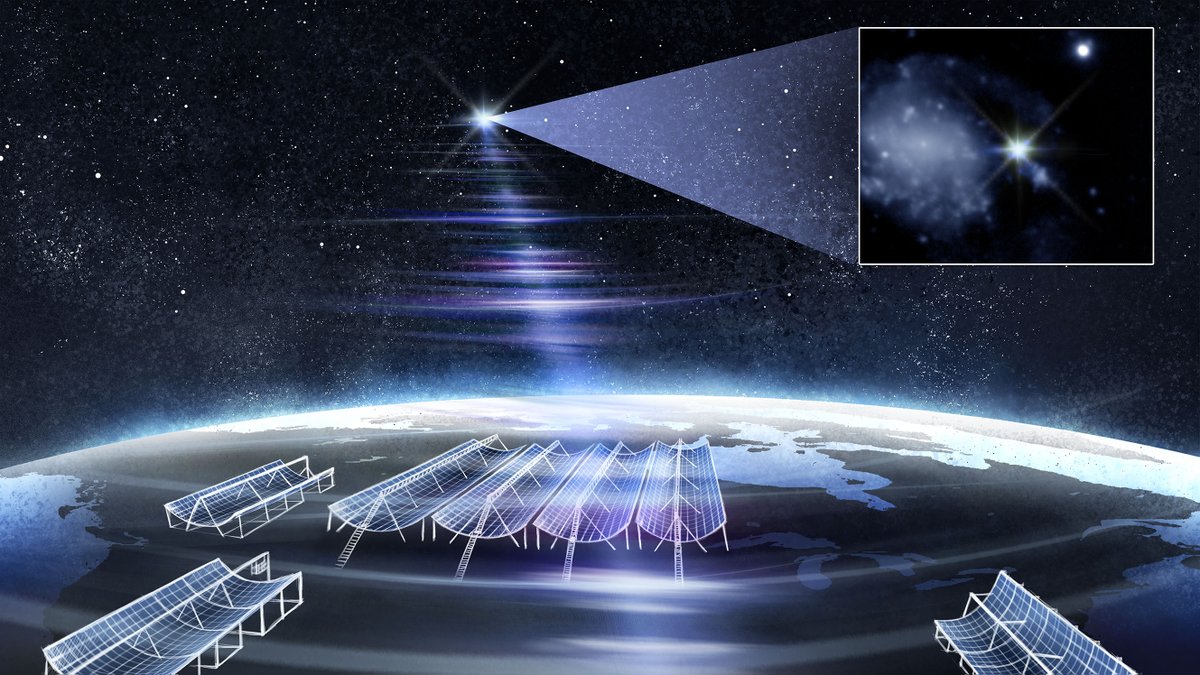
CIERA scientists have precisely traced one of the brightest fast radio bursts (FRBs) ever — “Root Beer FLOAT” to a spiral arm just 130M light-years away, accurate within 42 light-years! A huge leap in solving the FRB mystery. 🌌✨ #Astronomy#CHIME
🔗 https://t.co/LOLwxROcw8
See that blue dot? That's the fast X-ray transient (FXT) EP 250108a—and the supernova that followed it 🔭
Using a combination of telescopes, astronomers found that FXTs can result from the "failed" explosive death of a massive star: https://t.co/QjxofnQB8R
In two works led by @NASA Einstein Fellow Tarraneh Eftekhari (@NUCIERA) and McGill PhD student Vishwangi Shah @astroVishwangi repeating FRB 20240209A is in the outer regions of a quiescent, massive galaxy, confusing if FRBs arise from young magnetars! https://t.co/wPAX5l70Bv
Possibilities for its origin include dynamical formation in a (currently unseen) globular cluster, or the mergers of compact objects that could explain long delay times. https://t.co/SEr7dl7YKF
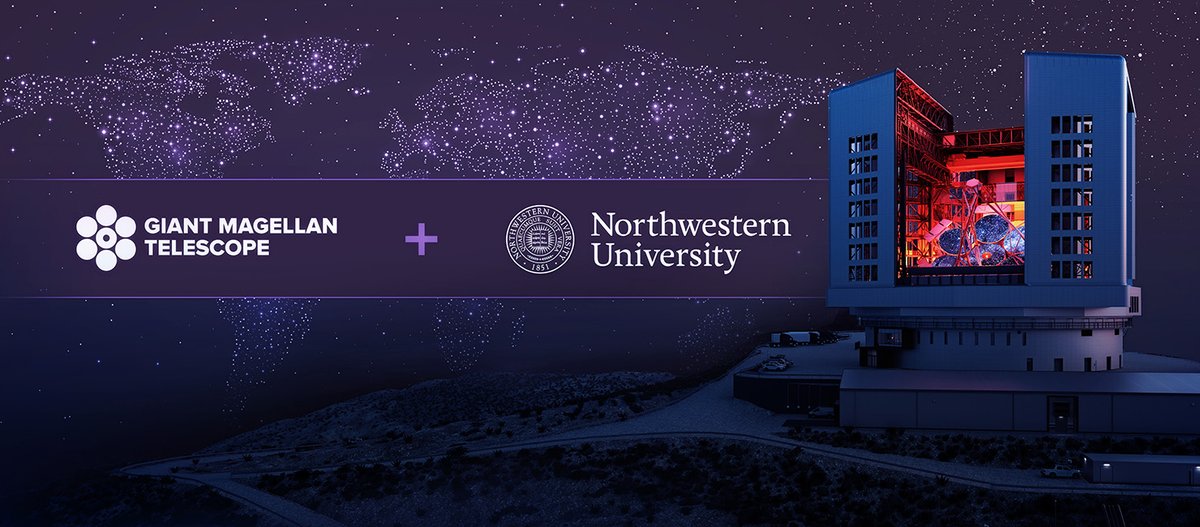
We are pleased to welcome @NorthwesternU as the 9th American institution to invest in the Giant Magellan Telescope. With institutions from the US, Australia, Brazil, Chile, Israel, South Korea, and Taiwan, they join one of the largest public-private partnerships in science advancing construction of one of the world’s most powerful observatories. https://t.co/KhKnadGTM3
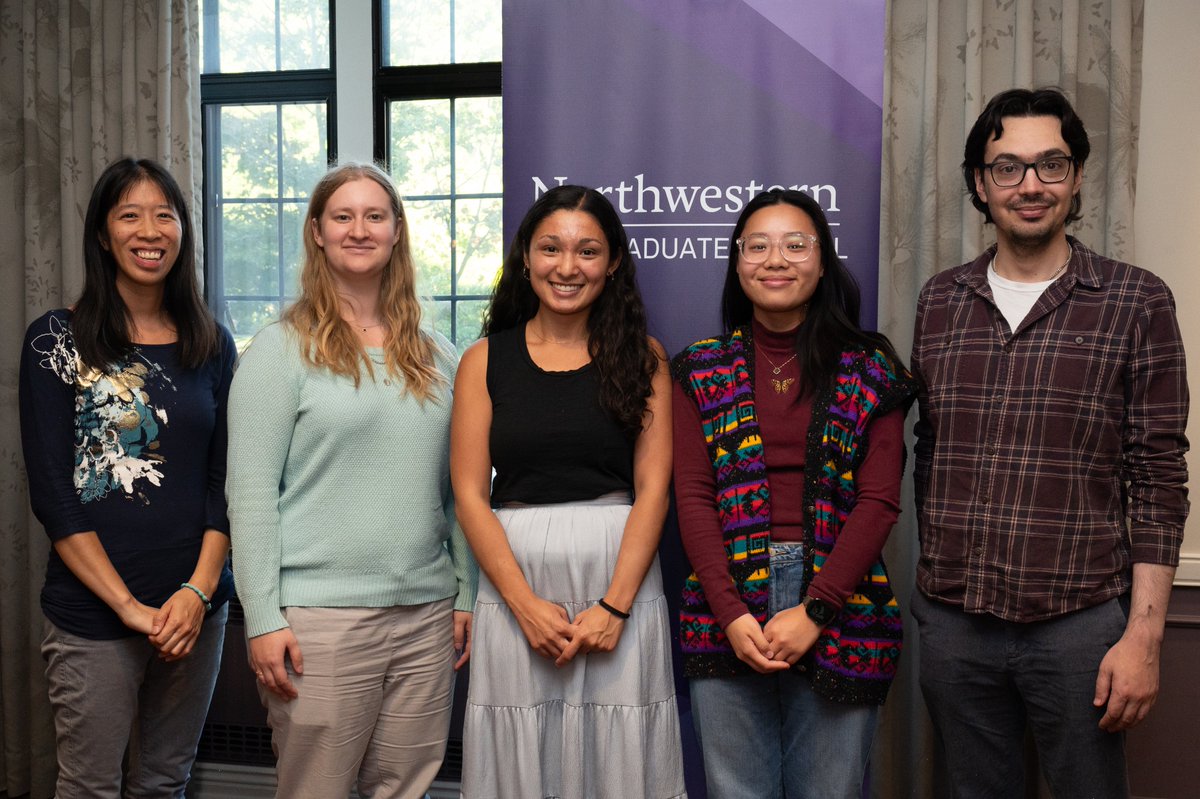
We were so proud to celebrate graduate student Jillian Rastinejad (@jillian_rast) at her official induction as a @NorthwesternU Presidential Fellow. Her research on origins of r-process clearly resonates across disciplines, and we are thankful to witness it! 📸: B. Robinson
So, while neutron star mergers are still the only observed site of r-process elements, Anya + team hope this paper makes you question if we need another, faster, channel to explain the Universe’s chemical enrichment…
🚨Paper Alert🚨
Recently graduated Dr. Anya Nugent questions the role of neutron star mergers in the Universe’s heavy r-process element enrichment in her new paper https://t.co/v5GyQ8yPl9. Fun collaboration with @alexanderpji! Check out the 🧵 for more details!
Anya + team also show that if a host has little to no ongoing star-formation, a neutron star merger will not be able to enhance the r-process stellar abundances: meaning an event like GW170817 (our prime r-process example!) was not able to enrich its old, massive host.
We are excited to share that @NUPhysicsAstro is recruiting for an Associate or Full Professor in Astrophysics who will become an active member of CIERA. Learn more about the position, our community, and institutional resources: https://t.co/2wOfNwd5Jm
We are looking to grow our group by two postdocs next year! If interested in time-domain and/or multi-messenger astronomy, please see our ad for more! Deadline Dec 20: https://t.co/N6bbuquQan 🔭
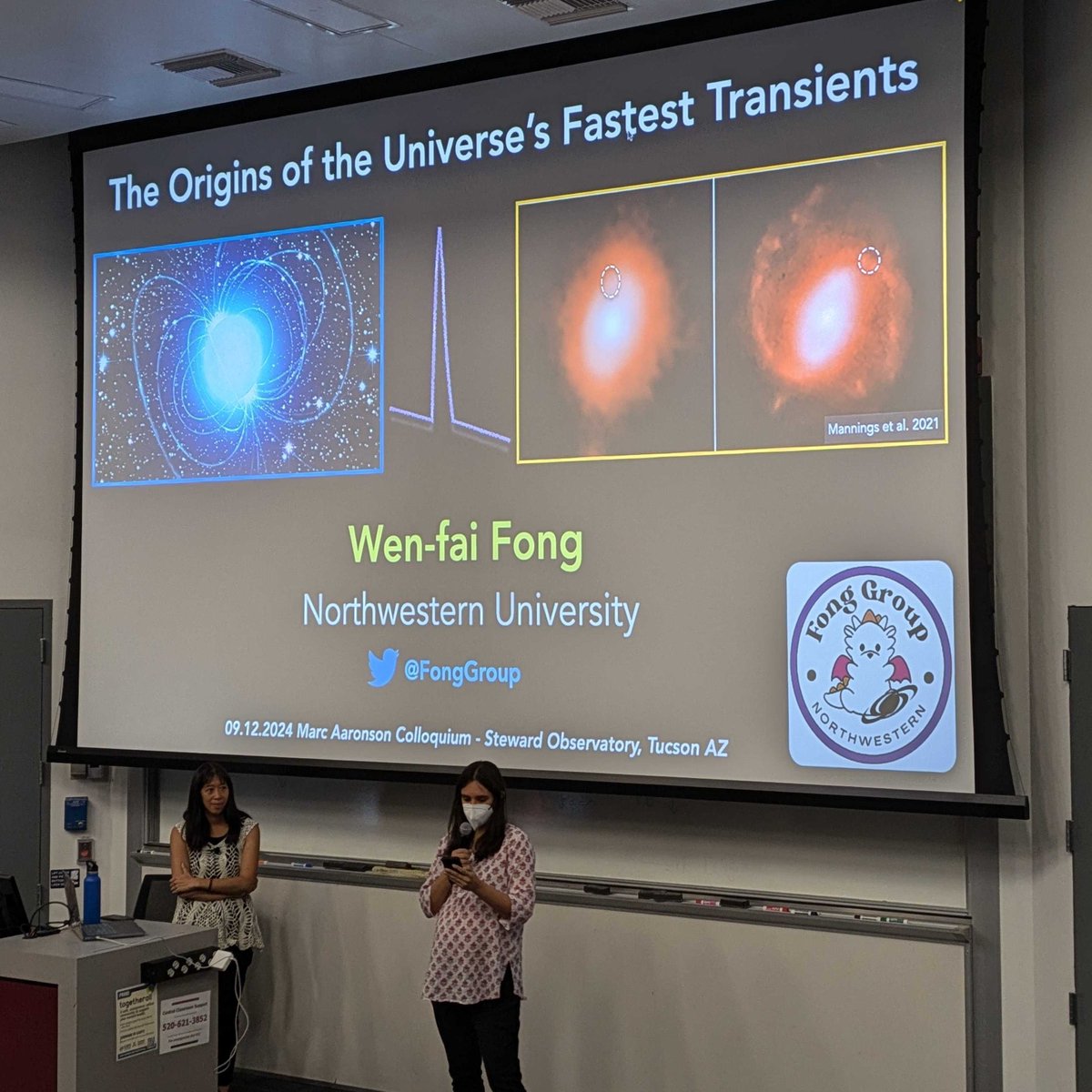
We thank @StewardAstro for the unforgettable visit to honor Marc Aaronson, and the opportunity to talk about Fast Radio Bursts and the origins of heavy elements!
Wen-fai Fong visited @StewardAstro at @uarizona in Tucson this week to accept the 2024 Marc Aaronson Prize. Aaronson was a pioneer in an astonishing number of topics, from elliptical galaxies to globular clusters to the age of the Universe.
The Marc Aaronson Prize was created by his family and colleagues, turning tragedy into light and opportunity. We honor his memory by reading his papers in an attempt to get to know the scientist he was, and continuing to talk about his work. 💙