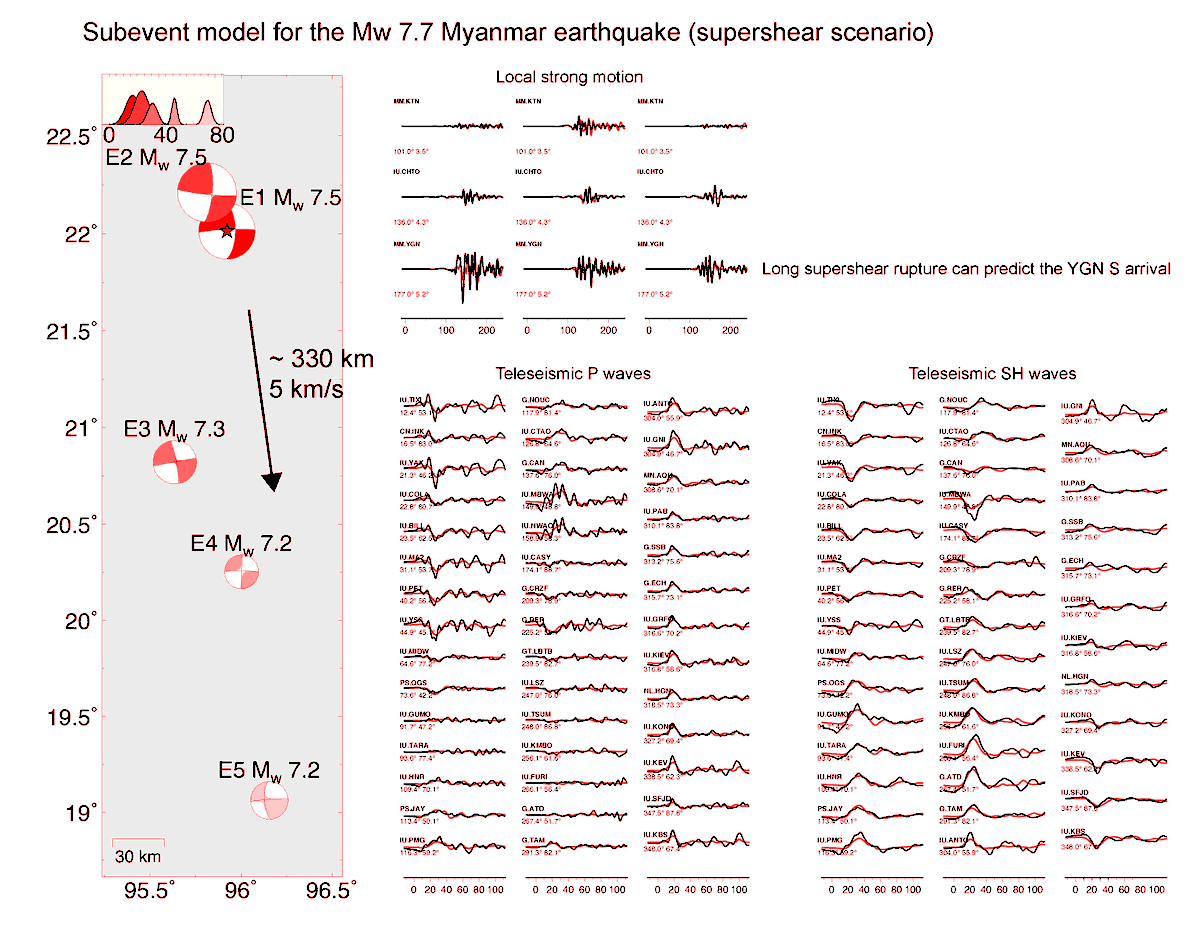
#MyanmarEarthquake may be a long supershear event (~5 km/s, ~350 km rupture), evidenced by S wave arrivals on the strong motion data, which explains strong shaking felt far away. Supershear amplifies damage, calls for urgent rescue needs & infrastructure strengthening.
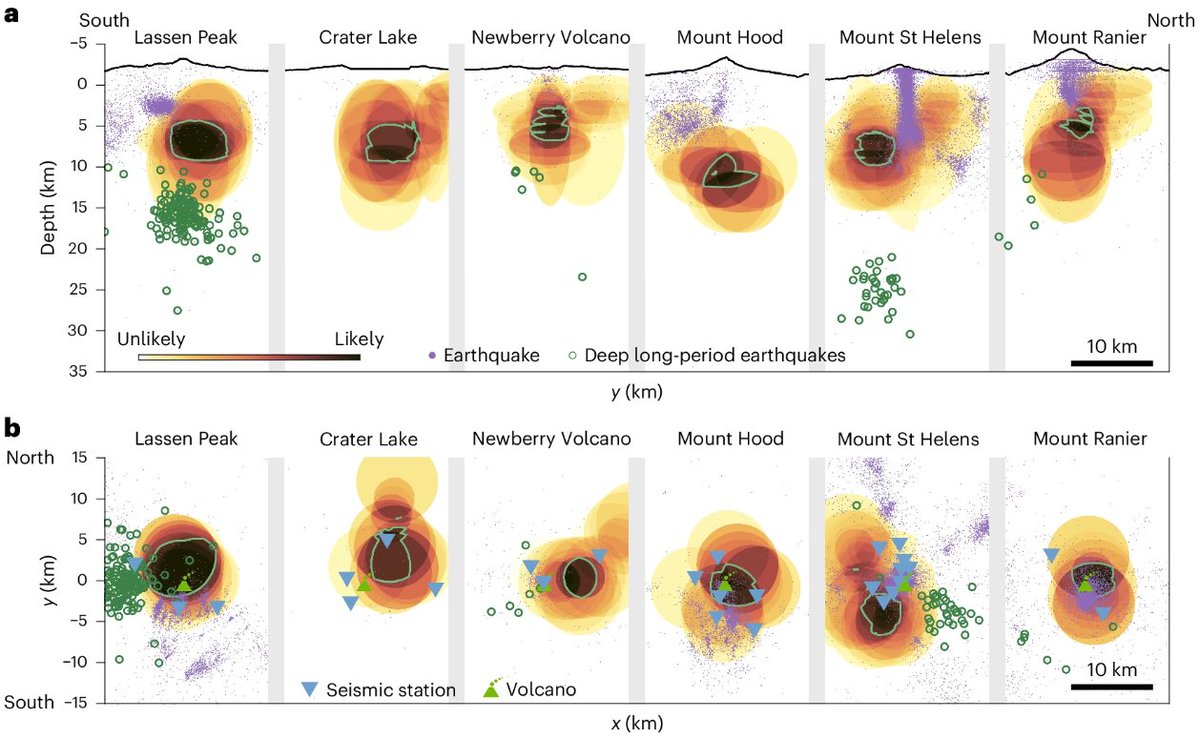
Article: Upper-crustal magma bodies are present beneath most Cascade Range volcanoes, indicating that large volumes of melt can persist at shallow depth through eruption cycles
@forstokes@CornellEAS@USGSVolcanoes
https://t.co/XtaEXM9ZPU
🌟OPEN ACCESS🌟
In a new #TSR paper, @LosAlamosNatLab and @USGS scientists present a new way to optimize parameters for neural network-based phase-pickers.
https://t.co/ONIejNkWJa
Seismic Monitoring near Ithaca, New York, Reveals Nonuniform Distribution of Microseismicity in an Intraplate Region #SRL
Plans at @Cornell to heat its Ithaca campus via geothermal operations involves characterizing background seismicity.
https://t.co/zktpUyD8Jv
@united My flight was cancelled. No body helped us with rebooking and hotel. I was promised to get refund but it is over three days, don’t get anything. getting emails saying “we experienced an error completing your refund request. Please contact us at 1-855-426-5560 for details”
Very proud of my PhD student Avigyan Chatterjee's work characterizing spatial variations in earthquake ground motion in California. Someone hire this man! https://t.co/h9zoeDuR4O
Though this is a little late, The Seismo Lab would like to reflect on the recent passing of Thomas C. Hanks and his contributions to modern seismology. Hanks and Hiroo Kanamori, of USGS and Caltech respectively, developed their now universally used Moment Magnitude Mw scale in the 1970s as a way to consistently measure the size of an earthquake using an earthquake's seismic moment instead of amplitudes as recorded by seismographs. In the news when you hear someone mention the Richter Scale for any event > M3.5, they are actually referring to the Hanks & Kanamori scale. His contributions were great and lasting, and he will be missed. Read more about their work and the Mw scale here: https://t.co/7Kg1Q1Gd28
#twithaca A black man was shot in the 100 block of Plain Street near State Street around 9:30 PM Saturday evening. A witness reported hearing six gunshots in rapid succession. A BOLO has been issued on a grey sedan that is believed to be involved in this shooting. This area is the site of a Black Lives Matter street mural and is virtually the same location as the murder of Tehran Forrest in March of 2022.
📢Check out the just-published work let by Dr. Sánchez-Pastor! We've tried to understand how seismic noise generated from ocean waves 🌊can help to monitor the steam evolution of geothermal reservoirs over years of power plant operation⚡️🔋
https://t.co/5BNSLob9BY
As The Seismic Record nears its three-year anniversary, we asked Editor-in-Chief @KeithKoper to talk about how the journal has evolved and what to expect next in its pages. https://t.co/HuRPkRGemj
Does academic writing matter?
Does better writing cause our peers (eg as referees and journal editors) to evaluate our papers more favorably?
Our paper “Writing Matters” (with @CorinnaRGL and Libby Ross) suggests it does!https://t.co/UZViMul19q #EconTwitter. A thread. (1/11)
A smart and efficient way to retrieve surface waves and characterize noise sources simultaneously by sequencing ambient noise cross-correlations! Cool work done by As. Prof. Hongjian Fang @hjfang at Sun Yet-Sen University.
✨ OPEN ACCESS✨
In a new #TSR paper, @stevenjgibbons explores the importance of constraining direction from 3-component seismic stations, and presents a way to do so. He includes two case studies: 55 Finland surface explosions and 4 DPRK nuclear tests.
https://t.co/FmvwRHhdKP
✨ OPEN ACCESS✨
Source Scaling and Ground‐Motion Variability along the East Anatolian Fault #TSR
Scientists examine 1,585 earthquakes with magnitudes greater than 3.0 that occurred along the East Anatolian fault since 2010.
https://t.co/vbkCJtsW2I
I’ve handled the review of > 1000 papers at @nature. Over time, you notice aspects of presentation on which reviewers tend to comment. In the interests of minimizing hassles during review, I offer the following suggestions (a bit targeted to climate papers).
A Deep‐Learning Phase Picker with Calibrated Bayesian‐Derived Uncertainties for Earthquakes in the Yellowstone Volcanic Region #BSSA
Scientists from @UUSSquake seek to improve earthquake detection in Yellowstone.
https://t.co/PfnePu7XGx