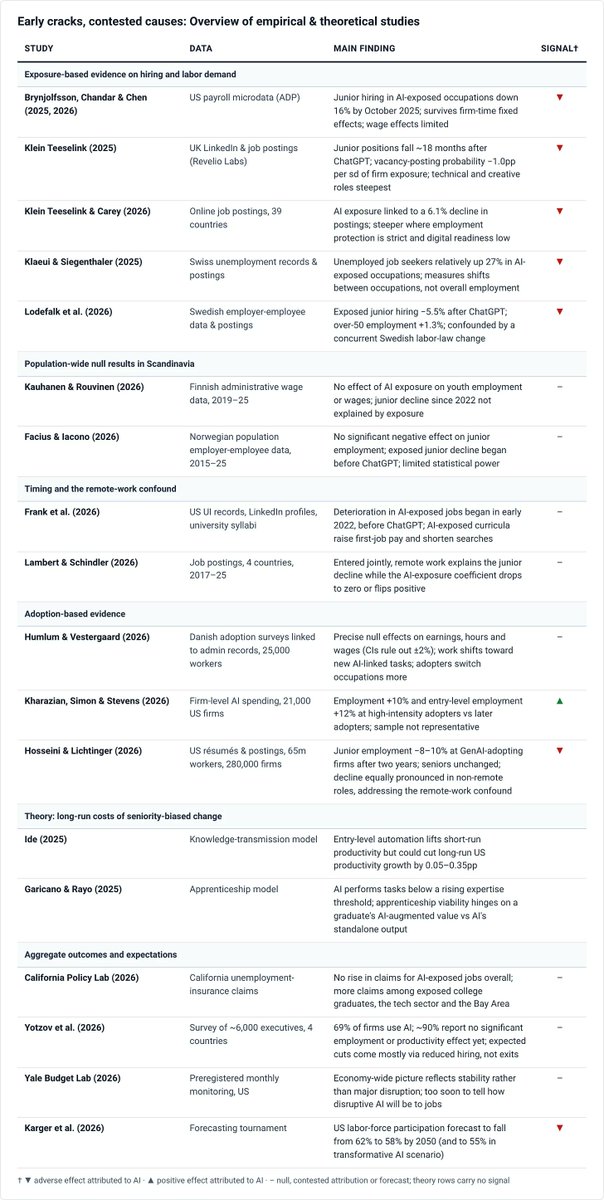
Has AI hit the labor market yet? @alexolegimas and my verdict after ~20 papers: not yet in aggregate. Unemployment and layoffs show almost nothing. But AI may already be cutting junior hiring in exposed white-collar jobs. Remote work may explain part of that decline.
A 🧵
A pre-training pause is easier to enforce than a complete pause. But it only works if pre- and post-training are complements: post-training can only elicit what pretraining put there.
OpenAI believes this. It says lower perplexity, meaning better token prediction, is directly related to emerging capabilities.
If the belief is wrong, a cap incentivizes racing toward post-training techniques, including more harmful ones such as recurrent depth.
For the labs, it might also be economically beneficial to stop costly pretraining, especially if you haven't just received an IPO windfall.
Gundlach et al. find that algorithmic progress is scale-dependent. So a cap would also cut the return to AI-automated pretraining research, the RSI channel Pachocki worries about
We decided to provide more transparency into pretraining progress at OpenAI for the sake of moving toward shared safety bars. In “Perplexity and Intelligence” I argue for common limits based on perplexity and other measurements, with progress beyond them gated on our ability to understand AI behavior.
https://t.co/XX35m5vq89
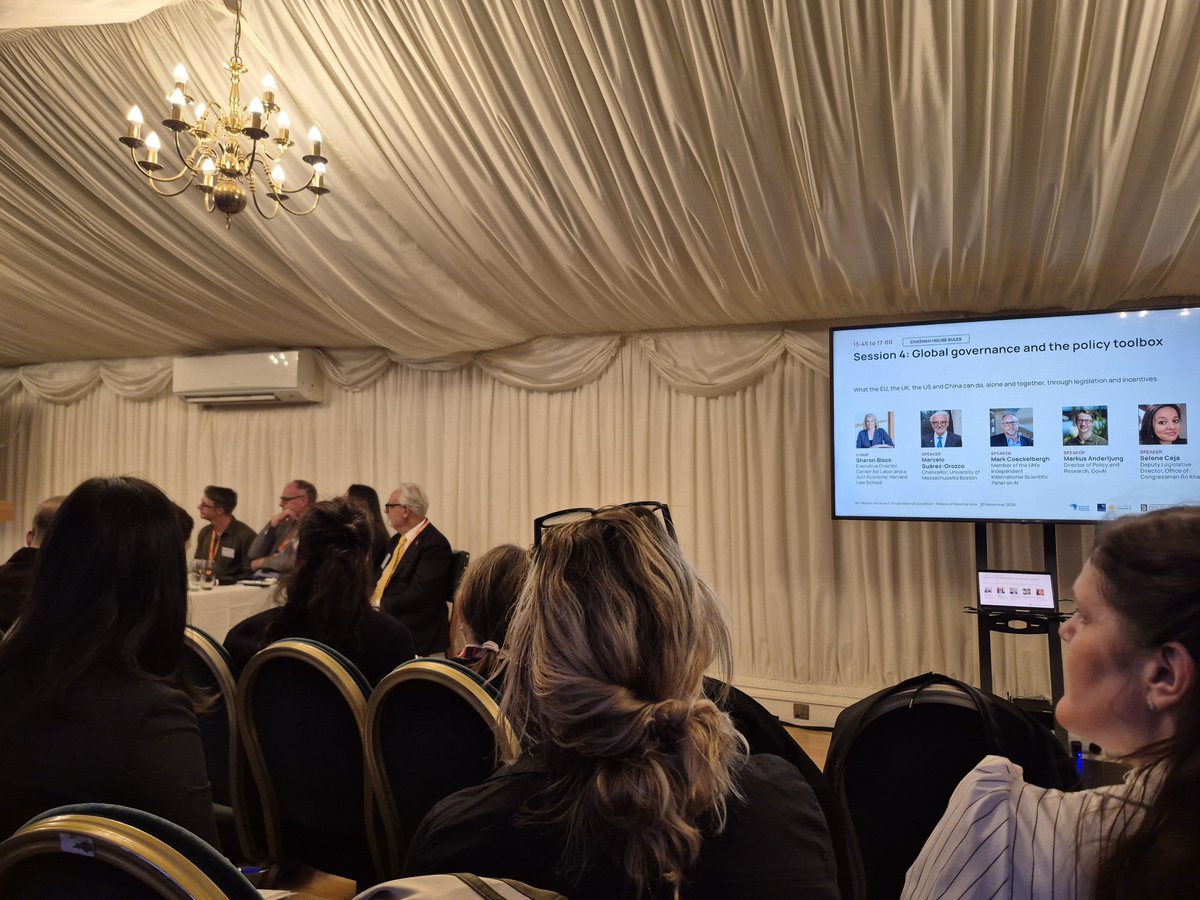
A growing consenus in DC wants to regulate AI, including banning recursive self-improvement. Surprising to hear how fast the US Overton Window is moving on my first visit to the @HouseofCommons. DC stays more AI-pilled than Europe
@testingham Took me a minute to see that this is consumer surplus from undergrad micro. Spend is the rectangle; uplift is the area under the curve. Useful analogy for AI agent uplift.
Huge kudos to OpenAI for releasing this! They are automating AI R&D at a breathtaking pace, but weak links such as research taste and the need for human review limit the uplift for now
We're sharing new data on how AI is changing research at OpenAI.
We find researchers' AI use continues to rise exponentially, and agents are completing longer tasks, but human involvement remains central in research. Researchers are also spending more time on safety and alignment, with human effort in these areas growing faster than in any other individual research area.
This report aims to increase transparency around research acceleration and inform the governance of increasingly capable AI. We believe that AI labs should be required to track and publicly report indicators of recursive self-improvement (RSI): the process by which AI accelerates the development of future AI systems.
Our hope is that this expanded report will help sustain and advance shared measurement norms across the industry.
https://t.co/xyGPcCkPCK
@testingham Took me a minute to see that this is consumer surplus from undergrad micro. Spend is the rectangle; uplift is the area under the curve. Useful analogy for AI agent uplift.
@danielrock Tried to hedge with *recent changes*, but thanks for engaging with my more controversial clickbaity statements! X algorithm is working! College premium is decreasing atm at least afaik
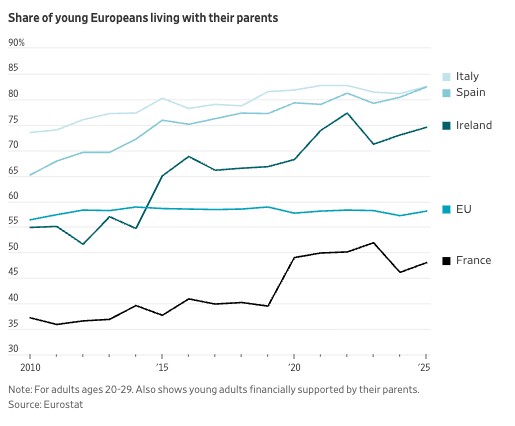
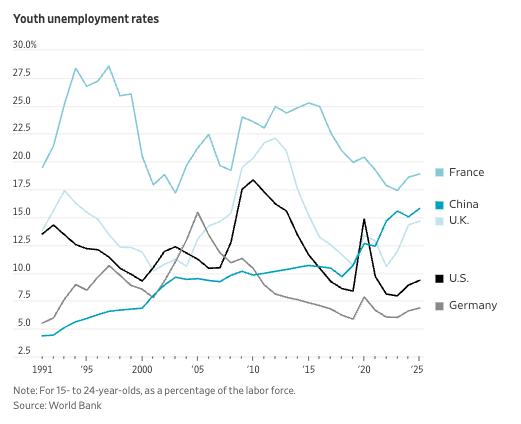
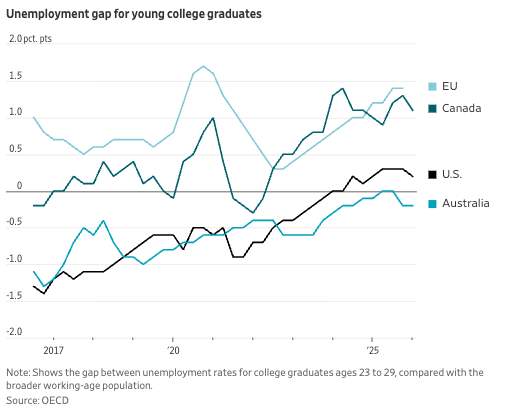
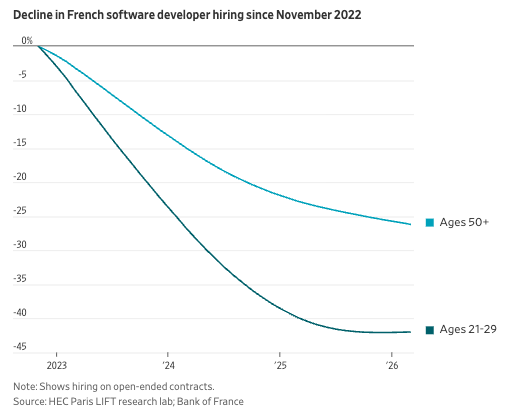
Young people around the world are not okay. Incredible graphs from WSJ
1. Unemployment rates for young college grads have been climbing compared with the broader population for years
2. AI might be exacerbating the employment challenges for young ppl in software
3. In Italy and Spain, more than 80% people in their 20s live with their parents (!?!!?)
4. Youth unemployment in China has gone from non-existent to one of the highest in the world during a period when its poverty rate has plunged. Weird.
Thoughtful balance in the Milburn review, e.g. on minimum wage. Most UK youth unemployment isn’t driven by AI, so it needs different solutions.
The AI Youth Observatory and data sections sound promising. I hope it uses up-to-date administrative data, such as monthly HMRC payrolls.
In @SMFthinktank I argued for extending the NI exemption to 25. But the Swedish evidence shows only moderate effects per pound spent, so Milburn’s more limited reduction is a sensible start: https://t.co/0CWrhDU2gV
We risk a lost generation if young people aren't prioritised, author of youth unemployment report Alan Milburn tells the BBC
Follow live: https://t.co/HvyofBBuHj
First econ seminar today. Lessons:
Your question should follow from your motivation. Upside if not: confused listeners ask fewer hard questions.
Tell one story: question, method, results.
Cite what the audience needs, not your favourites. Sorry, Garicano (2000).
@infornomics Yeah, got some useful feedback! It was a bit too early to present, but I haven't committed to a PhD or anything else yet! But could do with less flexibility/ part-time jobs! Stable employment has benefits!
Breaking News: Germany will nominate Markus Brunnermeier as the new @ecb chief economist. Germany couldn't have proposed a better candidate. An excellent and completely non-ideological economist. An outstanding choice. @MarkusEconomist
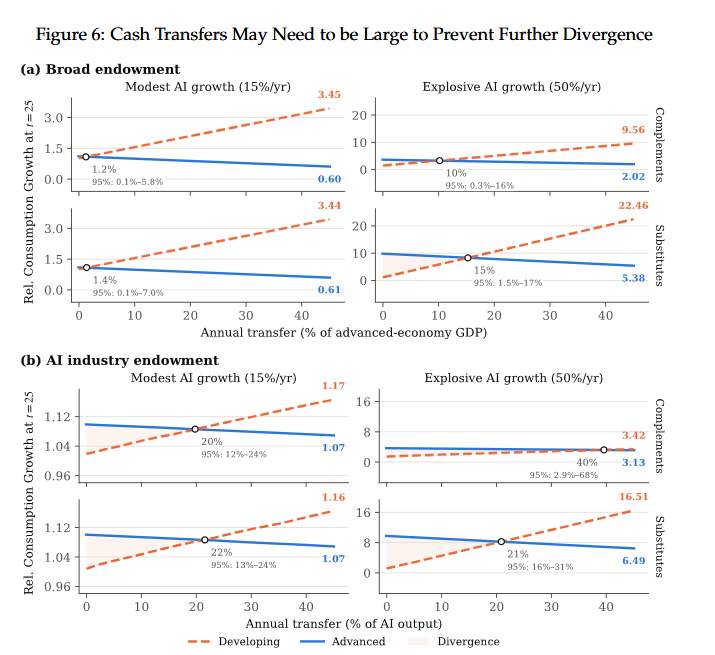
New NBER paper: @danbjork, Lagakos & VanVuren write the theory I was missing on whether AI growth reaches developing countries. In @ReadTransformer (@ShakeelHashim), I argued for giving poorer countries a stake in the AI industry. They find the share of AI output needed to stop the consumption gap widening stays roughly stable (20–40%) across AI scenarios, because transfers grow with the size of the disruption.
The caveat: this assumes AI’s value shows up as AI-sector profits. If competition drives AI prices down, the endowment pays out little.
Here's the paper https://t.co/duezMFEhBj and my rough sketch https://t.co/dG8KUWa6pT