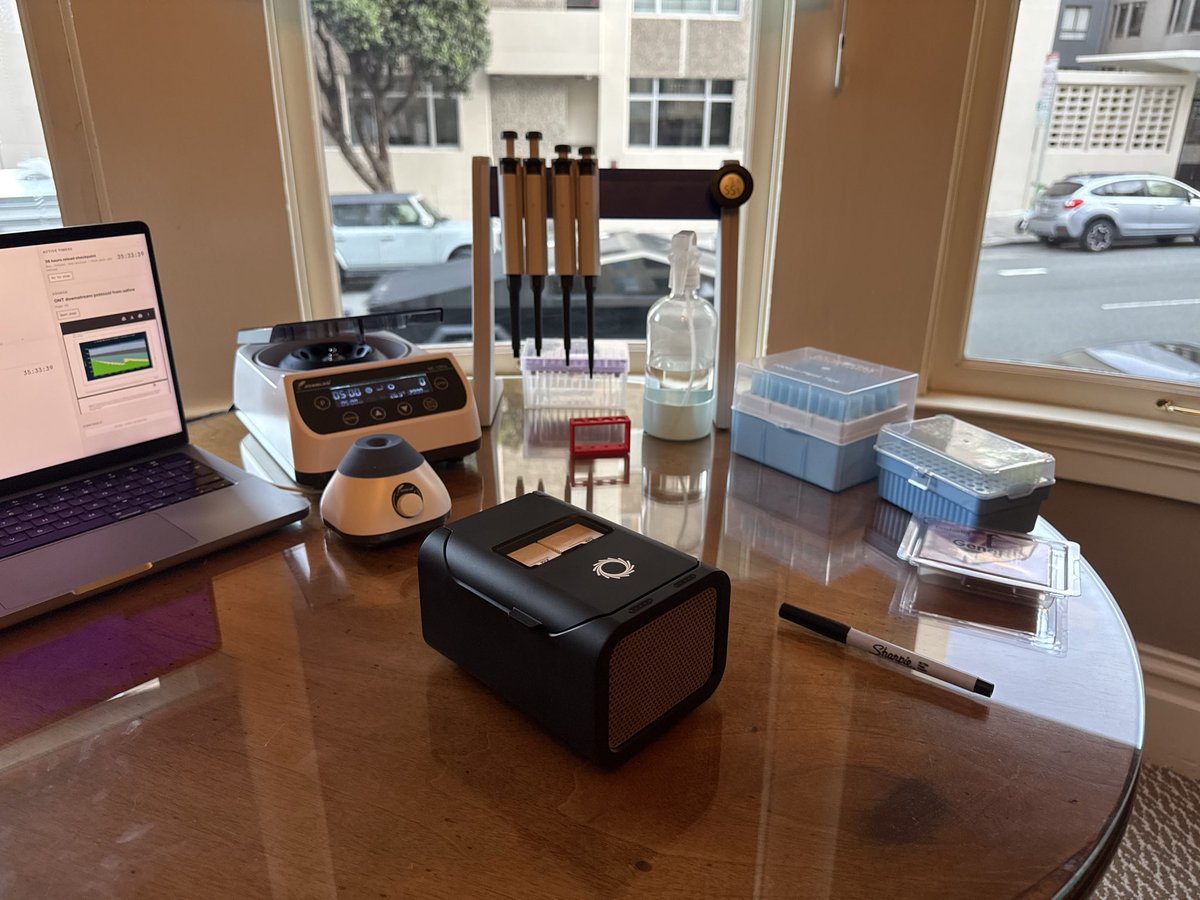
I just sequenced a human genome to 30× coverage entirely at home.
As far as I know, this is the first time this has been done.
I didn’t step foot in a lab once. Every step - from saliva collection, to running the sequencer - took place in a single room with a dining table + kitchenette.
Six weeks ago, I had never done wet lab biology before.
I used an Oxford Nanopore P2 Solo - the only commercially available sequencing device portable enough to do 30x human genome sequencing at home.
Biggest takeaway - I could build something that combined software, hardware, and molecular biology far faster than I thought was possible.
I can name >100 specific instances where AI helped me solve a technical problem that would previously have blocked me because I lacked access to a domain expert.
For example: how do I save my sequencing run when my DNA extraction yield is 4x lower than I need it to be, and I have this limited set of reagents to hand?
To make this work, I had to navigate multiple disciplines:
- writing software to monitor sequencing runs and orchestrate remote GPU infra for basecalling
- learning + executing 5 hour long molecular biology protocols
- building a hardware device to quantify DNA concentration
Apologies for the hyperbole, but I feel super lucky to be living in 2026.
A few weeks ago I decided to sequence a human genome to 30x at home.
Then I actually did it. And I did it really quickly.
Fully agree. I’ve trained about 50 models since January. All on a single GPU. Learned a ton along the way and some of them are now trading for me profitably :)
if you're doing AI research at all; I recommend doing the "ETH zurich" route
Train models that use a single GPU. Make sure that it takes less than a minute to train models. Pufferlib is a great example.
The more models you train the more you learn
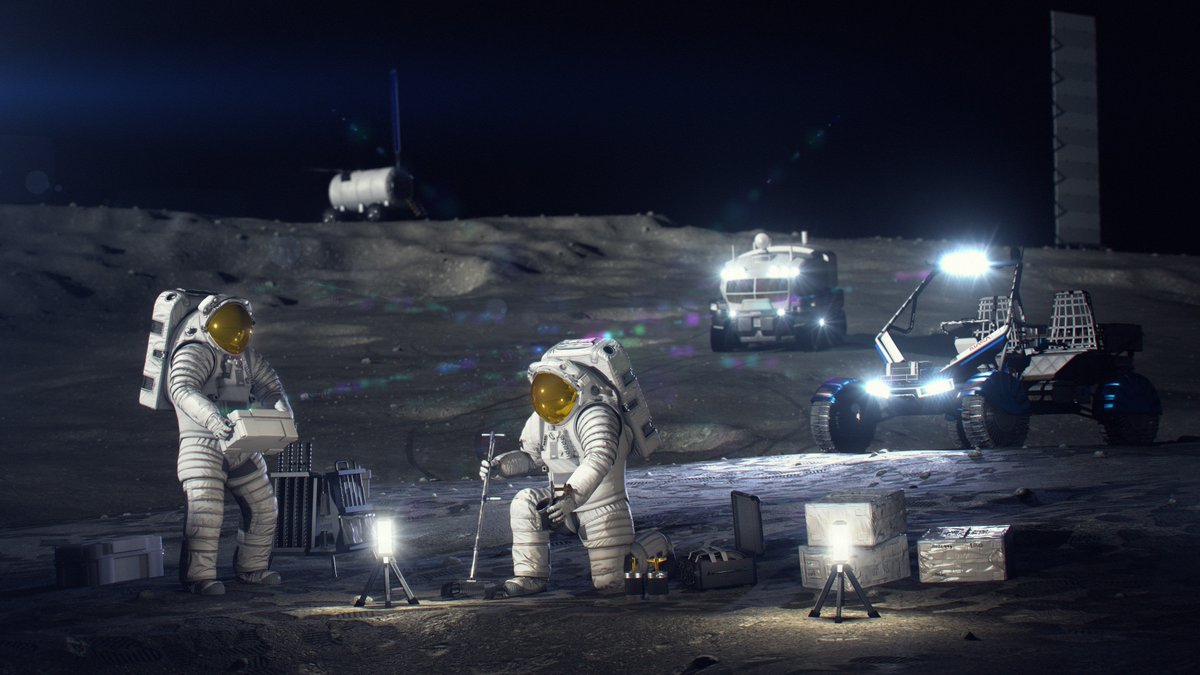
We're building a Moon Base!
@NASAMoonBase will serve as a habitat where astronauts live and work during long-term science missions.
Join us at 2pm ET on Tuesday, May 26, for a live news event where we’ll share updates on our lunar exploration plans: https://t.co/IJXA7xYwju
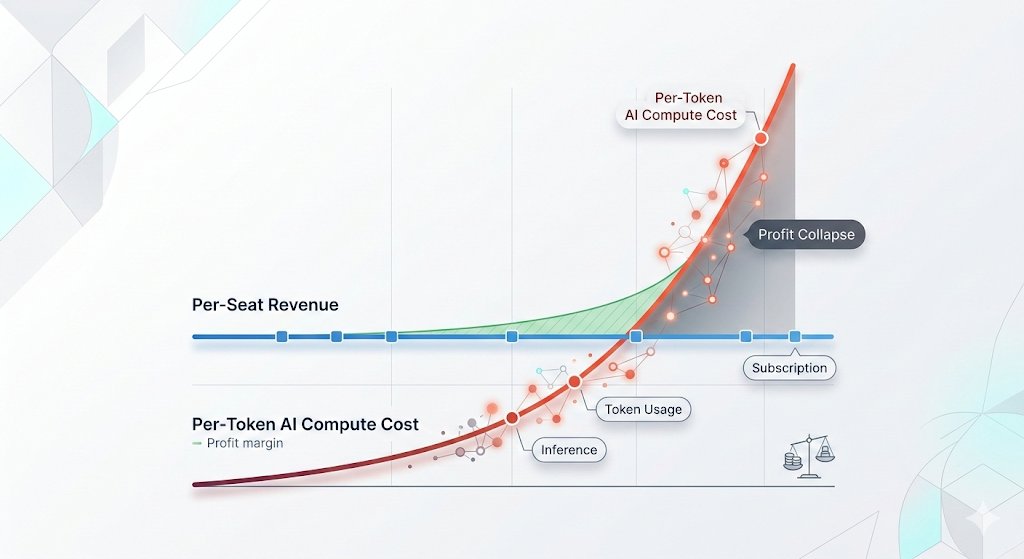
🦔Microsoft canceled its internal Claude Code licenses this week after token-based billing made the cost untenable, even for a company with effectively infinite cloud resources. Uber's CTO sent an internal memo warning the company burned through its entire 2026 AI budget in just four months. American AI software prices have jumped 20% to 37%, and GitHub (owned by Microsoft) is dropping flat-rate plans for usage-based billing across its products.
My Take
The AI subsidy era is ending in real time. The same company that put $13 billion into OpenAI and built the Azure infrastructure powering most of Anthropic's compute just looked at the bill from a competitor's coding tool and decided it was not worth paying. That is not a productivity failure on Anthropic's end. Token-based pricing is forcing every enterprise customer to confront the actual cost of running these models at scale, and the number turns out to be far higher than the flat-rate experiments suggested.
This ties directly to my Gemini Flash post yesterday. Anthropic, OpenAI, and Google all raised effective prices in the last six months. Enterprises that built workflows assuming AI costs would keep falling are now watching annual budgets evaporate in months. Two outcomes look likely from here. Either enterprises scale back AI usage to fit budgets, which slows the revenue ramp the labs need to justify their valuations ahead of IPOs, or the labs cut prices and absorb the losses, which makes the unit economics worse at exactly the wrong moment. Both paths land in the same place, the numbers stop working, and somebody has to take the writedown.
Hedgie🤗
Opus 4.6 is a LOT better than Opus 4.7 especially if you're not calling tools.
I wasn't just imagining things: https://t.co/3LlHJXYcaD
Tl;Dr: Opus 4.7 relies *heavily* on tool use to make up for its weaknesses and requires lots of heavy lifting to prompt.
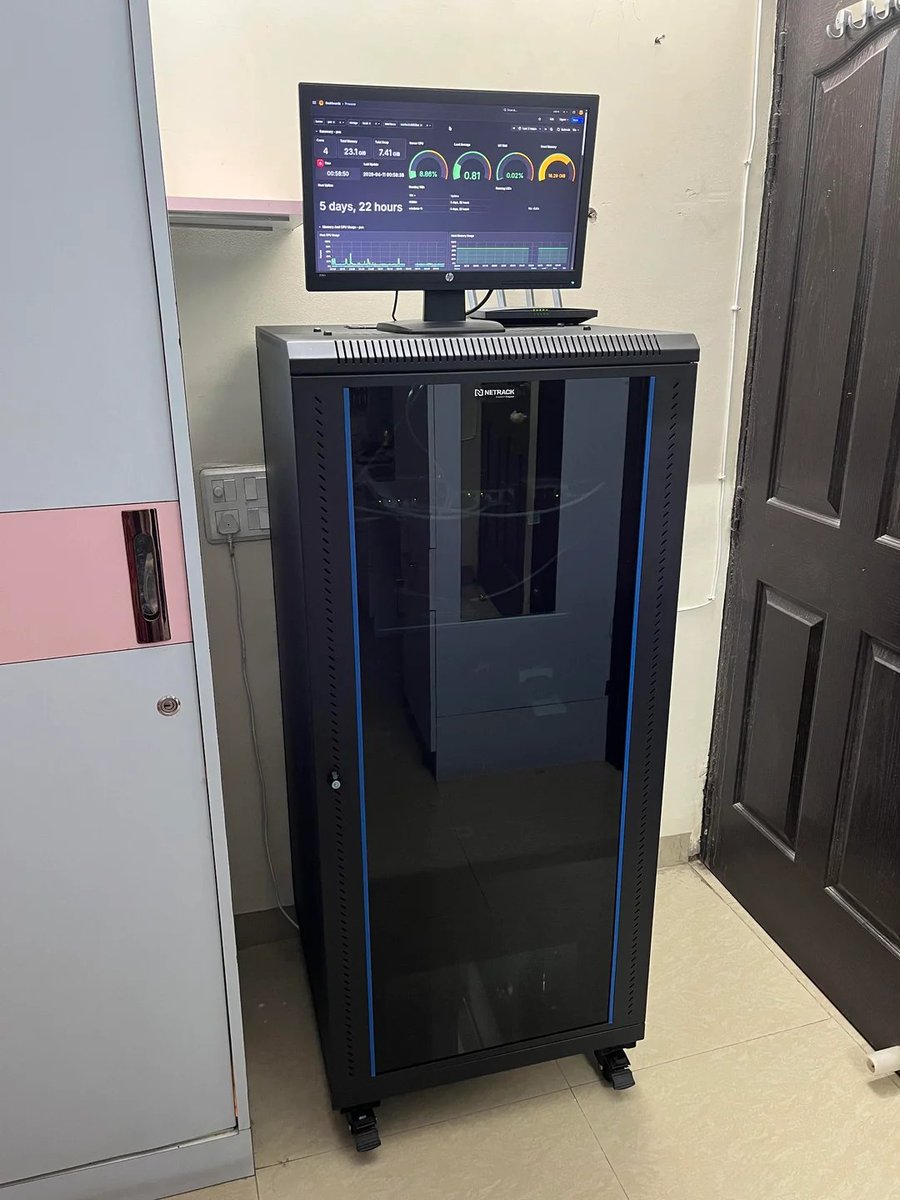
THIS GUY REPLACED EVERY SUBSCRIPTION FOR OVER 30 SERVICES WITH A HOMELAB HE BUILT USING CLAUDE CODE
he built his own self hosted version of basically every service you pay for online and runs it all from a 27U server rack in his house
the goal was simple:
stop renting access to your own data, stop paying monthly subscriptions for things you can run yourself, and have one private dashboard that controls everything in your digital life
he opens one homepage on his browser and from there he can:
> stream his entire movie and TV collection through plex or jellyfin
> request a new movie through overseerr and watch it appear in his library automatically once it's downloaded and tagged
> back up every photo he takes through immich (his own google photos)
> store all his files through nextcloud (his own google drive)
> manage his audiobooks, ebooks, music, RSS feeds, recipes, and bookmarks from one place
> block ads across his entire network with adguard home
> see live grafana stats for every machine running in his house at any moment
and a lot more
the homepage dashboard even shows the current weather, his calendar, system stats, download queues, library counts, and shortcuts to every service he uses
the hardware list:
> netgate 1100 router running pfsense+ for firewall, DHCP, DNS, and VLANs
> tp-link 8 port managed switch
> tp-link archer C6 access point
> raspberry pi 4 dedicated to a full screen grafana dashboard
> HP laptop with i3 11th gen and 24GB RAM running proxmox VE as the main hypervisor
> compaq laptop with a core 2 duo and 4GB RAM running proxmox backup server
> tower PC with a core 2 duo running unraid for the NAS
the proxmox VE box runs every self hosted service inside a debian VM with docker compose. backups run on a schedule with chunk based deduplication. unraid handles all the storage with mixed drive sizes and a single parity drive
every device is on a tailscale tailnet so he can hit anything from anywhere in the world without poking holes in his firewall
then he built his own private streaming empire on top of it:
> plex and jellyfin pointing at the same library
> overseerr to request movies and shows
> radarr, sonarr, lidarr, readarr managing different media types
> prowlarr indexing everything
> sabnzbd and qbittorrent handling the downloads
> bazarr pulling subtitles automatically
> tautulli for plex stats
> trailarr for trailers
then the rest of the stack:
> nextcloud replaces google drive
> immich replaces google photos
> paperless-ngx for OCR document management
> adguard home blocks ads across the entire network
> miniflux for RSS, karakeep for bookmarks
> mealie for recipes, navidrome for music, audiobookshelf for audiobooks
> calibre for ebooks, code server for VS code in the browser
> stirling PDF, IT tools, microbin, searxng, pairdrop
every service surfaces through homepage, a self hosted dashboard he built tooling around to auto generate the YAML config (made with claude code)
this guy is paying $0 a month for what most people pay $200+ in subscriptions for and had an initial setup cost of ~1000 to 1500 USD
the homelab community is quietly the most overpowered and cracked group of builders on the internet
this is so badass for the future of medicine. i'm guessing healthy people could even benefit from this. forget peptides, inject yourself with organ helper cells.
@apoorva_mehta Okay that’s wild. I’ve been building my own algorithmic trading systems and deploying my own capital over the last few months.
I thought 700m tokens / month was a lot.
I need to step it up ^-^
Man makes a visual demonstration of how American bread is actually made
Many Americans know our bread is toxic by now but they don’t really understand what the process of making it actually looks like and how bad it really is
This is eye opening
Terence Tao is the greatest living mathematician.
Fields Medal at 31. Solved problems that had been open for a century. Widely regarded as the sharpest analytical mind alive.
And he just told you the thing your entire career is built on is now worthless.
Tao: “AI has basically driven the cost of idea generation down to almost zero.”
For five hundred years, the idea was the prize.
The theory. The hypothesis. The flash of insight a physicist chased for twenty years in a lab before it landed.
That was the bottleneck. That was what tenure rewarded. That was what Nobel committees were looking for.
Gone.
A model can generate a thousand candidate theories for a scientific problem in an afternoon. Not noise. Not garbage. Plausible, structured, publishable-grade hypotheses.
A thousand of them. Before dinner.
The idea used to be the scarcest resource in any room.
Now it is the cheapest.
But Tao went somewhere most people are not ready to follow.
Tao: “Verification, validation, and assessing what ideas actually move the subject forward… that’s not something we know how to do at scale.”
Sit with that.
We automated creation.
We did not automate truth.
We can produce ten thousand explanations for a phenomenon.
We cannot tell you which ones are real.
That is not a gap. That is a chasm.
And it is the most important unsolved problem on Earth right now.
Tao: “Human reviewers… they’re already being overwhelmed actually.”
The entire scientific apparatus was built for a world where a single paper took months to produce.
Peer review. Journal boards. Consensus forged over years of replication and debate.
That infrastructure was never designed for what just hit it.
Journals are flooded. Reviewers are buried. The filters that separated signal from noise for decades were engineered for human-speed output.
They are now absorbing machine-speed volume.
And they are cracking under it.
Tao compared it to the internet.
The internet drove the cost of communication to zero. That did not produce clarity. It produced an ocean of noise with islands of signal buried somewhere inside.
AI just did the same thing to knowledge itself.
Infinite generation. Zero verification.
The person who can produce ideas has never mattered less.
The person who can prove which ideas are true has never mattered more.
That is the inversion nobody is processing.
Every company, every lab, every institution is racing to generate more. Faster models. Bigger outputs. More theories. More code. More content.
Nobody is building the system that tells you which of those outputs are actually correct.
And that is the only system that matters.
Whoever solves verification at scale does not win a market.
They become the filter that all of science, all of engineering, all of human discovery flows through.
The bottleneck of the last five hundred years was producing the answer.
The bottleneck of the next fifty is knowing whether the answer is real.
And right now, according to the greatest mathematician alive, we do not know how to do that at the speed the machines demand.
That is not a research problem.
That is the race beneath the race.
And almost nobody has entered it.
karpathy just broke the internet with something called auto research
it’s basically an ai research agent that runs experiments for you 24/7
you give it a goal like
“make this model better”
“find a higher converting landing page”
“lower customer acquisition cost”
then it runs a loop:
1) plan an experiment
2) edit the code or config
3) run a short test on a gpu
4) read the metrics
5) keep the winner
6) try again
over and over
while you sleep
by the morning you wake up to the best version
actual tested improvements
think of it like a robot research intern that runs hundreds of experiments and only keeps the winners
this is link to his repo https://t.co/hm9aFyXQZS for your to mess around with it
in the latest episode of @startupideaspod
i break down:
• what auto research actually is
• how it works step by step
• 10 business ideas you can build with it
• how to install it and start using it
this one is saucy
because tools like this change how startups get built
watch
Intel’s not doing so hot lately. Meanwhile vendors are killing it at the RISC-V Summit in China.
One CPU got a specint2006/GHz rating of 10.4/GHz!
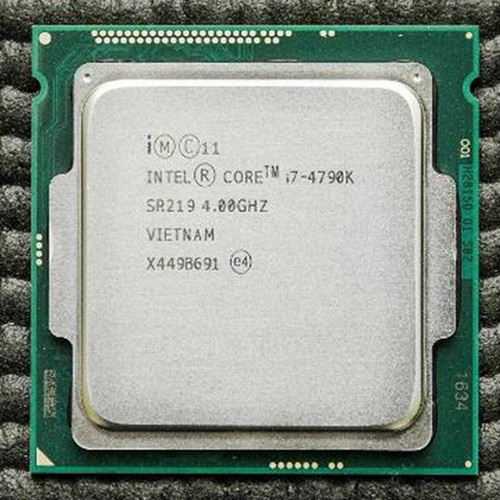
To put it in perspective, a i7-4790k (Haswell) scores 8.1/GHz.
RISC-V is hitting high-end desktop territory FAST:
ok - final reminder for tonight’s deadline:
**11:59 PM PST is the deadline** to apply for a16z Speedrun with your project/startup. After this, we close out the application process and focus on meeting all the teams, investing up to $1m in each over the next few weeks. Doing interviews, asking references, and giving feedback
We’ll be investing over $30-40m so it’s a great opportunity to get off the ground quickly. Our program is focused on tech, AI and entertainment, but more importantly we want to work with the earliest stage startups where <$1m investment could make a big difference. The whole process of applying to a16z Speedrun is meant to be easy, like 10 minutes or less.
While many of you are focused on the investment, I also want to say something about the intangibles of the program:
- first, the network. Many of you have amazing professional networks already, but a16z speedrun will connect you to hundreds of elite CEOs/founders who are thinking about startups at the same time as you. We have folks from amazing backgrounds - from FAANG to repeat founders to highly technical AI researchers. They are thinking about the same sectors (AI!), negotiating w the same vendors, hiring at the same time. You can compare notes, grow together, and ultimately this is the community that will be building over the next decade. On a personal note, when I moved to California in 2007 it was the friends I met early on that came to build many of the unicorns, run huge teams at the top tech cos, and became the next gen of VCs. Our goal is to do the same here
- the a16z speedrun team. We have dozens of full time folks in marketing, partnerships, talent, corp dev, etc that will be working with speedrun startups to make them successful. And a16z has 600 employees across the broader firm with deep expertise on making startups win. Usually most preseed/seed firms only have a few generalist partners - with Speedrun we want to offer the best of both worlds, a hands on program experience plus access to a16z’s comprehensive knowledge and expertise at scale
- support for global founders and employee hires. We know great entrepreneurs come from everywhere, and we have tons of best practices to help people relocate/split their activities to the US. This is both hands on advice on visas/immigration, introductions to the top lawyers, but also neighborhood guides and a pre-built community of new friends
- world class speakers. We have had an incredible number of unicorn founder/CEOs speak at Speedrun. This includes a16z portfolio companies like Figma, Zynga, Carta, etc, cutting edge new AI startups, and also exited companies like DoorDash and Tinder. We often set up small group events with these founders, have set them up to angel invest in relevant startups, and make 1:1 intros to Speedrun cos
- launch and growth. For early stage startups, getting wins on an initial launch is key. You might need a killer hype video, a coordinated investor-led social media push, etc. Or you might need an initial paid marketing spike. Or a new look at your signup flows to make them efficient. We can advise on all this and get hands on too.
- building out your investor network. We help each and every company with dozens of 1:1 intros with VCs. This builds a network for the initial round and for the future
Ultimately a16z Speedrun is all this and also an opportunity to start a relationship with Andreessen Horowitz. For future investment, to join our community, to get advice at inflection points, and much more. I’ll be spending 1:1 time w everyone in the Speedrun program so def excited to meet y’all.