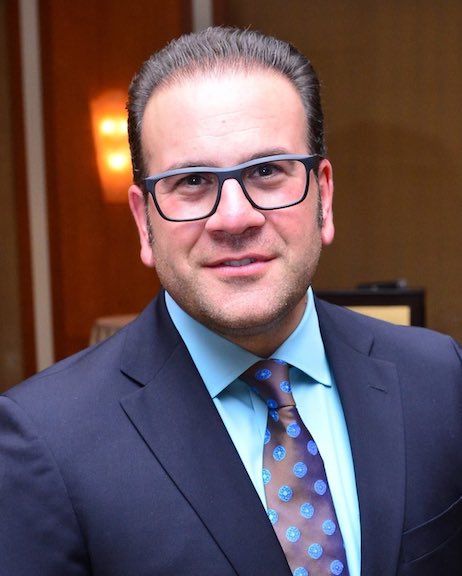
Here's my take on Karpus Maximus on CNBC...
Critics are painting his appearance as a nervous breakdown or worse.
Hardly.
First, Karp clearly laid out what he sees ahead, and the inherent fallacy associated with frontier AI models.
Karp was driving at something I run into all the time… the world’s best and most successful executives know that protecting their business model is critically important.
Competitors – meaning every other AI model out there that Karp harped on – require that you load UP your data, design prompts that feed into somebody else’s models, which means they get to see how your business operates and what you deem as important, before feeding that back to you with specific results.
Not tracking?
This would be like Coca-Cola being required to hand its secret formula to a lab that also formulates recipes for Pepsi — and then being forced to trust that lab to keep quiet about what it sees while paying for the privilege.
Palantir, on the other hand, keeps everything private and is entirely auditable every step of the way.
Second, nearly everything he said went in one ear and out the other around the table.
I found the blank looks priceless.
The average critic cannot be bothered to understand the difference between what Palantir does and what “competitors” do so they wind up parroting false information, misleading narratives and half-baked thinking.
Third, Karp confirmed what I’ve been saying all along with hard, unambiguous numbers.
I’m paraphrasing but here ya go… “We have much more demand than we can supply. If you just look at our financials you can see, 2 years out, you can see $15-$18B in free cash flow.”
Think about that.
Karp said that Palantir could 4-5X in the next few years.
Exactly what I’ve said all along.
Perhaps I am naïve but I found it astonishing that not one person at the table had an apparent interest in exploring that line of thinking on anything other than a cursory level despite the fact that it is ostensibly their job. 🤦
I hope I own enough shares.
Keith’s Investing Tip: Founders know their companies better than anybody else so when they make statements that are grounded in fact and knowledge, smart investors would be wise to pay attention.
Trade idea: Obviously, own $PLTR as an investment. BUT get ready. Shares are now up ~23% off recent lows and my guess is that it’s only a matter of time before there’s another short attack. Tactically speaking, that presents a potential short-term play using putskies while premiums are cheap and volatility is comparatively lower than it’s been in a while.
If I’m correct, that’d be a GIFT to long term investors.
Nox Metals exists so America can build 100x more factories and technologically abundant industrial capacity in the West.
We are announcing our $11.5M Seed round led by Hyperion, with participation from Palmer Luckey, Y Combinator, Jared Friedman, RoboStrategy, Operator Collective, DTX, Alumni Ventures, and others.
Over the past few decades, America has neglected domestic production. We lost our dominating ability to build in the world of atoms while jobs on the factory floor plummeted.
It's time to build for America again. As our grandparents once did.
Since launching production only 7 months ago, we have shipped metal to hundreds of American factories. Countless truckloads to America's industrial base. And we are no where near slowing down.
Our metal has gone to space. It has protected our troops. It is in your car and in the machine that scanned your chest. It is all around us. And we can't stop supplying at warp speeds, because America needs it.
We will be revitalizing a WW2 era, 35,000 SQFT factory in Detroit this summer where we will have our techno industrialists working hard to further pursue our mission. We will be tripling down on technology, which has allowed us to move this fast for America thus far.
More code. More machines. More metal. More production.
Nearly every company on this map traces to a single decision made in Pasadena in 1930.
That year the Guggenheim family paid to bring Theodore von Kármán to Caltech to run its aeronautics lab. His graduate students, a crew known on campus as the Suicide Squad, lit their first liquid rocket motor in a dry riverbed north of the Rose Bowl on Halloween 1936. That test site became JPL.
The aircraft industry stacked in around it. Lockheed, Douglas, Northrop, and Hughes built planes across the same basin through WWII and the Cold War. Each generation of engineers trained here, then trained the next batch, then sent their kids to the same schools.
The talent never left. That is the whole story of this map.
SpaceX headquarters sits at 1 Rocket Road in Hawthorne, inside the old Northrop plant that built aircraft on that spot for 70 years. The same building once turned out 747 fuselages. Elon put the rocket factory there because the workforce was already standing in the parking lot.
You can move a headquarters with a single post. No one has figured out how to move tens of thousands of aerospace engineers and the knowledge sitting in their heads. When the SpaceX HQ move to Texas got announced, this map barely lost a dot.
The startups are new. The cluster feeding them is almost a century old, and it compounds every year a fresh graduate walks out of Caltech or USC into the company next door.
LA spent $418 million on homelessness in 2025.
A city report found only 10% went toward permanently getting people off the streets. 
The other 90% paid salaries, middlemen, and nonprofits.
If they solve it, the money stops.
Nobody accidentally builds that system.
https://t.co/nY1yIMyKUR
LA has over 40K drug addicts holding Angelenos hostage. All it takes is one to make moms feel too nervous to let their kids just go be kids and explore the quiet streets of their beautiful neighborhood. ENOUGH. We are done being held hostage in our own homes. Vote PRATT today!
POD-OF-ONE: THE NEW ORG BUILDING BLOCK
As a @coinbase board member, t’s been a privilege to watch @brian_armstrong@emiliemc, and the Coinbase team build a true AI-native company.
Brian's whole post is worth reading in depth. I want to focus in on one thing that Coinbase is testing: “one-person product teams.”
Most of the AI discourse has focused on one-person companies. The more powerful and more broadly applicable construct will likely be one-person teams inside companies.
The old product org split context across 3 people. The designer held the user experience. The PM held the customer and prioritization context. The engineer held the code and systems context. Coordination was the price you paid to combine those views into one shipping decision.
Agents reduce that coordination cost.
A single high-agency person can now ask agents to draft flows, write code, run QA, summarize customer feedback, generate variants, check edge cases, and produce release notes.
This model rewards a very specific kind of builder:
• Technical enough to inspect the work
• Product-minded enough to choose the right problem
• Tasteful enough to reject mediocre output
• Fast enough to ship before the org forms around the idea
The scarce skill is judgment.
One strong person with customer context and good taste can now do the work of a small pod. One weak person with agents just creates more output for someone else to review.
This changes how early-stage founders should hire.
The most useful hiring question is now: “Can this person own the outcome end-to-end?”
That’s a higher bar than a functional job description. It blends product sense, technical range, design taste, writing clarity, and operating discipline. The title matters less. The span matters more.
Call it pod-of-one thinking.
A pod-of-one builder can go from ambiguous customer pain to shipped v1 without waiting for specs, mocks, tickets, handoffs, or meetings. Agents fill in missing labor. The human carries the context.
Teams still matter. They should form when the surface area is real: multiple customer segments, production risk, complex GTM loops, or enough product depth that specialization pays for itself.
Before that, a pod-of-one may be the fastest shipping unit in the company.
Founders: hire people who can be pods-of-one, who can carry the whole problem in their head and use agents to increase their throughput.
Interesting that no company has been able to sustain being the top for more than three decades and no one is around from 1985 in the top 10. https://t.co/AYXP5YyXWZ?
2026 is shaping up to be a great year with a strong Q1 leading the way. We set new records and delivered:
👉 $1.1 billion in adjusted net revenue up 41% year over year with 31% EBITDA margins
👉 1.1 million new members
👉 1.8 million new products
These strong results reflect our relentless focus each and every day to bring the best products, best experience and best value to our members and clients. Thank you for trusting @SoFi to get your money right.
https://t.co/sdUvu6supE
$NOW CEO Bill McDermott pushed back hard against the selloff during his Bloomberg interview (as usual 🤣). He noted that the company is the fastest to reach $15 B in enterprise software revenue, continuing to grow at over 20%. He also said that they just delivered a beat and raise quarter and reiterated full-year guidance.
McDermott addressed the concerns about a messy quarter caused by recent acquisitions. He strongly denied that mergers and acquisitions were used to hide weak organic growth. He pointed out that the newly acquired Veza and Armis platforms were not even factored into the quarter's reported numbers. He also highlighted the success of their earlier Moveworks acquisition. He noted that ServiceNow's sales team generated more revenue for that product in one single quarter than Moveworks did in an entire year before being acquired.
He also addressed the massive investor fear that raw AI language models will replace traditional software. He called the current sentiment toward enterprise software some of the lowest in memory. But he argued that building internal workflows from scratch using standalone language models would cost companies ten times more than just paying for ServiceNow. And ServiceNow raised its pure AI contract value goal from $1 B to $1.5B for 2026. He expressed a lot of confidence in the company's future, calling the current stock drop the best entry point imaginable for investors.
Obviously, he is there biggest cheerleader. The acquisitions are still helping with the revenue growth story, but if they do improve the actual ecosystem that is not really a big deal.