It’s been a tough few weeks. My 10yo daughter was diagnosed with a very rare, aggressive cancer called interdigitating dendritic cell sarcoma (IDCS). I’m reaching out to identify clinicians/patients who have encountered pediatric IDCS, indeterminate dendritic cell histiocytosis or other (non-LCH) histiocytic sarcomas cases.
I'm trying to understand non-surgical chemo and targeted therapy options, new pathology markers to better diagnose subtypes/treatments, and any data on progression in pediatric patients. Please feel free to share – I’m trying to cast a wide net due to the rarity of this condition and how little is known.
People can contact me directly at my first name (as written in my profile) at https://t.co/ubo0zQRMn0.
🌟 Hepatitis B serological testing - interpretation of results
🔸️HBsAg and anti-HBc is to be done to screen for HBV infection before starting immunosuppressive therapy
The United States leads the world in #obesity prevalence.
The United States leads in intake of Ultra-Processed Foods.
Correlation does not prove causation, but certainly this is a strong possibility 🤔
#ADASciSessions#ADA2024@ADA_DiabetesPro
New South Park nails it. Health insurance is complete racket: when I was sick (paid into insurance entire life, never used it) at age 33 they tried to deny coverage. MDs at Stanford Oncology had to plead case. Took us weeks. While at my worst. Burn it down
The obesity prescription as a service business models scare me. Everyone wants a piece of the pie & jumps on the bandwagon. It goes against the fact that people with obesity need comprehensive care. It goes against evidence based obesity treatment.
Allison is correct! There have been too many people getting rich off of the labor of physicians. We should be paid for any extra time that the EHR takes. The data selling needs to stop!
Physicians cannot own hospitals.
•Felons can own hospitals.
•MBAs can own hospitals.
•Change healthcare can own hospitals.
A hospital to treat women owned by great female physicians.
Nope. Illegal.
Lawmakers are dumb.
Not #healthcare
Full text of my article @Forbes: Why Are Cash Prices Lower Than Health Insurance Negotiated Prices?
Growing evidence demonstrates a counterintuitive phenomenon in healthcare: the cash price is often cheaper than insurance prices for the same service or product. Cash prices are unilaterally determined by a provider, while insurance prices are bilaterally negotiated between a provider and an insurance company. Don’t insurance companies presumably possess more bargaining power than individual patients?
My colleagues and I found that among common shoppable services—such as lab tests, imaging, and joint replacements—half of U.S. hospitals set cash prices lower than their median insurance negotiated prices. About 20% of hospitals even set cash prices equal to or lower than their minimum insurance prices. System-affiliated hospitals and those located in low-income communities are more likely to set relatively cheaper cash prices.
How about non-shoppable services, for which patients cannot compare prices or plan ahead? A typical example is trauma activation. Hospitals designated as trauma centers bill trauma activation fees to patients coming to emergency rooms. Our study published in JAMA Surgery found that nationwide, cash prices are lower than insurance prices on average, as well as at the median and various percentiles, for almost all levels of trauma activation fees.
In Arkansas, median cash prices and insurance prices are $2,030 vs. $2,477 for level I trauma activation (18% cheaper paying cash), $1,152 vs. $2,011 for level II (43% cheaper), $1,149 vs $1,900 for Level III (40% cheaper) and $764 vs. $1,420 for level IV (46% cheaper).
Cash price being cheaper than insurance prices has also been documented for prescription drugs. While counterintuitive, these findings reflect the inherent and inevitable trade-offs between using cash and using insurance to purchase healthcare.
Insurance shields us from financial risk exposure but adds administrative complexities. When financial risk exposure is low, it makes little sense to use insurance. That’s why car insurance does not cover oil changes, and home insurance does not cover faucet replacements; otherwise, premiums would skyrocket and such plans would be driven out of business.
Additionally, financial interests are not well aligned between insurance companies and plan sponsors. Lower healthcare spending typically means less revenue for insurance companies. It’s no surprise that they often negotiate uncompetitive prices, leaving plan sponsors’ money on the table.
From providers’ perspective, serving cash-pay patients costs less than dealing with insurance. Administrative burdens and the time and energy spent on insurance compliance disappears. As Dr. Mario Molina recently said: “When I see a patient complaining about a sore throat, I want to focus on the sore throat, not all the screening questions insurance wants me to go over.”
Importantly, patients who spend their own money are sensitive to prices and, by having full agency, actively shape the provider’s reputation, just like consumers typically do in cash-pay markets. Providers understand this and set cash prices accordingly: they are more likely to be cheaper than insurance prices in low-income communities. Even powerful system-affiliated hospitals and non-shoppable services, like trauma activation, offer cheaper cash prices than insurance prices.
Insurance companies should focus on what they do best—covering services that impose meaningful financial risks that can justify administrative complexities. Patients should gain control of their own healthcare dollars (either earned or subsidized) to purchase other services, thus allowing providers to focus on care delivery and innovation.
As we wrote in JAMA Internal Medicine, “Broader health insurance coverage is not the same as better health care or improved health. Policy solutions to improve health while containing costs should focus on allowing patients, not insurance, to control healthcare dollars whenever possible.” Failing to do so results in high prices and deprives patients of a dynamic and innovative healthcare delivery system that centers around their best interests.
@JHUCarey@JohnsHopkinsSPH@BSPH_HPM
https://t.co/SVr7n60JyC
https://t.co/LlNU0EobB6 This article describes the upcoming merger of Mass General and Brigham and how the Physicians are feeling devalued.
There is no clarity in how the combined system would consolidate departments, who would lead the departments and if there will be layoffs. The boards of the two institutions are dominated by Corporate elites and not physicians.
The Stark laws have been a very usefull tool to eliminate Physician representation at the board level. Physicians are marginalized at large systems and that has always been the plan. Hospitals are now large corporate entities that are focused on maximizing profit and not on patient care.
The physicians are considering unionizing and at this point that is there best option if they decide to stay employed by the system. They could also leave and compete through direct patient care.
Do you want your patient care at a facility run by a private equity executive or a physician?
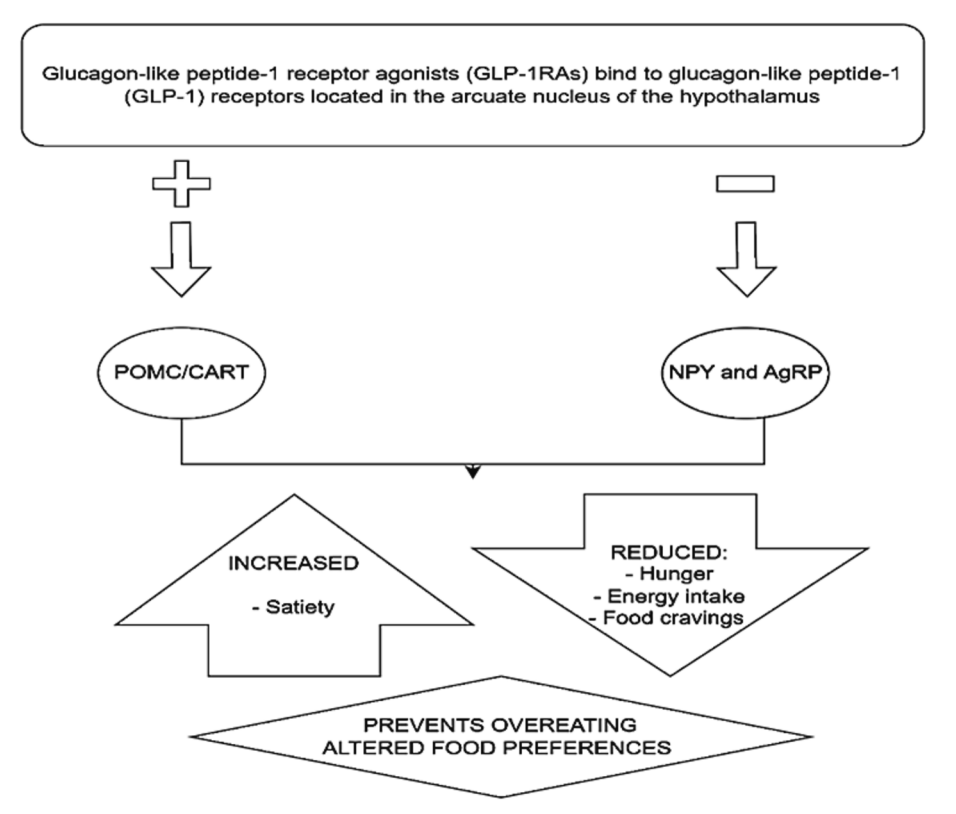
#GLP1 receptor agonists (liraglutide and dulaglutide) reduce binge eating disorder frequency and comorbidities in addition to favorable psychiatric side effect profile, according to a recent meta-analysis of small pilot studies.
https://t.co/f0UTSiPUhT