A Missouri sheriff's office retaliated against the family of a young boy because they reported that a deputy sexually assaulted him, by Lisa Riordan Seville. 7/8 https://t.co/cxU7KfEu8i
A deep data analysis of misconduct committed by The Baltimore Police Department's District Action Team, which replaced its notorious Gun Trace Task Force, by @notrivia 6/8
https://t.co/8IIAyVdyzT
A reckoning with the many wrongful convictions stemming from David Simon's famed "murder police" in Baltimore, by @larabazelon 5/8 https://t.co/hsEHkuVUH2
A rogue detective in Raleigh, North Carolina who planted drugs on Black residents and the widespread destruction of his long reign in the city, by @Sean_Kev 4/8 https://t.co/oEMis0gFtB
The radicalization of Silicon Valley, the emergence of San Francisco doomerism, the 2022 recall of San Francisco DA Chesa Boudin, and the rise of David Sacks, by @SilvermanJacob. 3/8 https://t.co/LYx7BZsnnF
News: @garrisonproj will fold its operations into @deepsouthtoday, a nonprofit network of local newsrooms that includes Mississippi Today and Verite News. Enormous thanks to all of my reporters and a 🧵of some of their stories. 1/8
https://t.co/TOVWv8pI2d
New: Homicides are way down in Baltimore—there were 333 homicides in 2022 and 201 in 2024—and clearance rates are rising. But an analysis of 20 years of Baltimore Police data by @notrivia finds that arrests for murder have remained flat for years.
My latest for @baltbeat: Pretrial defendants make up the vast majority of Maryland's jail population, a figure that has gone UP since 2017's "bail reform" effort. Why haven't state leaders solved the problem? https://t.co/26VXLz5lSC
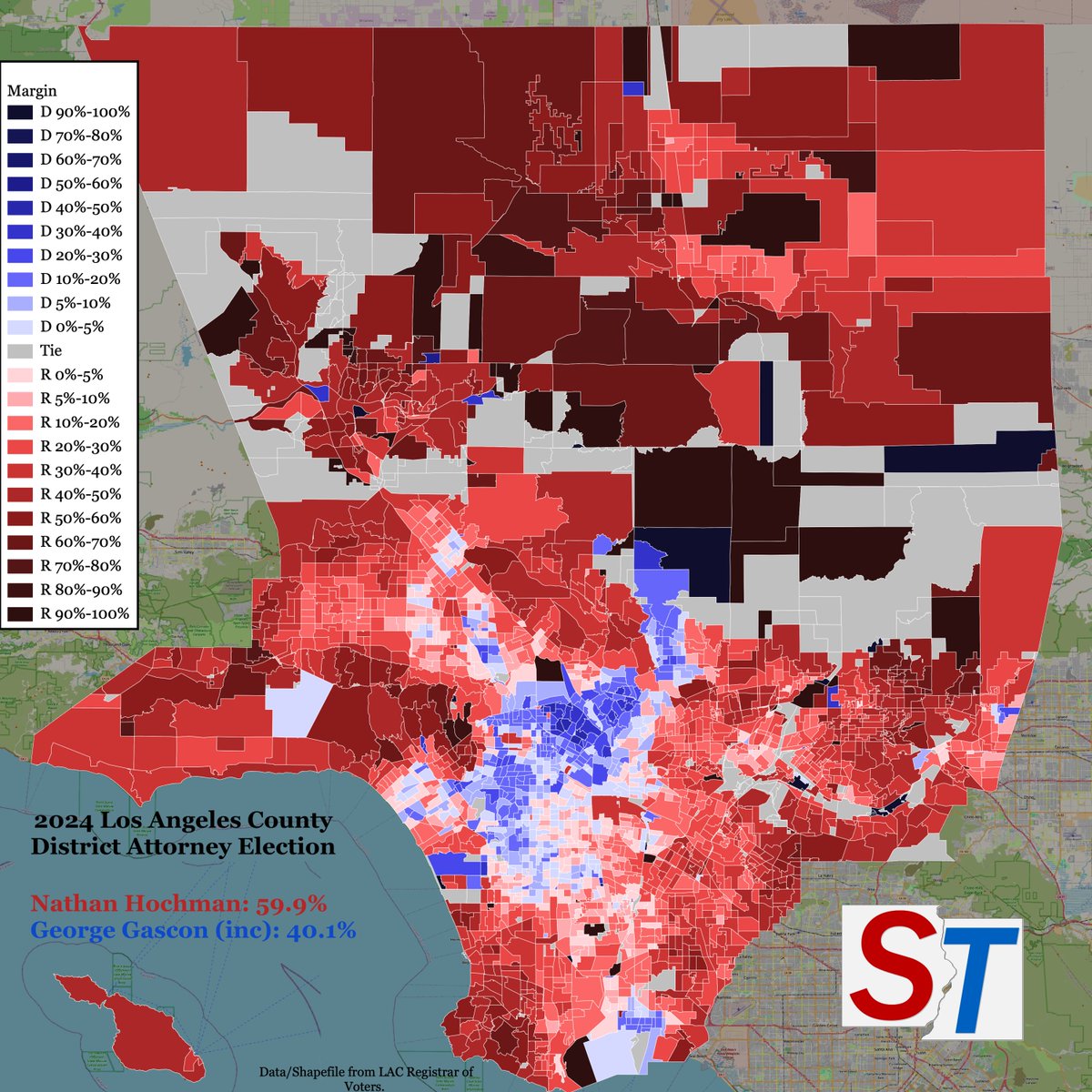
Our latest @SplitTicket_ work, from @Thorongil16 and @ethanbrown72, breaks down where & why they win and lose, and where their votes come from (mostly the poorer inner city and progressive whites).
https://t.co/vZz8rs8jFp
This was a mixed year for reform prosecutors. They got some key wins, like in FL/MI, but then had a really ugly loss in Los Angeles.
It's a coalition that mirrors what people thought Bernie's would look like, obviously. It's progressive whites *and* the inner-city aligning.
Criminal justice reform is just a difficult issue for Dems/progressives. The public immediately defaults to preferring tough-on-crime when there’s any rise in crime, and there’s not really a big constituency for reform. Walking the tightrope isn’t easy, although it is possible
The crime-as-vibes analysis from pundits is particularly problematic as facts on the ground have shifted so dramatically: a 30-plus percent decline in homicides in Oakland, a nearly 40 percent decline in New Orleans, a nearly 40 percent decline in Philadelphia. 5/5
Reporting also largely excludes people affected by crime or criminal justice reform policies. "The actual subjects of policy do not matter," Pfaff writes, "This, in turn, implies that reforms have only downsides, and that we should only fear them." 4/5
Their perceptions of crime are shaped by the media which covered the pandemic increases in crime, but barely touched recent data from the Major City Chiefs Association suggesting we're on pace for a historic drop in homicide rates for the second year in row. 3/5
Because crime is densely concentrated geographically and among certain people, when Ezra Klein says on Pod Save America “talk to some people who live near you" about crime, the people he’s referring to are those whose lives are *least* likely to be affected by crime. 2/5
New: post-election, Democratic pundits and podcasters say that fact-checking concerns about crime is a fool's errand because the politics of crime are all about vibes. But as John Pfaff writes, the vibes are coming from somewhere: the media. 1/5