@kapilyadav_1 @RoryWalshe @petemcgowran The Kosi floods serve as a good case study. Flood was not a disaster to the locals as it helped in their agricultural livelihood, but to developers because it interfered with railway expansion. Consequently, the river was jacketed, and benign floods turned into complex disasters
A sad example in Philippines, as documented by @davepetley landslide blog, of multi-hazards, perception & dynamic risk. The focus on one type of hazard cascade (heavy rain-> storm surge) meant not being aware of another type (heavy rain->mudslide).
https://t.co/j60XidsmHp
For our recent #CommonGround event, the @SHEAR_SSC prepared these 3-minute videos to provide a snapshot of their incredible work.
Here, @gaurabsagar tells us about his research on transboundary impacts of #earlywarningsystems and their cultural context.
https://t.co/bE79YiQnXG
A video on @kclgeography#risk Analysis, #disaster & #resilience (RADR) MSc programme @KingsCollegeLon. Prospective students & interested people please do take a look & share widely. Geography dept. in the ❤ of #London may be the place for you.
https://t.co/R8uEsOZClt
2 conclusions from the @SHEAR_Programme on #floodearlywarning systems: there is a need to strengthen the creation of meaning vs simply convincing and there is also a need to understand how the local population interprets the information https://t.co/HtlxoxB54O
The glaciers of Everest, the highest mountain in the world, are melting.
This is probably the most severe climate threat to India 🇮🇳 and South Asia. It’s time to act!
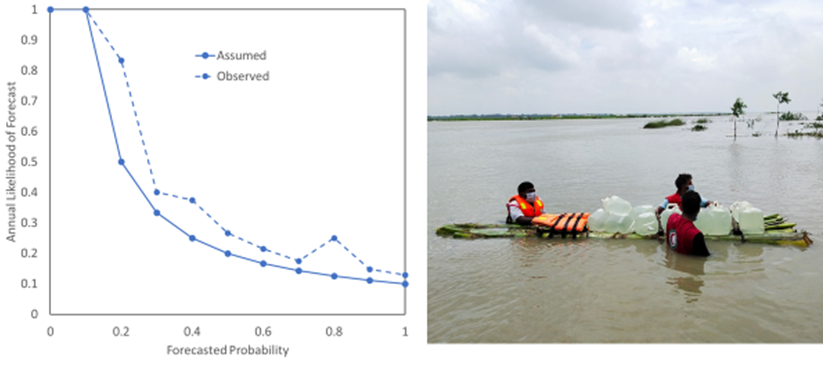
I am advertising a PhD studentship with @CoughlanClimate, @jonny_day & David Brayshaw:
"Modelling the frequency of extreme event forecasts for the management of funds for humanitarian action".
Project includes placements with @RCClimate & @ECMWF.
https://t.co/mgWGl4gVJh
Comprehensive take (to be read all three articles in series) on ‘sorrow’ of Koshi, possible sorrows Saptakoshi High Dam might bring and how it can be avoided by @KanakManiDixit.
https://t.co/VAj8odOlNa