Anthropic launched Claude Fable 5 on June 9.
It was arguably the most capable publicly-available AI model ever created.
72 hours later, the US government ordered it disabled.
Everyone's talking about the Fable drama. But almost nobody sees the real story beneath it.
A thread
Starlink is licensed in over 165 countries and has spent five years complying with every single law and requirement of the government of India, so why still no license?
Is Ambani the real boss of India?
In programming, you always need to understand at least one level of abstraction below the one that you’re working at to become really good at your craft. AI is no different.
In the age of low-level programming languages (e.g., C/C++), if you knew computer architecture, memory management, OS modules, etc.), you would be much better than the average programmer.
In the age of AI coding agents, knowing software architecture, design patterns, etc., makes you much better at agentic engineering than the average vibe coder who speaks in vague prompts.
We'll be spending a lot more time trying to understand the outputs of language models. A few thoughts, tips & tricks:
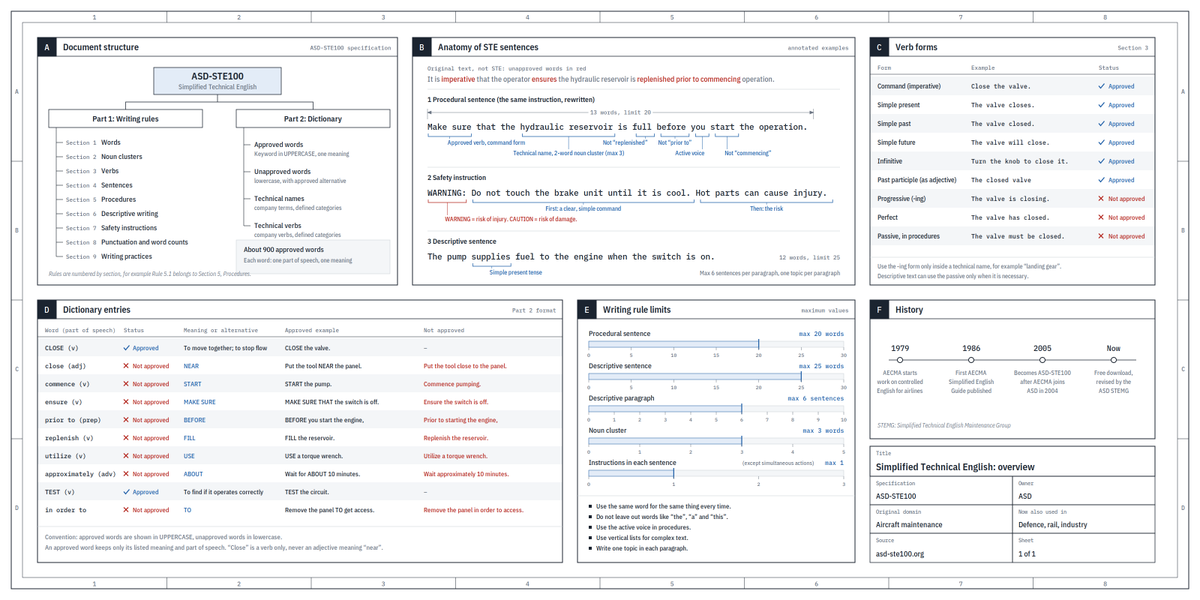
Writing. Something I've had success with: Ask your LLM to explain something in ASD-STE100, it's a controlled language specification originally developed for aerospace maintenance documentation. LLMs well-versed in this language and it comes with heavy constraints on clean writing style that I often find a lot more readable. Sometimes I've tried to soften it a bit e.g. ask for "80% of the way to ASD-STE100" because the spec is quite stringent. But even better:
Diagrams / images. Instead of writing, ask your LLM to create a diagram. These can be a lot easier to process, parse, and understand. But even better:
Web pages. Ask for output "in HTML" to get a beautiful, interactive webpage. LLMs are getting really good at frontend and can create beautiful experiences, animations, etc. But even better:
Explainer videos. The output format I am most bullish on is fully custom / bespoke explainer videos generated on any arbitrary topic. Experiment with things like "Create a 3b1b style video explainer on X. Use my ElevenLabs API key for audio narration". (you'd need an API key for the latter or you can ask your LLM to find you decent free alternatives that use your local compute). This is actually starting to work!
In summary:
- As LLMs get better, they will do more and more of the legwork autonomously, and a lot more of our work will rise up the abstractions into oversight and understanding.
- Luckily, LLMs can help here too because as intelligence and code are increasingly abundant, you can ask for large, custom, discardable software artifacts (e.g. web apps, video explainers) that would have never made sense to create before. Push the boundaries here and you'll be surprised.
For decades, researchers have sought materials that sort electrons by spin while their magnetism cancels.
In 3 days, 90+ Opus 5.5 agents helped us uncover two room-temperature magnetic semiconductor candidates in simulations: YBaMnFeO₅ and KV[Cr(CN)₆].
KV[Cr(CN)₆] was synthesized back in 1999. Its predicted ability to sort electrons by spin appears to have been hiding in plain sight for 27 years.
Reminder:
When Students cheat on Exams — using AI or by any other means — they do so because School Systems value Grades more than Students value Learning.
DHH is probably one of the top software artisans of the past decade. Hearing him speak with this much conviction and transparency about one of the most polarizing topics in software right now, writing code by hand vs. with AI, is something pretty much every software engineer should hear a few times.
Especially those still on the wrong side of history.
Claude has discovered a previously unknown enzyme system hidden in the DNA of bacteriophages. Beside the enzyme’s gene sits a long array of repeating DNA—a structure that looks somewhat similar to CRISPR.
We don’t yet understand what this system does, but only a handful of known systems share its features, and all of them are able to cut, copy, and paste DNA. Historically, the discovery of such programmable systems has helped revolutionize medicine. CRISPR, for instance, is now the foundation of genetic medicines. But it will take much more work to learn what this system does, and whether it can be put to similar use.
Read more: https://t.co/RuEosScSMb





![ValsAI's tweet photo. For decades, researchers have sought materials that sort electrons by spin while their magnetism cancels.
In 3 days, 90+ Opus 5.5 agents helped us uncover two room-temperature magnetic semiconductor candidates in simulations: YBaMnFeO₅ and KV[Cr(CN)₆].
KV[Cr(CN)₆] was synthesized back in 1999. Its predicted ability to sort electrons by spin appears to have been hiding in plain sight for 27 years.](https://pbs.twimg.com/media/HT48hIiaAAAh5CL.jpg)