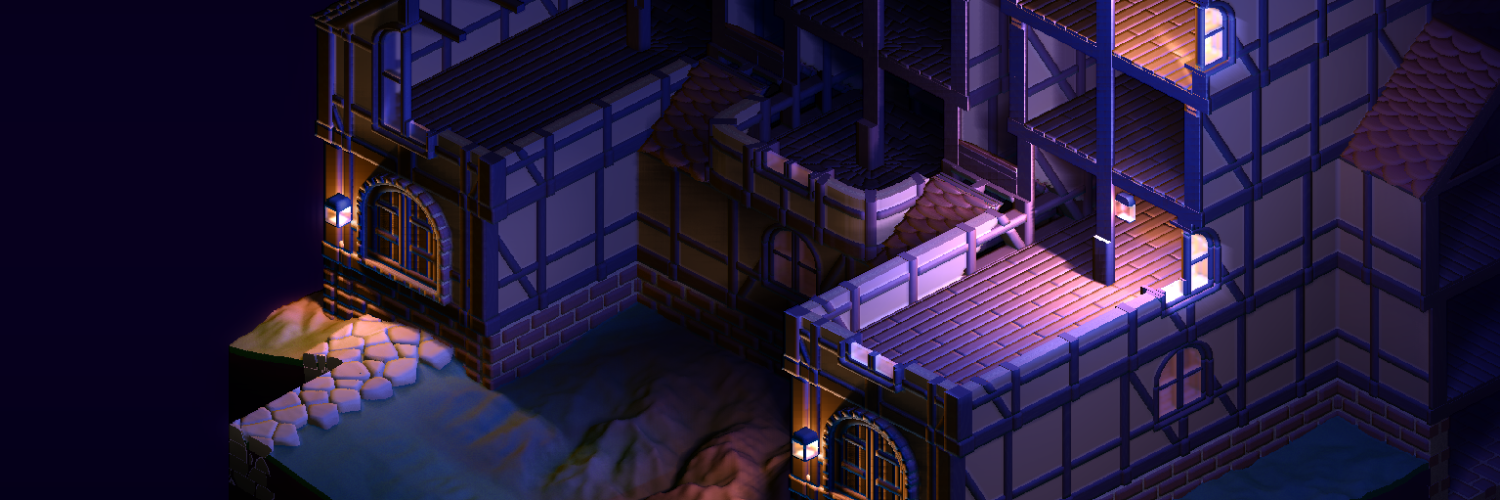
I finally have 1 step / texture read per voxel, much harder than anticipated given all of the (literal) edge cases. Not perfect yet but more exact edges and fewer steps required to get there. This is half as many steps used as any previous video, avg ~2 steps per pixel at 1080p.
Got a first version of the water surface working, including some quick foam that moves with water speed.
This is for the water simulation in my relaxing sandbox building game Island Architect.
Trying a particle-based cloud system, moved by wind velicity, and repelled if too close to another particle (to prevent from degenerating into thin streamlines).
Seems to work, but it quickly reaches a steady state. Need to randomize it a bit.
#indiedev#gamedev#indiegames
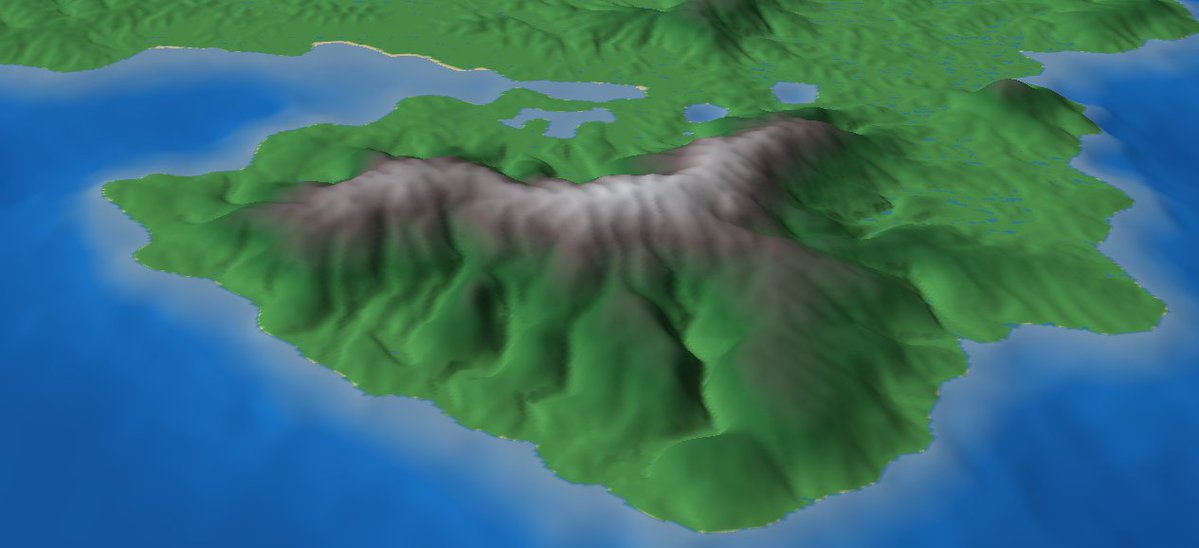
On a NOT Unbound note, here is a spare-time experiment I always wanted to try out:
Making physically plausible and interesting worlds *without* using Perlin noise and *without* using regular grids.
Here is how it works:
@sd_marlow I would pay for it, how much though? That would depend on how much more output actually raised my salary (that might sound selfish, but I don’t know how else to justify it). In that sense, it’s probably more practical if my company pays for it.
There are plenty of valid critiques in the AI war, but thinking that something "is not going to work" is too confident of a take. "Will Smith eating spaghetti" was almost exactly just 3 years ago.
For me (personally) it is already more useful than I ever imagined it would be, but then again I have free, high-tier access to what I assume are expensive tools. The only question in my mind at this point is whether or not it is sustainable. It really depends how much you use it I think. I have similar opinions about (for example) Rust - but I think if I actually used it a lot I would probably become more of an advocate.
Introducing Texel Splatting: Perspective-Stable 3D Pixel Art
open source paper+code
Most 3D pixel art techniques (e.g. t3ssel8r, ProPixelizer) snap pixels to a screen grid, which only works with an orthographic camera
Texel splatting solves this for perspective cameras: first,
Parallax Mapping (Left) vs Parallax Occlusion Mapping (Right) 👀 Which result do you prefer?
Both techniques are explained step by step in The Godot Shaders Bible. Learn more 🔗 https://t.co/qSuueg4Ppk
#GodotEngine#gamedev#indiedev#realtimeVFX
Here's a look at how the mattress physics look using my debug view. A mattress is essentially a 3x5 grid of rigid bodies connected with joints to flex, and then stacked on another grid kinda like 2 pieces of bread, with springs between them for compression
@Jonathan_Blow@wookash_podcast FWIW I was quite skeptical of AI-assisted coding at first. I feel like I ~10x'd at work, but a large part of that is I am working with 1000s of people and its hard to understand everything else they produce quickly. Note that 0.3% of developers are using paid AI tools IIRC.
You can now place lights while digging deep into the ground in my game. The plan is to have lights be a resource that must be conserved.
Given there are no shadows for these lights right now (much less GI), this is already looking better than I was expecting.
[cont]
The Incredible Machine was a solo project by Kevin Ryan, published in 1993. He developed it in about nine months on a shoestring budget, and it became a surprise hit - both critically acclaimed and commercially successful, selling over 800,000 copies (an absurd number for a solo project).
The core concept had players building complex chain-reaction machines using items like bowling balls, cats chasing mice, alligators, blimps, and dynamite to accomplish simple tasks, such as putting a ball in a box. There was always more than one solution, requiring creative and abstract thinking to predict actions and reactions. It was a perfect example of a game that relied heavily on ideas and concept, and less on polished graphics or fast-paced action.