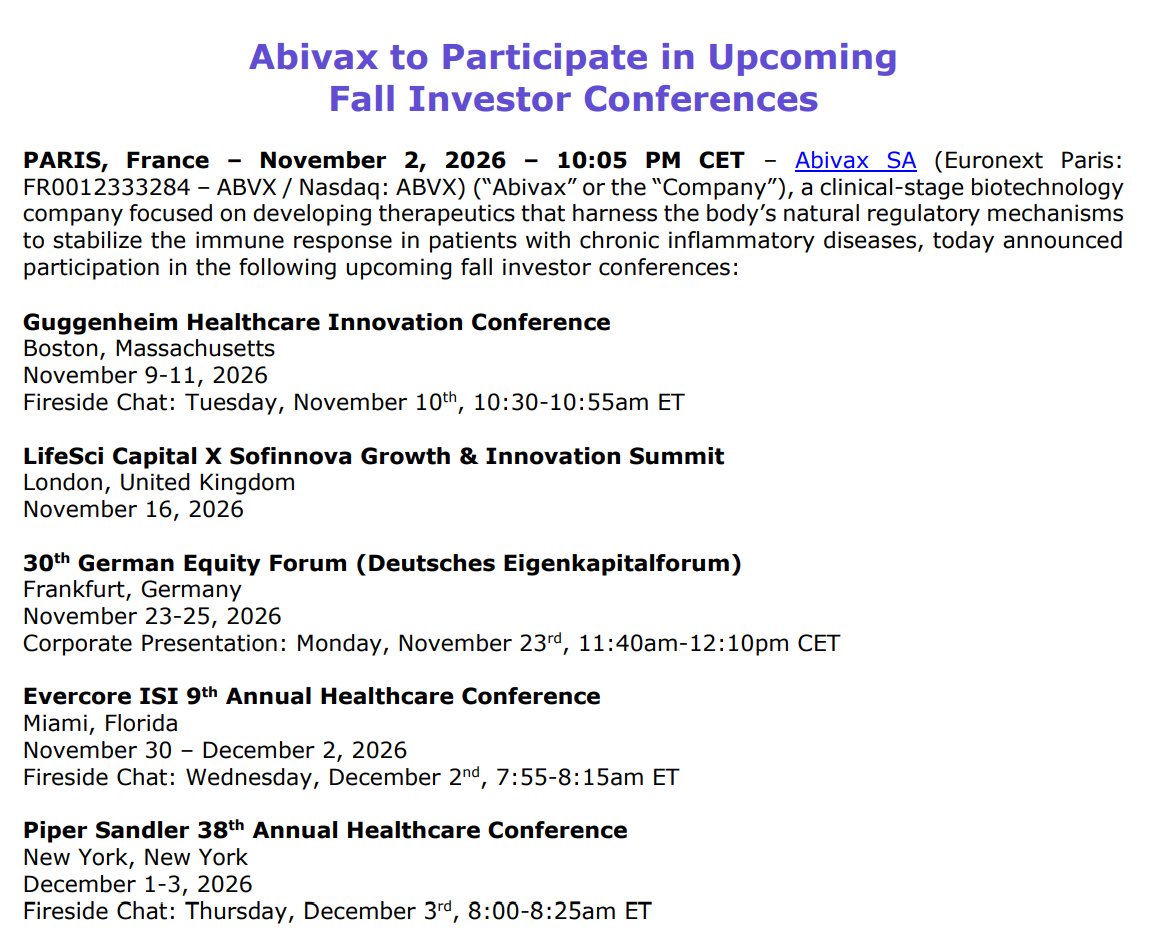
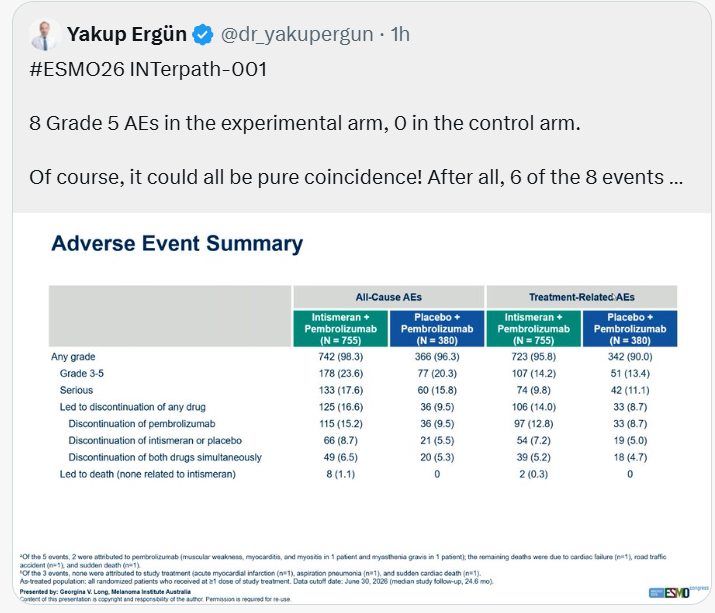
$ABVX In short, the Scorpion folks are smart.They saw firsthand how badly the stock reacted during the malignancy scare.Stock has remained weak ever since and they saw the perfect oppty to capitalize on that lingering fear by doing a short report full of questionable allegations.
@Rayanbiotech I think it would be pretty unwise for interested parties to wait for maintenance data. Induction was great, Ph2 maintenance was even better tells you Ph3 would be good.When BP gets to see to that data,why wait and pay potentially ~Xb more for the same asset?How did that turn out?
@bermudadude Now now... why would you think I was implying that? Are you a mind reader? A 3rd grader could bring up examples in less than 10 seconds where that wasn't the case. You don't have to burn your Claude credits.
@Biohazard3737 I think gene editing as a whole has gotten a bad rap over the past two years due to the number of clinical holds, program halts, safety issues and discontinuations across the space.
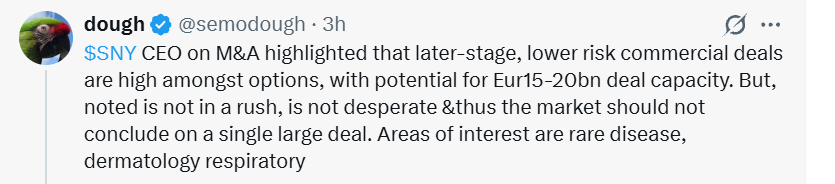
$GILD has already said it sees its own emvistegrast as a potential backbone for future combinations. Today’s HCXT-2001 acquisition reinforces that conviction. $ABVX
Why is this good news for $ABVX? Because, although their data are good all around (essentially tied the current "big gun" drug, Rinvoq on clinical remission in maintenance), the one endpoint that really clearly stands head and shoulders above the competition for Obefazimod is *Endoscopic Remission*.
As noted in the past, there has been growing momentum around emphasizing this ER endpoint in recent years, but the VERDICT data today settle the debate once and for all. Endoscopic remission is what you are targeting when treating a UC patient - period.
Yes, $ABVX basically tied the *prior* final boss of efficacy on clinical remission (with what will be a much cleaner safety label, mind you). But $ABVX wiped the floor with Rinvoq on Endoscopic Remission...*almost* doubling its ER rate on both an absolute and placebo adjusted basis...
Then, the part 2 maintenance data a month later showed us that even patients who DO NOT RESPOND to obe during the first 8 weeks of induction STILL have a HIGHER ENDOSCOPIC REMISSION RATE THAN ANY OTHER DRUG'S ***INDUCTION RESPONDERS*** DO.
Obefazimod *non*-responders end up with higher rates of ER than other drugs' *responders* do after a year of continued treatment at 50mg...This is just an unbelievable outcome.
And as of this morning, this endpoint, Endoscopic remission, will now become the evidence-based de-facto goal of treating UC. Really, this boils down to a very simple question that GI docs will ask themselves...
How can I give my patient the highest probability of achieving the goal of treatment?
Well, there happens to be one drug that seems to be the best at achieving that goal...And it comes as a safe, once-daily pill with durable effect. Why would you start with anything else?
Same goes for payors..."Oh $ABVX can't go it alone because they will have a hard time getting payor coverage without being a big pharma!"
Really? The treatment guidelines are about to be re-written in a way that clinical evidence now directly favors their drug because of *OUTCOMES BASED* clinical trial results showing that patients achieving ER are less likely to have hospital admissions, surgeries, etc than patients achieving just CR. Those "events" cost payors *big* money, and in ways they can't claw any $$$ back like they can with drug rebates.
Getting patients access to drugs that achieve *ER* and not just CR will have not just positive impact on patients' lives, but also on payors' bottom lines...The guidelines here should leave little, if any room for debate on Obe's coverage in light of the data they have generated to date. Highest ER rates ever in the most refractory population ever...The signal is not subtle.
$ABVX management should have significant bargaining power with the real-world results from VERDICT today backing up the importance of ER, precisely where their drug is *the most* differentiated from the competition.