Three common #Ebola myths debunked:
❌ Everyone with Ebola dies.
✅ Many survive, especially with early diagnosis and quality care.
❌ Closing borders stops Ebola.
✅ It can drive travel underground and hinder outbreak control.
❌ Ebola spreads through the air like the flu.
✅ Ebola spreads through direct contact with infected bodily fluids or contaminated materials, not routine airborne transmission.
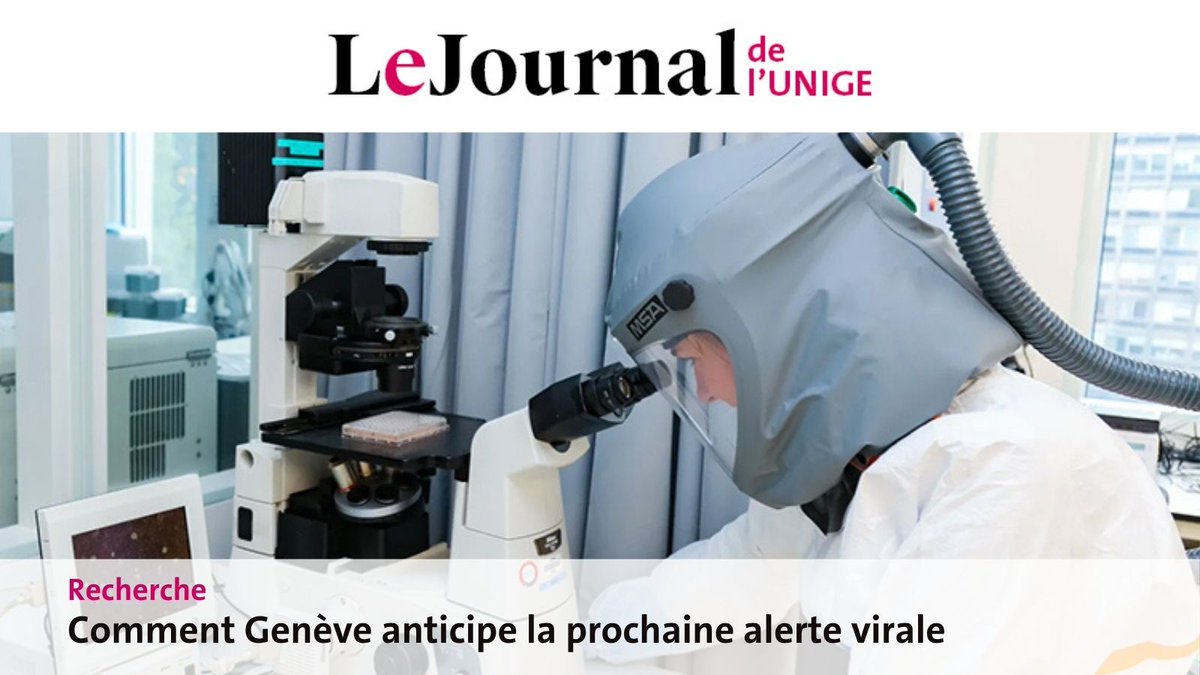
🦠 Mpox, hantavirus, Ebola: face à l’irruption de ces virus, le Centre des maladies virales émergentes des @hug_ge et de l’UNIGE joue un rôle clé dans le diagnostic et la réponse clinique. Créée après l’épidémie d’Ebola de 2014, cette structure fête ses 10 ans alors qu’une nouvelle flambée inquiète tout un continent.
Plus d’informations 🔗 https://t.co/FijbVcRWDK
#santé #virus #epidemie
Five urgent realities in the #Ebola outbreak in the DRC:
1⃣This is not just a virus problem — it’s a health systems crisis.
2⃣Healthcare worker infections are a major warning sign.
3⃣Diagnostics are just as critical as vaccines and therapeutics.
4⃣Community trust determines whether outbreaks are contained.
5⃣The world cannot keep cycling between panic and neglect.
Outbreak control depends on speed, trust, infrastructure, and sustained investment — not just emergency declarations.
Two children of an American Ebola patient look through a window at their father in the isolation ward at the Charite hospital in Berlin, Germany https://t.co/WqXUS2wkcY 📸 Charite Hospital
A lot of misinformation about #Ebola is circulating right now. Key facts:
1️⃣ It spreads through direct contact with bodily fluids from someone who is sick.
2️⃣ People are NOT contagious before symptoms begin.
3️⃣ Early supportive care saves lives.
4️⃣ Travel bans don’t stop outbreaks — surveillance, testing, IPC, and community trust do.
5️⃣ Frontline health workers and affected communities deserve support, not fearmongering.
Public health must be guided by facts not fiction.
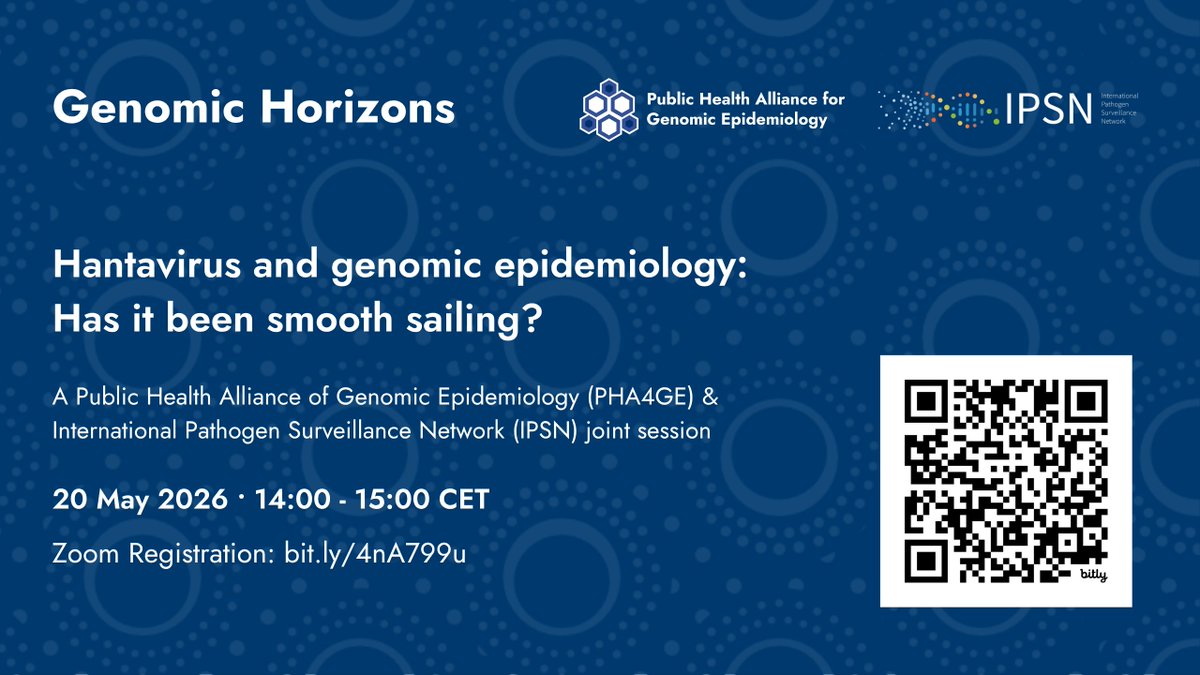
🚨 Hantavirus and genomic epidemiology: Has it been smooth sailing?
Join a special PHA4GE & IPSN webinar exploring how genomics supported the response to the Hantavirus outbreak.
📅 20 May 2026
🕒 14:00 CEST
📍 Zoom
Register: https://t.co/fEKoyu1HzY
#PHA4GE#Hantavirus
There is a LOT going on as researchers and public health experts are racing to respond to the #Ebola Bundibugyo outbreak in DRC and Uganda before it grows bigger.
My story in @ScienceMagazine is here:
https://t.co/aVam5zVDCw
Great to see #DRC post the initial genomes from May 2026 Bundibugyo Virus Disease Outbreak.
It helps improve diagnostics, track transmission, and accelerate development of vaccines and therapeutics.
Transparent, real-time data sharing is essential for outbreak control.
https://t.co/ovQjvgFnv3
The misinformation and disinformation being spread about #Ebola is disrespectful to those exposed, those infected, and those who have lost their lives.
It also undermines the many frontline healthcare workers, laboratorians, epidemiologists, and response teams working tirelessly to contain this outbreak under incredibly difficult conditions.
Outbreaks demand facts, science, compassion, and solidarity, not fearmongering and falsehoods.
The reports of unlinked #Ebola cases in Kampala and a case in Kinshasa are deeply concerning.
Kampala and Kinshasa are densely populated cities with millions of residents and major regional and international transit hubs. Combined with ongoing transmission in mining towns with constant cross-border movement, this creates significant opportunities for further spread if containment efforts are not rapidly intensified.
@emilylmullin@florian_krammer i think the story of CDC and PCR assays for research use only is a warning: complete clinical validation for a rare disease is very difficult. The research use only label has to to with accreditation that diagnostic labs have to abide by @CDCgov
Ebola is no stranger in the Democratic Republic of the Congo, which has seen more than a dozen outbreaks since the virus was first identified there 50 years ago. But a new outbreak announced by the Ministry of Health has raised more red flags than usual.
The ministry says there are already 246 suspected cases, including 80 deaths, in the remote province of Ituri, suggesting the virus spread widely before it was identified.
The virus is a rare species called Ebola Bundibugyo, which standard field tests often miss, and for which no vaccines and therapeutics exist. https://t.co/tr6UIpoKSf
First #hantavirus, now #Ebola.
Two outbreaks in just weeks are reminding us that emerging infectious diseases remain a constant global threat and that the world is still dangerously underprepared.
From surveillance and diagnostics to IPC and global coordination, these outbreaks show why sustained investment in global health and organizations like @WHO matter.
https://t.co/HRy49PMslE
1/ 🚀 Pathoplexus now supports Bundibugyo virus (BDBV), a species of Ebolavirus.
BDBV has been associated with past outbreaks of Ebola in the DR Congo and Uganda, & a case was reported today during response to the current Ebola outbreak.
https://t.co/Us6vffAzD8
#ebola#bdbv
The #DRC has declared a new #Ebola outbreak in Ituri Province, with 13 cases so far confirmed to be caused by the Bundibugyo species. A total of 67 community deaths suspected to be due to Ebola Bundibugyo have been reported.
#Uganda has also reported one Ebola Bundibugyo confirmed death today that is linked to Ituri, DRC.
WHO experts are in Ituri, working side-by-side with DRC health authorities, reinforcing response measures to control the outbreak.
https://t.co/mlHFH3RIoe
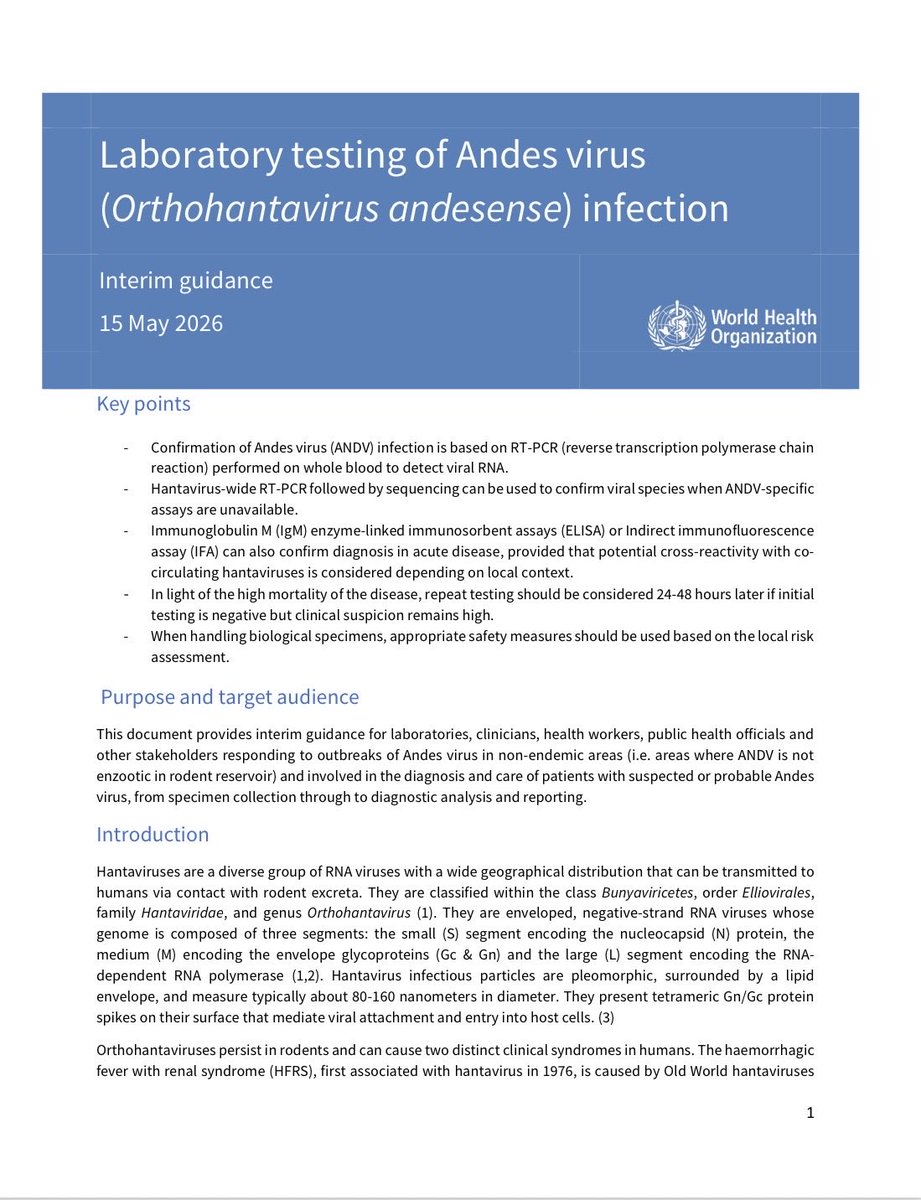
🆕📢 @WHO interim guidance for laboratory testing of Andes virus infection
Critical guidance issued to help countries test & diagnose #hantavirus.
https://t.co/36Pu2Xh4pe
L’@institutpasteur a réalisé le séquençage complet de la souche Andes détectée chez une passagère française du MV Hondius.
Le virus analysé correspond aux souches déjà connues et surveillées en Amérique du Sud. À ce stade, aucun élément ne laisse penser à l’apparition d’un variant susceptible d’être plus transmissible ou plus dangereux.
Ce travail de séquençage nous permet de mieux comprendre le virus et de garantir une surveillance sanitaire étroite.
Les données seront partagées avec la communauté scientifique internationale selon les protocoles en vigueur.