The SwissMech webinar series by the mechanics faculty at @ETH_en and @EPFL_en shows insights into their excellent research. Check out all presentations and recordings from the academic year 2021/2022 on our website: https://t.co/oCp3boFi8S
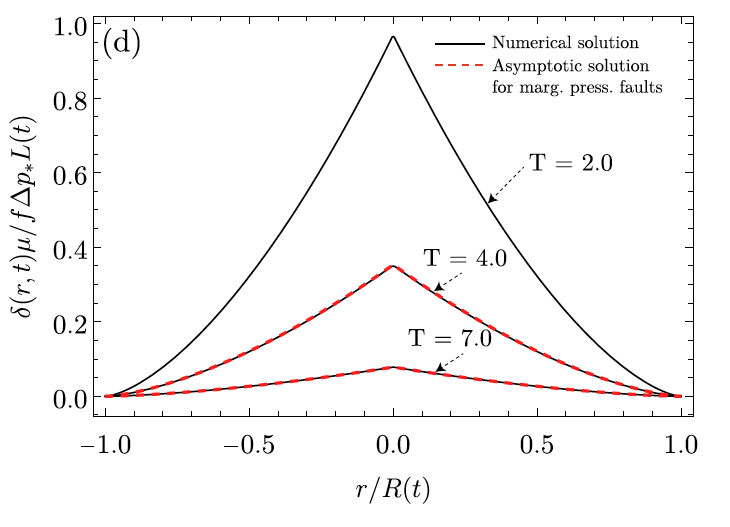
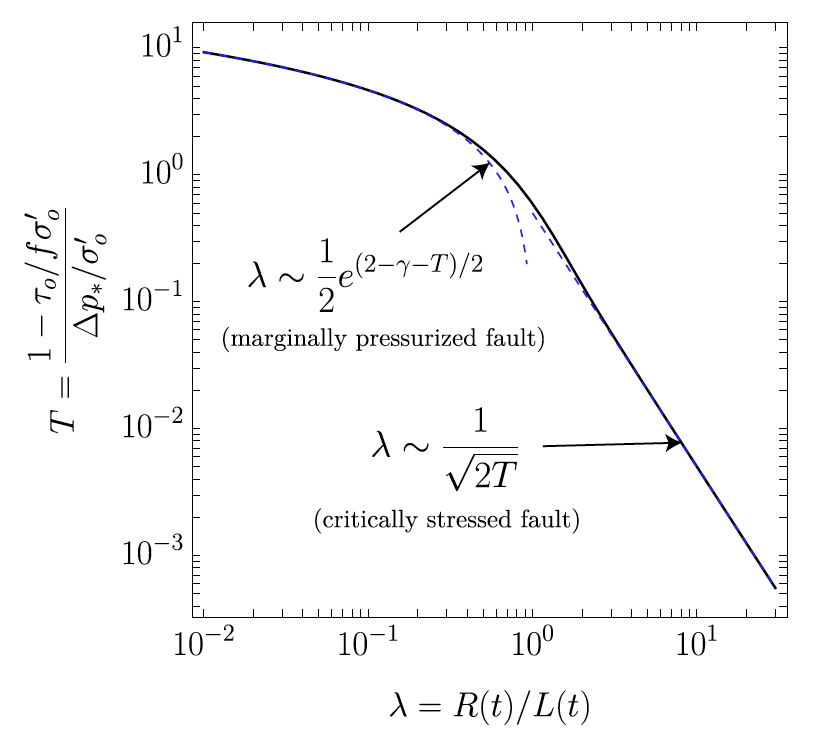
We derive analytical solutions for rupture propagation and slip profiles, and use these solutions to validate a more general numerical solution procedure. 4/n
Interested in how fluids induce fault slip? 1/n
Check out the latest result from a project led by PhD student Alexis Sáez (@EPFL) with @BLecampion and @PathikritBhatt2. #OpenAccess
https://t.co/Ujmm8okrYt
Only two weeks to go till the deadline! Undergrad students from all over the globe, consider applying to our summer research program SRP! https://t.co/5lZvYieMd3
The power‐law rheology should be simply abandoned in hydraulic fracture modeling in favor of models capturing both the small/large shear rates limits. Check out our last paper #nag https://t.co/are4HSryDp
#hf#modeling#fracking#scaling
Do hydraulic fractures stop immediately after the end of injection? No! Under some conditions, significant post-shut-in propagation might occur. Find out the details in our new paper https://t.co/G9sX9iq8x5
#geomechanics#fracture#mechanics#EPFL
@andimoeri @BLecampion
Wondering about the impact of scale dependent #fracture#toughness on the growth of a hydraulic fracture ? check our recent Engineering Fracture Mechanics paper with Dong Liu and Dmitry Garagash https://t.co/EAKTIwUClI
#efm#fracturing#Fracking@gel_epfl
Our paper on "Explicit versus implicit front advancing schemes for the simulation of hydraulic fracture growth" has just been published in Int. J. Numr. Anal. Meth. Geomech. https://t.co/vlxCQEHpaG #nag#geomechanics#hf#hydraulicfracturing