Transcription factors don’t fail in MDS—they’re misdirected.
Today in Blood, we show how loss of STAG2 rewires chromatin accessibility to redirect GATA1 and alter blood cell fate.
https://t.co/zlpMlz1St3
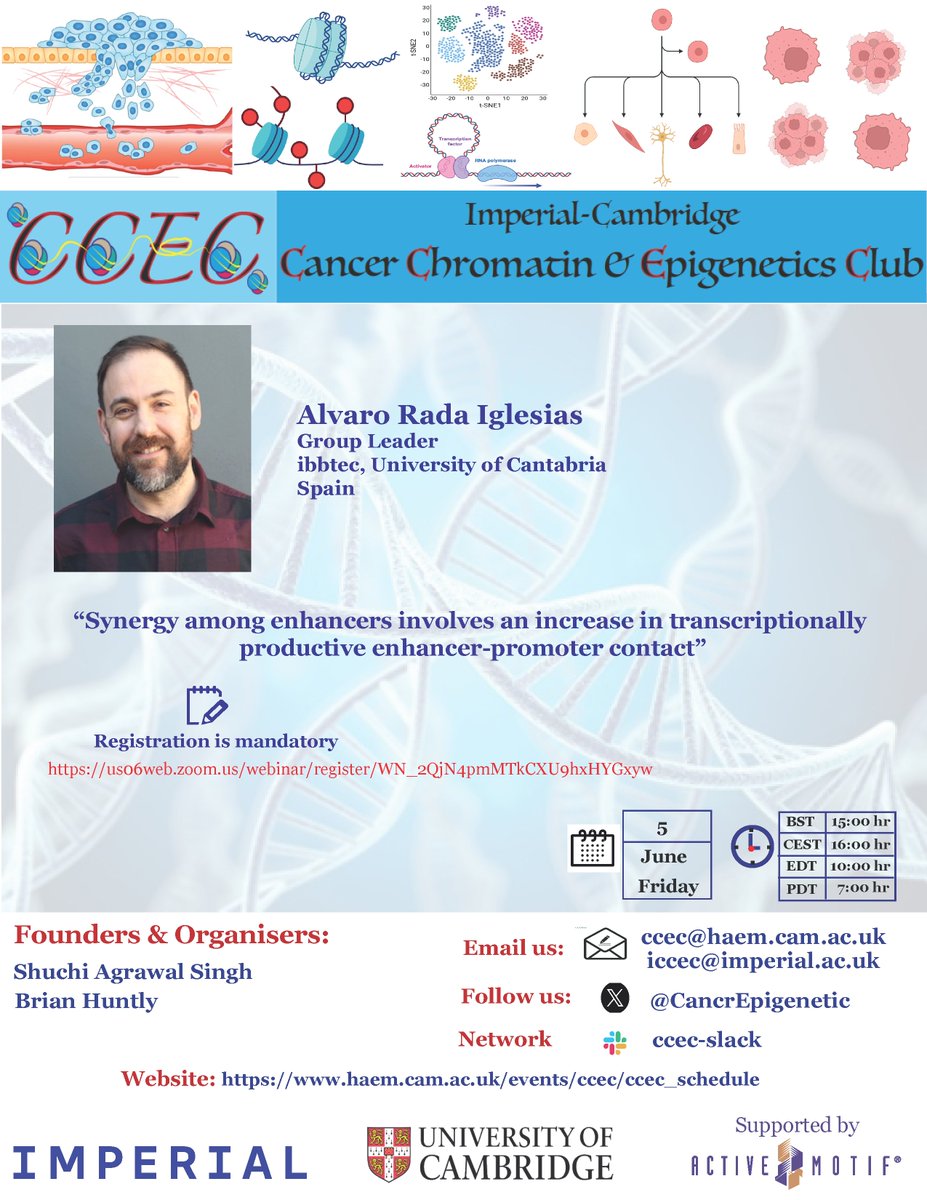
📢Another exciting seminar on CCEC, scheduled on Friday 6thJun@3PM,UKtime with Alvaro Rada Iglesias @IBBTEC Cantabria.
Alvaro will discuss: Enhancer-Promoter contact, a key feature in gene regulation, how and why?? link2join https://t.co/V7gUW5YReJ
@ShuchiChromaBio@activemotif
🧬 💻 We're looking for a motivated postdoctoral associate in computational biology to join Barisic Lab at Weill Cornell Medicine and study chromatin remodeling and 3D genome organization. Please share and apply below: https://t.co/Kr9jQ34BPo
I’ve been serving as a Deputy Editor @ScienceAdvances since last October. In this role, I'll help build and expand submissions at the intersection of AI/machine learning and genomics/computational biology.
Feel free to reach out if you’d like to discuss future submissions.
Exciting new insights on CpG islands (CGIs) regulation by transcription factors (TFs)! CGIs drive most transcription initiation with unclear regulation. We find that chromatin-opening TFs are key players—following a surprisingly simple rule.
https://t.co/mXkDodTALR
1/9
How do transcription factors (TFs) that recognize the same DNA motif end up binding different places in the genome? 🧬
We're excited to show you how we tackle this question in our new bioRxiv pre-print!
https://t.co/rwjTaCekCR
Our paper with Vijay Ramani is out today in @Nature.
We show that chromatin has a richer grammar than simple "open" or "closed" DNA. Using IDLI, we read 14 nucleosome structural states across single chromatin fibers and find that this grammar is actively written by transcription factors.
3D genome architecture underlies health & disease, but its biochemical basis is hard to study at scale. We present Plate-C: a screening platform that profiles thousands of whole-genome 3D maps in a day ($4 each), discovering many pathways that rewire DNA: https://t.co/gC6j0xAbyg
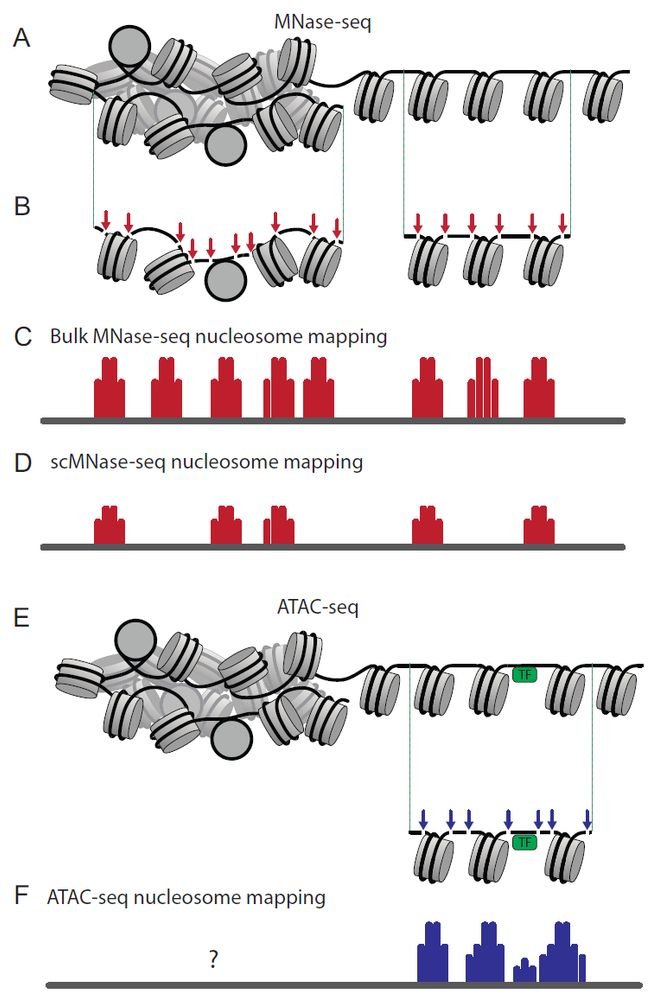
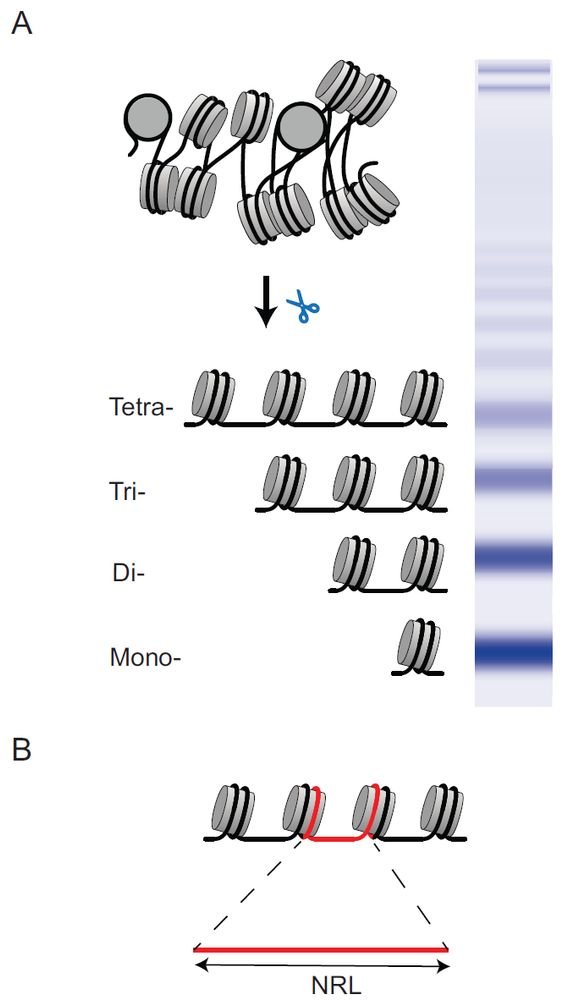
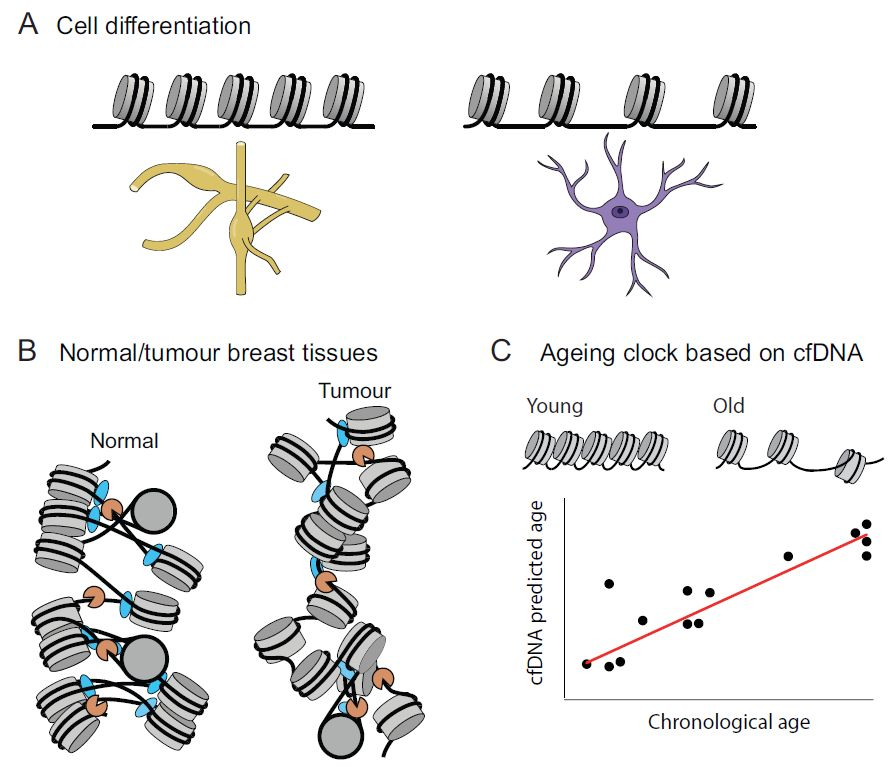
Nucleosome aficionados! Our new review "Nucleosome spacing across cell types, diseases, and ages" is out in NAR: https://t.co/Z1TgEYxBH8
A huge effort to pull together what we’ve learned about nucleosome spacing in many systems. Enjoy!
#nucleosomics#nucleosome#chromatin#cfDNA
ASBMB is debuting its new Transcription Webinar series, aimed at facilitating knowledge exchange and collaboration among researchers in the fields of transcription, chromatin & epigenetics.
➡️Catch the first session on Thursday, Jan. 15. Register now: https://t.co/dvnxb6dWLU.
Great to see that this preprint used our software NucTools to calculate NRL, and reached conclusions confirming our previous paper, which reported effect of linker histones H1 on cfDNA fragmentation patterns and nucleosome spacing in cancer tissues/cfDNA https://t.co/eaPqOWINHN
10% of human transcription factors are oligomeric. Stoichiometry can be dialled to modulate transcription. We show CREB searches DNA mixtures as a dimer, and suggest this might be common amongst other members of the bZIP family which fold on binding DNA.
https://t.co/4UZWB9Odaw
Excited to share our latest study published in Nucleic Acids Research: https://t.co/ZSFQt4DI57
It’s the cover story for Issue #12! We drew inspiration from Greek mythology to illustrate CTCF’s constant struggle in shaping the 3D genome architecture.
@sara_mostafavi (@genentech ) & I (@Stanford) r excited to announce co-advised postdoc positions for candidates with deep expertise in ML for bio (especially sequence to function models, causal perturbational models & single cell models). See details below. Pls RT 1/
We have a postdoctoral opening for a researcher with experience in bioinformatics of DNA sequencing and machine learning to work on the development of new methods for cancer diagnostics related to nucleosomes, chromatin and more https://t.co/7btyVTeDR8. Apply by 21st April 2025!
❤️🔥 Passionate about gene regulation research, wet/dry lab?
🎡 Excited about London's vibrant research and social scene?
🔬 Looking for a funded postdoc position (+ ideally, have the CV & drive to apply for a fellowship in your 1st year)?
Please DM/email me to discuss!
My first, first author paper is now on bioRxiv! 🤩
Linker histone H1 is a liquid-like "glue" condensing chromatin, which revises textbooks! 📖✨
https://t.co/ASW9Vxxhro
Huge thanks to my PI, @kazu_maeshima, for supervision.
Amazing collab with @rcollepardo’s group!" (1/n)