Our diverse ESC work is out! Amazing collaboration with generous colleagues esp @Laura_Reinholdt C Baker @stevemunger G Churchill + more.
https://t.co/kZuhbn2bU8
1/3
New Short Article online now CellStemCell: Mapping the Effects of Genetic Variation on Chromatin State and Gene Expression Reveals Loci That Control Ground State Pluripotency https://t.co/jAqEb69I9o
Interested in doing an genetic experiment with a cutting-edge mouse multiparental population (MPP), but don't know which best suits your needs (e.g., inbred vs outbred)?
Using simulations from real genetic data, I sought to provide some answers and guidelines.
BREAKING via Washington Post:
The FBI found documents in Trump's bedroom, office, and the first-floor storage room at Mar-a-Lago during the Aug. 8 search.
GBRS manuscript is up on bioRxiv. We show how we apply an allele-specific expression (ASE) algorithm to reconstructing individual imputed genomes/transcriptome, and then, to quantifying gene expression.
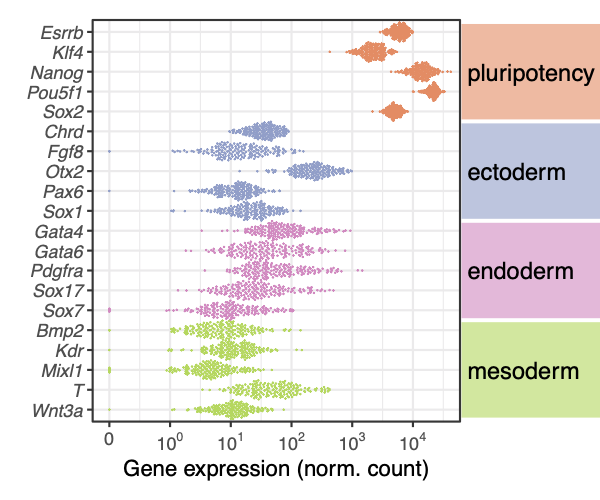
My very favorite visualization -- RNA-Seq of 185 genetically diverse ESC lines:
pluripotency genes = highly expressed (as expected)
lineage markers = lowly expressed
… but check out that variation 🤩!
3/3
Our diverse ESC work is out! Amazing collaboration with generous colleagues esp @Laura_Reinholdt C Baker @stevemunger G Churchill + more.
https://t.co/kZuhbn2bU8
1/3
New Short Article online now CellStemCell: Mapping the Effects of Genetic Variation on Chromatin State and Gene Expression Reveals Loci That Control Ground State Pluripotency https://t.co/jAqEb69I9o
@selcan_t has a great explainer that weaves together this paper with our companion work led by @OrtmannDaniel and @VallierLab
https://t.co/IQ0Vl4FxAv
2/3
Excited to see (and share) the final version of this work with @bryancquach! From the labs of @WilliamValdar, Ivan Rusyn, and Terry Furey.
#PLOSGenetics: Integrative QTL analysis of gene expression and chromatin accessibility identifies multi-tissu ... https://t.co/kueJ1NHsFO
THRILLED to share our two NEW computational toolkits called CELLEX and CELLECT for integrating GWAS and scRNA-seq to prioritize etiologic cell-types underlying traits and diseases. Tweetorial 1/12
https://t.co/zL3Xt6lpDW
Our attempt at scRNA-Seq profiling of the heart maximizing both data quality and cellular diversity. Homeostasis and AngII model. Really fun study and collaboration between nearly opposite sides of the globe!
Our latest work to help better understand cellular drivers of cardiac fibrosis and hypertrophy. A fantastic team effort by an excellent group of people from @BakerResearchAu @PAM_latrobe @jacksonlab@genomequant.
https://t.co/ZgjLLgfKDR
[1/n] Multiple bulk RNA-seq studies showed that allelic imbalance (AI) is pretty common. It is subtle in many genes, but sometimes it is extreme as in imprinted or X-inactivated genes. We are curious to see what AI would look like at single-cell resolution.
@fabian_theis@VolkerBergen@falexwolf Fantastic work and really grateful that you have made the code and clear docs easily available -- I have already been using the software pre-preprint!
TT requirement arguably has merit as a shortcut to filtering out unqualified PIs, but I'd push CZI to take the risk of a few unqualified apps in return for engaging with a pool of dynamic pre-TT applicants (assess qualifications using preprints, github, etc). 4/4
Dear @cziscience: love the new #inflammation in disease https://t.co/PgKOV49X6t and other RFAs. But I have to gripe about eligibility criteria (only PIs with TT position). 1/4
The role of #inflammation in health and disease is not well understood. @ChanZuckerberg’s new call for applications will support science teams to collaborate + apply new tools to gain greater insight into inflammatory diseases https://t.co/b33FYpbMEf
Non-TT can be doing great science in an independent capacity (e.g. advanced postdoc or research scientist), may have awesome ideas but lack the resources to bring them to fruition. 3/4