💥 Russia: Amur Gas Chemical Complex, a Russian-Chinese joint venture that was to be one of the largest basic polymer production facilities in the world (2.7 million tons/year), exploded during final pre-starup stage after 7 years of construction.
6,000km from Ukraine.
Rome handed out free grain to 40,000 citizens in 73 BC. By 46 BC, Julius Caesar found 320,000 people lining up for their monthly ration. That eight-fold expansion happened in under three decades, and it shows you how welfare states actually grow.
No Roman senator stood up and announced a plan to addict a third of the city to government bread. It happened incrementally, through political competition. Each magistrate who wanted votes expanded eligibility. Each expansion normalized the next one. The citizen who once considered the dole shameful eventually expected it, then demanded it, then organized politically to protect it.
This is the core mechanism free market thinkers have identified across every era: once you create a transfer program, you create a constituency for that program. Recipients vote. Administrators build careers. Grain merchants who supply the state develop a stake in keeping the contracts flowing. The political economy locks in.
Caesar, to his credit, actually cut the rolls back to 150,000 through verification audits. It was one of his more economically coherent moves, though the Senate still murdered him. His successors quietly let the numbers climb again.
What did the dole require? Massive grain imports from Sicily, Sardinia, and Egypt, organized through state logistics at state expense, funded by taxation and conquest. When the conquest revenue dried up, the obligation remained. Rome had written a check against future military success, and future military success eventually failed to arrive.
The lesson is not complicated. Distribute a benefit and you distribute dependency. Distribute dependency and you distribute political power to whoever controls the distribution. The grain dole didn't weaken Rome overnight, but it made every subsequent reform politically impossible.
27 000 soldats français sont tués en une seule journée. Ce n’est ni Verdun, ni le Chemin des Dames, ni le Débarquement.
C’est le 22 août 1914.
La guerre a commencé 3 semaines plus tôt. Ce matin-là, 5 armées françaises se retrouvent au contact de l’ennemi en même temps, sur 400 km de front, de la Lorraine à la Belgique.
Les hommes montent à l’assaut en pantalon rouge et képi. On les voit venir de très loin.
En face, les mitrailleuses allemandes tirent des centaines de coups par minute, et les canons frappent depuis l’arrière des collines, sans jamais voir leur cible.
Les officiers ordonnent la charge à la baïonnette. Ils partent devant, et tombent les premiers.
Le pire a lieu près d’un village belge des Ardennes qui porte un nom de chanson : Rossignol. En quelques heures, 7 000 Français y sont tués.
À la tombée de la nuit, la journée a coûté 27 000 morts. Autant de soldats français que les 8 années de la guerre d’Algérie. En un jour.
Cette date ne dit pourtant rien à presque personne.
Le jour le plus meurtrier de l’histoire de France n’a ni monument national, ni cérémonie. Il a des cimetières de village, le long de la frontière belge, où l’on compte encore les tombes de ce seul jour d’été.
A Scottish laird threw his sheep onto a beach in 1832 and left them to starve. They are still down there, still eating, and they have since evolved so far into the job that a green field would now poison them.
North Ronaldsay is the last island in Orkney before there is nothing. Three miles long, flat as a table, and windier than is strictly reasonable. The laird wanted the middle of it for cattle and crops, so out went the natives to the shore, which is a decision that reads perfectly well in an estate office and looks somewhat different when you are standing on shingle in February.
To keep them there, the islanders built a drystone dyke round the entire circumference of the island. Thirteen miles, six feet high, laid by hand, no mortar, still standing. It is a Grade A listed structure, so a wall put up to inconvenience sheep now enjoys the same legal protection as Edinburgh Castle.
Nobody expected the flock to make old bones.
They took up kelp.
There are two land mammals on this planet that live on seaweed. One is the marine iguana of the Galápagos, which has never been more than about nine feet from a film crew. The other is a small brown sheep in Orkney that nobody has heard of, working a beach in the dark.
And they did not just get by. They reorganised their entire lives around the tide. They sleep through high water and rise for the ebb, which is two hundred years of tide table written into an animal with no clock and no reason to care. Winter storms tear the kelp off the seabed and dump it up the shore, so while every other flock in Britain is going backwards on hay, the beach sheep are gaining condition in January on a crop nobody planted, watered, ploughed, sprayed or paid a penny for.
Seaweed carries almost no copper. So they evolved to hoover up every atom of it going, and that machinery has no off switch. Put one on ordinary pasture and it keeps taking copper on board at beach rates until the liver packs in. They are the most copper-sensitive mammals known to science, and a field of good Orkney grass is, to a North Ronaldsay, a slow poisoning with a lovely view.
Which leaves the arrangement completely inside out.
The wall was built to keep the sheep off the good ground.
The wall is the only thing keeping them alive.
About 2,500 of them, owned communally by a dozen or so islanders, descended from animals that were on that shore before the Vikings arrived and formed opinions about it. Every winter knocks a few more sections of dyke down. Every summer a handful of people put a few back up. Only one of those lines is heading the right way.
The kelp industry the wall was built to replace collapsed and is gone. The laird is gone. The crops are gone. Most of the islanders are gone.
The sheep he sentenced to death are out there tonight, waiting on the tide, farming the only ground in Britain that gets delivered twice a day by the sea.
In 1954, scientists told Congress the Arctic would melt within 25 to 50 years.
Then 20 years later, in 1974, Time magazine warned we were heading for another ice age.
By the 1990s, when that didn't happen, warming was the returning scare, with Norway's top expert saying the Arctic would be ice-free by 2007. The Centre for Biological Diversity said it would be ice-free by 2012. The BBC said by 2013. Needless to say, they were all wrong. The Arctic sea ice minimum has actually been stable for the past 18 years now.
In 2008, NASA's James Hansen predicted lower Manhattan would be underwater by 2018 due to the burning of fossil fuels.
Back in 1923, scientists claimed Glacier National Park would melt by 1950. Then in 2006, Al Gore said it would be gone by 2020. Yet today, the glaciers are still there, about the same size they were 35 years ago.
Decade after decade, the doomsday dates change. But the climate alarmist script persists.
Pol Pot forced communism onto the Cambodian people, and the results were catastrophic.
The regime abolished private property and money, closed schools, banned religion, and sent entire cities into labor camps.
Scholars estimate that 20%-25% of the population died at the hands of the Khmer Rouge.
@BrotherRasheed Most European countries also have high youth unemployment, which currently sits at 15.5%. They should put more effort into providing jobs for their own people instead of importing cheaper labor.
“Fortunately, the Nazis (the German people) don’t reproduce much. That’s why we rely on immigrants from other countries.”
This is Gregor Gysi, Bundestag president and member of The Left, the modern extension of the GDR socialists.
Believe them when they tell you who they are.
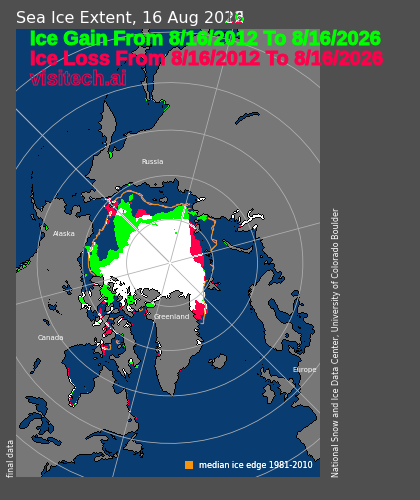
Arctic sea ice extent is 15% higher than it was on this date in 2012, when @GretaThunberg was nine years old
https://t.co/1ECHoogMYE
https://t.co/qx1kea5B2R
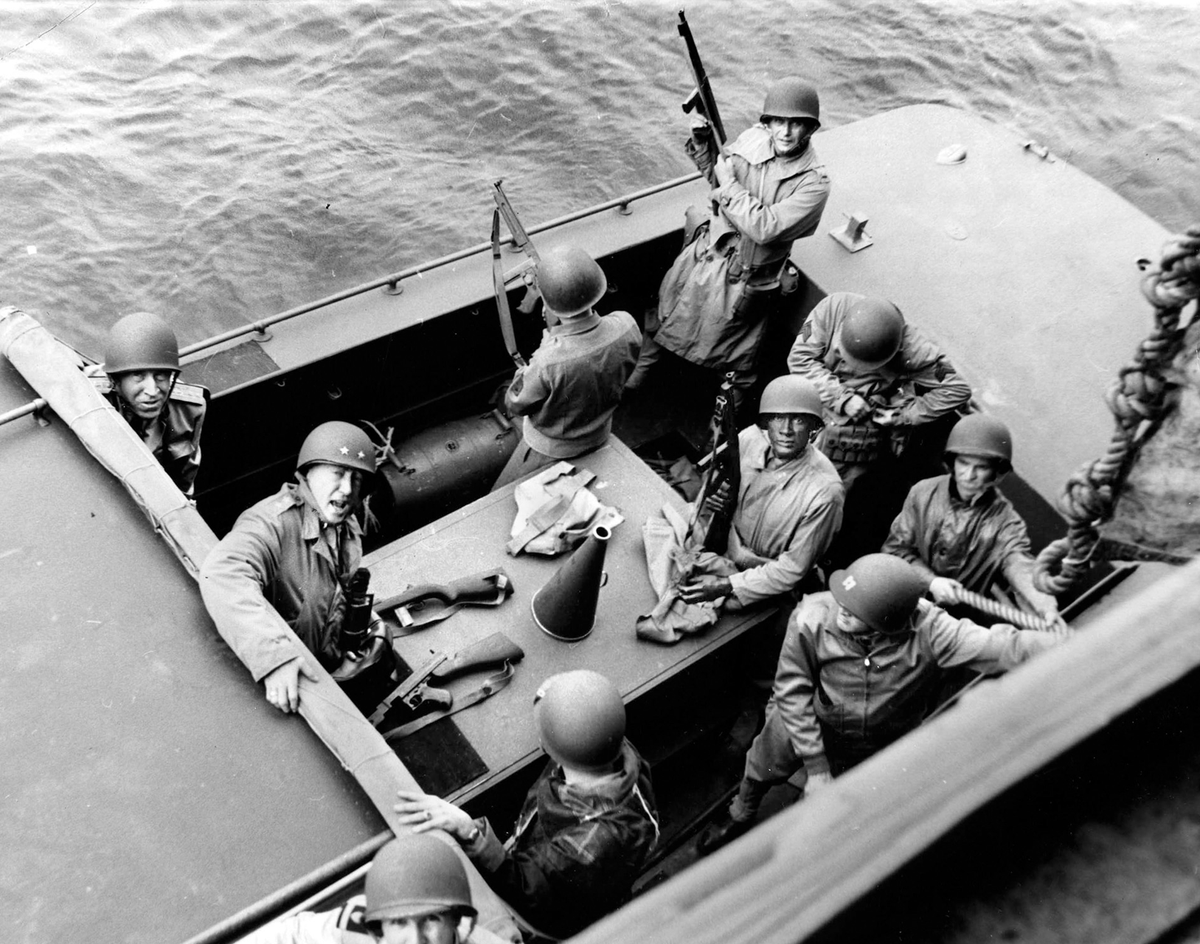
On this day in 1942, while other generals watched from the safety of their ships, Patton climbed into a landing craft and went in with the first waves.
8 November 1942. Operation Torch. Off the coast of Morocco.
Major General George S. Patton sits low in the boat, helmet on, mouth open, already shouting orders. Right behind him is Master Sergeant George Meeks, his personal orderly and one of the few men he truly trusted.
This is not a staged moment. This is Patton on the morning he finally got to fight. He had waited years for this. Now the real war had started, and he refused to stay offshore. Within hours he would be on the beach at Fedala, directing traffic, cursing delays, and pushing his Western Task Force inland.
The general who would later drive the Third Army across France began exactly like this: wet, angry, and already too far forward!
Follow for more.
The BBC says it will review its climate coverage, not because it suddenly found integrity, but because it got caught.
A leaked letter from a former standards advisor accused executives of ignoring "widespread evidence of skewed reporting."
The BBC has skewed the truth for years to push a political agenda. It claimed human CO2 made US heatwaves 35 times more likely. It said wildfires were exploding because of climate change. And it sold Net Zero as an economic miracle while hiding the costs.
These are all falsehoods with the data, in many cases, showing the exact opposite. And when challenged, the BBC quietly edited, deleted or buried the evidence.
Even the regulator Ofcom ordered entire climate programs be pulled for dishonesty.
This isn't journalism, it's propaganda.
But the public is cottoning on, and switching off.
In the past two years alone, roughly a million UK households have stopped paying the BBC license fee.
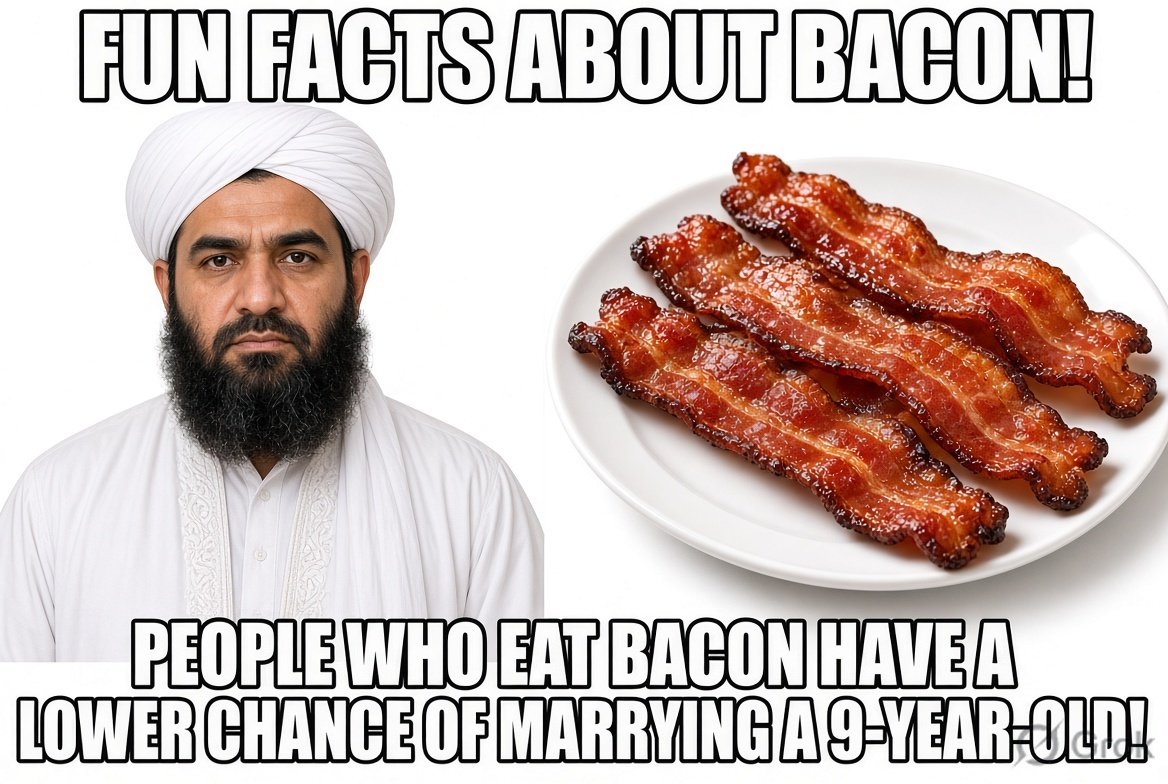
🚨NEWS: Posting this meme in the United Kingdom is now illegal
Stephen Gray, a 65 year old man from Durham, UK has just been found guilty in a court of law for posting this online
You can literally insult any religion in the UK except one
Is the UK an Islamic state now?
Most people never read about the pogroms against the Greek Christians of Constantinople carried out by Muslim Turks that took place in 1955, just 70 years ago. These events took place roughly 30 years after the Greek-Armenian-Assyrian genocide, which was motivated by both religious and racial hatred. By then, the goal was to completely erase every remaining Greek element from Asia Minor.
Their next target was the once-Greek Constantinople. It was a warm September evening in 1955, in the heart of Constantinople, a city still echoing with the ghosts of its Greek-Byzantine past.
The Greek community was already marginalized by years of discriminatory policies, felt the weight of suspicion. After the fall of Constantinople, thousands were slaughtered, but they tried to keep the flame alive. But, on September 6 (1955), a false report spread like a spark in dry grass: a bomb had allegedly damaged the Turkish consulate in Thessaloniki, near the house where Mustafa Kemal was born.
The bombing was a staged provocation, orchestrated by Turkish authorities to incite rage. By dusk, Constantinople was a tinderbox. Mobs, organized and armed with clubs, knives, and gasoline, poured into the streets, targeting Greek homes, businesses, and churches. The government’s role was clear; lists of Greek properties had been prepared in advance, and the police stood by, complicit or indifferent. It was all staged. A plan with only one purpose. To murder innocent Greek Christians that were living peacefully in the land of their ancestors, in the City that was built by their fathers.
A crowd, chanting Kemalist slogans just like the days of the Genocide of 1922, smashes windows, looting everything; shelves, ovens, even family photos. The mob moves with precision, targeting Greek-owned properties. Churches, like the Zoodochos Pigi in Balat, are desecrated; holy icons are shattered, and altars burned. The Greek cemetery in Şişli is vandalized, graves defiled in an orgy of destruction.
4,348 Greek businesses, 110 hotels, 27 pharmacies, 23 schools, and 73 churches were damaged or destroyed.
Many Greeks were killed, hundreds injured and numerous women assaulted. The mobs, often transported from outside Constantinople, carried out their rampage over two days, September 6–7, leaving the Greek community in ruins.
The pogrom was a death knell. Many lost everything; homes, livelihoods, security. Greeks of Constantinople were reducing over time already after the fall in 1453. But that was the final hit.
The exodus of Greeks from Turkey, reduced the community of over 250.000 to fewer than 2.000 today.
As dawn broke on September 7, Constantinople became "Istanbul".
The last Greeks, descendants of those who found the City, who built the city, who defended the City, who had history in this City, were expelled from their ancestral homeland.
Streets were littered with broken glass and shattered dreams. The Greek community, a cornerstone of the city’s history, was left to pick up the pieces.
That was, the anti-Greek "Istanbul pogrom" that took place on 6–7 September 1955.
These events are fresh in our memories.
How can we forget all the thing they did to us?
They came and they expelled Greeks from their homes, their ancestral lands.
Constantinople, Asia Minor, Cappadocia, Pontus, Cyprus, Ionia. We will never forget, everything they did to us.
We will never coexist with them.
Homer Pavlos
The chunky wood butcher block in 1980s kitchens disappeared because of a government recommendation that had zero science behind it.
In the early 90s, food microbiologist Dean Cliver asked the USDA for the evidence behind their advice to ditch wood for plastic. They admitted they had none. So he ran the test himself.
He contaminated wood and plastic boards with E. coli, Salmonella, and Listeria. Three minutes later, 99.9% of the bacteria on the wood was dead. The wood's pores pull bacteria beneath the surface, where they can't survive.
Plastic went the other way. Left overnight at room temperature, the bacteria multiplied. And knife-scarred plastic was nearly impossible to sanitize, even in a dishwasher. Every cut creates a groove where bacteria hide from your sponge.
The thickness wasn't decoration either. Those blocks were end grain, wood fibers standing vertical, so the knife slides between fibers instead of cutting across them and the surface heals itself. That construction only holds together as a thick slab. Slice it thin and it cracks.
Cliver repeated the results across nine hardwoods, maple to walnut. Same outcome every time.
The butcher block was self-sanitizing and built to outlive the house. America threw it out for the board that grows bacteria overnight.
@Planter5657@ChrisCl23903611@VoicesofWW2 Do you know that it was France and the UK that declared war on Germany? Not the opposite? Hitler was only interested in the East.