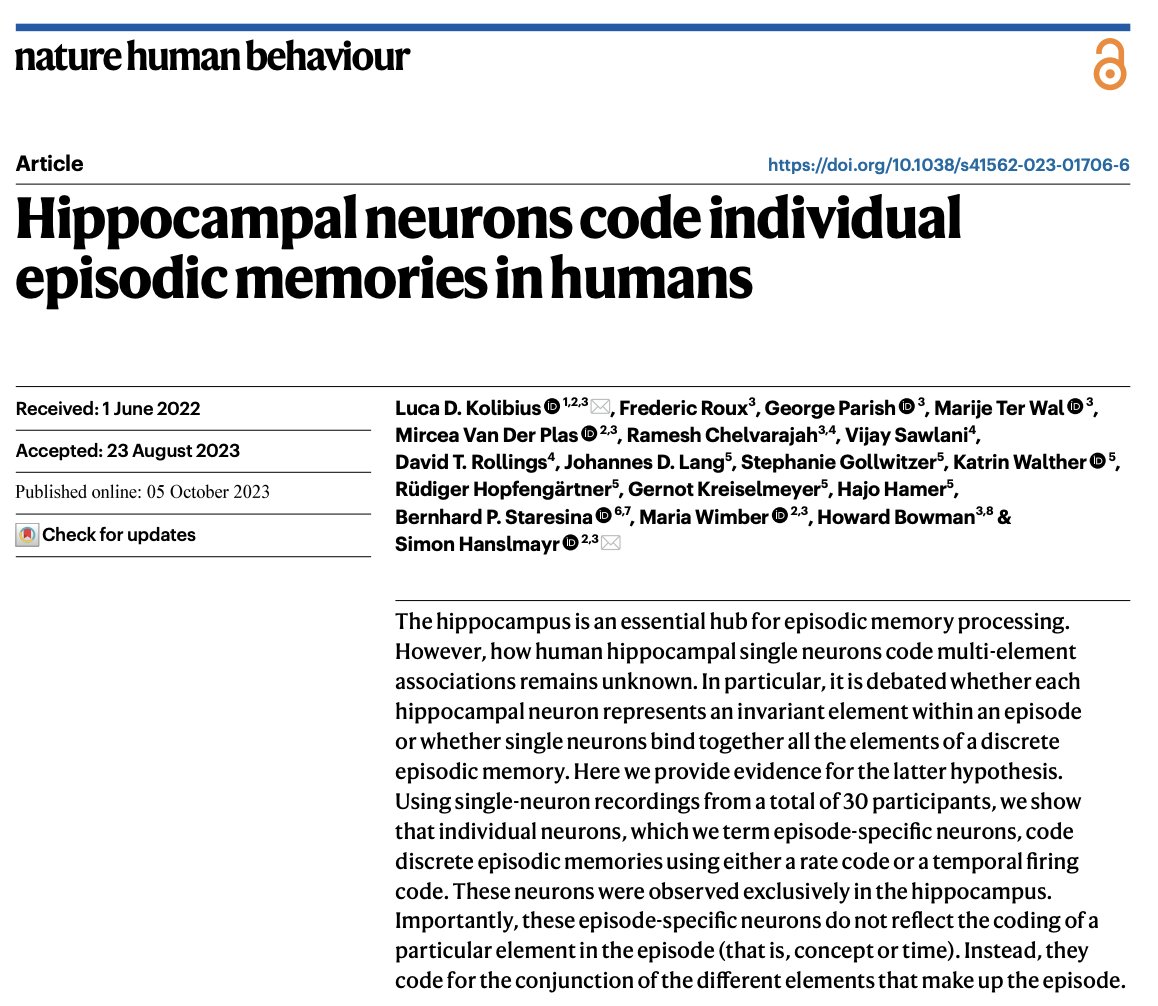
Just published! 🥁
Hippocampal neurons reinstate specific episodic memories in humans. These Episode Specific Neurons are independent of Concept Neurons or Time Cells and code the conjunction of elements that make up the event.
Check it out here:
https://t.co/TEqPaS29s1
There is tremendous risk in repeatedly analyzing data as it comes in…
For example, in the absence of any effect, the p-values of repeated t-tests on a growing dataset will randomly walk between 1 and 0!
Thanks to @lakens for inspiring this simulation!
#RStats#dataviz
Ever wondered whether spike-timing-dependent plasticity (STDP) plays a role in human episodic memory? In our new preprint we @Kimron_Shapiro & @SimonHanslmayr present behavioural evidence in a human episodic memory experiment that is consistent with STDP. Here’s how we did it:
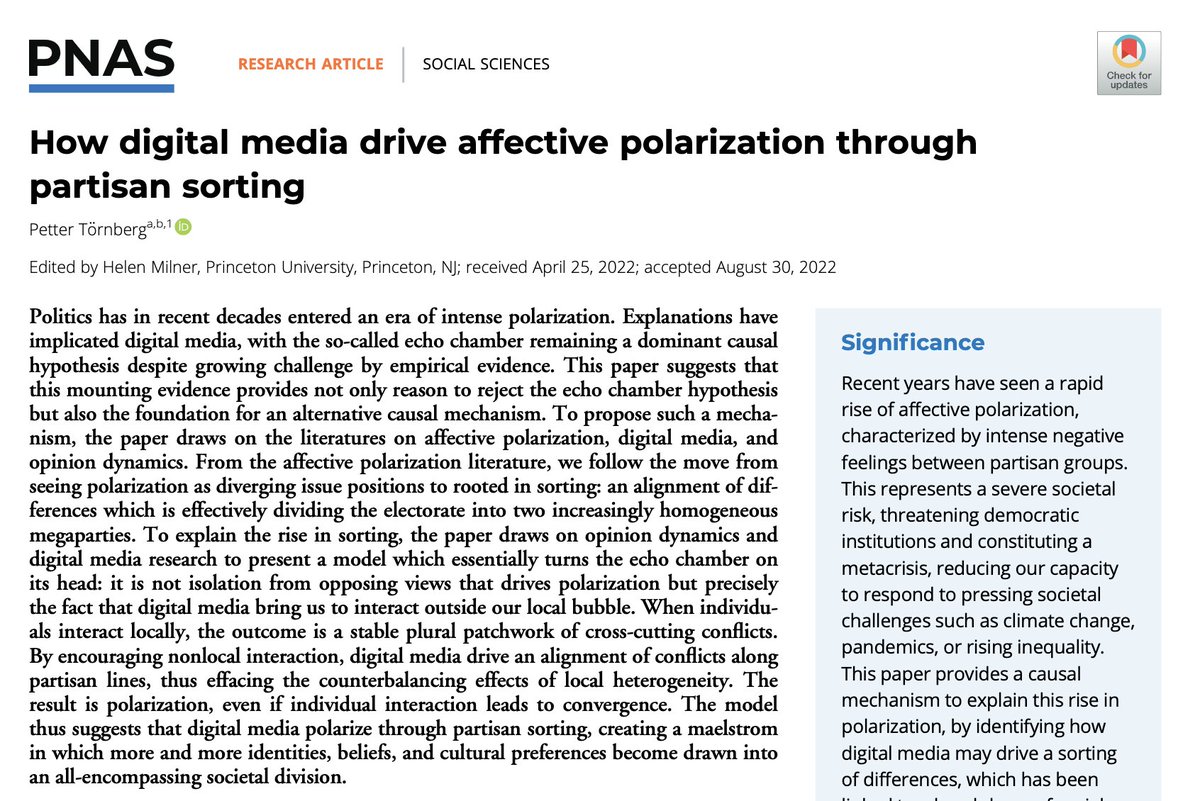
Social media has been broadly linked to intensifying political polarization.
But why would social media drive polarization?
My new paper in PNAS suggests that the reason might not be what you think... 🧵
https://t.co/TYmzN8jsg2
Ever wonder how spontaneous rhythms of cognition interact with temporal structure in the environment? This preprint is for you! And 🎉 Congrats to Leah Snapiri 🎉 on putting out the first paper from her exciting PhD work!
https://t.co/xCcr6rYhgc
What’s the Best Way to Soothe a Crying Baby?
Using the "transport response" method of carrying a crying baby for a few minutes and then sitting with the child helps reduce crying and heart rate.
#babies#neuroscience#science
https://t.co/7d4ZybScMU
Scientists have developed tattoos that change color in response to glucose, albumin, and pH levels. The new tech could let people with diabetes or kidney disease track and control their health without having to take frequent blood samples. https://t.co/WTuwxRWudm
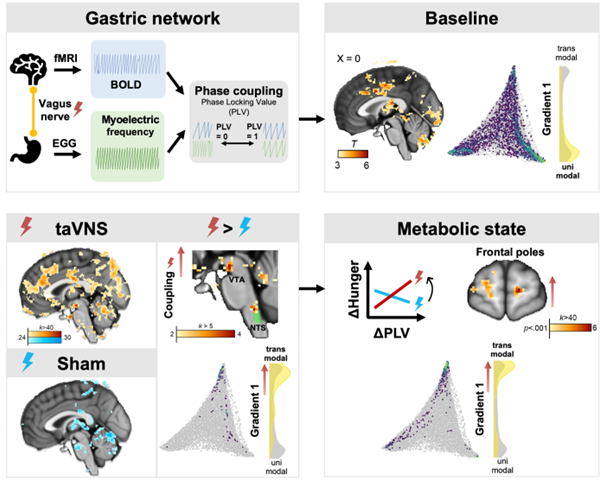
Out now @brainstimj: Can we use brain stimulation to target the gut-brain axis?
We show that non-invasive stimulation of vagal afferents increases stomach-brain coupling.
Led by @revivaciously, w/ @glassybrain & @BrainAndStomach
https://t.co/BOlpUNMRH5
The dominant intellectual current in AI research today is the belief that we can (and soon will) create human-level AI without having to understand how the mind works (and without even having a proper definition of intelligence), through pure behaviorism and gradient descent.
"Eye-contact affects synchronization between brains more than within brains, demonstrating that eye-contact is an inherently social signal."
—Social synchronization of brain activity increases during eye-contact https://t.co/7Y0oS3ySHj Congrats to @caroluft, @Ioanna_Zioga_ & al!
I'll present my poster 'Unifying STDP and theta-phase-dependent synaptic plasticity in a computational model to explain theta-dependent memory effects in humans and animals' with @GeorgeMParish@Kimron_Shapiro and @SimonHanslmayr#SfNConnectome21 P340.04 today at 11 am EST.
For anyone that might be interested in an artistic phone case or pair of socks, prints of my colourised sketches are now available through my Redbubble store!
https://t.co/FqPaibxFNr
#artistsontwitter#artist
Did you know that our brains, pupils, gaze and heart rate synchronize with other people when we watch videos? But why? And which signals should or should not synchronize?
We test a new theory on 150+ people, with @lucas_c_parra. Out in @PNASNexus: https://t.co/FRaemJEGwt
1/13