Our CEO pitched SubTrack to @Jason live at @LAUNCH Startup Tune-Up.
Rapid-fire ping-pong on paid acquisition, then the gut-punch lesson: having users vs. the doggedness to GO ACQUIRE paying customers.
Ranked us #1. Called him a "credible founder." 🔥
Full video 👇
Sent out our latest investor update today.
A couple months ago we had one paying customer. Today we're at 3 paying companies, 11 seats, and over $750k worth of real construction work has been logged through SubTrack.
The biggest milestone was seeing a pilot customer expand usage and roll SubTrack out across their earthworks operations. Watching something we built get used every day on real jobs has been incredibly rewarding.
Still a long way to go, but it's exciting to see the early signs that we're solving a problem worth solving.
Huge thanks to our customers, supporters, and everyone who has provided feedback along the way. Every conversation has made the product better.
Back to shipping. 🚀
#FieldOperations #startups #TimeandMaterial #Earthworks #saas #ConTech #contractor #webapp #OilandGas #ConstructionTech #Equipment
We landed a major contractor.
Over the last 5 days, more than $50,000 of real production Time & Material tickets have flowed through SubTrack.
Heavy usage exposes things that demos never will. Different approval chains, client requirements, integrations, and edge cases all show up when real work starts moving.
The good news? We caught issues early, adapted quickly, and kept production tickets moving.
Nothing teaches you faster than real customers doing real work.
Onward.
People ask me: "How is @subtrackinc safe from being duplicated?"
I've been trying to come up with a one-liner to explain it. Here it is: the business logic is built into the application. And once someone has their system inside SubTrack and realizes the time it saves, they won't want to switch.
But it's so much deeper than that.
You can't Google what I know. You can't ask ChatGPT for it either. You earn it in the field. Years of revising LEMs, renaming PDFs, recombining PDFs, just to get them declined again. Hundreds of edge cases across the time and materials space. Every stakeholder, every scenario, every time.
That experience is baked into every product decision I make. My team pushes back on those decisions constantly, which I welcome. But I can always point to a specific scenario from the field that explains exactly why the software needs to work the way it does.
I know how the foreman thinks when he's under pressure. I know how the PM thinks when they're getting heat from the client. I know how engineers think. I know how subcontractors think. I can run the simulation in my head before we write a single line of code. I know how much leeway the software needs to give people. I know where it needs to do the work for them.
From small contractors to large organizations, the foundations are the same. But the software needs to adapt to that scale. Software should work for the foreman and the PM, not the other way around.
The business logic isn't just in the application. It's in the decade of scar tissue behind it.
My real answer? Good luck.
Last week, @subtrackinc passed $100,000 in processed LEM tickets.🚀
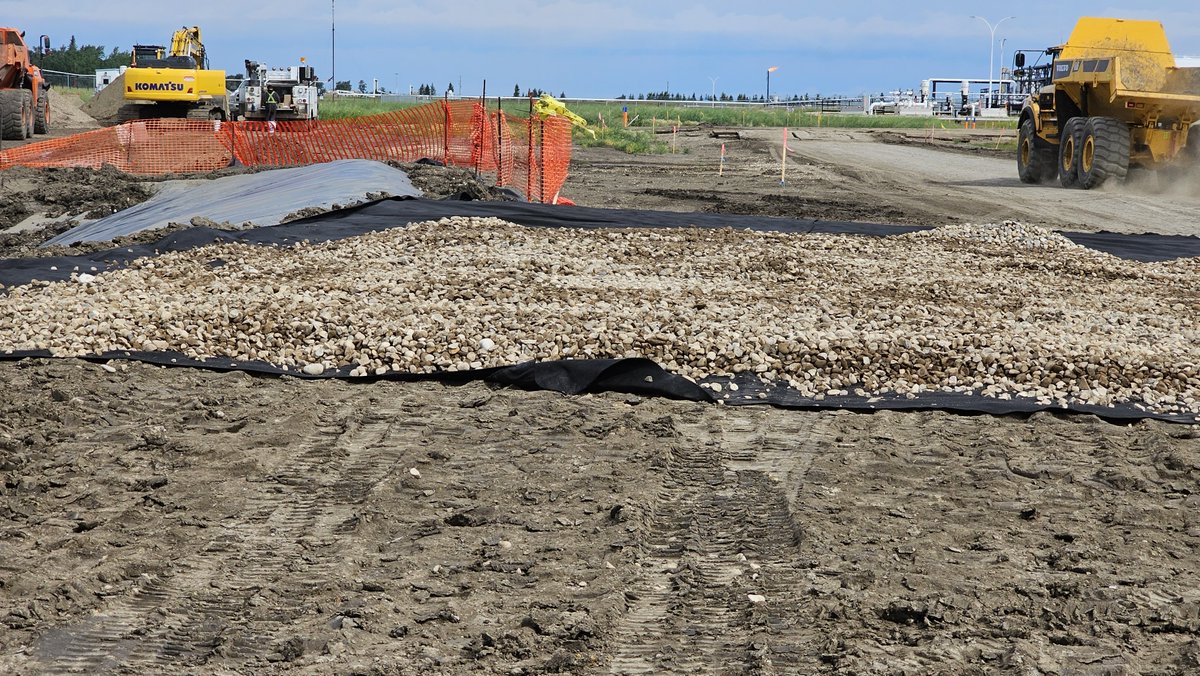
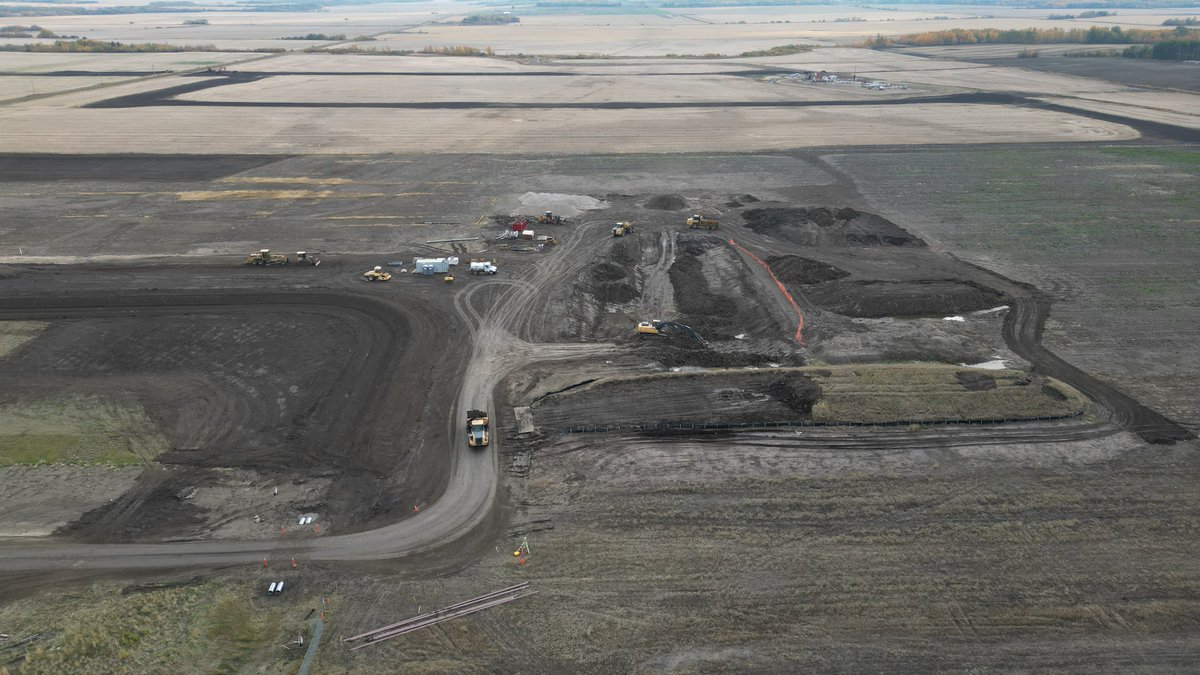
This is all real work. Just construction projects over the last few weeks:
A triple six-day water break repair in a small town in Northern Alberta (~$50,000)
Heavy snow removal throughout the winter season
Seasonal sewer backups and emergency callouts
Digging inside a school for a commercial job
Fire hydrant replacement
Early flooding prevention: ditch cleaning and culvert flushing
We’ve been working closely with a small group of pilot users through all of it.
Weekly calls.
Late-night feedback.
Real input from the field and the office.
That’s led to practical changes in the product:
Larger text for visibility in the field
More control over LEM status before approvals
Faster editing for equipment and materials
Cleaner client and contact linking
Warnings to prevent losing unsaved tickets
The feedback has been consistent:
It saves time. Every day.
In the field and in the office.
Enjoy pictures we received from our users!
#FieldOperations #Earthworks #TimeandMaterial #ConTech #webapp #OilandGas #ConstructionTech #Equipment
A contractor I spoke with today had $7,000 cut from a $14,000 invoice.
The project manager who rejected the hours was sitting in an office about 500 km away from the job.
Here is what actually happened.
A commercial plumbing contractor had been brought in from out of town to install a sump system inside a school. They needed someone local to handle the excavation.
Digging inside a building is not like open cut work outside. Normally that means hand digging. Shovels, pickaxes, and wheelbarrows through hallways.
The water and sewer contractor proposed a different approach. Use a Hydrovac. The method was discussed and agreed on before the job started.
They showed up properly equipped. Hydrovac truck, a compact mini excavator that could fit through the doors, and electric wheelbarrows for moving material. The mini excavator had a concrete breaker to handle the slab. They even ran an exhaust tube outside so equipment could operate safely indoors.
The job ran four long days. Ten to twelve hour shifts. The sump was excavated properly and the plumbing crew was able to move ahead with their install. The foreman on site was happy with the work.
Then the invoice landed in the office.
The PM looked at the number and rejected roughly half the hours.
Anyone who runs Hydrovac equipment knows the math. Fuel, operators, transport, maintenance, insurance. Add the excavator, the breaker, and the crew. Cutting half the invoice would barely cover the hard costs.
The contractor went straight to the plumbing foreman who had been on site the entire time. He saw the work. He saw the hours. He saw the equipment running. So he went back to his own PM and pushed back.
The hours were real. The work was done.
The reason it was easy to prove is that this contractor was using @subtrackinc The lifecycle of the ticket had been captured as the work happened. Hours logged in the field. Equipment recorded. Daily progress documented. Foreman approvals tracked.
No debate. Just the record of what happened.
The invoice got paid in full.
This is the LEM to invoice gap.
The work happens in the field. The approval happens in the office. Somewhere in between, the context disappears.
Contractors rarely lose money on the job.
They lose it between the field and the invoice.
How often do you see this happen on T&M work?
#FieldOperations #Earthworks #TimeandMaterial #webapp #OilandGas #ConTech #ConstructionTech #Equipment
Here's a scenario that happens every single week in construction and almost nobody talks about it.
Your crew works Monday to Saturday. By Thursday, two of your guys have hit 40 hours. Friday, they're on overtime. Payroll knows this, payroll calculates it, payroll pays it.
But your T&M billing? Your LEM sheets? They have no idea. Because your payroll system and your time-and-material tracking are completely separate. The foreman fills out the LEM on Friday, enters 8 hours of regular time, submits it. Nobody flags it. The invoice goes to the client at straight time. You just ate the OT difference.
Or worse, the client catches it three weeks later, disputes the whole batch of LEMs, and now you're reconciling a month of timesheets trying to figure out who was on OT, on which project, for which change order.
It gets even messier. A PM with 30+ years in construction told me that payroll rules and billing rules aren't even the same. Some clients say OT kicks in after 10 hours in a day. Your payroll says OT kicks in after 44 hours in a week. Your union agreement says something else. And the foreman in the field is supposed to keep track of all of this on a paper sheet.
How much has this cost you in the past?
#FieldOperations #Earthworks #ConTech #TimeandMaterial #webapp #OilandGas #ConstructionTech #Equipment
A contractor told me his company recently switched to an on-premise server. Not moving to the cloud, moving away from it. Back to a physical server in the office.
The result? Slower performance. More security headaches. Had to bring in third-party security. Extra cost, extra complexity.
Meanwhile, he was perfectly happy on Google Workspace. Everything worked. Accessible from anywhere. His guys in the field could pull up what they needed.
Somebody made a decision (probably for "security" or "control") and now the entire company is dealing with a worse system that costs more and does less. And the field crew is the first to feel it because they're the ones who need access from a jobsite, not from the office where the server lives.
This happens all the time in construction. Technology decisions get made by people who don't understand how the field works. The decision makes sense from a boardroom. It makes zero sense from a muddy jobsite with one bar of cell service.
#FieldOperations #Earthworks #TimeandMaterial #ConTech #OilandGas #ConstructionTech #Equipment #webapp
Think about what a foreman actually does in a day.
He manages 10-30 people. He makes engineering decisions on the fly, rerouting work because the ground conditions aren't what the drawings said, adjusting scope because the client changed their mind at 7am, figuring out how to keep the crew productive when a piece of equipment breaks down. He's the client's main point of contact on site. He handles safety. He resolves conflicts between trades. He sequences work so that the crane crew isn't sitting idle while the pipe crew finishes.
And then at 6pm, after a 12-hour shift, he's supposed to sit down and become a data entry clerk. Fill out timesheets. Calculate hours. Track materials. Write daily reports. Enter it all into an Excel sheet or a paper form that was designed by someone who's never set foot on a jobsite.
Every piece of construction software on the market right now is built for the person sitting at a desk. Project managers get dashboards. Estimators get takeoff tools. Executives get reporting. The foreman, the person doing the most complex job on the entire project, gets a paper form and a pencil.
That's backwards. That's why I started @subtrackinc
#FieldOperations #Earthworks #TimeandMaterial #OilandGas #ConTech #ConstructionTech #Equipment
SubTrack is officially live with self-serve onboarding! We built this platform to take the "burden" out of Time & Material projects, allowing your team to track labor, equipment, and materials from the field in seconds, not hours.
To celebrate our launch, we’re offering a 14-day free trial plus a 20% lifetime discount for a limited time.
Simplify your T&M today:
https://t.co/DKvtrw3ggG
🚨 Sec. Marco Rubio just DROPPED STRAIGHT FIRE right in Europe’s face!
“We in America have NO INTEREST in being polite and orderly caretakers of the west’s MANAGED DECLINE!”