FUN FACT🚨: There are more stars than grains of sand on Earth. Astronomers estimate that there are around 10,000 stars for every grain of sand on Earth.
Let that sink in!
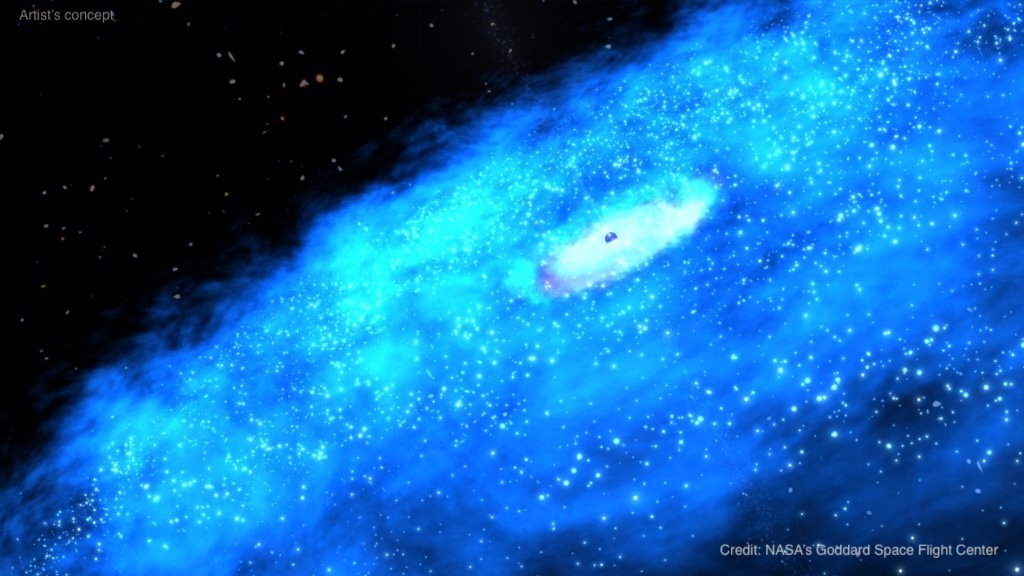
Our friends at @Fermilab are celebrating the 70th anniversary of the first neutrino detection. These zippy particles hurtle through the universe, and @NASA telescopes have been able to help pinpoint and study the cosmic origins of a few of them. #Neutrino70 🧵
🔶 🔷 🔶 #Guatemala | Arqueólogos anunciaron que lograron determinar la identidad de un matemático y astrónomo que en los años 700 dC se dedicó al estudio de los planetas y los números para establecer una fórmula para calcular el tiempo.
El erudito maya que vivió en el siglo VIII fue identificado como Sak Tahn Waak o “Zorro de Pecho Blanco”, según glifos localizados en el sitio arqueológico San Bartolo Xultún, ubicado en el norte de Guatemala y en la frontera con México.
Xultún es reconocido como un yacimiento arqueológico con pirámides, plazas y campos de juego de pelota y está ubicado a unos a 40 kilómetros del mundialmente reconocido parque Tikal, centro de la cultura maya.
Lee más aquí 👇
https://t.co/I98wEwiYSO
Este próximo miércoles 29 de julio a las 19 h, la explanada del Cárcamo de Dolores se convierte en nuestro observatorio sónico. Ven a la #NocheDeMuseos y vive Pepa Flow Bio, experiencia audiovisual única de Pepa Flow Studio y Sr. Crisis que fusiona arte, música ✨☄️ 🌧️
¡Un festival con mucho estilo y cero veneno de aburrimiento! Súmate al Quinto Festival Mexicano de las Serpientes y descubre por qué estos reptiles son los verdaderos guardianes de la naturaleza
📍 Biolaboratorio, Plazoleta
📅 Sábados 11 y 18 de julio
🕛 11 a 16 h
¡Te esperamos!
Wake up, babe! There’s a new planet around Beta Pictoris!
Webb spotted a new giant planet hiding in one of the most studied planetary systems in our galaxy.
https://t.co/WDsrOd2kpA
The Cartwheel Galaxy: A Cosmic Bullseye
Located about 500 million light-years away in the constellation Sculptor, the Cartwheel Galaxy is one of the most breathtaking sights in the known universe.
Its stunning architecture looks like a giant celestial wheel: a bright inner ring, a wide dark gap, and a spectacular outer ring connected by delicate radial spokes. This isn’t how galaxies are supposed to look — and that’s exactly why it’s so extraordinary.
The Aftermath of a Perfect Cosmic Hit
Roughly 200–300 million years ago, a smaller intruder galaxy smashed straight through the heart of what was once an ordinary spiral galaxy. The gravitational shockwave from that direct collision was immense.
Like a stone dropped into a pond, a powerful ring-shaped density wave rippled outward through the galactic disk. As it traveled, it compressed interstellar gas and triggered an explosive wave of star formation. Today, the outer ring — spanning roughly 150,000 light-years across — marks the leading edge of that ancient ripple. It glows vivid blue with the light of thousands of hot, massive young stars born in this cosmic fireworks display.
The inner ring represents the galaxy’s original core, now also bursting with new star formation as the rebounding wave passed back through the center. Delicate radial spokes of gas and stars stretch between the rings like cosmic spokes on a wheel, holding the whole dramatic structure together.
JWST Reveals the Details
In 2022, the James Webb Space Telescope turned its infrared eyes on the Cartwheel and delivered a whole new level of clarity. Webb pierced through obscuring dust to reveal:
Individual star-forming clumps embedded along the entire outer ring
The precise distribution of cosmic dust and ancient stars
Hidden stellar nurseries invisible to previous telescopes
These observations provided stunning visual confirmation of the ring-wave model: the intruder galaxy’s passage didn’t just distort the Cartwheel — it turned it into one of the most efficient star-making machines in the local universe.
The Cartwheel isn’t just a pretty galaxy. It’s a living laboratory showing how one dramatic collision can reshape an entire galaxy and trigger waves of new star birth that ripple across tens of thousands of light-years.
A cosmic masterpiece born from violence — and a spectacular reminder that some of the universe’s most beautiful things begin with a crash. ✨
💫🪐 This Hubble Space Telescope image shows the galaxy cluster MACSJ0717.5+3745.
It is one of the most massive known galaxy clusters and also the largest known gravitational lens.
Close to the outskirts of the Small Magellanic Cloud, a satellite galaxy roughly 200 000 light-years from Earth, lies the young star cluster NGC 602.
(Credit: ESA/Webb, NASA & CSA, P. Zeidler, E. Sabbi, A. Nota, M. Zamani, N. Bartmann)
Un equipo internacional liderado por el Centro de Astrobiología (CAB), centro mixto del Consejo Superior de Investigaciones Científicas (CSIC) y el Instituto Nacional de Técnica Aeroespacial (INTA), ha detectado por primera vez azúcar en el medio interestelar, la región del espacio ubicada entre estrellas dentro de una galaxia.
En concreto se trata de eritrulosa, que en la Tierra se encuentra en las frambuesas y otros frutos rojos o como aditivo en cosméticos bronceadores; y que, en el espacio, se ha hallado en una nube molecular cercana al centro de la Vía Láctea.
Más información en: https://t.co/71Gf2x9xsp