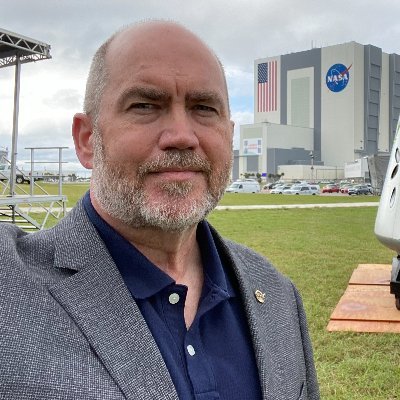
We’re excited to welcome all newly elected members of the House of Representatives to celebrate amid the holy relics of the space age at @airandspace. Our Smithsonian Astrophysical Observatory is donating telescopes to ALL rural schools in the nation and we’re demonstrating them!
We tell young people in our society that end of the rainbow is retirement at 65.
We ought to tell them that "there is going to be this short but beautiful golden window from roughly age 3 to roughly age 12 where your kids are not only easy (comparatively to bottles & diapers), but are going to be these beautiful little creatures and it will pain your heart to be away from them for too long. So, prepare in your 20's, financially and career wise, to build that flexibility into that chapter of your life".
You don't get another shot at living the "golden window". And, for me, leaning hard into that golden window has made everything else in my life feel fairly insignificant in comparison. I have made plenty of mistakes as a father, but what I won't have is the regret of having been distracted and absent from these formative years. In some cases, that has required financial sacrifices (declining a particular career opportunity that would have required relocation), but I personally have zero regrets.
I also hear from some ambitious & successful people with a 4 year old that say "I've lost my ambition, I am so immersed in fatherhood". At least for me, and a number of my friends, it comes back. You can't keep an ambitious person down and if you have the fire, hanging at a playground on too many Tuesday afternoons is going to feel like torture after too long.
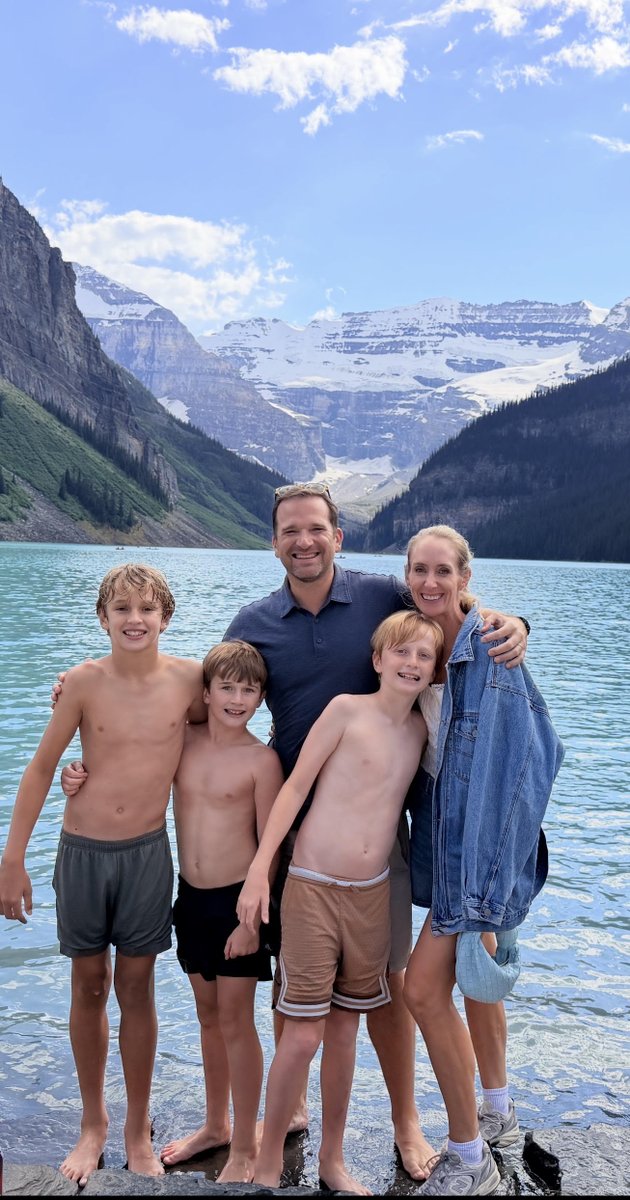
My three boys are approaching 13, 11 & 9, and it's much different than 7, 5 & 3. This summer, for example, they slept until 11am and I hard an unencumbered 6am-12pm to work (being on PT helps), then got another great window 7-11pm, but was able to be present in the heart of the day, then weeks when they were at basketball camp, etc. It gets easier, your time frees up again (there's a sadness to that too), but I'm back to working as intensely as I did pre-kids just because my day to day presence requires fewer hours than it did before (also, my wife is just superbly wonderful). And that is the beautiful gift of entrepreneurship (or at least my sort of business), the ability to deliver still a high level of output but work that around your life rather than the opposite.
TLDR, grind before, and grind after. Prepare for the golden window.
NASA SMD AA Nicky Fox announces "new Competition Model 2.0" -- a "better way to compete" science missions and "accelerate delivery of science." https://t.co/5VXgLKk5aQ
Virtual NASA Science Town Hall on Oct 26 to discuss it.
My biggest takeaways from @Netflix's Chief Product and Technology Officer Elizabeth Stone:
1. Elizabeth believes that “systems thinking” is becoming the most important skill in the AI era. In engineering and product, this means people who can see across business domains and build the common capabilities that let many teams move quickly. In design, it means experience designers who create templates and design systems so that non-designers can ship work that stays coherent and on-brand. The underlying driver is velocity: when more people are doing more types of work at higher speed, you need to be good at building common scaffolding.
2. Systems thinking is learnable: zoom out one level from your specific problem. Given a task, step back one click—what bigger problem does this serve the business, will it scale across the product surface areas, should it become a platform capability? The companion habit: do your job in a way that helps your manager do theirs. This will force you to think about how all the pieces fit together.
3. Expect a storming phase before a forming phase. The role confusion people feel right now (“What is my job anymore?”) is the predictable middle of any transformative technology. Elizabeth’s advice: focus on high-quality source-of-truth data, guardrails on what ships, and constant internal reinforcement that humans own what they create.
4. The top AI labs converged on Netflix’s culture. High agency, high talent density, top-of-market pay, bottom-up thinking, fast experiments—the traits Lenny hears constantly from AI labs were in Netflix’s early culture deck. Elizabeth’s explanation: excellence comes from hiring exceptional people, trusting them to do great work, and holding them accountable.
5. Netflix’s culture is centered around building “excellence as an operating system.” High talent density, radical transparency, context not control, and the keeper’s test. These work together to create an environment of trust and accountability, without bureaucracy. But it’s also uncomfortable. It requires tolerating people making decisions you’d make differently, resisting the reflex to add process when things go wrong, and letting people carry the weight of their own choices. Elizabeth describes the hardest part as “being comfortable in that discomfort.”
6. The keeper’s test is as much about recognizing great people as it is about removing the wrong ones. The test—“If this person told me they were leaving, would I fight to keep them?”—is often cited in its difficult form: the moment you realize someone isn’t the right fit. But Elizabeth uses it predominantly as an entry point for honest performance conversations that are deeply positive. Most of the time the answer is “I would fight so hard to keep you,” which creates the opening to articulate strengths, discuss impact, and name what’s working. Good feedback hygiene needs a forcing function; the keeper’s test provides one.
7. Specialization is trending down—adaptable generalists are trending up. We’re shifting away from narrow stack-layer specialists (pure frontend, pure backend) toward people who can navigate fluidly across layers. The same logic applies to business domain knowledge: the mindset of “I’m a payments expert, full stop” is less valuable than “I know payments well enough and I’m willing to imagine what the future version of this looks like.” The meta-skill is learning to learn, not locking into a single lane.
8. Netflix’s approach to AI fluency is a universal principle, not a level-specific expectation. Rather than rewriting career ladders to specify what AI competence looks like at each level, Netflix added a single aspiration across all roles and levels: AI fluency. What fluency means varies by function and seniority, but the non-negotiable minimum is the same everywhere—an open-minded, experimental mindset, genuine curiosity, and comfort with ambiguity.
could be there Monday to cheer me on, would be warm but firm. He’d probably say, “What the hell are you slowing down for?! Let’s GOOOOO!!!!!!” (10/10)
To help me reach my fundraising goal for the Mental Health Collaborative, you can donate here:
https://t.co/6gBwjUxs5I
The Johnny Kelley statue at the bottom of Heartbreak Hill is one of my favorites. It shows two men—one young and one old—holding hands while crossing a finish line. On the left is Kelley as a 27-year-old winning his first Boston Marathon. And on the right is also Kelley (1/10)
It’s a message that goals are just a means through which we live out our purpose.
A friend asked me recently if I was just going to keep running marathons. Well, yeah, probably. Because it’s not about the finish line. When I run by that statue, I imagine future me, if he (9/10)