Peaceful anarchist.
Interested in criminology, international relations, 20th century history, evolutionary biology/psychology, philosophy and economics.
Reputation matters: a goal of Russian foreign policy circa 2002 was to isolate the Anglo-Americans in their plan to invade Iraq, not allowing them to gain legitimacy, or diffuse responsibility for the likely chaos, among a broader coalition.
https://t.co/bLPXUW1Wbb
Indian international relations scholar Sumantra Maitra on how the United States has never faced an adversary as formidable as China, with much more latent power in relative terms than Imperial Japan, Wilhelmine or Nazi Germany or the Soviet Union.
https://t.co/2K5qVNsQXE
The risk that Iran is covertly pursuing nuclear weapons is higher today than before the US and Israel launched their attacks on the Islamic Republic a year ago, according to western officials who cited new data circulated by the UN https://t.co/iAWmDGX4yX
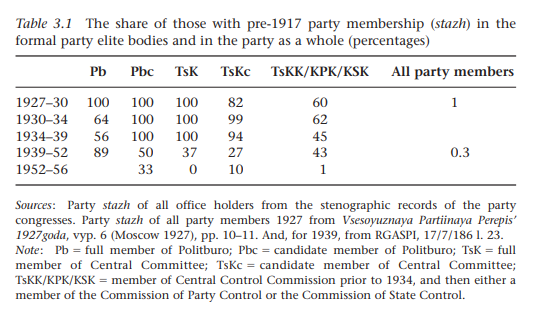
Reinforcing the work of Christian Gerlach on the importance of material self-interest in mass violence, the Soviet Great Purge was partly about denouncing people in coveted jobs and grabbing them, protecting retired Tsarist officers and Old Bolsheviks.
https://t.co/CjvQ6hPWez
"Available research... support the conclusion that a subset of about 20% of active offenders routinely possesses and uses firearms... this group commits all crime at a rate higher than the average incarcerated offender and commits about half of all violent crime."
Most American firearm dealers are small businesses, so there is a risk that future gun control regulation would concentrate sellers by imposing significant fixed costs.
https://t.co/QzxtYGoTvn
@dandolfa@ChrisPhelanEcon I wrote a criticism of the Malthusian model in my blog: https://t.co/TQiaAzilqb
Regarding the data, urbanization is strongly correlated with historical estimates of GDP per capita, and it slowly but surely grew in Europe for a thousand years before the industrial revolution:
It would not be accurate to sharply distinguish between the post-WWI Portuguese military dictatorship and the Estado Novo.
Not only did important figures span both regimes, but Salazar himself said his government was continuous with the officers’.
https://t.co/RBFN0fL39O
@iron_redux Not at all, urbanization is used as a proxy for economic growth by economic historians and today there is a strong relationship between share of GDP being agriculture and poverty.
In most of the USSR in the late Soviet years, the gradual rise of nationalism was not a popular, bottom‑up revival of “suppressed” and "colonized" identities and cultures, but an elite tool and project – of the corrupt nomenklatura and the national intelligentsia. Both were beneficiaries of the Soviet revolution asserting their material interests and symbolic status as the system was degenerating. Georgi Derluguian’s greatest book is all about this dynamic
An interesting 1990s article in Security Studies argues that, in a sense, Thucydides and Machiavelli were *too* moralistic, with the Greek's depiction of hubris and disorder and the Italian's consequentialism as distracting them from scientific work.
https://t.co/I1TCOU0yLO
"Even if realist arguments may appear cynical, non-emotional, and not driven by anything except power calculations, they are generally formulated from a deeper moral understanding of just goals and principles." - Andrei Tsygankov
Revealing speech as to Salazar’s mindset in the waves of reform and revolution of the 1960s: “The purest souls are disquieted, perturbed, do not know how to orient themselves and repeat, anxiously, Pilate’s very question to Christ: ‘What is truth?’”.
@iron_redux He reversed the secularization trend, though the 1960s were almost one long crisis: Goa lost, the African colonies in revolt, Macau under increasing Chinese control, student protests, much of the jailed leadership of the PCP escapes from prison.
https://t.co/cc8Rp02kkN
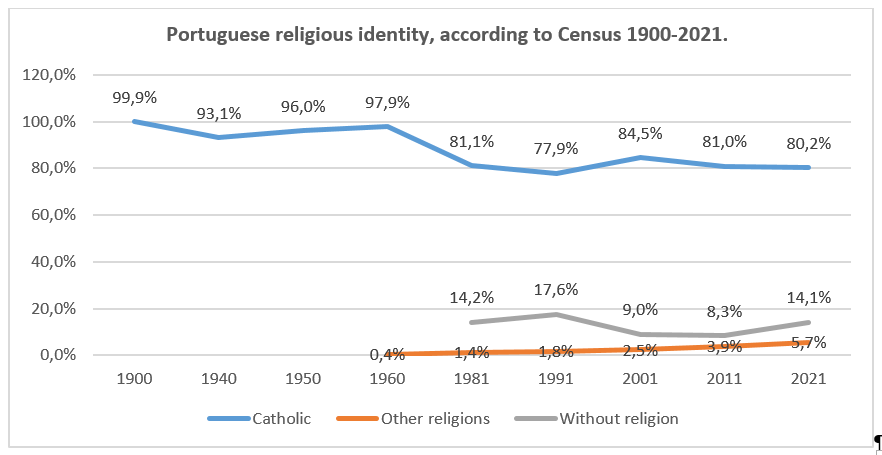
@bna_emperor A decline in Catholicism under the liberalizing First Republic was reversed by the Estado Novo.
By boosting literacy Salazar and Caetano also probably increased consumption of Portuguese literature.
@monolith94@haravayin_hogh Many of the weapons used by violent elements of the opposition in the 1930s were smuggled from Galicia.
The PVDE political police was active in the north to interdict arms smuggling.
@monolith94@haravayin_hogh Menenses' biography relates he said he wanted British weapons for defense against Republican Spain, though British diplomats believed he was hyping that threat to merely secure his own power from coups by giving the military new toys.
The Cyrillic script was connected with Russian colonialism and chauvinism and Orthodox missionary activity, while the Latin script would connect Soviet citizens, with good internationalist overtones, with the great, productive and developed cultures of Europe.
The early Soviet Union had a movement for the introduction of the Latin script to various languages, and Turkic and Caucasian languages in particular, as an attempt to overcome eastern nationality "backwardness" and indirectly attack Islam.