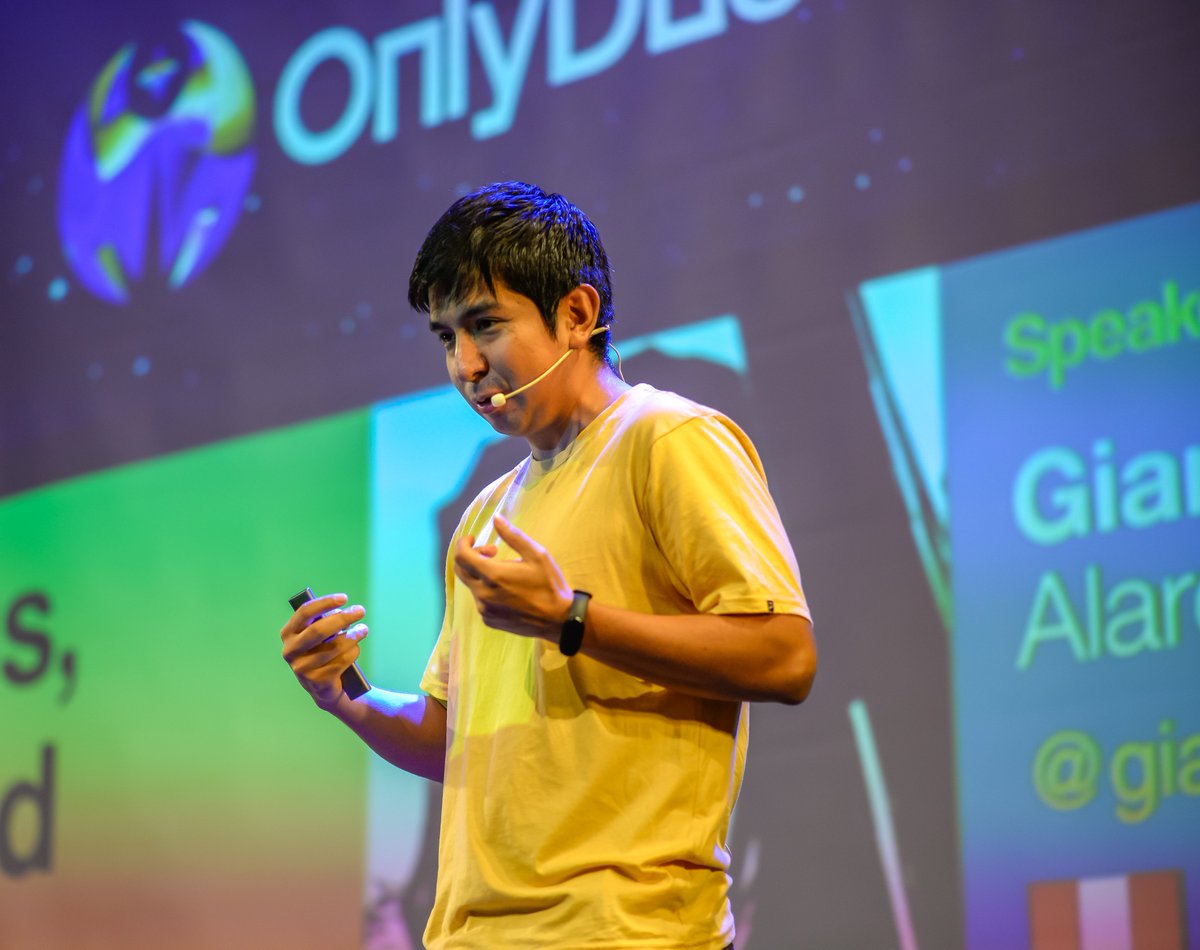
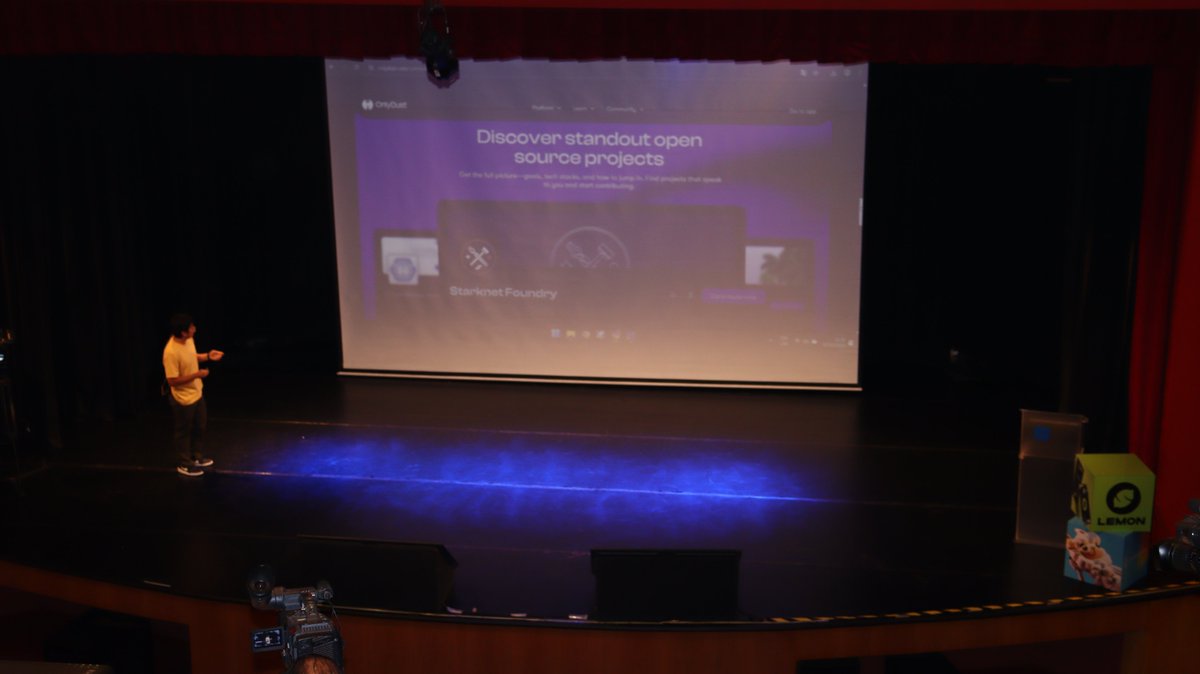
Just wrapped up an incredible #EthLimaDay! 🚀 Shared how anyone can start contributing to Open Source projects through @OnlyDust_com - open to all projects built on @ethereum, @Starknet and beyond! The community's energy was amazing. Ready to help more devs join the ecosystem.
we passed $300m of options premium recorded across the venues we read
@DeriveXYZ carries almost all of it, 94.3% of the premium. onchain options already have real size
a few things i learned on the way:
new assets keep coming
the road to $1b won't be a straight line and fragmentation doesn't help but the only way to bring innovation and solve the issues of the options fragmentation is through more competitive venues
before getting a better price find "where" it is w/o loosing time
🚨 BREAKING: Airwallex CEO Jack Zhang co-founded a blockchain and it has raised $80M
The chain is called Alta. Index Ventures led a $47.5M Series A today, after a $32.5M seed co-led by Airwallex and its founders' fund, Capital 49.
---
Alta is built for banks and payment companies. Payments stay private between the two parties, and each institution's sanctions and policy checks run as part of the payment.
Alta says it will reach 200 countries and 90 currencies by connecting to Airwallex's local payout network.
---
Zhang once said of crypto "you cannot be faster than instant", and for Airwallex customers he had a point. Airwallex pays out fast because it holds pools of local currency around the world.
Holding that cash is expensive. Alta's first product will fund each market just in time and keep the rest in yield-bearing tokenized assets until it's needed.
Airwallex holds those pools, so its own treasury is the first one Alta can improve.
Sort of like how most banks started with internal treasury for their tokenization services.
---
Alta calls itself neutral infrastructure for banks and payment providers, and Airwallex is the only named user so far.
Would Wise, Nium or a bank settle on a chain that a rival's CEO co-founded?
Alta's privacy design would hide a rival's payments from Airwallex. The rival would still be growing a network Airwallex helped fund.
---
It can be done.
Visa faced the same question. Bank of America ran BankAmericard until 1970, then handed control to the banks that issued the card. Those banks formed the company that became Visa.
If a payments chain pitches you, I'd ask three things:
- Who is live on it besides the sponsor?
- Who pays out in local currency on your corridors?
- Who controls the rules as it grows?
Alta gets a head start from Airwallex's payout network. And in stablecoins that's a HUGE leg up.
I'm watching for the second named customer. And how banks and non banks start to get value from it.
Crypto financial infrastructure has been operating under extreme paranoia that 24/7 bots are trying to hack it, by virtue of it being accessible by anyone, open source, and largely immutable. Some successfully, others not.
Since February, everyone serious in crypto has been running 24/7 agents against their code, either themselves or by employing 3p red teamers who are basically prompting for them with some extra tricks / known exploit databases etc (which are also public).
We have been operating an internal tool for this as well, called Cyclops, you can find it doing work in our repos @tempo.
The rest of the world is about to experience this, and everybody will need to introduce 24/7 agents to defend themselves.
The new meta will be that there'll be a minimum $ defense token spend that you'll need to release any kind of software. Hopefully, open models will make that minimum $ cost low enough that this doesn't raise the barrier to entry to production-grade software.
@linasbeliunas Revolut already have a strong design system, with that foundation it is easy to improve their workflow with AI, something basic nowadays. For startups, figma is a must until they have a very clear product.
hyperliquid:native up ~16% today
most people anchor to what they paid
better question: what price would you let it go at from here ?
(name it, get paid now while you wait. the trade off: above that price, it's gone)
@blindpay crossed $2.5B in annualized TPV with only 10 people
a single person here is 100x more productive than at other companies
we're from @ycombinator. we did our batch alongside 150 other AI companies, they're our inspiration to move faster than ever
we have a high-freedom culture: if you think it's going to be good for the company, just do it. the goal is to create information fast, good or bad
everyone here is ai-native. i'm not talking about using chatgpt or claude, i'm saying we automate every internal process possible
we have the first phase of our company brain: hundreds of markdown files covering how we operate in compliance, security, finance, and everything else that isn't tech. all new products we build already follow it automatically
we don't have a support team. if someone is complaining, it's because our system has a problem, and that's probably an engineering problem
we don't just have engineers because code is a commodity today. we have an engineer handling infra, an engineer handling design, an engineer handling ledger/exceptions, an engineer handling marketing/sales
if you ask every single person who works here how intense it is, they'll probably say this is the most intense company they've ever worked for
One of the hardest questions in stablecoins shouldn't be:
"Who else is building and where?"
Today we launched a completely rebuilt Stablescape to help answer that.
- 6,000+ stablecoin companies
- Interactive market maps
- Rich company profiles
- And more
You can now submit your company, claim an existing one, and play around with interactive charts.
See it for yourself here: https://t.co/nhEryNdhkV
🤝 Q3Labs se suma como Ecosystem Partner de la Hackathon Ethereum Lima 2026
Nos complace contar con el apoyo de @Q3Labs en esta edición, contribuyendo con mentorías, charlas técnicas y el diseño de retos que impulsarán la experiencia de los participantes durante la hackathon.
🧵
As AI assistants handle more of our work and private lives, users are losing reams of sensitive data to LLMs.
@LidoFinance contributors are addressing these concerns through Wisp, a private AI assistant designed to keep sensitive information hidden from infrastructure providers, and even Wisp itself.
Prism Android public beta is live
Prism is mobile wallet that lets foreigners in Vietnam pay any merchant by scanning their bank QR code, without needing a Vietnam bank account
Download on Android: https://t.co/5YmWbDnS1q
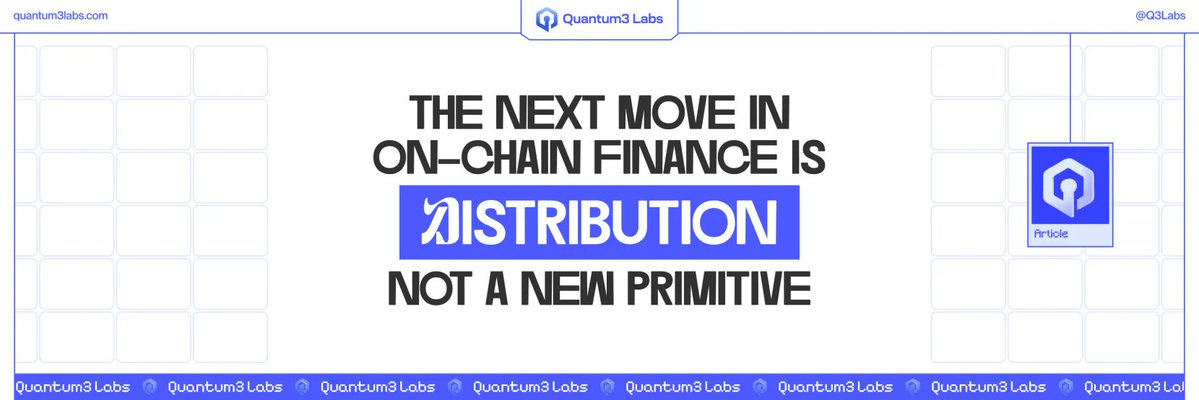
1/ Everyone in onchain finance is hunting for the next primitive right now. @VitalikButerin is writing about options-based lending, and a new "no-liquidation" protocol ships almost every week.
So, out of curiosity more than anything, we pulled the numbers. All on-chain options today: about $63M of TVL, spread across roughly 60 protocols. That's the whole sector, sharing what a single mid-size vault holds on its own.
The next move isn't the primitive. It's distribution. 🧵
“Loop engineering” is a hot buzzphrase after mentions of it by Boris Cherny (Claude Code’s creator) and Peter Steinberger (OpenClaw's creator) went viral on social media. Loops are now a key part of how we get AI agents to iterate at length to build software. In this letter, I’d like to share my 3 key loops, shown in the image below, for building 0-to-1 products. These loops guide not just how I build software, but also how I decide what software to build.
Agentic coding loop: Given a product specification and optionally a set of evals (that is, a dataset against which to measure performance), we can have an AI agent write code, test its work, and keep iterating until the code is bug-free and meets its specification. This idea of closing the loop took off around the end of last year, and it has been a game changer in enabling coding agents to work longer productively without human intervention. For example, over the weekend, I was building an app for my daughter to practice typing, and my coding agent could easily work for around an hour, using a web browser to check what it had built multiple times before getting back to me, without needing my intervention.
The engineering loop executes quickly. Every few minutes, the coding agent might build and test a new version of the software. I hear frequently from developers who are finding new ways to engineer more effective engineering loops. This is an active area of invention!
Developer feedback loop: In this loop, a developer examines the current product and steers the coding agent to improve it. Last year, a lot of developers (including me) were acting as the QA (quality assurance) function for our coding agents, manually finding bugs and then asking the agent to fix them. But with coding agents much more able to test their own code, the amount of time we need to spend on this function has decreased significantly. This allows us to make higher-level product decisions, such as what key features to offer, where the UI needs improvement, and so on.
The developer-feedback loop operates over time intervals between tens of minutes and hours — that's how frequently a developer might review a product and give feedback. In the case of the typing app, I changed my mind a few times about the visual design, what cat costumes she can unlock as she learns (she loves cats), and the user flow for a grown-up to log in and steer the child's learning experience.
When a developer has a clear vision for what to build, it is still a lot of work to translate that vision into a specification for a coding agent to implement. Further, after the developer has seen an implementation, they might update (or perhaps clarify) the spec to steer it toward what they want. If you find that the system repeatedly runs into certain problems, building a set of evals for the agent becomes useful.
AI-native teams are increasingly using AI to help shape product direction, for example, automating the gathering and analysis of usage data, summarizing written and verbal customer feedback, or carrying out competitive analysis. However, for pretty much all the products I’m involved in, I see humans as having a significant context advantage over current AI systems — we know a lot more than the AI system about the users and the context the product has to operate in — and thus humans play a critical role. Many people describe this human contribution as “taste,” but I prefer to think of it as humans having a context advantage, since that gives us a clearer path to helping AI systems get better. This also speaks to why this step can’t be automated: So long as the human knows something the AI does not, human-in-the-loop is needed to to inject that knowledge into the system.
External feedback loop: This includes a wide range of tactics like asking a few friends for feedback, launching to alpha testers, or putting the code into production with A/B testing. These tactics are usually slow, rarely taking less than hours and sometimes taking days or even weeks. This data informs the developer vision, which in turn continues to drive the detailed product spec, which in turn drives the coding agent.
With coding agents speeding up software development, more engineers are starting to play a partial product management role. For many engineers who are growing into this role, the hardest part is shaping the product vision and striking a balance between building (bridging the gap between vision and spec) and getting user feedback to evolve the vision. It is important to do both!
I will write more about how to do this in future posts, but for now, I find it encouraging that engineers are playing an expanded role (just as product managers and designers now do more engineering).
[Original text: The Batch]
6/ @gianmalarcon
Director de Desarrollo Blockchain e IA en Quantum3 Labs.
Compartirá su experiencia en tecnologías emergentes y el desarrollo de soluciones innovadoras para Web3. 🤖