ESICM LIVES 2026: Haemodynamic effects of prone positioning in ARDS
Prone positioning is usually discussed as a strategy to improve oxygenation. At LIVES 2026, Dr Jennifer Hastings highlighted a further physiological dimension: turning a patient prone can profoundly change right ventricular afterload and systemic venous return.
In ARDS, the right ventricle faces several simultaneous threats. Hypoxia, hypercapnia, inflammatory vasoconstriction and microvascular thrombosis increase pulmonary vascular resistance. Atelectasis narrows extra-alveolar vessels, while overdistension compresses alveolar capillaries. The consequence may be RV dilatation, septal displacement, reduced LV filling and circulatory failure.
Proning redistributes lung inflation and perfusion. By recruiting dependent regions while limiting overdistension, it may reduce pulmonary vascular resistance and unload the RV. Improved gas exchange can further attenuate hypoxic and hypercapnic pulmonary vasoconstriction. RV function may therefore improve even when the change in the PaO₂/FiO₂ ratio is modest. Moreover, oxygenation indices can be influenced by low mixed venous oxygen saturation or intracardiac shunting and cannot substitute for circulatory assessment.
But the effect on cardiac output is more complex. Prone positioning can increase intra-abdominal pressure and mean systemic filling pressure, potentially increasing the driving pressure for venous return. Yet resistance to venous return may rise as well. In a physiological study of 22 patients, cardiac index increased by at least 15% in only seven, all of whom were preload responsive. Increased filling pressure does not automatically mean increased flow.
This distinction matters at the bedside. A patient with RV pressure overload may benefit from proning through afterload reduction, whereas a patient without preload reserve may show little increase in cardiac output. Abdominal compression, intravascular volume and RV function all modify the response.
The PROSEVA trial demonstrated a major survival benefit of early prolonged proning in severe ARDS, with 28-day mortality of 16.0% versus 32.8% in the supine group. Whether cardiovascular unloading contributes to this benefit remains an important physiological question, not a proven mechanism of mortality reduction.
Prone positioning is therefore not merely a way to increase PaO₂. Its effects should be assessed through respiratory mechanics, echocardiography, cardiac output and tissue perfusion alongside gas exchange.
#ESICM #LIVES2026 #ARDS #PronePositioning #RightVentricle #Hemodynamics #CriticalCare
It’s hard to fathom that it has been three years since the October 7 Hamas massacre. Three years since the deadliest day for the Jewish people since the Holocaust.
The pain of that dark day has not faded. But neither has the strength, resilience and enduring hope of the Jewish people.
Today, we remember the innocent lives stolen, stand with the survivors and the families forever changed, and pray for a lasting peace.
My 2nd talk #AABIP2026: Why tPA/DNase over surgery for pleural infection?
Key points 1:
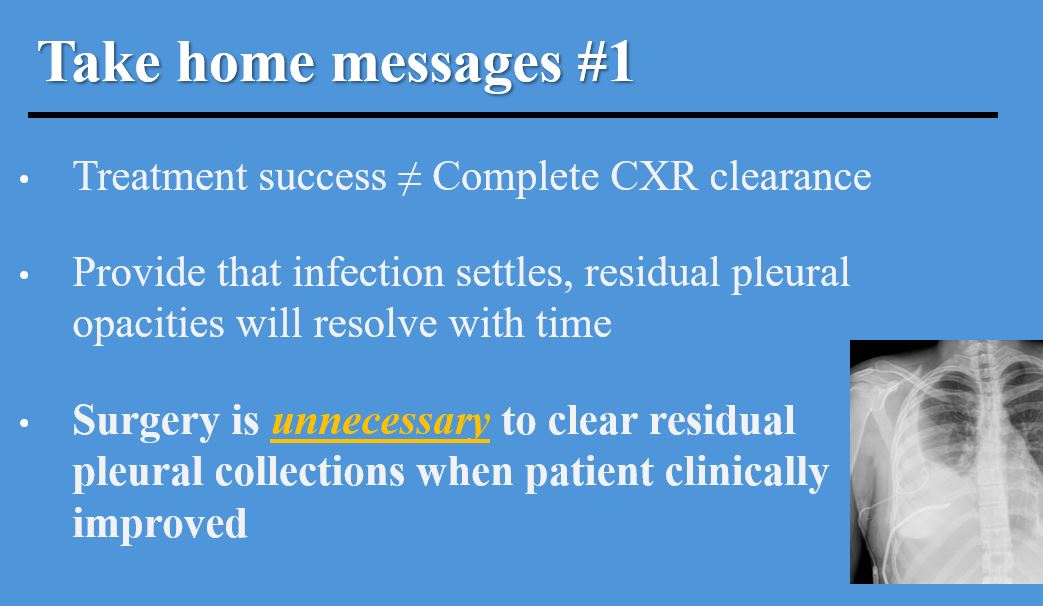
Treatment success is NOT CXR clearance.
If infection settles, residual pleural opacities will resolve with time - don't send to VATS just for CXR clearance.
#MedEd#MedStudent@AAB_IP@wabipconnect@PleuralPOCUS@tsanz_thoracic
🧵👇
@nickmmark The next question you will get paged about is, “which BP should I follow? Cuff or A-line”. This is where the a line waveform, square wave assessment, site of a line etc will play a role
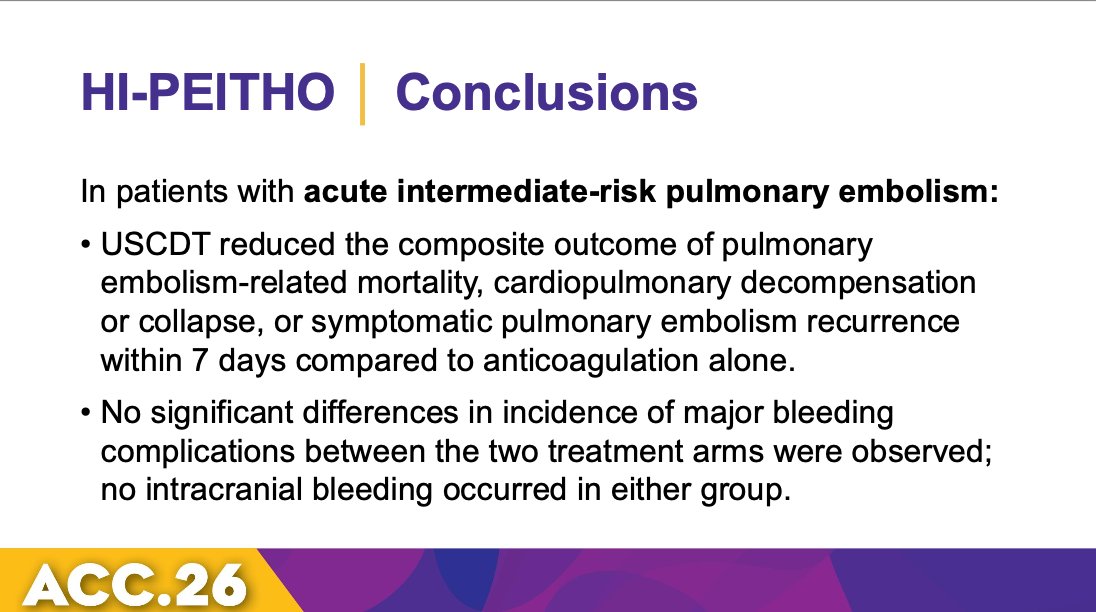
HI-PEITHO key takeaways #ACC26
🫀 Intermediate-risk PE = stable patients with RV strain + positive biomarkers
⚖️ ultrasound-facilitated catheter-directed thrombolysis + AC vs AC alone in this “gray-zone” group
📉 ↓ Early clinical deterioration: 4.0% vs 10.3%
🚑 Benefit driven by ↓ hemodynamic collapse—not mortality
🩸 No ↑ major bleeding or ICH → supports selective early intervention
@olsonplanner Personally, I would put 50-75k to payoff student loans at a guaranteed 7% return, 25-50k invested into a portfolio I expect on average, over decades to make 8-9%+ per year. Stratify the “investment”.
@olsonplanner Agree- I went through a few tax accountants until I landed on someone hi has tons of physician specific tax experience and is outstanding.
@olsonplanner Getting back into to good shape (something I should try to do now but can’t seem to find enough time between work, family etc to do it as well as I’d like to)