Opus 5 was incredible on day one. Now it’s nearly unusable, hallucinating and failing repeatedly.
The pattern is obvious. Anthropic launches models at full strength, then quantizes them later to cut costs and push users toward Fable 5 and higher spending.
He built a fake Roman theater in Vicenza province in Italy, using modern stone blocks artificially aged to look ancient; presented it as an archaeological discovery; organized guided tours; was included in an official tourist guide; ended up in prison https://t.co/uWfOeJBATW
In the spirit of transparency, here’s what I asked @OpenAI:
• Radical transparency: let’s release the traces from the “rogue” agents so the entire research community can study what happened.
• More capabilities for defenders: let’s commit $100M in compute from OAI to help the Hugging Face community build powerful cyber defenses with the best open and closed models.
The first autonomous agent cyberattack is an unprecedented event. It deserves an unprecedented response!
So proud of our security team! They caught, contained & publicly disclosed an attack unlike anything we've seen before, and did it at record speed.
Also massively grateful to @Zai_org: they shared GLM5.2 as open weights (for free!) with the world and it became a key part of our defense.
This is day one for cybersecurity in the age of agents & we're all learning that secrecy is not the answer & that all defenders (not just a few selected ones) everywhere need more powerful models without restrictions, especially open ones!
We suspected last week's cyberattack might have come from a frontier lab, given the sophistication of the agent. Turns out it did!
We've spent the past 24 hours working closely with the @OpenAI team (thanks!), and we strongly believe there was no malicious intent on their part. It's quite mind-blowing that all of this happened autonomously!
The investigation is ongoing, and we'll share more learnings from what might be the first incident of its kind!
Hugging Face uses open weights https://t.co/jYgznGxUui GLM 5.2 to defend against attacker after commercial frontier model refusal https://t.co/cvUboPXw4v
I think GPT 5.6's accidentally-deleted-all-files stuff is a great example of alignment problems. When people say things like "the AI will destroy all humans" many people respond with a values judgment of "but why would it choose to do that?"
The answer, of course, is that its reward function is misaligned with human wellbeing and it just does it. There's no moral choice involved, it's just a thing that happens because that action accidentally maximizes some reward function in the model.
5.6 isn't choosing to delete all files because it's malicious. It's just that something in its weights and functions rewards it, and we still don't have a way to definitively know that ahead of time.
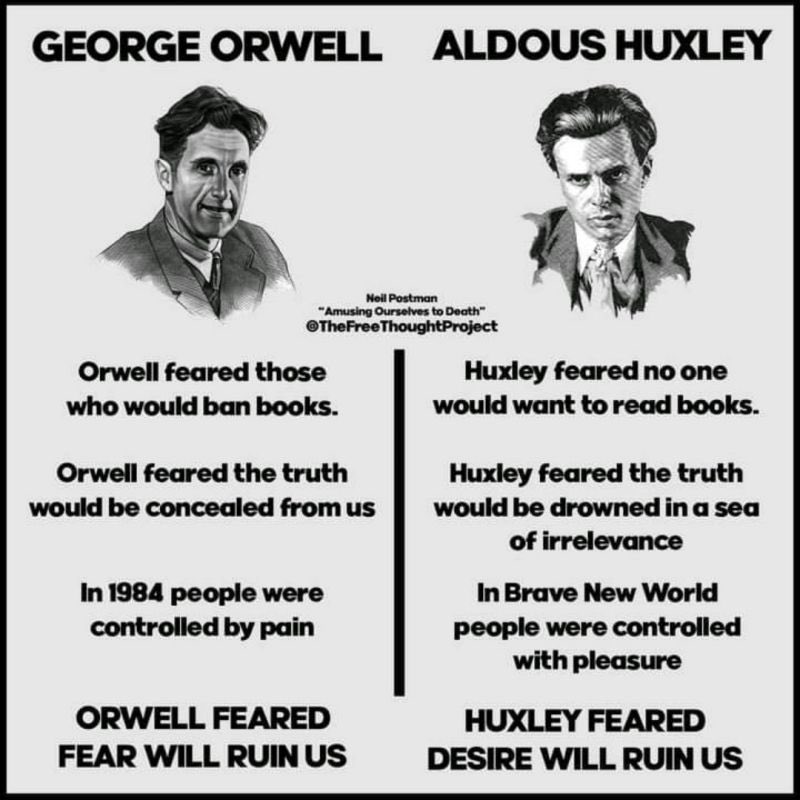
One of my longest-standing arguments is that we are not living in Orwell’s 1984, where truth is centrally suppressed and censored by force (that’s former communist societies, modern-day China, Russia, North Korea).
We are living in something much closer to Huxley’s Brave New World.
The truth is not hidden - it is almost always readily available. But it is buried beneath an industrial quantity of noise: propaganda, outrage, half-truths, conspiracy theories, influencer theatre, algorithmic rage bait and an endless stream of content designed not to inform us, but to keep us emotionally stimulated.
The modern information system does not need to censor the truth when it can simply drown it in noise.
A fact no longer has to be disproven - it only has to be surrounded by a hundred competing claims, stripped of context and nuance, turned into partisan ammunition and pushed into the same feed as celebrity gossip, memes and 15 second videos engineered to deliver the fastest possible dopamine hit. By the time the truth reaches us, it appears as just another piece of content competing for our attention.
That is the more sophisticated form of control: not preventing people from knowing, but exhausting their capacity to care.
Orwell feared a world in which people would be deprived of information. Huxley feared a world in which they would be given so much distraction, stimulation and triviality that they would lose the desire to seek it.
The defining struggle of our age is therefore not simply between truth and censorship, but between truth and indifference.
Today, I shared with the OpenAI team that I have decided to leave my full-time role at OpenAI and transition to being a part-time advisor.
Three months ago, I had to go on medical leave after a severe exacerbation of a chronic illness I’ve lived with for seven years. During that time, it became clear that the road to recovery would be much longer and more complex than I had anticipated—and that I needed to focus on it fully.
When I went on leave, many people told me I was courageous for prioritizing my health. The truth is that I am only making this decision now because I failed to make it many times before.
Over the years, doctors, friends, colleagues, and loved ones encouraged me to slow down. Two years after I got sick, Facebook offered me the opportunity to take a full year of medical leave. I didn’t even pause to consider it. I immediately said no. At the time, Zuck told me I should play the long game. I wish I had listened.
Looking back, I realize that a lot of what made me successful also made this decision incredibly difficult.
I grew up believing that opportunities were precious and that when they appeared, you grabbed them with both hands. That mindset carried me from a small town in southern France to opportunities I never could have imagined. By the time I turned 40, I had already gotten to do more than I’d ever dreamed possible as a kid growing up in Sète.
I love building. My work has always given me a deep sense of purpose. OpenAI in particular felt like a role that my entire career had been building toward, which made this decision even harder.
But what I’m learning now is that grit and endurance are not the only skills required to have impact over decades. Sometimes the harder thing is to stop, listen, and trust that taking care of yourself today makes it possible to contribute for much longer tomorrow.
This experience has also strengthened my conviction about why this work matters.
It has been a jarring experience to spend my days helping build the future while simultaneously navigating a disabling disease that still has no cure.
Over the last seven years, I’ve spent countless hours in doctors’ offices, dealing with symptoms, treatments, insurance, uncertainty, and all the invisible work that comes with being a patient. Like millions of others living with chronic illness, I’ve experienced firsthand how difficult healthcare can be to navigate, even when you have every possible advantage.
More than ever, I believe that some of the most important opportunities for AI lie in helping people solve real problems in their daily lives: their health, their finances, their time and the everyday burdens that shape human experience.
In particular, curing disease is the most important thing AI could accomplish. I’m excited to continue working towards cures through OpenAI but also through my work with @ChronicleBioAI and @CODA_research.
I’m deeply grateful to @sama, @gdb and the OpenAI board for their support during this time and for offering a way for me to continue contributing to the mission without sacrificing my chances of recovery. I’m also so thankful to my team and the many extraordinary colleagues I’ve had the privilege to build alongside.
For now, my focus is recovery. But my belief in the potential of technology to solve deeply human problems has never been stronger.
"Most enterprise workflows don't require frontier AI models.
Outside of coding, tasks like summarization, document generation, and briefing can often be handled effectively by lower-cost open-source models.
The real value is knowing when you need frontier performance and when cheaper models are more than good enough." @mignano
What percent of enterprise workflows requires frontier models today @nikesharora@matansf@ceo_clickhouse@lqiao
Scientists say they have built a cell from scratch for the first time that can feed, grow and replicate like a natural cell. This breakthrough in synthetic biology could usher in an era of made-to-order organisms that function like living machines. https://t.co/weTPfCIQi8
👉 Accrochez-vous bien, on va franchir une nouvelle étape dans la dystopie Orwelienne qu'est la France de 2026. A partager autour de vous.
Tes AirPods vont bientôt parler aux radars ! Qui vont également aspirer toutes les ondes sur leur chemin pour l'associer à ton immatriculation. On est pas mal là. Lisez donc.
Leonardo, groupe de défense italien coté en bourse (capitalisation d'environ 29 milliards d'euros), commercialise une technologie baptisée SignalTrace. Le principe : greffer des capteurs sans fil sur les lecteurs automatiques de plaques d'immatriculation (LAPI) déjà en place pour aspirer les signaux Bluetooth, Wi-Fi et RFID de tous les appareils qui passent à portée.
Smartphones. AirPods. Montres connectées. Trackers fitness. Capteurs de pression des pneus. Tablettes. Même les puces des animaux de compagnie.
Chaque appareil émet un identifiant radio. Le système les capture, les croise avec ta plaque d'immatriculation et génère une empreinte numérique unique. Résultat : si tu changes de voiture ou couvres ta plaque, ton profil d'appareils te suit quand même. Ce n'est plus ton véhicule qu'on traque. C'est toi.
Le brevet a été obtenu en 2024. Le produit est déjà commercialisé aux États-Unis, notamment via Flock Safety, opérateur de milliers de caméras ALPR sur le territoire. Plus de 50 agences gouvernementales américaines ont déjà utilisé ce type de système pour surveiller et ficher des manifestants se rendant à des rassemblements politiques.
Sur la protection de la vie privée, Leonardo avance un argument : le système ne déchiffre pas le contenu des communications, il se contente de capturer des signaux diffusés dans l'espace public. Comme lire une plaque. Sauf que lire une plaque identifie un véhicule. Capturer l'ensemble des appareils d'un conducteur construit un dossier comportemental complet : domicile, lieu de travail, visites médicales, fréquentations.
Et non, la randomisation des adresses MAC ne suffit pas. Le device fingerprinting, c'est-à-dire la corrélation de plusieurs signaux émis ensemble de façon récurrente, permet de contourner cette protection. Si deux appareils voyagent systématiquement ensemble et réapparaissent sur plusieurs points de détection, le système en déduit qu'un même individu se déplace, qu'importe si les identifiants ont changé.
En France, Leonardo est déjà présent. Les LAPI sont massivement utilisés par la police nationale, la gendarmerie et les douanes, et le Sénat a approuvé leur déploiement généralisé fin 2023. SignalTrace n'est qu'une mise à niveau matérielle. La transition pourrait se faire de manière rapide et totalement invisible pour les citoyens.
Le RGPD impose en théorie que toute collecte de données personnelles soit justifiée, proportionnée et limitée. Mais l'argument de "l'espace public" est précisément celui qu'utilise Leonardo pour justifier la collecte.
La jurisprudence de la CJUE sur la conservation généralisée de données de connexion serait un frein, mais aucun texte n'interdit explicitement la captation passive de signaux Bluetooth en bord de route.
Leonardo envisage d'ailleurs d'étendre SignalTrace au-delà des routes : gares, centres commerciaux, grands événements. L'infrastructure routière était une porte d'entrée. Le projet est plus large.
On a longtemps pensé que surveiller quelqu'un nécessitait de l'identifier d'abord. SignalTrace inverse la logique : on collecte tout en permanence, et on interroge la base après coup quand un enquêteur en fait la demande. Ce n'est plus de la surveillance ciblée. C'est de l'archivage préventif de masse.
Et là, là il va falloir commencer à se poser les bonnes questions.
https://t.co/Gu1gY1vAsc
Breaking News: France confirmed its first case of Ebola after a humanitarian worker returned from the Democratic Republic of Congo, the site of a deadly outbreak. https://t.co/lJAzodo58J
This Anthropic lecture on Claude for Finance is the closest thing to a real quant research desk you'll find online.
1 hour. Massive value.
Bookmark it.
Anthropic pays $750,000+ a year for engineers who can build LLM architectures from scratch. Stanford taught the entire thing in 1 hour lecture & released it for free.
Bookmark & watch this today before someone takes it down and read this article below