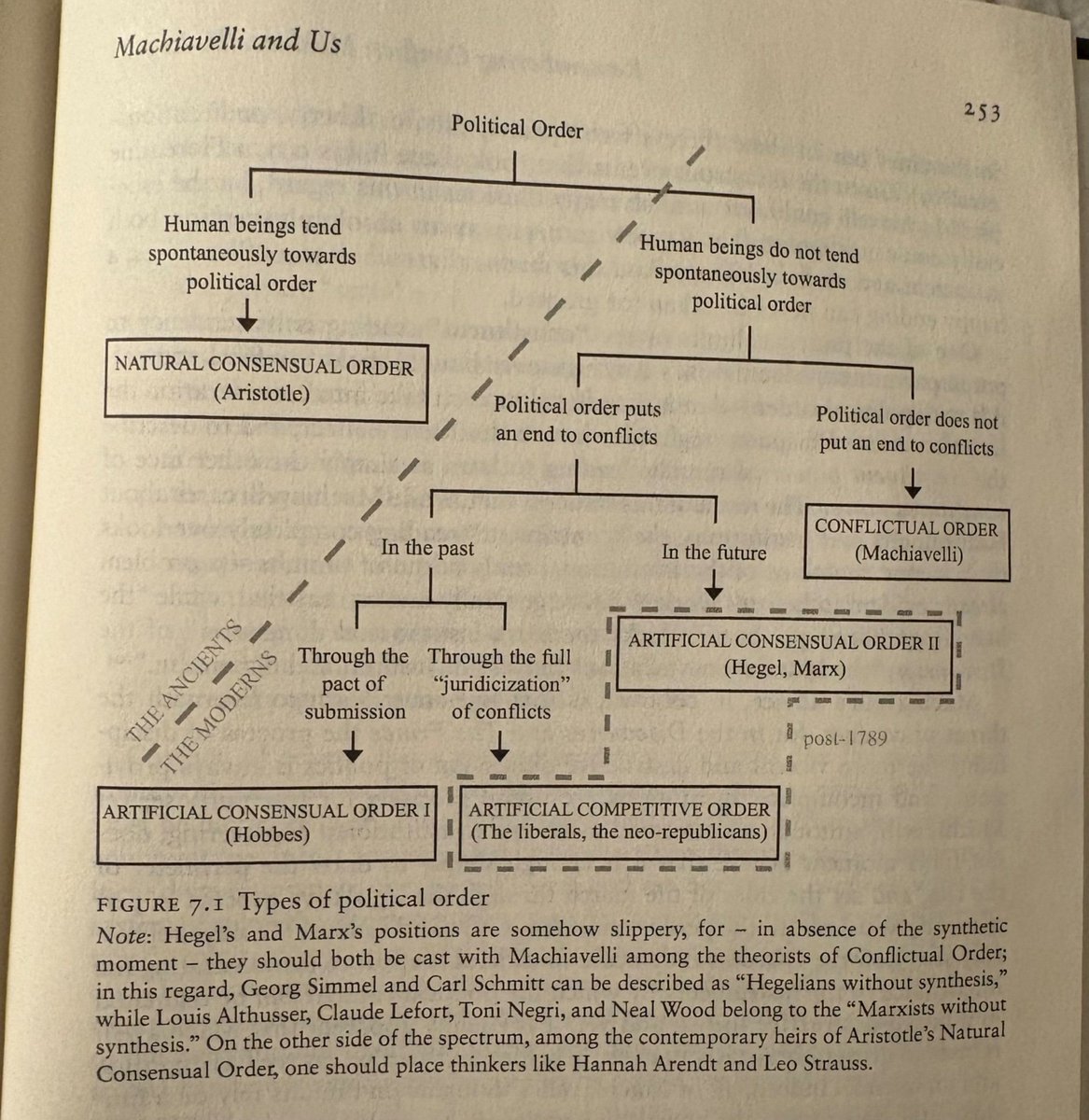
“To achieve good government, the sage participates with heaven and earth and cooperates with the ancestors. The sequencing of li lies in placing things properly. The governing of the people lies in allowing for their amusement.”
-Confucius, Dialogues 32
(diagram Brian Bruya)
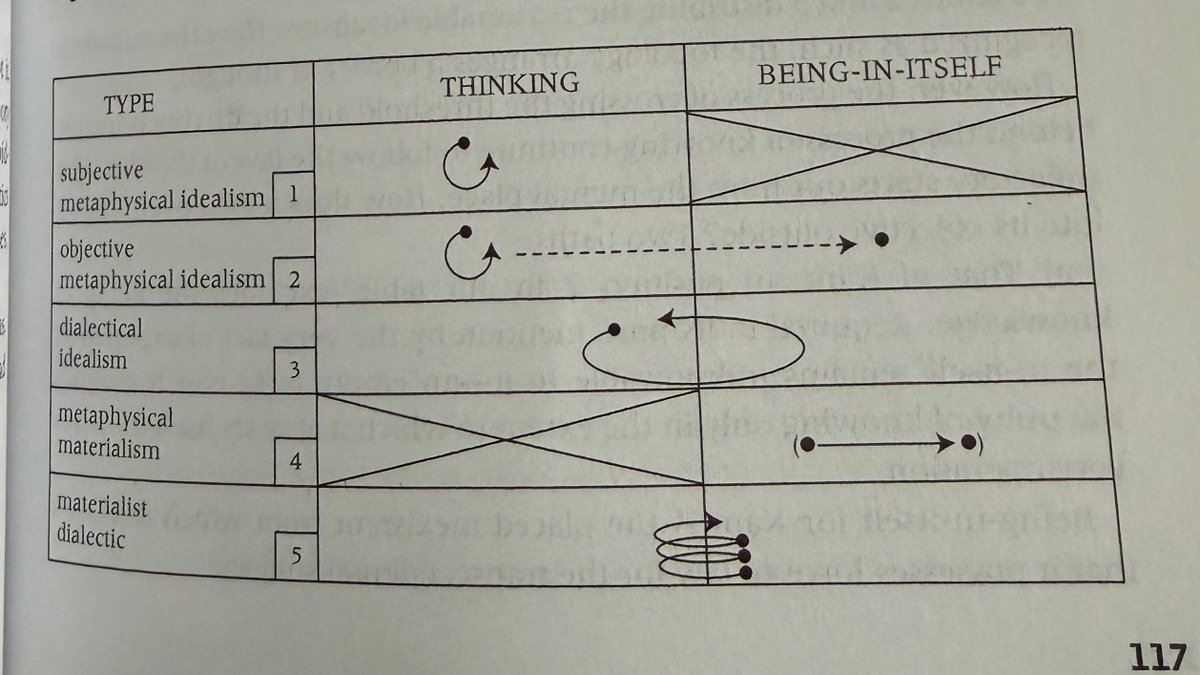
@NoemaMag@carlorovelli I believe Chalmers’ framework for categorizing consciousness has fundamental structural limitations; it is, by its very nature, contradictory. Below is a diagram that encapsulates my perspective.
@prathyvsh I think this is a different concept. In your examples, a loanword that is pronounced a certain way in its original language is subjected to the phonetic rules of a new language. With ‘gif’, there is no etymological origin, and the phonetic rules depend on which origin we imagine.
I just realized, the controversy over how to pronounce ‘gif’ hinges on whether you implicitly treat it as coming from a German root (hard g) or Latin root (soft g). I wonder if that shows up in any other synthetic words.
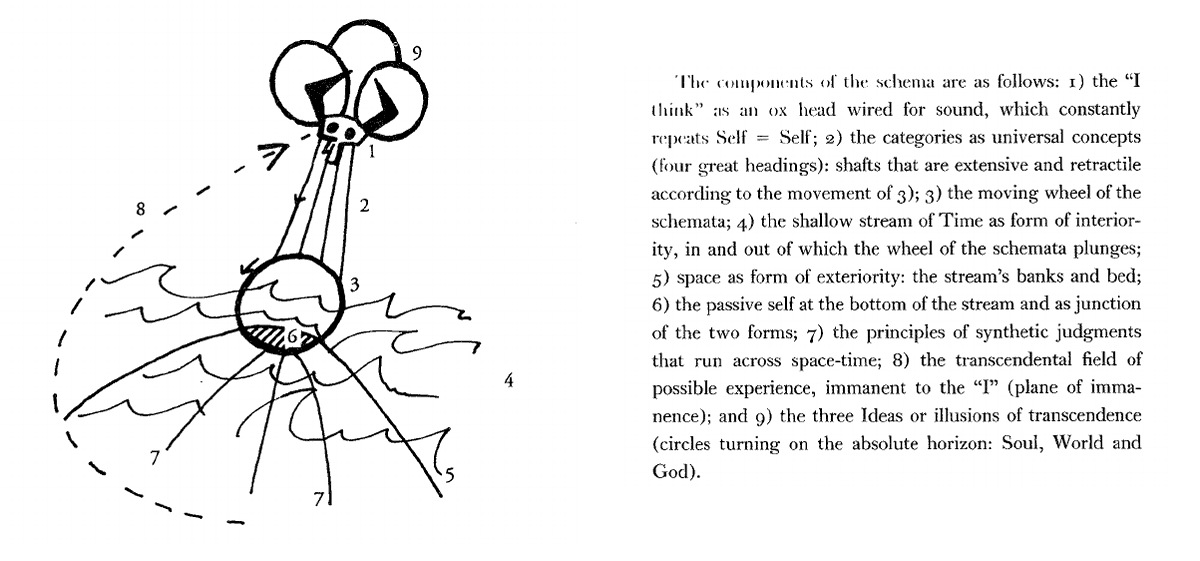
@cmkosemen The diagram by D&G is explained on the following page of What is Philosophy? (1996), and by your own criteria massively simplifies the details of Kant's Critique. In what sense is this meaningless?
Spicy flamenco take — In granaínas it’s not uncommon to end a piece on the E minor chord, modulating into a new harmonic universe but then doing nothing with it. Manolo Sanlúcar hated this and urged his students not to do it, but I think it’s actually a cool concept.
Chandranandan is a raga invented as a 3-minute improvisation in the 1940s. When people loved it and asked for more (expanding it for hours), the author spent 5 years reconstructing the principles that made it work. I love that idea: creating a soundscape. https://t.co/VXgBdd95Pc
For each person we interact with, we have a mental model of how much they know about us (possibly including things that aren’t true), and we are disconcerted when it turns out that they know something we didn’t account for. How does this not take up a huge amount of bandwidth?
What Andrew Paul Ushenko said here is very significant for the sole reason that it seems to mark the instance at which the revenge paradoxes were rediscovered (the mediaeval logicians were already well acquainted with them, however).
I think the lack of great philosophy in our time is because it’s become a form of conspicuous leisure. Actually taking the trouble to write a dense treatise would make you a schmuck. Philosophy has prestige only if you’re a dabbler; taking it seriously gets you scorned as a crank
RIP Jürgen Habermas. I have fond memories of my kindly high school librarian and I puzzling through the book Habermas: A Very Short Introduction, which is itself quite dense. Habermas’s ideas had something for everyone, and Lyotard was at his best when trying to prove him wrong.
A mediocrity-generator can be immensely helpful for mapping the space of opinions on a topic. What people get wrong is to think an LLM can find a privileged position in that space. Spelling it out, LLMs are often used in a molar way, but they can also be used in a molecular way.
I see many people asking LLMs to validate their opinions, which is much like those game shows where you win by giving the same answer that everybody else does. It should be the opposite: if your take on an issue is the same as an LLM’s, then you need a more nuanced opinion.
Recalling D&G’s problematics vs. axiomatics, it’s unsurprising to see anti-LLM views in the humanities, whose main labour is finding a fruitful way to frame an issue. Whereas in science fields that aim to ride conventional precepts as far as they go, LLMs let you skip boilerplate