AI enthusiast. Growth-company enabler. Partner at Klick Health, global marketing agency. Family-man, adventure-seeker, fascinated by the future. Proud Canadian.
SpaceX has just officially unveiled its AI1 satellite, the first generation of its AI satellite.
Overall Specs:
• 150 kW peak compute payload
• 120 kW average compute payload
• 70 kW per ton
• Compute provider interchangeable
Dimensions:
• Wingspan: 70 meters
• Deployed height: 20 meters
Thermal System:
• 110 m² deployable liquid radiator
• Redundant pumping loops
• Integrated micrometeoroid shielding
• Deployable liquid radiators
Solar Power System:
• 150 kW solar array
• 250 W/m²
• SpaceX-manufactured solar technology from Bastrop, Texas
Architecture:
• Centralized compute module
• Large deployable solar arrays
• Deployable liquid-radiator thermal management system
• AI-focused compute satellite design ("AI1 satellite")
Elon: "The AI satellite is much simpler than a Starlink satellite. The AI satellite is essentially a lot of solar cells, you still need some laser links, but you don't have all of the super complex antennas that you have on a Starlink satellite. The easier one to design for is the AI satellite. It's bigger. A lot of this is technology we've already made with the Starlink V3 satellites."
Each morning, the young elephants stop by to greet the resident blind black rhino before heading out.
Despite his solitary nature, he enjoys these daily visits, patiently waiting by the gate as his friends pass by.
Voyager 1 is 24 billion kilometers from Earth.
It communicates with us using a 23-watt transmitter.
Less than a refrigerator light bulb.
The signal takes 22 hours to reach us, traveling at the speed of light.
By the time it arrives, it's 20 billion times weaker than the power of a digital watch battery.
NASA's Deep Space Network picks it up using 70-meter dish antennas cooled to near absolute zero to reduce electronic noise.
The engineering required to hear a 23-watt signal from 24 billion km away is arguably more impressive than the spacecraft itself.
Launched 1977.
Still transmitting.
Still being heard.
We built something that works perfectly, 47 years later, in conditions no one has ever tested in.
That's what engineering for the long term looks like.
Here's a snapshot of the biological insult from international travel. It takes your body over two weeks to fully recover.
It's a big price tag.
One international trip per quarter is a reasonable balance.
Time to recover:
> sleep duration: 2 days
> grip strength: 5 days
> mood: 1 wk
> cortisol: 9 days
> sleep quality: 2 wks
> blood glucose: 2 wks
A 24-year-old Polish tennis player arrived in Paris last week ranked 114th in the world, with no sponsors, no guaranteed income, and no certainty she could even pay for her hotel room.
She had to win three qualifying matches just to enter the French Open main draw. Prize money is only paid at the end of the tournament, so a Polish sports drink brand quietly stepped in and covered her hotel bill.
Her name is Maja Chwalinska. And today, she plays in the French Open final.
Before this tournament, she had won exactly one Grand Slam main draw match in her entire career. She had battled depression so severe that in 2021 she couldn't get out of bed. She underwent knee surgery in 2022. She spent years grinding through small tournaments across Europe just to stay afloat.
Then she arrived in Paris, won three qualifiers, and kept winning. Zheng Qinwen. Elise Mertens. Maria Sakkari. Diana Shnaider. Nine straight matches. One set dropped.
She is now the first qualifier in French Open history to reach the final. The last time a qualifier reached a Grand Slam final, it was Emma Raducanu at the 2021 US Open. Raducanu won.
By simply making the final, Chwalinska has earned more prize money than her entire career combined. The runner-up cheque alone is $1.6 million. If she wins today, she takes home $3.25 million.
One week ago she couldn't pay for her hotel room.
this is just the most ridiculous AI application i've ever seen lol
a Peter Thiel-backed startup that makes AI collars for cows is now worth $2 billion
and the more I read about it the cooler it gets. here's how it works:
every cow wears a solar-powered collar that talks to a network of radio towers and an app on the farmer's phone
instead of building physical fences, the farmer draws the fence on a map in the app, and the collar keeps each cow inside that invisible line using GPS
when a cow drifts toward the edge, the collar plays a sound to steer her, and a gentle vibration tells her which way to go.
it's like how a car beeps as you back up toward a wall
the cows learn the cues in a few days
so now a rancher can move an entire herd to fresh grass by sliding the fence on a map, without driving out to open a single gate
and that same collar is reading each cow's body the whole time.
it takes five readings per second on every animal, so the AI can catch a cow that's sick, injured, ready to breed, or about to give birth before a person would ever notice walking the field
so it's basically like WHOOP for cows too lol
and they gave the AI behind it the perfect name: the Cowgorithm
it's been trained on more than 7 billion hours of real cow behavior, which is why Halter calls the data its real asset and moat.
they know what a normal cow looks like better than anyone, so they can flag the odd one out instantly
it's already on more than 1M cattle across New Zealand, Australia, and a bunch of US states.
California even used it on public land to graze cattle in patterns that clear dry brush and slow down wildfires
costs about $5 to $8 per cow per month
a job that used to mean barbed wire, gates, and driving the fields all day is now mostly 1 person on their phone
You use vowels when you talk, the a and i sounds. Sperm whales hide the same ones in their clicks. Slow a click down and the vowel appears, with a pitch shift that changes meaning the way Chinese does. We have the whole structure mapped and still cannot read a word of it.
The clicks come in quick little bursts that sound a bit like Morse code. Scientists call one burst a coda. For a long time the assumption was that the rhythm carried the whole message, just taps in a pattern. Then a team at MIT ran roughly 8,700 of these bursts through software built to catch patterns, and a hidden order fell out.
Think of it like a few knobs the whale can turn. One knob sets the beat. Another changes the speed. A third stretches or squeezes the timing halfway through, the way a singer drags a note. The last drops in an extra click. Turn those knobs in different combinations and you get at least 143 patterns the whales use over and over. People build words from a small handful of sounds the exact same way.
None of this came from us. A sperm whale makes sound by pushing air through lip-like flaps inside its nose, equipment that has nothing to do with the human throat. Two animals on completely separate paths, tens of millions of years apart, both landed on vowels anyway.
They have accents too. Whale families cluster into clans, some spread across a whole ocean. Each clan favors certain clicks the others rarely use. Take the Caribbean clan: it has a signature, a short 1+1+3 pattern found nowhere else, passed down for at least thirty years. One sweep of more than 23,000 of these click patterns across the Pacific sorted the whales into seven clans, each known by the clicks it prefers.
We can lay the whole alphabet out and watch the accents shift from clan to clan. Not one of us can tell you what a single click means. The grammar is right in front of us, and the dictionary is blank.
Welp, that happened faster than I predicted. Thought it would be end of 2027, then early 2027, but agentic traffic growing so fast that bots have now passed human traffic online for the first time in the Internet's history. https://t.co/2zX5bHdhsa
In Canada's National AI strategy, named figures total ~$8.5B, composed of:
NEW strategy-attached funds (~$2.86B)
- Canadian Tech Growth Fund: $500M
- Compute Access Fund (SME): $700M
- LIFT (BDC financing): $500M
- Regional AI Initiative: $500M
- AI Missions (health, first mission): $200M
- Health Sector Data Space + VITAL: $200M
- Commercialization across National AI Institutes: $130M
- Canadian AI Safety Institute: $50M
- Creative Technology Program: $50M
- CanCode: $30M
Funds from Budget 2025 (~$3.66B)
- VC stimulus: $1.75B
- Talent attraction: $1.7B
- Elevate IP / IP Assist: $159M
- Job Bank modernization: $50M
- plus SR&ED Productivity Super-Deduction: figure TBD
Pre-Existing Funds ($2B)
• Existing investments in Canadian AI compute capacity: $2B
Starlink V3 satellites have >10X bandwidth of V2 and there’ll be >10X launched, which means >100X more bandwidth.
Also, altitude will be 350km vs 550km, so min latency can be cut in half.
Light travels 300km/ms in space, so physics round trip min latency drops to <5ms.
UNDERWATER DATA CENTERS
China has achieved what it calls the world’s first fully operational, commercially running underwater AI data center off the coast of Shanghai.
The facility, developed in partnership with HiCloud Technology (also referred to as Hailanyun), features nearly 2,000 servers housed in sealed, submarine-grade capsules submerged in the ocean.
By leveraging the natural cooling power of seawater, it dramatically reduces energy demands cutting cooling costs by up to 90% compared to traditional land-based data centers. The entire system is powered by nearby offshore wind farms, making it highly renewable and energy-efficient.
The $226 million project was officially launched in June 2025, with construction completed later that year and full commercial operations beginning in recent weeks. It supports high-performance AI workloads, including GPU clusters from partners like China Telecom.
For context, the U.S. explored similar concepts through Microsoft’s Project Natick but quietly shelved the initiative in 2024 after successful trials, opting not to pursue large-scale commercial deployment.
This development highlights China’s aggressive push to address the massive energy and cooling challenges of scaling AI infrastructure.
This is an interesting engineering achievement in the AI infrastructure race, though scaling, maintenance, and long-term reliability in a marine environment will be key factors to watch.
New statement from Scott Pelley:
There has never been anything in America like 60 Minutes.
The Sunday tradition is the most successful program of any kind in history. For more than a decade, its innovative growth on every major online platform has extended its reach to countless millions around the world. This spring, at the end of our 58thseason, 60 Minutes grew rapidly with an unheard-of 9% jump in viewers on CBS.
“60” has been the number-one program in America for decades because our beloved audience finds integrity, quality, and humanity in our stories. When stewardship of the program passed to my colleagues and me, our responsibility was to expand energetically into a new age of media technology while preserving the values our audience expects. Now, the new owner of our network is casting this legend aside, apparently to curry a moment of favor with the Trump administration.
The waste is heartbreaking.
Last month, 60 Minutes lost its DNA when our entire senior leadership and two of our best on-air correspondents were cruelly fired without cause. Good people were silenced because they stood up for our audience. They stood for fairness against the forces of political bias; they stood for professionalism against chaos.
For my part, new management has instructed me to inject falsehoods and bias into a politically sensitive story. I’ve been told to include assertions that are unverified. To date, in every case, I have managed to ignore these instructions or refuse them. Recently, politicians have been invited to choose correspondents for interviews on the broadcast. Giving politicians control over 60 Minutes interviews is not how this is done. Finally, incompetence and unprofessionalism in the new management have wreaked havoc. In a case involving one of my stories, the entire program came within 19 minutes of not getting on the air at all.
At 60 Minutes, we have fought harder than anyone knows to save the program that became an American icon. We owed that to our millions of viewers. I am deeply moved by the thousands of wishes we have received to “keep up the good fight.” Most of the men and women of CBS News are still in that fight. But now the collapse of values at the top has become untenable. The leadership of 60 Minutes is no longer recognizable. The principles I hold dear are gone, and so I must leave as well.
I depart after 37 years at CBS with one emotion—a heart brimming with gratitude for the men and women of CBS News who encouraged and enriched my work, very often at the risk of their own lives. I pray for a day when those people and their ideals are honored again—a day when sanity, competence, and courage return.
Scott Pelley
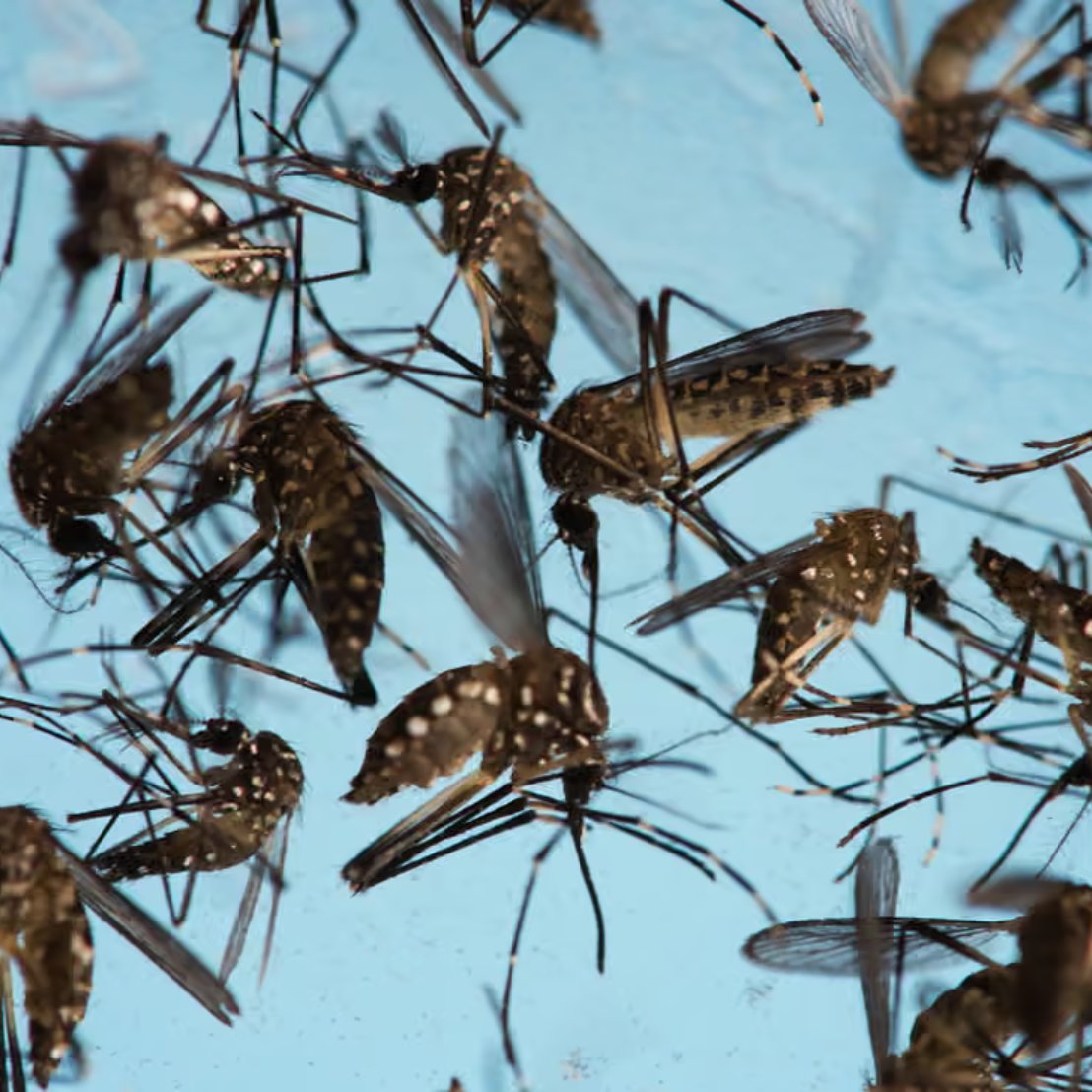
BREAKING: Google is planning to release 32 million mosquitoes across Florida and California.
The company has asked the EPA for permission to proceed, with the public given until June 5 to respond.
The mosquitoes are infected with Wolbachia bacteria, which stops them from reproducing and slowly collapses the wild population from within.
Google's previous Debug Project trial in California's Central Valley nearly eliminated mosquitoes from three test sites entirely. A separate trial in Singapore cut dengue cases by 70% within 12 months.
Google has now released over 1 billion mosquitoes across four continents. This new proposal is the largest deployment in US history.
Costco put a hard ceiling on how much money it's allowed to make on every item in the building. 14% on national brands, 15% on Kirkland. Bring in a product priced one point above that and a buyer kills it before it ever hits a shelf.
That sounds like a company leaving billions on the table. It is. And it's the most profitable decision in modern retail.
Run the bull case for marking up like everyone else. Walmart sits around 25%. Kroger and the traditional grocers run 25-50%. Price Costco's $249B in merchandise like a normal store and gross profit roughly doubles. Every spreadsheet says raise prices.
Here's what those spreadsheets miss. The product is the $65 card you buy before you're allowed through the door. Everything on the shelves exists to make that card feel worth renewing. Membership fees hit $4.8B last year, cost almost nothing to deliver, and throw off two-thirds of operating income. Renewal sits at 90%, the kind of retention most software companies never reach.
So Costco treats the 21% discount as customer acquisition spend. Every dollar it refuses to mark up makes the $65 renewal feel automatic. Cheaper shelves, stickier subscription.
Now read the chart as a spending report. The number next to each store shows how hard it can discount before the model breaks. Costco can sit at negative 21 because the membership line eats the loss. Walmart can't follow without a second revenue stream it doesn't have.
Walmart makes money when you buy. Costco makes money when you walk in. Whole Foods, at 40% above Walmart, has no membership fee underwriting its prices, so the margin has to come off the shelf.
The discount is the moat. The trade was never close.