For this flagship episode of the @glp1digest podcast, I invited Emily Field, Head of U.S. Biopharmaceuticals Equity Research at @Barclays, to discuss the most important questions across the GLP-1 market.
One of the most immediate is why two oral GLP-1 launches have played out so differently in the US.
Foundayo’s early launch data has been lacklustre, while the Wegovy pill has got off to a much faster start. The delta has surprised many, including me.
Is it the power of the Wegovy brand? Novo Nordisk’s aggressive partnerships with DTC platforms? Or something else entirely?
In the episode, we discuss:
- What explains the difference between the two launches
- Where the emerging muscle-sparing market is heading
- Why IQVIA data can give a misleading picture of true US prescription volumes
- And much, much more
Here’s a short preview.
$LLY $NVO
🚨podcast dropping soon!
i had the opportunity to speak with the wonderful emily field, head of biotech equity research at @barclays investment bank.
we discussed:
- the DTC price of retatrutide
- what % of the glp-1 market is going to be oral vs injectable
- why $LLY is going after cardiovascular primary prevention with tirzepatide
- whether $NVO's pipeline is strong enough to sustain second place
- how big is the muscle preservation market going to be?
📌 catch the pod as soon as it drops at the usual place
$LLY $HIMS
Shotsy has 350,000 monthly active GLP-1 users on its' app. Roughly one-third pay are paying annual subscriptions which is pretty darn good for a freemium app service.
And, even better, the customer acquisition costs are extremely low because the majority of users are acquired organically through community glp-1 forums and reddit testimonials.
I spoke with Aja Beckett, Shotsy’s founder and a former New York Times iOS engineer, about:
- Why so many users convert to Shotsy premium+
- How shareable dose-and-weight charts drive organic growth
- Why tracking becomes more useful during maintenance
- How provider switching creates demand for an independent treatment record
- Why Shotsy has resisted selling prescriptions
📌 Full deep dive analysis + Youtube/Spotify links below
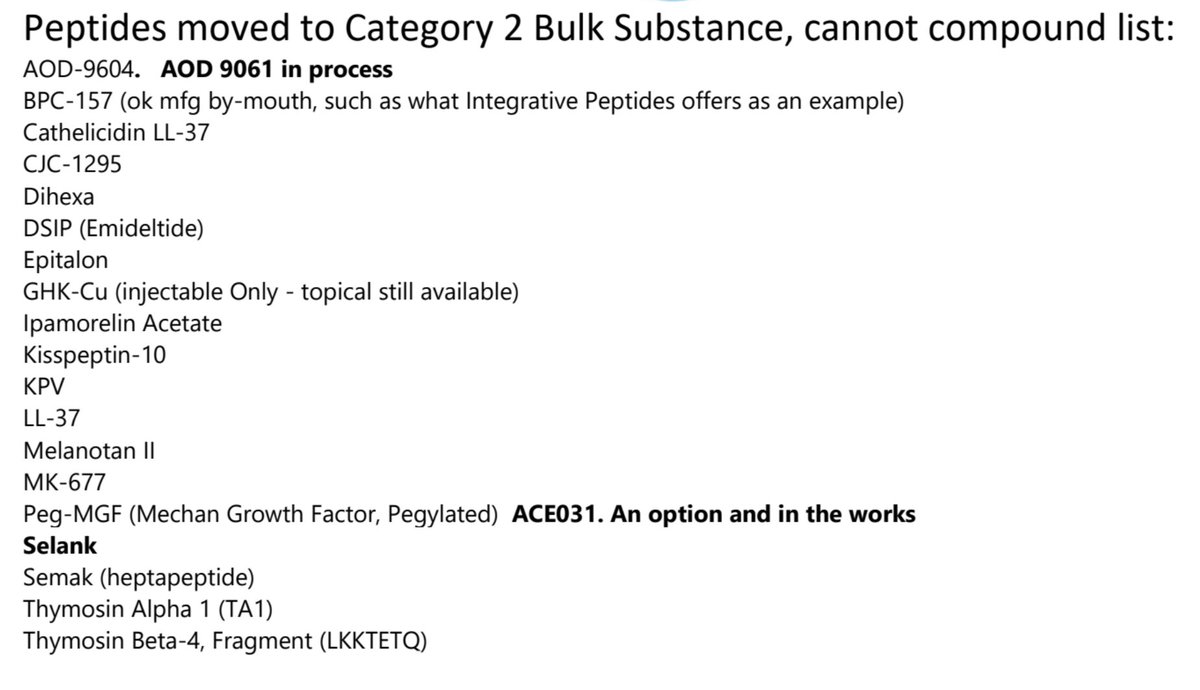
the pharmacy compounding advisory committee (PCAC) has voted YES for the following peptides to be added to the 503a bulk list:
- BPC-157
- KPV
- TB-500
- MOTS-C
this MIGHT mean they can be compounded in a licensed 503A facility, after prescription by a licensed physician (there is still an entire rule making process to confirm these changes).
but, let's assume it goes through. the question now is, how are DTC players going to capitalize on the expected multi-billion dollar goldrush?
two months ago i spoke with Tim Gutwald, a healthtech lawyer with ~20 years of experience in compounding and DTC healthcare, about exactly what needs to be true for a company to pounce on the opportunity.
we covered:
- why the async clinical questionnaire is going to be risky and ways to mitigate risk
- how internal data could become the next battleground in peptide advertising
- whether peptides become a standalone category, or just a cross-sell into GLP-1s, TRT and longevity
as per Jefferies, current foundayo pts are coming through 45% LillyDirect, 35% telehealth, and 20% retail.
most patients for the oral pill are therefore cash-pay while very few are being reimbursed. the channel distribution may change with medicare bridge program which $LLY appears to be particularly bullish on to drive even more penetration.
one of the key concerns around glp-1s is people reducing their physical activity. @SwissRe are taking the concerns so seriously they are modelling scenarios of increased levels of sarcopenic obesity in the next 20 years.
interview with the cmo of @swissre coming out soon.
the key indicator for how well an obesity drug is performing will increasingly be from ex-us markets. the patient volume and willingness to pay out of pocket from these countries is staggering. case in point, the uk, brazil and mexico.
d2c players are obv looking at international expansion to find the next glp-1 goldmine market. you'd think the best place to look is where semaglutide is going off-patent, like in india, china, turkey or canada.
in my view, all of these markets are red-herrings. and in the first instalment of essays on international markets, im going to dissect why india is going to bleed your unit economics dry.
https://t.co/wtMy6D86f7
with $HIMS announcing today that they'll stop advertising compounded GLP-1s and partner with $NVO to sell branded wegovy and ozempic on their platform, this conversation couldn't have come at a better time!
@BevTchangMD is a triple board certified obesity physician and endocrinologist, associate professor at @Cornell university & has treated thousands of patients on GLP-1s.
she's also an advisor for @Ro, which means she sees both the clinical and the business side of the market.
we covered a lot of ground, but a few things stood out with direct commercial implications:
✅should GLP-1s be sold over the counter? the case is much stronger than most people in the industry want to admit
✅wlll microdosing and lowering BMI thresholds shift the entire market from treatment to prevention?
✅why $NVO chose an open-label trial design for CagriSema vs tirzepatide, and what it signals about their confidence level
✅ telehealth platforms keep losing weight maintenance patients for very fixable reasons
✅ GLP-1 adherence might follow the same trajectory as statins and anti-hypertensives, which should be a key concern for health and life insurers
📌 Watch now: https://t.co/4jJQQGOT6b
i have an absolute banger of a podcast episode being released on sunday. topics include:
- should we give glp-1s otc?
- should d2c providers back off during the maintenance phase?
- is wrap around care actually moving the needle for patients?
- is retention always going to hover around ~50% for glp-1s?
stay tuned
30% of $HIMS revenue comes from compounded GLP-1s (approx $800m).
what happens if the FDA scrap compounding
@paulcerro explains why that's a big, big problem.
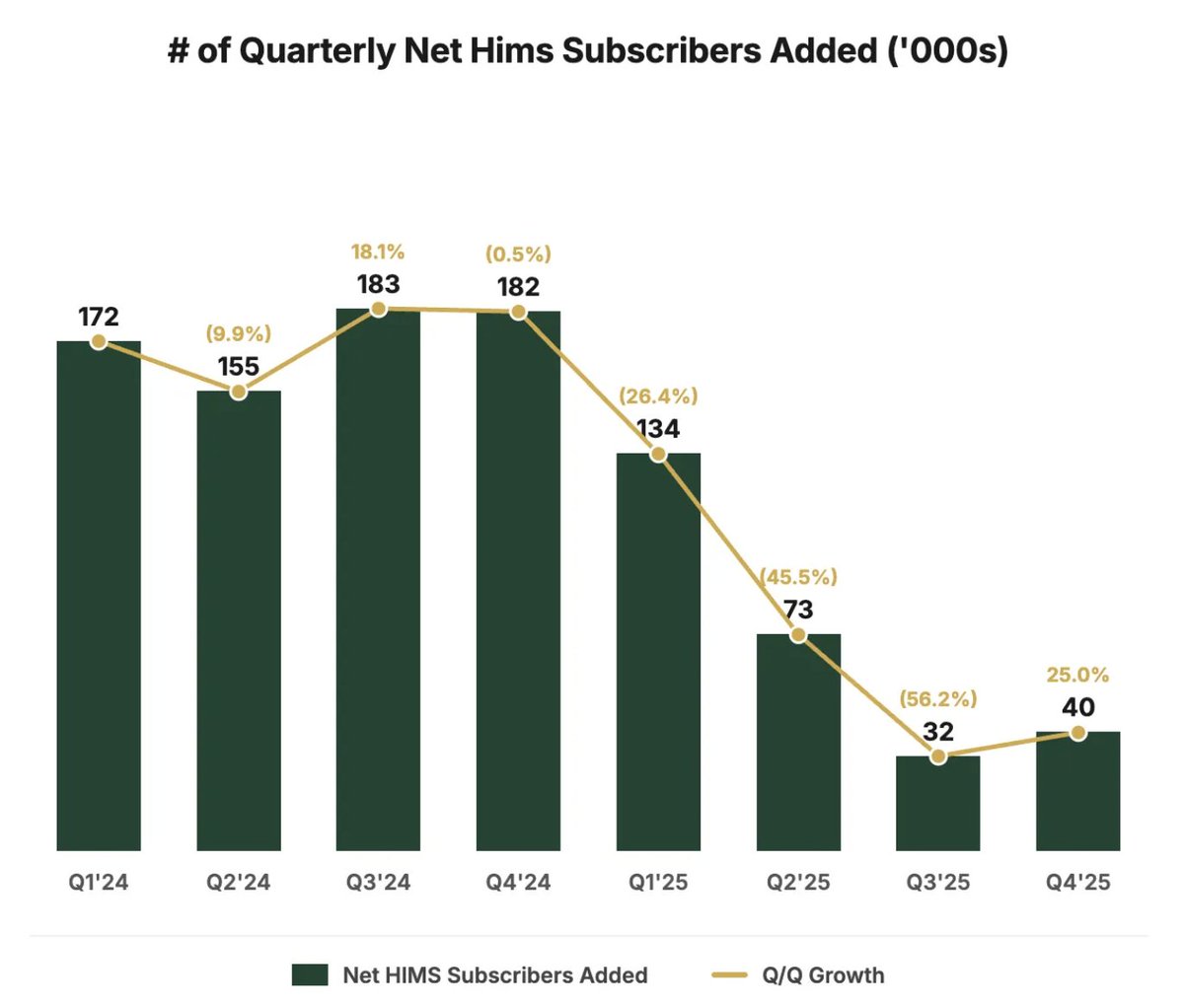
so many bangers from @paulcerro on $HIMS Q4 earning report & the sitch with $NVO.
here are some of my key takeaways:
1. net new subs are declining y/y because people do not want to consume daily ED pills via subscription method over on-demand purchases
2. international expansion is an important way to diversify away from a core fundamental slow down in growth in the US market
3. the new verticals (hrt, trt, bloods) are lower margin and might not able to capture the target volume as competition heats up and certainly won't replace the loss of compounded glp-1s
https://t.co/6wXf2mIz3G
the definitive Q4 2025 $HIMS earnings breakdown with @paulcerro is now live!
we go through:
- why is core slowing down?
- what's going on with net new subscribers?
- what's the steel man case for hims to succeed?
++ much more!
watch/read/listen here: https://t.co/6wXf2mIz3G
WOW! brazil are looking to end the patents for mounjaro and tirzepatide because they see the drugs as being “of public interest” - this allows them to break lilly’s patent!