INSTEAD OF WATCHING NETFLIX TONIGHT. Spend 2 hour with this. Claude AI FULL COURSE that teaches you how to BUILD and AUTOMATE anything. The people who watch this tonight will wake up tomorrow with a new skill. Watch it and bookmark it now.
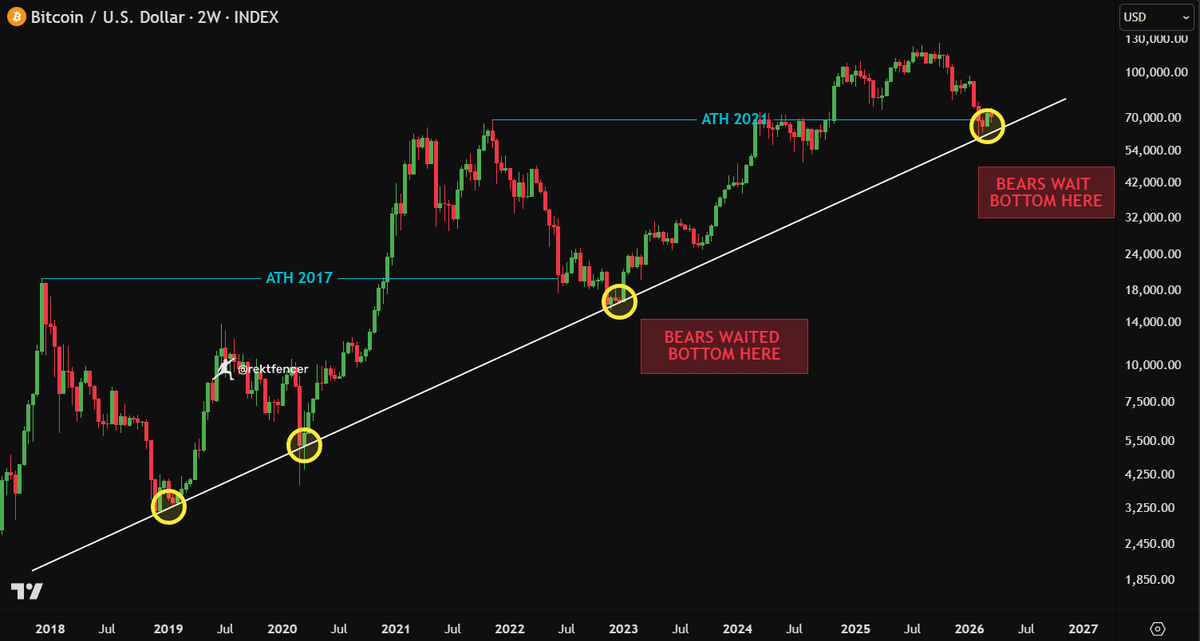
Bitcoin is now 703 days post-halving.
In previous cycles, $BTC bottomed around ~777 days after the halving.
So we’re about 2 months from that window.
And people are still aggressively bearish here?
Coinglass has added a Prime subscription - now you can see liquidation data for the past two years.
Take a look at how many longs are sitting at the $48K level.
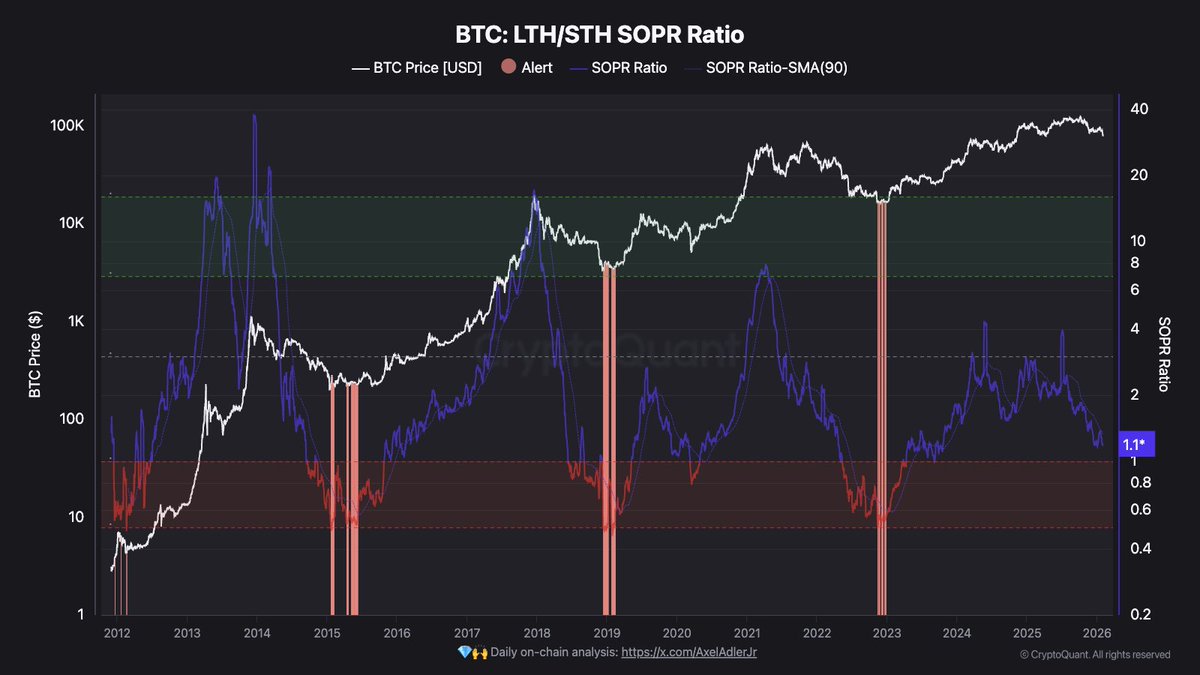
BTC LTH/STH SOPR ratio is getting close to a capitulation alert zone. ⚠️
Key point: sentiment often matters more than price.
This metric helps you see who breaks first.
What I’m watching:
- If the ratio drops below 1 = STH spending at a loss (stress / forced selling)
- If it holds above 1 = sentiment stabilizing, correction may be fading
Context:
- This is NOT a macro bottom call.
- It’s a market stress indicator. Track it, don’t marry it.
🚨 Tether is $500B giant that can nuke entire crypto
$USDT is the biggest stable, but it can go to $0 in minutes
I analyzed fake audits, forged documents and secret reserves
Here’s the full history of Tether and how it could collapse crypto👇🧵
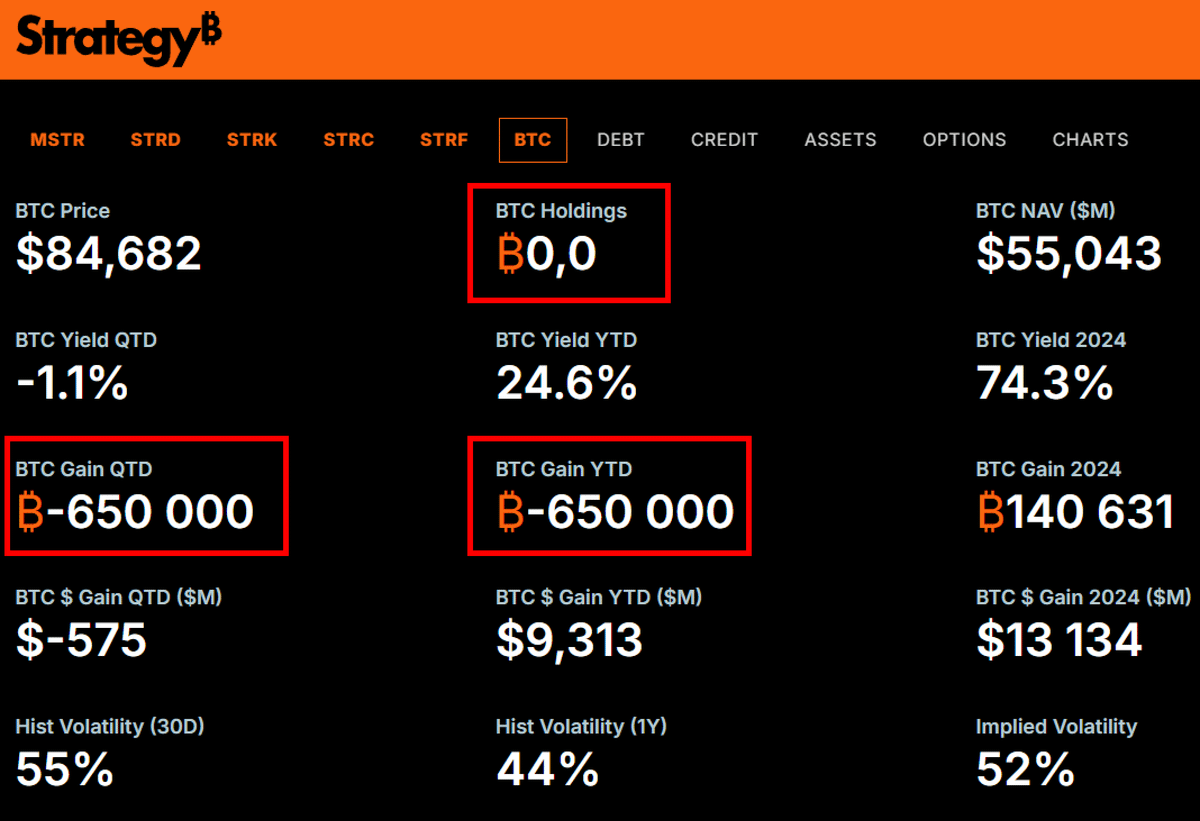
🚨 IS STRATEGY PLANNING TO SELL BTC?
- Risk of selling 650,000 BTC
- Risk of a full market nuke
- Potential loss of institutional trust
That’s the FUD I ran into this morning
And honestly - Saylor kinda hinted at it in his post
WHAT DO THE GREEN DOTS ON SAYLOR’S CHART MEAN?
- Yellow -> buys
- Green -> PROBABLE sells
Plus the Strategy CEO slipped up saying that under certain conditions they would start selling Bitcoin
SO WHEN EXACTLY IS STRATEGY READY TO DUMP?
Officially, Strategy uses mNAV as a multiplier to the company’s Bitcoin NAV
mNAV = Enterprise Value / Bitcoin NAV
In plain English - how much the market is willing to pay through Strategy stock for one dollar worth of Bitcoin
- mNAV > 1: stock trades at a premium vs spot BTC
- mNAV = 1: buying through stock = buying BTC directly
- mNAV < 1: stock is cheaper than the BTC on the balance sheet (scary)
HOW DOES STRATEGY’S BUSINESS MODEL WORK?
- They issue common stock, perpetual preferred stock and convertible debt
- They use the raised capital to buy even more Bitcoin
- As long as stock trades at a premium (mNAV > 1) - everyone is winning
- Common shareholders get growing BTC-per-share, preferred holders get fat dividends
The key metric: how effectively they expand Bitcoin yield per common share
That’s their version of classic EPS, but in Bitcoin terms
HOW MUCH DOES STRATEGY PAY ON THEIR PREFERRED SHARES?
- STRK (Strike) - 8% fixed, about $78.8M/year
- STRF (Strife) - 10% cumulative, about $108.3M/year
- STRD (Stride) - 10% non-cumulative, about $125.1M/year
- STRC (Stretch) - 10.5% variable, about $294.1M/year
- STRE (Stream) - 10% in EUR, about $89.4M/year
And projections show dividend obligations jumping from $217M in 2025 to $904M in 2026
That’s almost 2x more than the annual revenue of their software business
A structural mismatch is obvious
SO WHEN DOES STRATEGY START SELLING?
1) mNAV < 1
2) Equity premium disappears
3) They need cash to pay massive preferred dividends
Right now mNAV is floating around 1.11-1.21x
So now - everyone can draw their own conclusions
MORGAN STANLEY FORECASTS $305B HUMANOID CHIP MARKET BY 2045
Morgan Stanley projects humanoid semiconductor sales will reach $305 billion by 2045, driven by embodied AI and “physical intelligence.” The biggest opportunities lie in AI processors and sensors rather than robot manufacturing. Bill of materials is expected to rise 15% by 2030 and 40% by 2045. Key value areas include AI brain tech, AI vision, and analog sensing chips. The bank highlights leading companies in its Humanoid Tech 25, including Nvidia, AMD, Samsung, and Alibaba.
Pendant que les start-upeurs cocaïnés et subventionnés de Station F travaillent sur des snacks aux grillons et des vélos électriques sans carbone.
La Chine et les États-Unis développent l’arsenal technologique du monde de demain.
🚨Everyone thinks the 4-year Bitcoin cycle is broken
In reality, it simply shifted into 5 years macro cycle
I analyzed liquidity & halving data to spot the exact ATH
Here’s how to trade new cycle without losing millions👇🧵
🚨BREAKING: Trump just DIED
It’s the most BEARISH thing that could happen
I interviewed White House insider to find the truth
Here's what's coming next and what it means for BTC👇🧵
Airdrop for Linea Users 🪂
If you hold > 1500 LXP, you’re eligible to receive a @QuackAI_AI passport!
To claim, chat once, follow X and TG, and the Passport will be dropped directly into your wallet.
$3.6M in funding, link below to claim 👇
🔹 Chat more to earn points
🔹 Earn points for up to 5 chats each day
The airdrop is coming soon, so stay tuned!
Why a Rate Cut In September
Isn’t Good News
Most people assume: “Rate cuts = cheaper credit = markets go up.”
But reality is more complicated. A rate cut tied to economic weakness often signals stress, not strength.
— Markets move ahead of policy. Right now, stocks and crypto have already priced in a September cut.
If the Fed delays or sounds more hawkish, the rally can unwind fast.
Example: the S&P 500 has surged on cut expectations, and Bitcoin is holding around $114K, but those gains vanish quickly if the narrative shifts.
— U.S. mortgage rates don’t follow the Fed directly. They track 10-year Treasury yields.
If a cut signals recession risks or fiscal stress, long-term yields might stay elevated or even rise.
Outcome: lower Fed funds rate, but no relief for mortgage borrowers.
— The U.S. is spending up to $1.3 trillion annually just on interest payments.
A lower policy rate could ease refinancing costs, but the Fed doesn’t set policy to bail out the Treasury. Its mandate is inflation and jobs.
Cutting too aggressively risks fueling inflation and pushing long-term yields higher, undercutting the intended effect.
— What does it mean for crypto?
Crypto loves easy money: cuts usually bring a short-term pop.
But if a cut reflects economic weakness, capital often retreats after the initial spike.
July’s weak jobs data gave altcoins an +8% jump, but sustaining that move depends on inflation and Treasury yields, not just the headline cut.
— Bottom line
A Fed cut isn’t a magic switch for growth.
For the real economy, long-term yields and expectations matter more than the headline rate.
For risk assets, the quality of the cut matters: strength-driven cuts can fuel trends; weakness-driven cuts often fade.
September’s move, if it comes, could be more of a warning signal than a celebration.
Powell gave a hidden message during the FED meeting
Most didn’t catch it only 1% understood what it meant
I spent 17 hours analyzing the meeting and was SHOCKED
Here’s the HIDDEN message and what’s coming next 👇🧵
There is a Bitcoin cycle - just not what many think.
It mirrors the business cycle.
Bitcoin tops when it tops.
Bitcoin goes parabolic when it inflects.
Bitcoin's "ramp" length = Time until inflection
Bitcoin has always topped 14 months after inflection.