MISSION SUCCESS | ZhuQue-3 Y2 Reusable Launch Vehicle Achieved Full Success in Orbital Insertion and First-Stage Recovery
On August 19, 2026, at 07:35 (UTC+8), the ZhuQue-3 (ZQ-3) Y2 reusable launch vehicle lifted off from the Dongfeng Commercial Space Innovation Pilot Zone. Approximately 137 seconds after lift-off, the first and second stages separated. The second stage continued its flight and successfully delivered the Honghu 03 satellite, independently developed by Hongqing Technology, into its designated orbit. At approximately 07:41, the first stage performed a successful soft touchdown at the LandSpace Landing Site#1 in Minqin County, Gansu Province, following the planned trajectory — marking the full success of the flight test mission.
EVEREST — India’s first full-flow staged combustion (FFSC) rocket engine.
80-tonne class. Fully integrated. Designed and manufactured in Bengaluru, India.
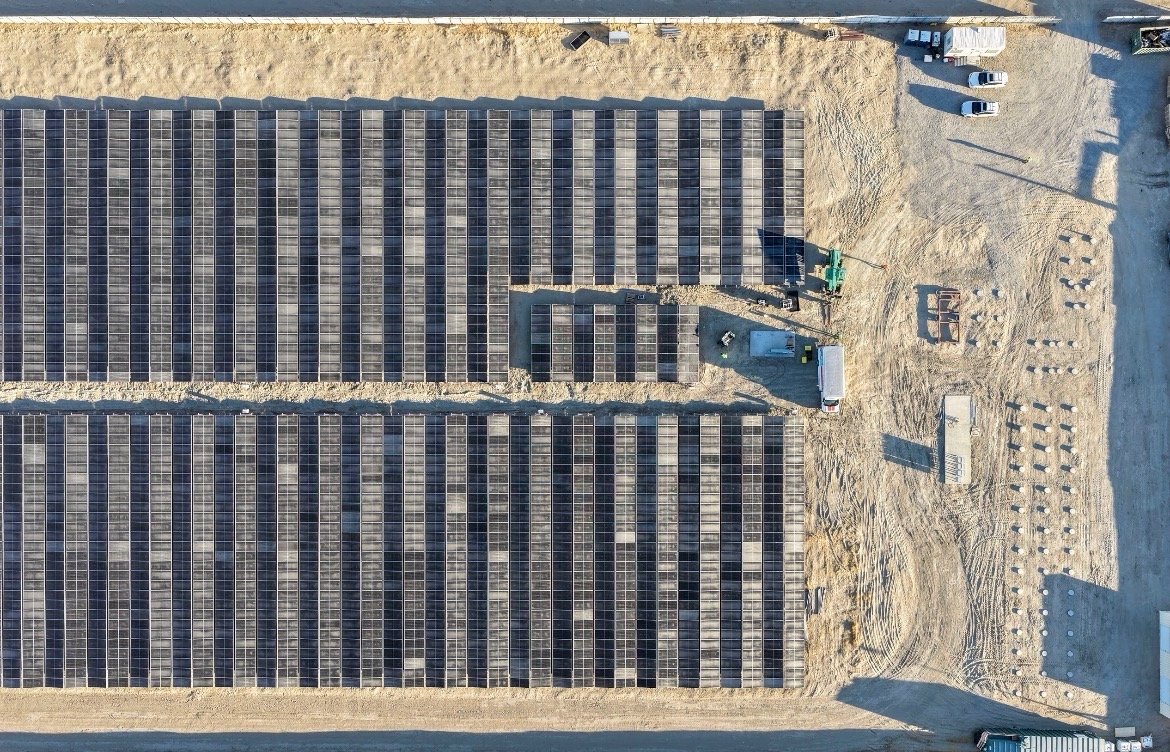
Last week the hydrogen electrolyzer team @terraformindies pulled off yet another first, the sustained production of >99.9% pure H2 from our vertically integrated, California-manufactured electrolyzer stack while it was coupled directly to a solar array at our Muroc desert test site.
WTAF?
Most commercial electrolyzers need carefully conditioned power from expensive battery-meditated backup systems. Ours runs directly off the sun. Clouds pass, the day turns to night, and we maintain purity from a stack whose Bill of Materials cost is well below $100/kW.
Terraform's single-minded focus on capex reduction has allowed us to convert sunlight to hydrogen in an unprecedented demo at a cost below $2/kg. If that wasn't enough, we have a crystal clear plan of steady execution to push that cost below $1/kg in the coming years.
Rather than linger on this point in response to experts-with-spreadsheets who said this was not only beyond my team, it was forbidden by known laws of physics, let me tell you a bit about how we actually pulled this off.
We started building this test site in March. Once the panels and electrics were in place the CO2 team were the first to demonstrate production on site. Close behind them the electrolyzer team planned the logistics necessary to project substantial operational ability into a hostile test site in the middle of nowhere. It's no good to find you're missing a wrench half way through the day!
Much of the test prep was completed before dawn, when the panels go live. The sun came up and the stack immediately started splitting water into hydrogen and oxygen. The team carefully monitored purity and flammability as the sun climbed through the sky. As designed, the stack warmed up and conducted even more power, maintaining solid production until late afternoon when the setting sun shaded the panels.
Terraform's synthetic fuel system is uniquely designed to follow the sun and extract the maximum possible value from cheap solar panels.
Hydrogen is a pernicious molecule. It leaks through and embrittles metals, burns almost invisibly at a wide range of mixtures in air, burns hot and fast and can easily undergo detonation transition, and has about half a dozen other spookily dangerous properties. My advice is to never work with it unless you absolutely have to. The Terraformer produces and consumes H2 in one compact discrete area with a minimum of complexity and fuss, and as expected this demo was completed in accordance with our rigorous safety standards and no unscheduled excitement!
This successful demonstration was also a profound milestone for the team after a testing anomaly last December compelled us to finally rip off the bandaid and move decisively towards the "future design" with half the parts but considerable complexity in assembly. No-one else makes electrolyzers this way and we, more than anyone, know exactly why. And also how to do it anyway, translating directly into a unique cost advantage.
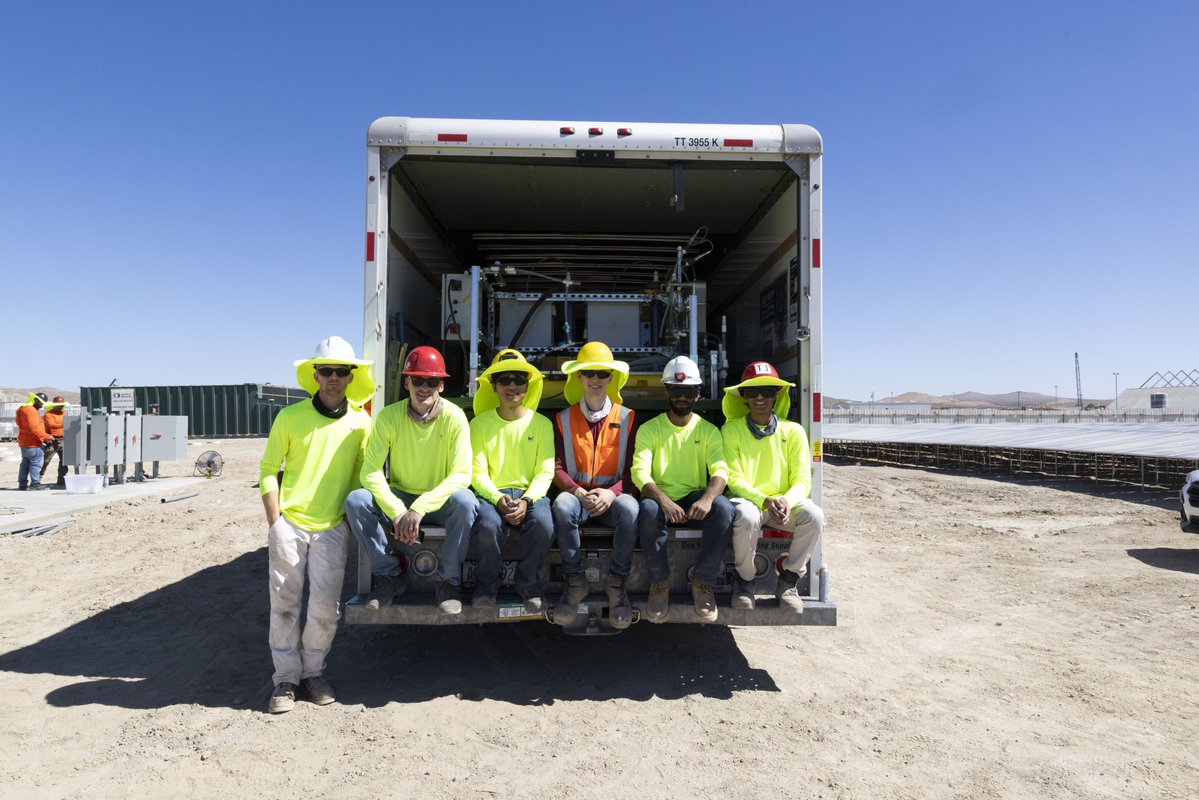
A huge congratulation to Ken, Sherman, @ckalitin, Nikhil, Abdullah, and Aaron for their successful test campaign.
Terraform's hydrogen and CO2 are the chemical precursors for synthetic methane and methanol, which we make in our own synthetic fuel reactor.
Combined, we make oil and gas out of sunlight and air. We are breaking the geological and geographical monopolies on oil production.
In the limit, Terraform will deploy these electrolyzers by the millions and they will all be plug-and-play with solar PV arrays.
The Muroc smoke test campaign is far from over.
We will win!
RFA ONE is on the launch pad. For the first time, our rocket is standing at SaxaVord Spaceport as we continue preparations for launch. Next step: first-stage hotfire testing.
@dhruvesh_naik@zone5aviation Vikram-1 has a ~50% higher takeoff twr from what I gather, and its smaller size makes the acceleration seem even more impressive
ORBIT ACHIEVED. 🚀
Vikram-1 Test Flight-1 has reached orbit. India's first privately developed orbital rocket has completed its final burn and injected its payloads into a ~450 km orbit, making India the third country in the world with private orbital launch capability.
History is made. 🇮🇳
#Vikram1 #JourneyToOrbit #SkyrootAerospace
It’s official. 🚀
July 18. 11:30 AM IST.
Vikram-1. Test Flight-1. Mission Aagaman.
India’s first private orbital launch from the historic First Launch Pad at SDSC-SHAR, Sriharikota.
The countdown begins. 🇮🇳
#Vikram1#MissionAagaman#SkyrootAerospace#OpeningSpaceForAll
Tomorrow, we launch.
At sunset tonight, Artemis II waits on the pad, ready to carry astronauts potentially farther than any humans have traveled in more than half a century.
The next era of exploration begins.
desalinate seawater. mine the brine.
liquify and separate air.
synthesize ammonia and methane with haber-bosch and sabatier respectively. fischer-tropf for longer hydrocarbons.
we can have abundance but all of this hinges on super cheap electricity ~10$/MWh
Wow, so he's really going for a dyson swarm huh?
Would be a full circle moment when @elonmusk builds a giant planet-scale supercomputer like Deep Thought in the Hitchhiker's Guide to the Galaxy