Het arrest van het gerechtshof Den Haag in mijn zaak gister leest als 1984 in de praktijk.
Zo zegt het hof dat “negroïde” een beladen term is gezien de “historische achtergrond”. Als je dat woord contrasteert met “blank” is er sprake van een “evident racistische” betekenis.
Laat dat even doordringen: het gewoon beschrijven wat je ziet, het beschrijven van iemand z’n feitelijke huidskleur is inmiddels genoeg om als racist te worden gelabeld én te worden veroordeeld.
Waar gaat dit nog over? In politiedossiers wordt ook gewoon het woord “negroïde” gebruikt. Overal in de maatschappij wordt dat woord gewoon gebruikt. Je moet wel echt in een totaal extreem links-activistische bubbel zitten om zo’n beschrijving te labelen als “evident racistisch”.
Dat laatste is echter precies wat er aan de hand is met de Nederlandse rechtspraak: het is bevooroordeeld. Rechters en raadsheren zijn een soort linkse activisten geworden die met hun rechtspraak andersdenkenden het zwijgen willen opleggen.
Zielige minderheidsgroepen (lees met een negroïde huidskleur) moeten koste wat het kost beschermd worden tegen blanke “racisten”. Zelfs als het gaat om gruwelijk geweld waarbij een blanke man bijna het leven uit wordt geschopt. Zelfs dán weegt het voor de Nederlandse justitie zwaarder dat deze minderheden zielig zijn. Zelfs dán heb je als Nederlands opiniemaker, politicus, dissident of burger ter rechterzijde het nakijken.
Het is echt compleet waanzinnig.
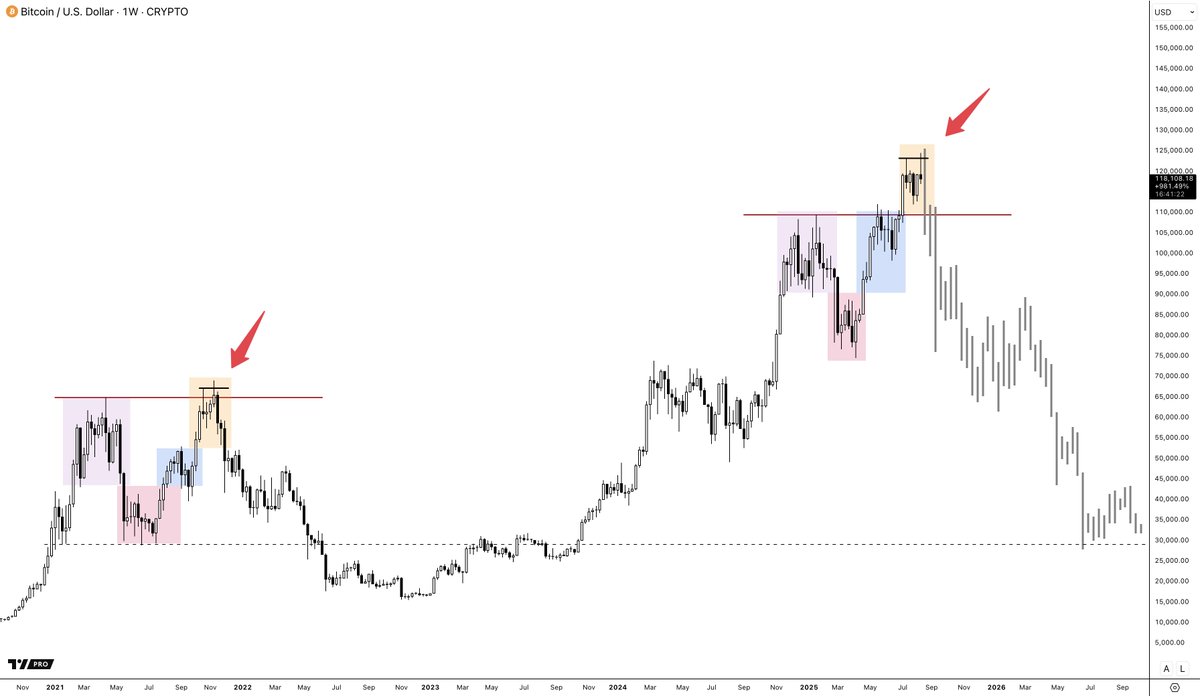
@CryptoCon_ Hi thanks for al the content and keep up the work! Always nice to see various views, let's see what we get.
Is it me: or is there an error on the picture? Blue and red in 14/15 and 16/17 cycle does not seem to correspond with the legend
Ik heb vier artikelen geschreven over de stikstofcrisis, omdat het dossier steeds verder vastloopt — niet door Brussel, maar door onszelf. Onder het mom van "Ik leg het nog één keer uit hoe het zit."
Over hoe een elegante Europese Vogel- en Habitatrichtlijn in Nederland is veranderd in een juridisch doolhof.
Over hoe we beheer en vergunningverlening door elkaar zijn gaan halen.
Over hoe jurisprudentie steeds strenger werd omdat bestuur en beleid te weinig leverden.
Over wetenschap die moet doen wat ze niet kán: zekerheid geven tot achter de komma.
En uiteindelijk over moraal: het afschuiven van collectieve verantwoordelijkheid op individuele boeren en ondernemers.
De kern: een systeemfout, geen natuurwet.
Zolang spoor 1 (natuurherstel, beheer, verantwoordelijkheid) onderontwikkeld blijft en spoor 2 (vergunningen) alles moet oplossen, blijft Nederland vastzitten.
Vier artikelen, één lijn, één ongemakkelijke conclusie.
Voor wie verder wil kijken dan millimollen en modellen.
Deel 1: https://t.co/JCHE5zAIuP
Deel 2: https://t.co/g9Y8uSJkWI
Deel 3: https://t.co/5QAT8hNMlU
Deel 4: https://t.co/00pWbR4ydv
@StikstofInfo@DilanYesilgoz@RobJetten@HenriBontenbal@ajflach@lientje1967@FemkeMarijeW@MonaKeijzer@DiederikBoomsma@Pieter_Grinwis
🚨 Here is the full 42 minutes of my crew and I exposing Minnesota fraud, this might be my most important work yet. We uncovered over $110,000,000 in ONE day. Like it and share it around like wildfire! Its time to hold these corrupt politicians and fraudsters accountable
We ALL work way too hard and pay too much in taxes for this to be happening, the fraud must be stopped.
The 12 best health purchases I made in 2025:
1. Reverse Osmosis Water Filter (with re-mineralizer)
RO removes microplastics, heavy metals, PFAS, chlorine, fluoride, and hundreds of contaminants.
Use it with a remineralizer and it makes the water elite.
What goes down 👇 must come up 👆
🧵
- - -
(1/2) Lots of great work coming out lately on the correlation of Bitcoin with the ISM PMI (Purchasing Managers' Index).
I analyzed the full dataset of the PMI from 1948 - today, and found that we are currently in the LONGEST running contraction (defined by PMI < 50) in the index's history! 🤯
The AVERAGE contraction length is 1.1 years, and we are now 2.92 years into the current one, making this a 3-sigma event (an extreme outlier, by definition occurs <0.3% of the time).
What does this imply? For cyclical time series data, the force of mean-reversion tends to be stronger, the more extreme the outlier is.
To me, this, along with several other macro indicators and political/news headlines, all suggest that we soon move to RISK-ON... with Bitcoin - the king - being a primary beneficiary. WE GO HIGHER.
This is such a great read-
In addition, if OG sellers are maximally profit-taking, the question is: why specifically now beyond current gains and enhanced liquidity, but also future expectations?
OGs are a special group of investors. They saw something nobody saw before and took early chance, in size. This implies that the very risks these sellers are seeing may be the same rewards they once underwrote as one of the earliest cohort of buyers- which means by definition, the factors must be: non-consensus, improbable, and existential.
Worth thinking about this framing as well.
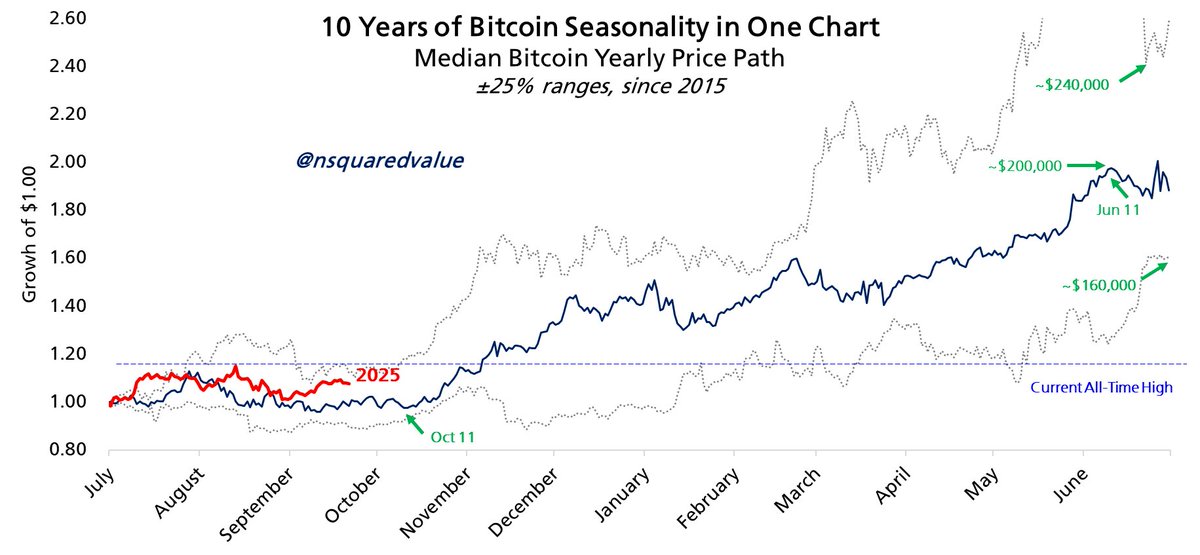
There is a 50% (or better) chance that Bitcoin will be $200,000 by June.
This chart takes the annual seasonal pattern and shifts it 6 months to better illustrate the bull market periods.
Bitcoin's bull market runs from Oct 11 to Jun 11.
$200k by June is an average monthly return of about 7%, about 120% annualized.
50% or better chance of a new all-time high in early November.
α
Er bestaan hardnekkige misverstanden over de effecten van de HRA. Ik lees in NRC “De hypotheekrenteaftrek is de reden dat we een huizencrisis hebben”
De hypotheekrenteaftrek
is oorspronkelijk niet bedacht om huizenbezit te stimuleren, maar om kosten fiscaal te compenseren die destijds als inkomen golden. Pas in de jaren zeventig presenteerde Den Uyl de HRA als instrument om de arbeider aan een huis te helpen. Daarmee werd een technische fiscale correctie politiek ingekleurd.
Ook de causaliteit houdt geen stand. Terwijl de HRA de afgelopen jaren fors is afgebouwd, zijn de huizenprijzen juist harder gestegen dan ooit. Vanaf 2014 werd de aftrek versneld beperkt, vooral voor hogere inkomens. In diezelfde periode verdubbelde de gemiddelde woningprijs volgens het CBS: van circa €215.000 in 2014 naar ruim €430.000 in 2022. Dat had alles te maken met de extreem lage rente, een tekort aan bouwlocaties en een stokkend vergunningenbeleid niet met een aftrekpost.
De redenering om de HRA nu af te schaffen, leunt sterk op cijfers uit het verleden. Dat de regeling decennia terug een prijsopdrijvend effect had, staat buiten kijf. Maar wie vandaag pleit voor afschaffing, moet overtuigend laten zien wat het voor de toekomst betekent. Zonder zo’n analyse is het beleid gebaseerd op de achteruitkijkspiegel.
De cijfers verdienen ook nuancering. NRC noemt 11 miljard euro aan HRA, “tweemaal zoveel als de huurtoeslag”. Maar het hele huurstelsel kost de belastingbetaler veel meer, circa 4 miljard huurtoeslag én ongeveer 17 miljard die jaarlijks via aftopping en woningcorporaties in het systeem wordt gepompt. Samen meer dan 20 miljard per jaar, bijna het dubbele van de HRA. Het is dus nogal suggestief om uitsluitend de hypotheekrenteaftrek als belastingcadeau te bestempelen.
Bovendien wordt vergeten dat woningbezit de overheid óók direct geld oplevert. Jaarlijks komt er circa 4 miljard binnen via het eigenwoningforfait, 4 tot 6 miljard via de overdrachtsbelasting en nog eens 6 miljard via de onroerendezaakbelasting van gemeenten. Alleen al deze drie posten zijn goed voor rond de 15 miljard euro per jaar. Het idee dat de staat enkel geld “kwijt” is aan huiseigenaren, is aantoonbaar onjuist. Het levert geld op.
Daar komt bij dat het beeld van de HRA als “overheidsgarantie dat hoe rijker je bent, hoe meer voordeel je krijgt” inmiddels achterhaald is. Sinds 2023 geldt voor iedereen hetzelfde maximale aftrektarief van 37,05 procent. De progressieve voordelen zijn verdwenen; de mythe dat de HRA een belastingvoordeel voor de bovenklasse is, behoort tot het verleden.
De overheid wijst graag naar de hypotheekrenteaftrek als prijsopdrijver, maar vergeet haar eigen rol. Niet de aftrek, die inmiddels fors is beperkt, maar het gemeentelijke grondbeleid heeft de woningprijzen echt opgejaagd. Weilanden van €7 per m² werden door gemeenten omgezet in bouwgrond van €300 tot €600, in de Randstad zelfs richting de €1.000. Inmiddels bestaat 30 tot 40 procent van de woningprijs, in stedelijke gebieden zelfs de helft, uit grondkosten. Zo profileert de overheid zich als hoeder van betaalbaarheid, terwijl zij zelf de machtigste prijsopdrijver is.
Tot slot. Wie echt verder wil kijken, zou moeten nadenken over de integrale fiscale behandeling van woningbezit. Het afbouwen van de HRA kan prima samengaan met het afbouwen van de vele belastingen en heffingen die de overheid juist rondom het bezit van huizen heeft ontwikkeld, zoals het eigenwoningforfait en de overdrachtsbelasting. Zo kan een hervorming kostenneutraal worden vormgegeven, en tegelijk bijdragen aan een eenvoudiger en transparanter stelsel.
Het afschaffen van een negentiende-eeuwse fiscale correctie zal de woningmarkt echt niet plots toegankelijk maken. Het is niet de HRA die de boel in brand zet, maar de overheid die weigert te bouwen.
“De hypotheekrenteaftrek is de reden dat we een huizencrisis hebben” https://t.co/ZqJYzfDVG6
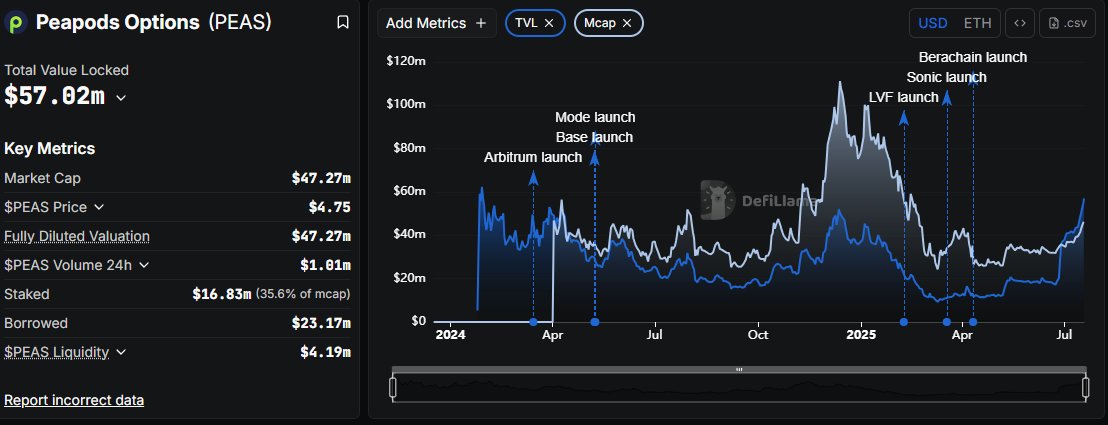
The DeFi protocol in question, as most of you guessed was indeed $PEAS - @PeapodsFinance
& for the first time in it's history the TvL is higher than the market cap.
Here's a thread on why I think it could be one of the biggest & sustainable $ETH DeFi protocols of all time.
👇
Just for context...
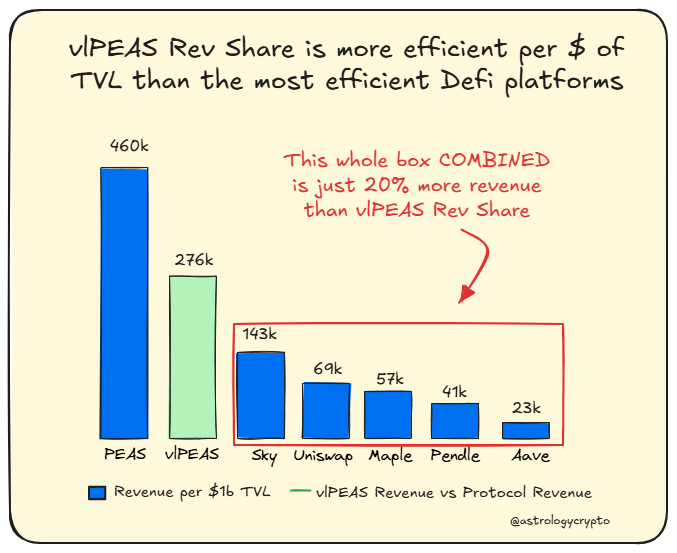
vlPEAS Revenue share, as in the $$$ that goes to vlPEAS holders
...would be just 20% less than the TOTAL COMBINED REVENUE of $SKY $UNI $SYRUP $PENDLE $AAVE when benchmarked at the same TVL
Yeah, $PEAS is going higher!
Time allocation is now more important than capital allocation.
Capital allocation is a solved problem.
Just buy Bitcoin and hold it until you reach escape velocity.
The left and right sides of the bell curve understand this.
But time allocation?
This is an evolving field of study.
Personally I'm baking some unique assumptions into my time allocation decisions.
Assumptions no one in human history has ever had to navigate.
Namely, that AI will completely upend the world as we know it inside of 10 years.
There will soon be an abundance of tireless intelligence that exceeds the capacity of the smartest humans on earth.
They will be solving humanity's biggest challenges around the clock.
That seems entirely reasonable to me.
And 10 years is probably a conservative timeline.
Even if you completely discount the emergence of a recursively self-improving superintelligence, you should at least consider the possibility that >90% of all paid mental work will disappear.
There will be vast societal and economic consequences.
Life 10 years from now could be far better or far worse.
The optimist in me chooses to believe it will be far better as fewer people will be wasting time on menial work, and the price of things will fall dramatically when priced in BTC.
But how should you act if you believe the world will change in an extreme way within the next 10 years?
Everyone is in different situations.
Personally I'd do everything I could to get as close to 1 Bitcoin as possible within the next 3 years.
But if you're already in a solid financial situation, you should probably add a much larger premium to your time than you already do.
That's what I'm doing.
We are living in a golden age that we will look back on with extreme nostalgia.
Similar to how many people look at the time before the Internet as a special time... But x100
- No mass reliance on UBI.
- Opportunities for upward mobility still exist with hard work and ingenuity.
- No autonomous face-scanning police roaming the streets.
- Most places are still safe and pleasant to visit.
Are you soaking it in? Are you experiencing this time fully instead of living for the future?
As I consider how I want to educate my children, it's obvious that the current system isn't setup for the world that's coming.
20th century jobs as we know them will disappear.
Worker drones will be useless.
So instead of inculcating the habit of daily mental work and prioritizing the next grade, the next milestone, etc...
(as I was trained to do)
I will raise kids who know how to enjoy the present.
I will encourage their natural ability to live with energy and joy today.
I will teach them to value mental, physical, and spiritual discipline.
They will dance, laugh, explore, and love.
They will do strenuous physical activities, meditate, and spend lots of time in nature with friends and family.
They will play sports and make art.
And rather than prioritize more financial wealth, I will do these things with them along the way.
Because I now view this as the best way to allocate time to prepare for the likely future.
And if I'm wrong?
The beauty is I'll never regret these things no matter what happens.
Study time allocation. Consider the future we're headed towards.
And adjust course accordingly 🫡