For those wondering: I’m not launching a “writing career.” I’m starting a long, ugly fight.
I fully expect to be misunderstood, misquoted, blocked, and despised.
Good. @Canada has enough polite conservatives.
I’m here to be the one who says the part you’re not supposed to say.
@PardyBruce@Honickman Maybe the repair starts when both sides admit they confuse liberty with license. Ottawa calls management freedom. Alberta sometimes calls grievance freedom. A country needs ordered liberty, not naked self-interest with better branding.
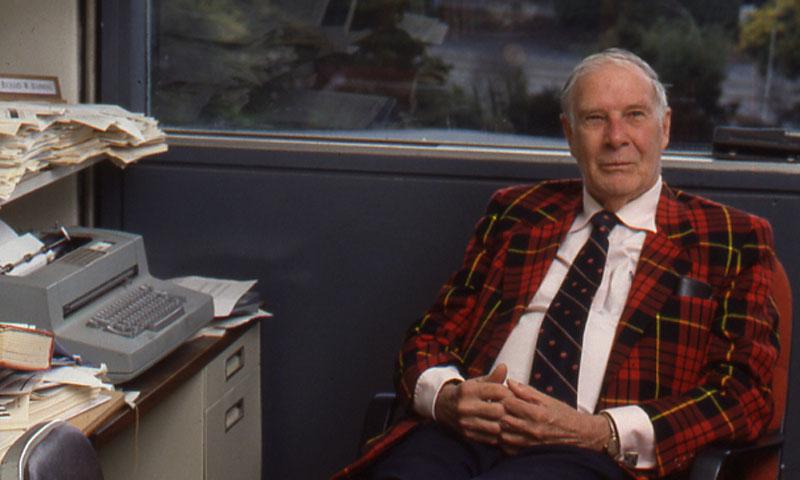
A mathematician at Bell Labs noticed that the scientists who won Nobel Prizes and the ones who never amounted to anything were equally smart, equally hardworking, and equally credentialed, and the only thing that separated them was a single question almost nobody is brave enough to ask themselves before they die.
His name was Richard Hamming.
He spent 30 years at Bell Labs, in the same building as John Tukey, Walter Brattain, and a long list of physicists who took home Nobel prizes for work they did down the hall from his office, including the legendary Claude Shannon.
His invention of error-correcting codes made modern computing possible. He has won the Turing Award. And all the while he was creating his own legacy he was secretly doing a study on the people around him.
The study was straightforward. 2 Teams. The legends and the lost. Same I.Q.s. Degrees same. Same desk hours. Same access to the world’s best resources.
And yet, at the end of 40 years in their careers, one group had changed entire fields, and the other group could not be remembered by their own colleagues five years after retirement. He wanted to discover what the actual difference was.
In March 1986, he stood before 200 researchers in a Bellcore auditorium and told them what he had seen.
He said it all came down to one question. And hardly anyone he ever met was willing to ask it directly.
He called it the Friday-afternoon ritual. He spent years blocking out his Friday afternoons and not doing anything productive with them every week. No experiments. No meetings. No deliverables.
He called it Great Thoughts Time. He sat down with a notebook and asked himself a couple of questions in order. What are the most relevant problems in my discipline? And why I am not working on either of them.”
Most weeks, the answer was the same, he said. For a week now he had marched confidently in a direction he did not think was the most important direction. He was a goer. He worked a bit. He was getting clean results that would publish in respected journals. (
And for five days straight he'd been lying to himself about whether any of it mattered.
The reason almost nobody does this ritual is because the honest answer is unbearable. The thing is that if you sit down on a Friday afternoon and say out loud that you are not working on the most important problem in your field, now you have to do something about it.
You have an immediate change in direction, or you have to keep lying to yourself every week from that point on. Most people choose the lie.
In the short term it’s cheaper, but over a career it’s more expensive.
Hamming took the ritual a step further in the Bell Labs cafeteria. He began approaching scientists he barely knew, asking them what they thought the most important problems in their field were.
A week later he would ask them why they had not worked on these problems. Eventually people wouldn't have lunch with him. “I had to keep finding new tables,” he said.
Nobody had a good answer for that, and being around someone who kept asking it made every meal feel like a performance review.
The line that broke me is the line that most people skim over in the transcript. His words: If you do not work on an important problem you are unlikely to do important work.
That’s not motivational line. It is a rational one. You cannot make a great result from a problem that does not matter. Input restricts the output. The choice of the problem is the ceiling of the career.
The transcript has been freely available on the internet for almost 40 years. Stripe Press published the complete lectures as a book. Naval Ravikant quotes it all the time. It’s still given out to new hires at every serious engineering lab in Silicon Valley.
Most people will not run the ritual this Friday. They will be busy. They always are.
@aakashgupta It's astonishing to see they did when compared to how we do things (overcomplicated with 'technology'!?). What's most remarkable is that it was all engineered and built by people who had no 'formal' (read: government) education.
“They work by dislocation of attention. That is why new styles are necessary for perception. The function of the arts is training in perception. It is not instruction. It is to train your ability to see and use your senses.”
Marshall McLuhan
‘Education in the Electronic Age’
‘67
Canada has had a longer continuous, unbroken period of monarchical government than any of England, Scotland or Northern Ireland. This is due to the Interregnum of 1649-1660, at which time Canada was part of New France.
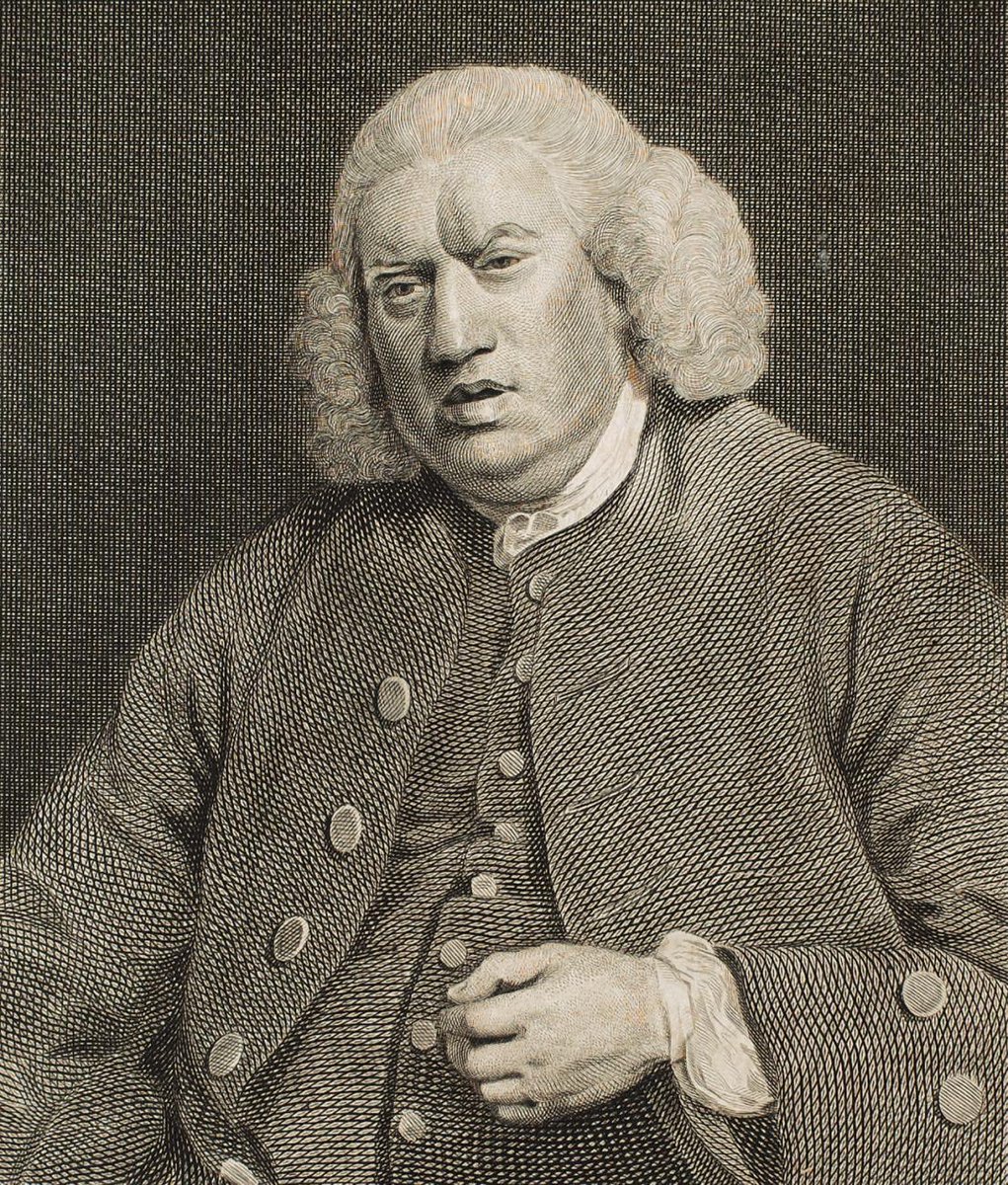
Samuel Johnson’s advice for Twitter users: “I therefore retired from all temptations to dispute, prescribed a new regimen to my understanding, and resolved, instead of rejecting all established opinions which I could not prove, to tolerate though not adopt all which I could not confute. I forbore to heat my imagination with needless controversies, to discuss questions confessedly uncertain, and refrained steadily from gratifying my vanity by the support of falsehood.” (Rambler no. 95)
“If there is a single most deplorable intellectual failing on the conservative side, it lies in reducing every question of law, constitution, culture and society to a question of economics.”
Sir Roger Scruton
Just wrapped up a fascinating conversation with Canadian writer and academic Nathan Pinkoski, who has authored a new introduction to Jean Raspail's dystopian fiction, The Camp of the Saints.
The Camp of the Saints is one of the most suppressed books of the 20th century, but it is now soaring to the top of Amazon's best seller list.
Interview to be released on YouTube and X (in case YouTube takes it down) next week.
“There is in Shakespeare neither contempt of religion nor scepticism, and he upholds the broad laws of moral and divine truth with the consistency and severity of an Æschylus, Sophocles, or Pindar. There is no mistaking in his works on which side lies the right; Satan is not made a hero, nor Cain a victim, but pride is pride, and vice is vice, and, whatever indulgence he may allow himself in light thoughts or unseemly words, yet his admiration is reserved for sanctity and truth.”
—John Henry Newman, The Idea of a University
@Shawnbuckleylaw Property rights appear nowhere in the Charter. A rather curious omission; I'm told that it was too difficult to deal with as Aboriginal groups were going to make a stink if it was included, and that's why it was left out.
Today is Flag Day, commemorating the introduction of the Liberal Leaf in 1965 under prime minister Lester B. Pearson. What does the Liberal Leaf mean? Where did it come from? What about the Red Ensign mean? A thread. 1/
@c2cjournal A simple 'vote' isn't a workable plan. Grown-ups do the homework: demands, costs, legal path, transition paper, governing machinery. Then a referendum becomes useful leverage. Without that, it's a stomped foot and a squeaky toy.
@DroletRenee@MartinC64018406 Égalité, égalité! Faut de l’égalité! Après 60 ans, les péquistes ont fait rien d’autre que chialer sur l’assimilation — canadienne, ricaine; pis leur propre politique du « n’importe qui, tant qu’il parle français » garantit exactement le même résultat.
@EABeauregard Good diagnosis: elites are inevitable, even necessary; build a bench or be ruled. But Kirk’s test remains: restraint. Duncan's strong on capturing institutions; thin on leashing power once we win. Without limits + local ballast, it’s just a new logo on the same machine.