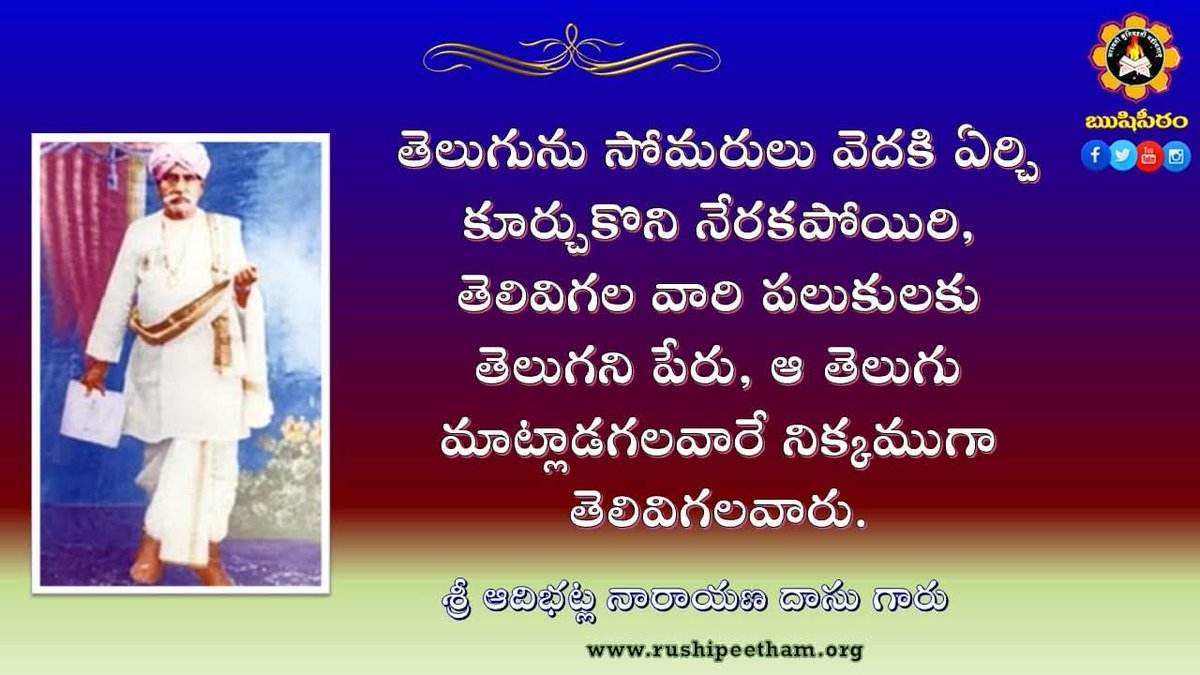
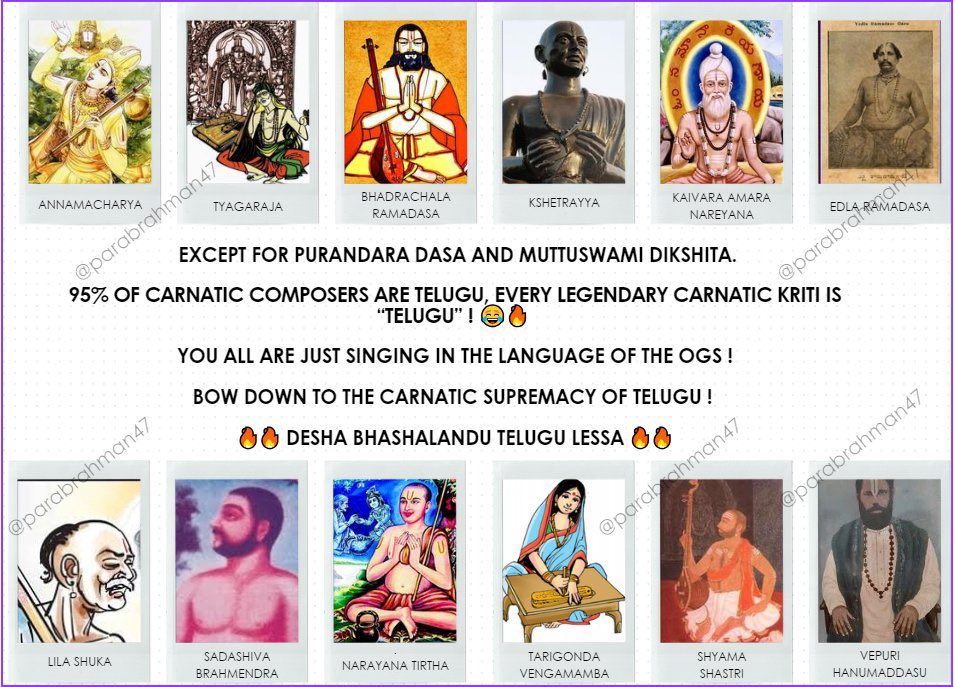
ఈరోజు అనగా సాంప్రదాయ కాలంధర ప్రకారం (పుష్య బహుళ పంచమి రోజున) సుప్రసిద్ధ కర్ణాటక సంగీత వాగ్గేయకారుడు, మనమందరం గర్వించదగ్గ తెలుగువాడు, శ్రీరామచంద్రుని అపర భక్తుడు త్యాగరాజు గారి ౧౭౫వ పుణ్యతిథి. జన్మతః ఆయన పేరు కాకర్ల త్యాగబ్రహ్మం.
Non-Telugus singing Bantureeti is like “Kolu… viyya… vayya…”
Are you calling three different people?
It’s “Koluvu Iyyavayya” one shot, like #Tyagaraja intended. This isn’t a group project.
Correct or leave #Rama alone. Respect Telugu 🎶🔥😎
#Carnatic#TFI#OG#Telugu#Music
తమ్ముడు తమ్ముడే పేకాట పేకాటే
@ncbn Be extremely careful.
People of AP need to be extremely careful. Once you get money and support, it does NOT matter who your CM is. Gates will call the shots. Do NOT forget that Gates treats India like a lab rat in his own words. This MoU is very dangerous. @PawanKalyan
The MoU includes centralized data lakes and predictive analytics, meaning vast amounts of sensitive data—citizen health records, farmer yields, student performance—will be collected and processed. If the Gates Foundation or its partners design these systems, they will eventually gain influence over how that data is used or even who gets access. Globally, Gates-backed projects like digital ID systems (e.g., in Africa) have raised questions about data sovereignty—Andhra Pradesh risks giving similar leverage if it doesn’t retain full ownership and oversight.
How many vaccine trials sponsored by Gates Foundation were tried in erstwhile united AP without consent? How many deaths resulted?
Are we going to let Bayer Monsanto take control over farming? The MoU with AP emphasizes “climate-resilient agriculture” and tech-driven solutions—areas where Bayer-Monsanto’s GM seeds, herbicides, or digital farming tools could slip in. If the state adopts these under the partnership, it might not make Bayer a monopoly outright, but it could cement their influence, locking farmers into a cycle of buying patented seeds and chemicals while sidelining local varieties or competitors.
Evidence of monopoly concerns isn’t just historical. In India, Monsanto’s Bt cotton already covers over 90% of cotton acreage, and farmers have long complained of high costs and dependency—issues that led to legal battles, like the 2022 Supreme Court case where Monsanto clashed with Indian firms over patent royalties.
GMO food is NOT the way to go!
Difficult for me to say this. But let me.
To the young professionals who write to me saying they want to give up corporate jobs and work on some Indian Knowledge Systems out of sheer passion.
Don't do it. Especially if you have responsibilities to fulfil.
Passion projects are better relegated to weekends. There is a lot of self study you could do to strenghten your knowledge. What you can do instead of giving up a job that sustains you and then wonder what to do.
1) Online Sanskrit Courses (Vyoma Labs, etc have them)
2) Read unabridged Itihasa (Ramayana, Mahabharata) preferably in Sanskrit or in your mother tongue (translated, not reimagined) or Dr. Bibek Debroy's English translations. End to end.
3) Explore Yoga sutras, Arthashastra (Kangle), Charaka Samhita, Natya Shastra, etc according to your interest in their unabridged forms
4) Try forming reading groups, look out to engage with scholars.
Read, Reflect and repeat.
5) Your job would by then have given you a perspective of the world of problems which you are expected to solve. Think which problem you can solve using wisdom from Indian traditions. Easier said than done. But the sheer thinking, brainstorming and discussion is going to generate a congenial atmosphere.
5) Rekindle your family traditions. Probe the detail and rationale. Practice.
6) Pantheon willing, you would have built a niche using the combined insight and expertise. Too far off for me to predict, but you will be in a stronger position financially, spiritually mentally and intellectually. You would be in a position to influence a part of this world. You would have done more for Indian tradition than you would if you blindly give up a job and grope in the dark.
1/
India’s history is far older than we think, and deep in Chhattisgarh’s forests lie secrets waiting to be uncovered.
For over a century, ancient petroglyphs (rock paintings) have been found across the state. Some are 10,000+ years old, some 30,000 years old, and some… completely mind-boggling.
A thread 🧵— why we MUST invest in research.