🚨 Microsoft just open-sourced something every .NET developer using AI tools should pay attention to.
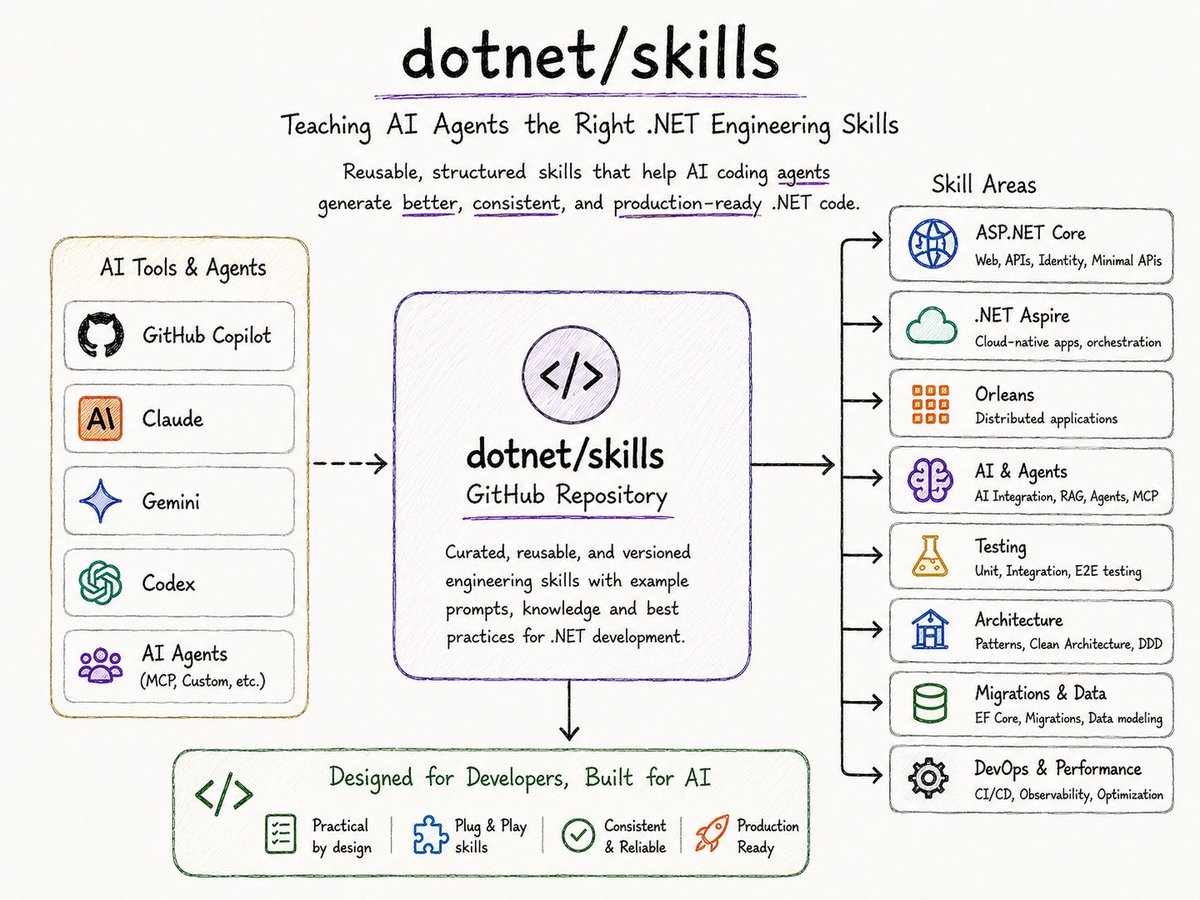
The dotnet/skills repo went public on GitHub. It's a curated set of reusable engineering skills that AI coding agents (Copilot, Claude, Gemini, Codex) can load on demand to write better, more consistent .NET code.
I've been running my own skills setup for months. Custom CLAUDEmd files, project-specific commands, repeatable workflows for writing, reviewing, and refactoring code. It works really well. But it's mine. Nobody else on the team gets to use it.
That's what changes now.
𝗪𝗵𝗮𝘁'𝘀 𝗮𝗰𝘁𝘂𝗮𝗹𝗹𝘆 𝗶𝗻 𝗶𝘁:
• Skills for aspnetcore, Aspire, Orleans
• AI + Agents patterns
• Testing, Architecture, Migrations
• Works with any agentic AI tool, not just Copilot
𝗪𝗵𝘆 𝘁𝗵𝗶𝘀 𝗺𝗮𝘁𝘁𝗲𝗿𝘀:
Most AI prompts in .NET projects get written from scratch every single time. Same context, same examples, same patterns. Typed into the chat over and over.
Skills flip that. The knowledge lives in the repo, the agent loads what it needs, and your code stays consistent across the team. No more "perfect prompt" trials.
This is the same approach that has been quietly winning in the Claude Code and Cursor communities. Microsoft is now making it native to the .NET ecosystem.
If you ship .NET code with AI in the loop, this becomes the foundation you build on top of.
Repo linked in the comments.
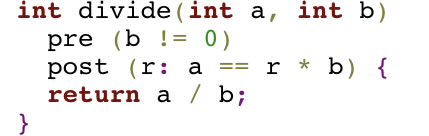
GCC16 supports contracts in C++. Among other things, you can specify in code your expectations regarding the parameters, as well as your expectations regarding the outputs.
How this is check depends on the execution profile.
You can specify it with -fcontract-build-level=...
-fcontract-evaluation-semantic=
ignore: no checks
observe: check; on fail call handler, continue
enforce: check; on fail call handler then terminate (default)
quick_enforce: check; on fail terminate immediately (no handler)
The default is enforce.
I wish there was an 'assume' setting which would optimize the code according to your conditions... saldy, this was not included in the specification.
BUT as it is stands, this is a great feature. You may think it is silly... but the purpose here is to make it easier to debug your code...
Lots of people assume that debugging means starting a debugger. For me, that's almost never the case.
Having good development-time checks makes it possible to solve really difficult problems without spending any time fiddling around.
How will this interact with AI coding? I anticipate that it might mix well with AI. We shall see!!!
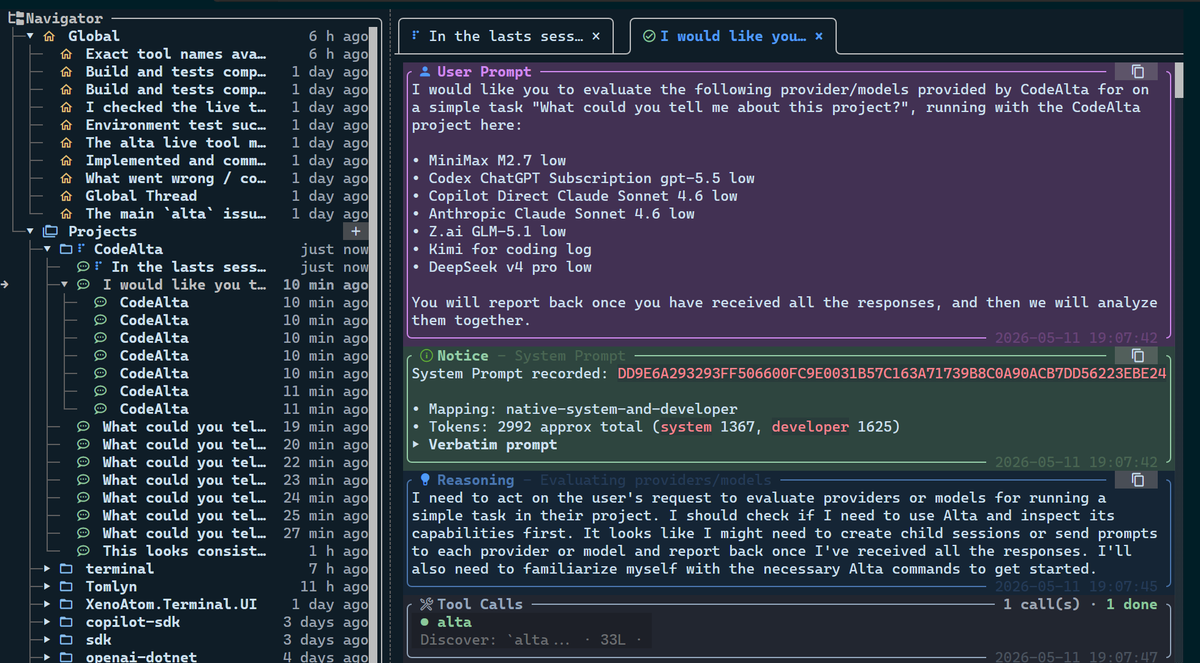
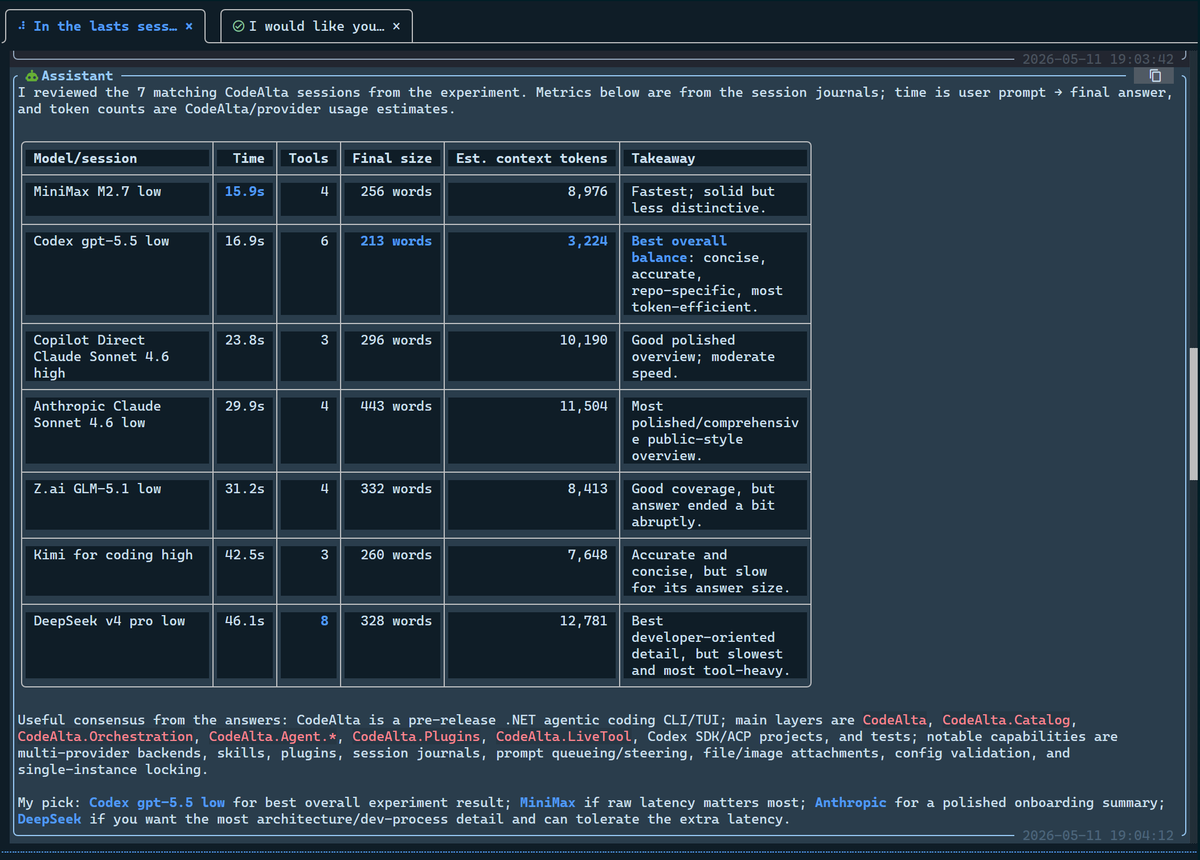
This weekend, I started implementing subagents in CodeAlta... and ended up with something even cooler: a self-pilot/inspection tool! 😎
CodeAlta can now list providers/models, launch sub-sessions with them, get notified about reports, and I can ask it if the live tooling was enough for the task, or how it should be improved. Each sub-sessions are fully inspectable, and I can manually continue them at any time.
Getting very close to the feature set I want for 1.0 so time to polish things and hopefully ship before summer.
This is exciting! Stay tuned! 🚀
If you're wondering how I get those colorized ping outputs. I use grc (Generic Colourizer).
It works with so many tools straight out of the box (df, lsblk, free, ps and more).
You can quickly install it with your package manager, for example:
$ sudo dnf install grc
Add these lines to your ~/.bashrc file if you use Bash:
GRC_ALIASES=true
[[ -s "/etc/profile.d/grc.sh" ]] && source /etc/profile.d/grc.sh
Then reload your shell:
$ source ~/.bashrc
For Zsh, add this to your ~/.zshrc:
[[ -s "/etc/grc.zsh" ]] && source /etc/grc.zsh
Then reload:
$ source ~/.zshrc
For other shells, you'll have to look up their manuals.
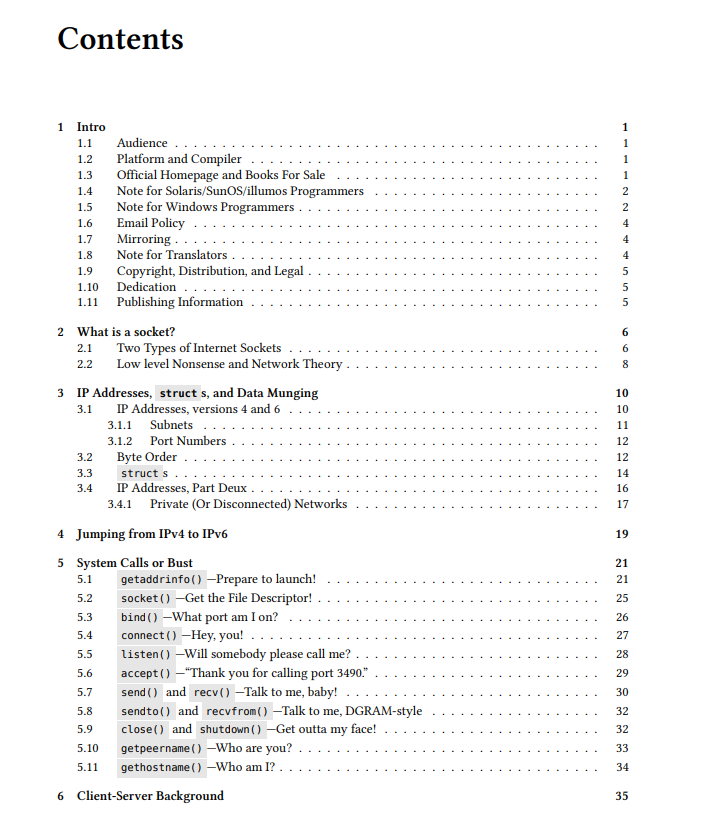
someone asked Beej how sockets work in C. he got tired of explaining it. so in 1995 he put it all online.
it's been the definitive socket programming guide for 30 years.
it covers everything: TCP, UDP, IPv4, IPv6, non-blocking I/O, select(), poll().
graduate OS courses worldwide assign it. it's funnier than any technical book has a right to be.
it's free and always will be.
Dirty Frag Linux kernel local privilege escalation vulnerability (CVE-2026-43284) mitigations are now available.
Read the blog for details: https://t.co/h13u1l5YCy
Finally able to talk about what I've been heads-down on for 6 months at @nvidia 🦀⚡
We just open-sourced cuda-oxide — an experimental rustc backend that lets you write CUDA kernels in pure Rust.
No DSLs. No FFI. No source-to-source step. Single source.
Short🧵👇
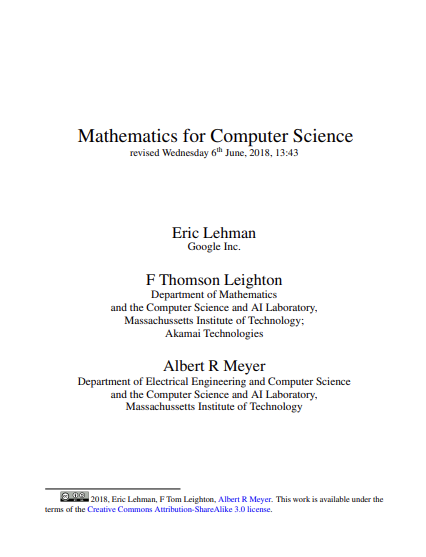
MIT JUST MADE A 1048 PAGE COMPUTER SCIENCE MATHEMATICS TEXTBOOK COMPLETELY FREE.
No paywall or signup. Just the full book.
This is the exact math foundation that every serious software engineer, data scientist, and AI researcher needs.
What is inside:
↳ Mathematical proofs from scratch
↳ Logic and logical formulas
↳ Number theory and probability
↳ Graph theory and structures
↳ Algorithms and complexity
↳ Data types, sets, functions, and relations
This is the curriculum MIT charges tens of thousands of dollars to teach in person.
You can read the entire thing for free right now.
The people who will build the next generation of AI systems are not just good at coding. They understand the math underneath the code.
This book is where that understanding starts.
Save this. Share it with every developer, student, and self-taught engineer you know.
Link in comments.








![sysxplore's tweet photo. If you're wondering how I get those colorized ping outputs. I use grc (Generic Colourizer).
It works with so many tools straight out of the box (df, lsblk, free, ps and more).
You can quickly install it with your package manager, for example:
$ sudo dnf install grc
Add these lines to your ~/.bashrc file if you use Bash:
GRC_ALIASES=true
[[ -s "/etc/profile.d/grc.sh" ]] && source /etc/profile.d/grc.sh
Then reload your shell:
$ source ~/.bashrc
For Zsh, add this to your ~/.zshrc:
[[ -s "/etc/grc.zsh" ]] && source /etc/grc.zsh
Then reload:
$ source ~/.zshrc
For other shells, you'll have to look up their manuals.](https://pbs.twimg.com/media/HIGs1u_XUAAaULS.jpg)