Today is the 82nd anniversary of D-Day – the Allied landings in Normandy, which significantly hastened the countdown to the Nazis' collapse in World War II. It is one of the most important moments of unity among the defenders of life in human history, and it was less than a year until the peoples’ aspiration for freedom and the hope of peace prevailed in May 1945. It happened then. We are working to make it happen again today.
And although yesterday in Petersburg another cynical order to continue killing was issued for the army trying to destroy our freedom, history has seen this before. The Nazis also had their own hopes after D-Day. But freedom still wins. And even in the darkest circumstances, people find ways to come together to protect life.
I thank all those who are now helping to protect the values that prevailed in World War II. I thank everyone who is defending life. Glory to Ukraine!
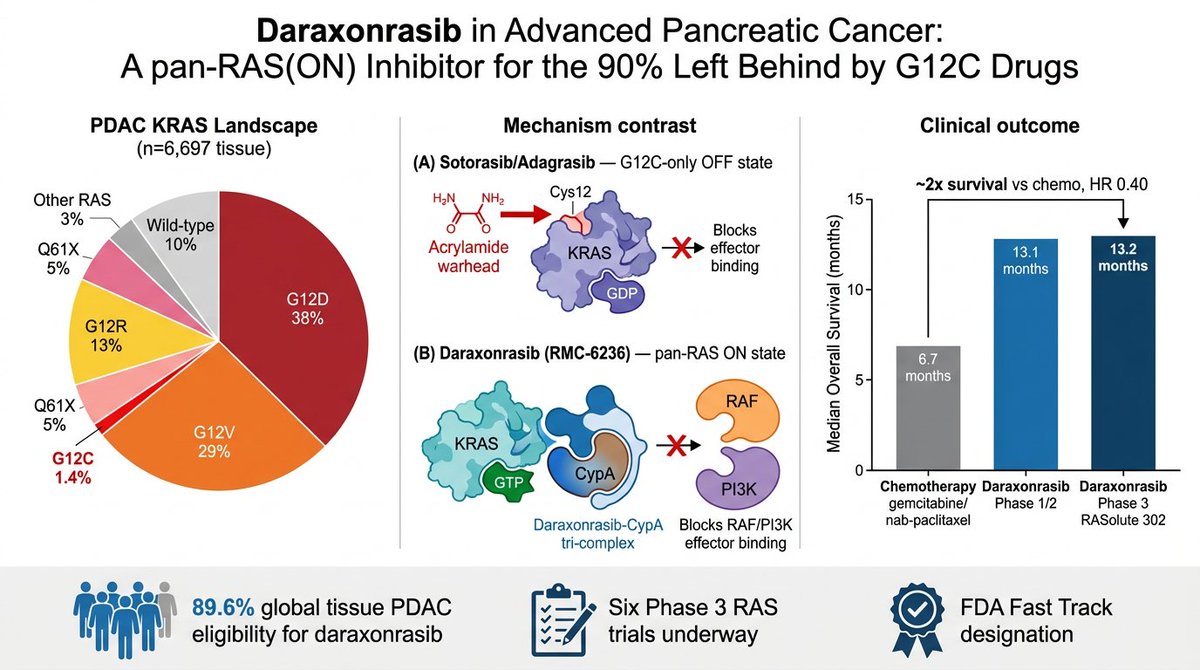
RAS finally getting drugged is one of the great stories in modern biology, and almost nobody outside oncology understands why it's such a big deal.
YOU'LL LEARN SOMETHING AWESOME TODAY.
i am going to keep this as understandable (and simple) as i can.
OPEN THE THREAD.
🧵
This blog shares some thoughts on protein and genome foundation models. The first part explains some of the concepts by training models for example tasks. The second part is opinion on the state of the field.
https://t.co/ZBFyFaTGdS
Five cancers that used to be death sentences. Pancreatic. Glioblastoma. Triple-negative breast. Renal. Melanoma. The median survival for metastatic pancreatic cancer is still 6 months. Glioblastoma, 15 months.
Now personalized mRNA vaccines are producing complete remissions in some of these patients. Not responses. Remissions.
BioNTech’s pancreatic cancer vaccine has 6-year follow-up data. 8 of 16 patients who mounted an immune response are still alive. For a cancer that kills 95% of patients within 5 years, that's incredible.
Topol’s pyramid here maps the trajectory. From broad checkpoint inhibitors at the base to personalized neoantigen vaccines at the peak. The technology is climbing.
Tucker Carlson interviews a British doctor who worked in Gaza.
"Four young teenage boys were brought in, all of whom who'd been shot in the testicles."
software engineering in 2026:
- your package manager is compromised
- your cloud provider blocks your account
- github itself is hacked
software is solved
This sounds nice, but it's a great way to undermine the welfare state.
The strongest welfare states in the world (the Nordics) tax everyone, including nurses. And they give everyone universal healthcare, childcare, pensions, education in return.
When the middle class has skin in the game, they defend the system. When welfare is 'just for the poor', it becomes a poor program: stigmatized, underfunded, easy to gut.
That's why billionaires keep pushing this idea. The real scandal isn't that this nurse pays $12k.
It's that Jeff Bezos pays $0.
The outrage over Ben Gvir's video is loud. Netanyahu called it "not in line with Israel's values." The foreign minister called it disgraceful. "This is not the face of Israel." Spare us the hypocrisy.
This is the same government that has not touched Israeli settlers who have murdered over 16 Palestinians since the start of this year. The same ministers who have publicly stated their plan is to ethnically cleanse Palestinians from the West Bank and Gaza.
This is the same government whose Finance Minister Smotrich stood on a hill overlooking the Christian town of Beit Sahour in January, inaugurated an illegal settlement built on Palestinian Christian-owned land, land that was once meant for a Palestinian children's hospital, and declared their plan is ethnic cleansing.
This is the same government that has done nothing as settler terrorists attacked the Christian village of Taybeh over 200 times. While you read this, settlers are at the entrance of Taybeh, harassing its residents.
Ben Gvir and Smotrich are not rogue actors. They are executing Israeli government policy.
The only thing that upset Israeli officials and propagandists today was that it was filmed, and that the victims weren't Palestinian.
Las imágenes del ministro israelí Ben Gvir humillando a los miembros de la flotilla internacional en apoyo a Gaza son inaceptables.
No vamos a tolerar que nadie maltrate a nuestros ciudadanos. En septiembre anuncié la prohibición de acceso al territorio nacional de este miembro del gobierno israelí. Ahora vamos a impulsar en Bruselas que estas sanciones se eleven a escala europea de manera urgente.
Le immagini del ministro israeliano Ben Gvir sono inaccettabili. È inammissibile che questi manifestanti, fra cui molti cittadini italiani, vengano sottoposti a questo trattamento lesivo della dignità della persona.
Il Governo italiano sta immediatamente compiendo, ai più alti livelli istituzionali, tutti i passi necessari per ottenere la liberazione immediata dei cittadini italiani coinvolti.
L’Italia pretende inoltre le scuse per il trattamento riservato a questi manifestanti e per il totale disprezzo dimostrato nei confronti delle esplicite richieste del Governo italiano.
Per questi motivi, il Ministero degli Affari Esteri e della Cooperazione Internazionale convocherà immediatamente l’ambasciatore israeliano per chiedere chiarimenti formali su quanto accaduto.
We are entering a new era where the binding constraint on philanthropic startups is no longer funding.
The scarce factors are good ideas & the talent who can execute on them.
Now is the time for entrepreneurial people to start new organizations that create public goods.
Norway and the UK drilled the same North Sea.
🇳🇴Norway got $2 trillion.
🇬🇧The UK got tax cuts.
Same basin,Same era.... Completely different outcomes.
Norway captured $30 per barrel in government revenue. The UK captured $11.
That gap, compounded over 50 years of production, is the entire difference.
Norway's model was simple: tax heavily (78% marginal rate), take direct equity stakes in fields via the SDFI, own part of Equinor, and put everything surplus into a fund invested abroad.
The Government Pension Fund Global now holds over $2 trillion in assets.
That's $390,000 per Norwegian citizen about 1.5% of all listed equities on earth.
The fiscal rule: only spend the 3% annual real return. Never touch the principal.
The UK started producing earlier, at lower prices, with a lower tax rate (40%) and no saving mechanism.
North Sea revenues flowed straight into the general budget.
Economists estimate the UK missed out on roughly £400 billion compared to a Norwegian style regime.
The windfall largely financed tax cuts in the 1980s rather than a fund.
Where things stand in 2026?
Norway's petroleum sector will generate $63 bn in net cash flow this year alone feeding a fund already large enough to cover 10-15% of the national budget from returns alone.
The UK is a net energy importer.
Since 2021 it has paid countries like Norway more than £100 billion for gas.
One country treated oil as a finite resource to convert into permanent financial wealth.
The other treated it as income.
image source:eia
Norway, a country with just over 5 million people, manages the world’s largest sovereign wealth fund — worth nearly $2 trillion. This translates to around $340,000 for every citizen, making it one of the richest countries per capita.
The fund was built from oil revenues, but instead of spending it all, Norway invested globally in stocks, bonds, and green energy projects. It serves as a safety net for future generations, ensuring the country’s wealth continues long after oil production declines.
Norway’s model is admired worldwide as an example of smart resource management. It shows how natural resources can be transformed into long-term prosperity when governments prioritize sustainability and financial discipline.
The birth-rate collapse isn’t just about money, housing, or women choosing careers. The sharper diagnosis: fewer couples. Across the world, young people still say they want kids. But they socialize less, partner less, commit less – and become parents less. Smartphones didn’t make us infertile. They may have made us lonelier. The fertility crisis is really a bonding crisis. https://t.co/DSi1emv0HU
This is a hard article to read, but I hope you'll do so. I've spent some time reporting on widespread rape and other sexual violence of Palestinian male and female prisoners by Israeli authorities, and the article is now published. The assault victims were warned not to give speak of what they endured -- they were sometimes told they would be killed or raped if they gave interviews -- but they found the courage to do so. One man described being raped three times in a single day in Israeli prison, the third time after he tried to protest. A young woman said the guards would come in at the beginning of each shift and strip her naked and abuse her. Another reported that she was shown photos of herself being raped and warned they would be released unless she cooperated with Israeli intelligence. Even three children who had been detained told me they had been sexually abused. Look, whatever our position on the Middle East, we should be able to agree on being anti-rape. Sexual assaults were horrific when Israeli women were targeted on Oct. 7, and they're equally horrific when Israeli authorities use them against Palestinians day after day after day. We should be able to find common ground in opposing rape. Here's a gift link to the article: https://t.co/aMMHId49OO
Whether it’s existing consulting firms, new ones that emerge, FDEs from agent vendors, or new internal agent engineering roles, the amount of work that is going to be created to implement agents in enterprises will exceed anything we imagine today.
The complexity of implementing agents in any existing organizations is very real. When I talk to large enterprises, as you move from a chat paradigm to agents that participate in meaningful workflows, there are a number of things they need to do.
First, you have to get agents to be able to talk to your data securely across your systems. In many cases, enterprises have decades of legacy infrastructure that contain the valuable context for AI agents. That’s going to take a ton of work to go modernize and move to systems that work well with agents.
Then, you need to ensure that you’ve implemented agents with the right access controls and entitlements, the right scopes to be safely used, and have ways of monitoring, logging, and securing the work that they do.
Next, you need to actually document the processes in the organization in a way that agents can utilize for doing the work. You also need to figure out what the new workflow looks like when agents and people are working together on a process, and who steps in where. Just replicating the old workflow will mute the gains. Oh and you likely need to create evals for your top new end-state processes.
Finally, you have to keep up with a rapidly changing set of best practices and architectural shifts happening in the agent space. While it’s fun for people to change their personal productivity tools on a dime, it’s 100X harder to do this in a business process. The speed of change is a blessing and a curse right now for anyone trying to keep a stable system design.
All of this means that individuals and companies that develop expertise on the above set of components (and more) are going to be needed to help organizations actually implement agents at scale. This is also the rationale for vertical AI agents right now that can go in deep on a business domain and help bring automation to it.
This is a huge opportunity right now whether you’re doing this internally or as an external business provider.
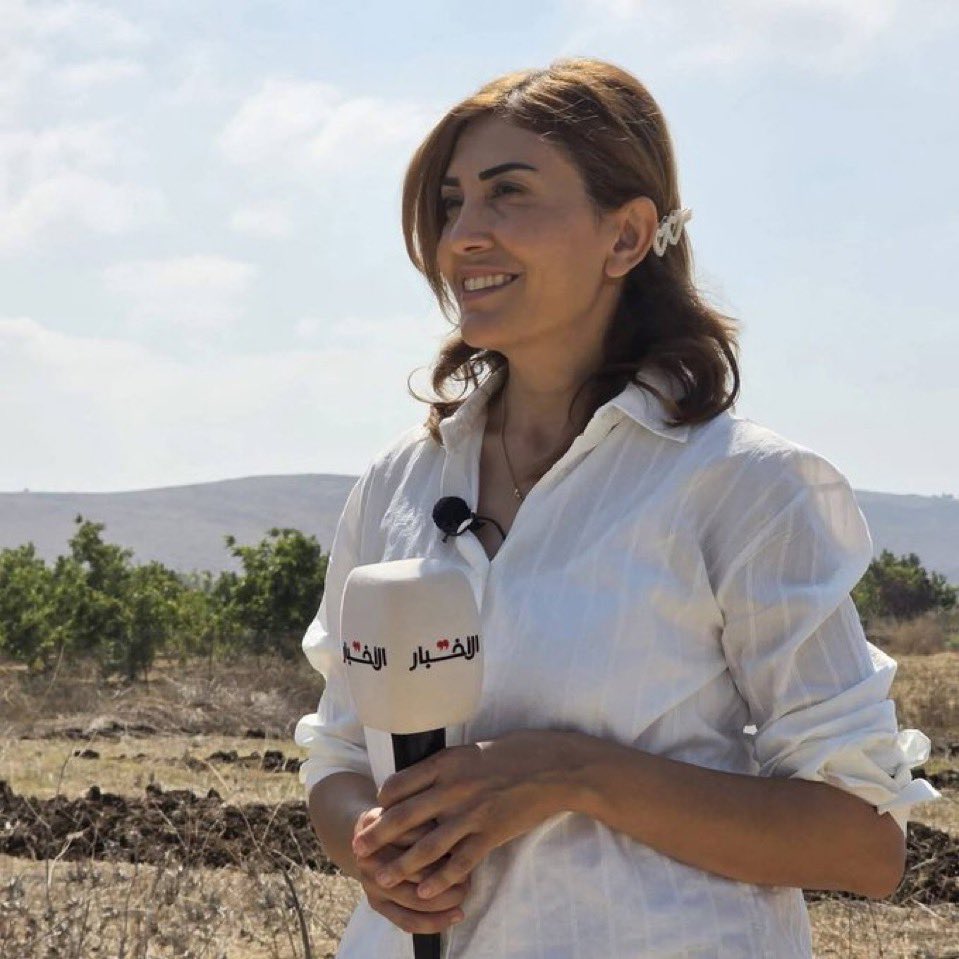
Lebanese journalist Amal Khalil was found dead after hours of searching under rubble. She was killed in an Israeli strike, after the Israeli army fired at ambulances trying to reach her, delaying her rescue.
She is the fourth journalist killed by Israel while in the field since 2 March.
She was a professional, kind and dedicated journalist, and always a pleasure to run into in the field.
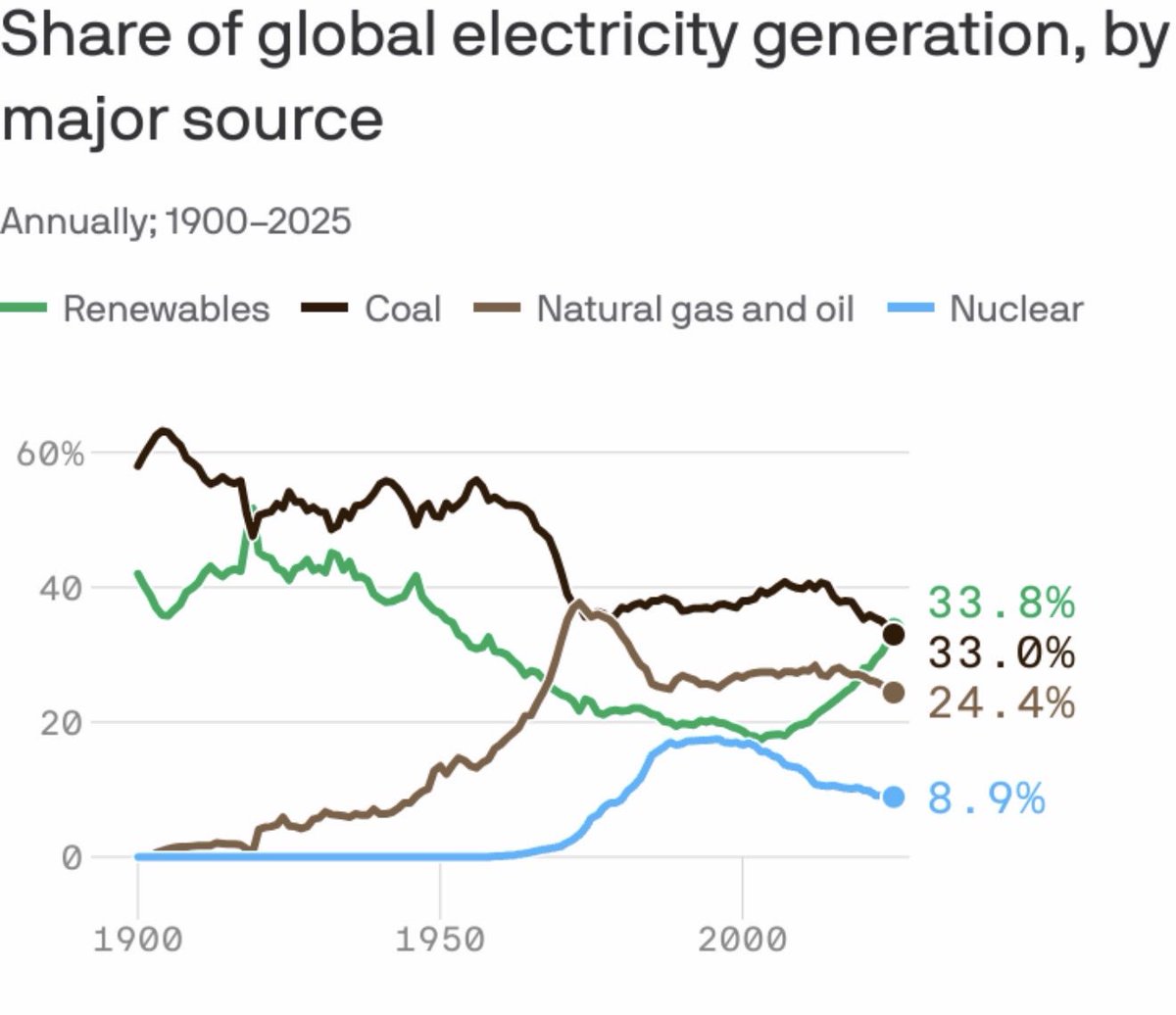
Solar met 75% of global electricity demand growth in 2025. Clean power covered all new demand, so fossil generation didn’t rise for the first time since 2020.
Solar electricity is on track to become by far the biggest source of power.