Attackers move in minutes; can your patching keep up?
Adaptiva + CrowdStrike just broke down how AI and autonomous patching are changing the game.
Link in comments.
#Adaptiva#CrowdStrike#Cybersecurity
@evanlapointe@bhalligan@evanlapointe really liked this. Could you share a couple of simple examples where something sounds like criticism, but seeing it through a cause-and-effect lens helps shift the perspective? I have some ideas and even tried asking GPT, but would love to hear your take
🛑 600,000+ users impacted! A widespread campaign compromised 16+ extensions, including tools for AI and VPNs, using phishing and malicious code injection.
Learn more: https://t.co/SZHKeMwBry
People often talk about being in the right place at the right time, but they forget that they also need to be the right person, and for that, you need to keep investing in yourself without making excuses: if you can just stay fit, sharp, focused, optimistic, your time will come.
Just finished Shreyas' week-long Product Sense course. It is hands down the best course I’ve ever taken (no exaggeration). If you’re into building products, don’t miss this chance. It’s pricey but worth every penny!
https://t.co/qy8ivJ9mPM
If you want your team to be good at going fast…
…you must also make them good at cleaning up messes.
The hallmark trait of bad leadership is wanting speed and being mad at the messes and inefficiency they experience later.
We’re a Leader when it comes to attack surface management. Get your copy of The Forrester Wave™: Attack Surface Management Solutions, Q3 2024, to learn the industry trends and key capabilities of the most significant providers.
🔗 Learn more: https://t.co/e9vt2HNwex
This might be intentional, with no malice from the rideshare company
Uber might periodically pay out total tips but not show individual amounts to prevent drivers from rating riders solely based on tips.
I took an @Uber today and for the first time was offered a NYC yellow cab. I thought good for Uber supporting the cabbies. I asked the driver about his experience with Uber and he surprised me by saying it was bad.
He explained that even when the passenger agreed to pay a tip to the driver on the Uber app, the driver did not receive a tip and Uber kept the tip for itself.
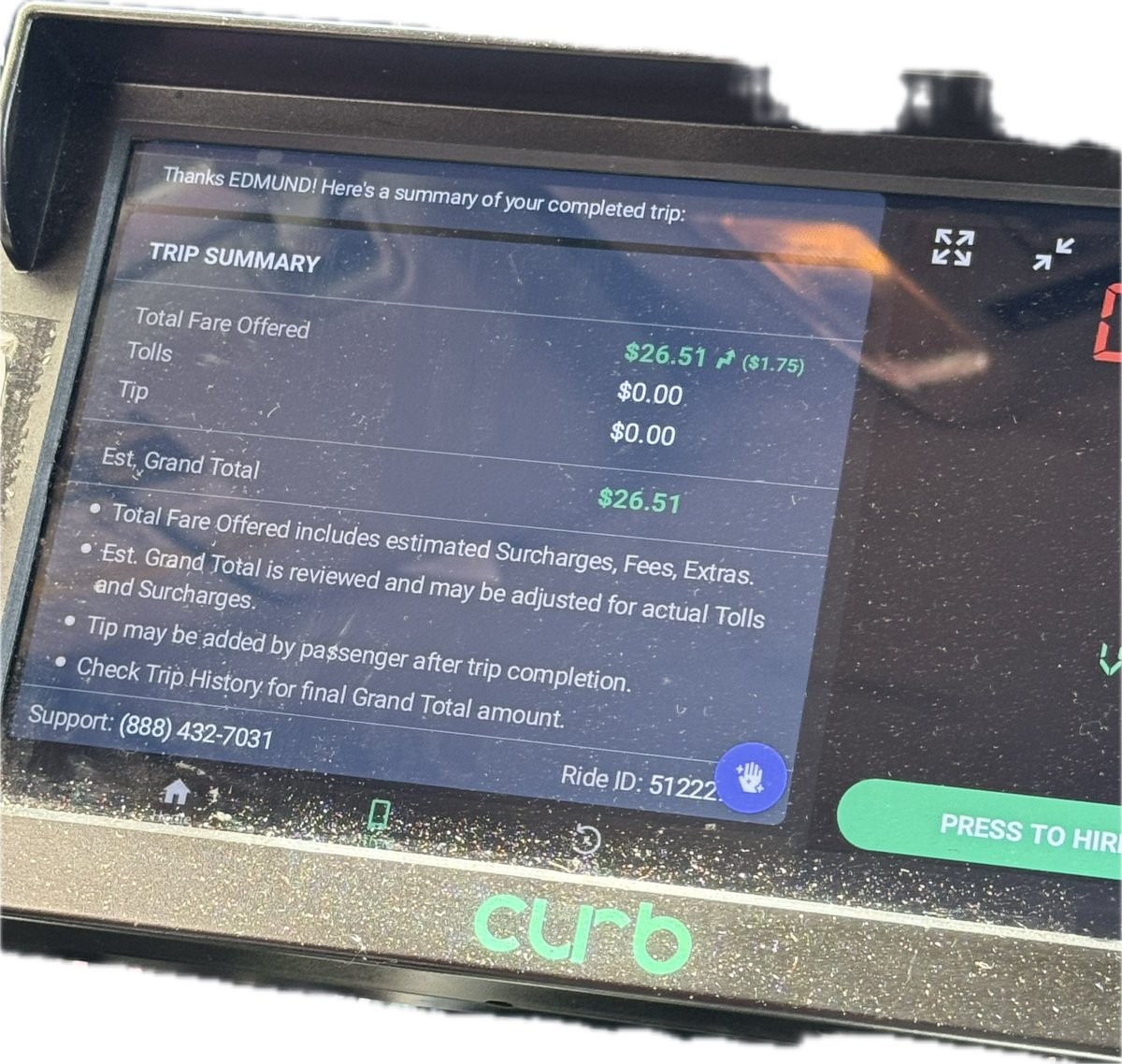
I said that this could not be true so he asked me to test it. When the ride finished I added a $5.00 tip. His screen showed that I paid no tip.
The driver was right. In short, Uber is massively increasing its margins and profits in NYC by ripping off NYC cab drivers.
I texted @dkhos Dara from Uber midday today and sent this photo of the driver’s screen. He did not respond. I like Dara, but this is really bad. I can only assume that Dara is unaware of this.
Uber needs to immediately return the stolen funds with interest to the NYC taxi drivers and to other drivers in any other markets where they are doing the same and they should deeply apologize. And Uber should restate its earnings to reflect this overstatement of margins and profits.
This needs to happen now. @ericadamsfornyc Mayor Adams, I am sure agrees.
Wow! I'm curious why InfoSec teams at large companies don't put data loss prevention measures in place.
It's definitely a red flag when someone logs into a personal account on a corporate device and uploads work content.
That's something you shouldn't need two years to know.
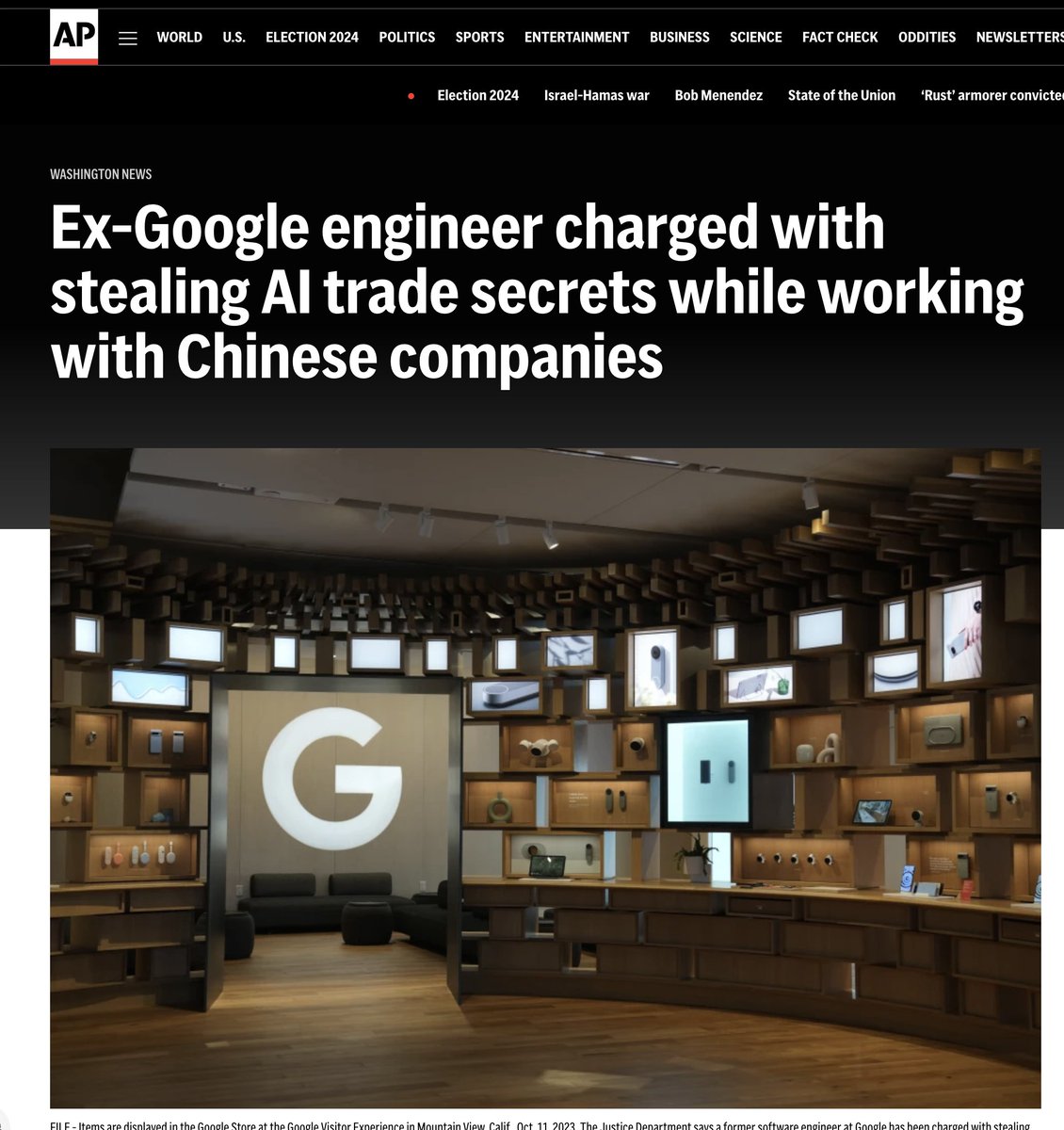
An ex-Google software engineer was just charged with stealing AI trade secrets from the company and secretly working with two China-based AI startups.
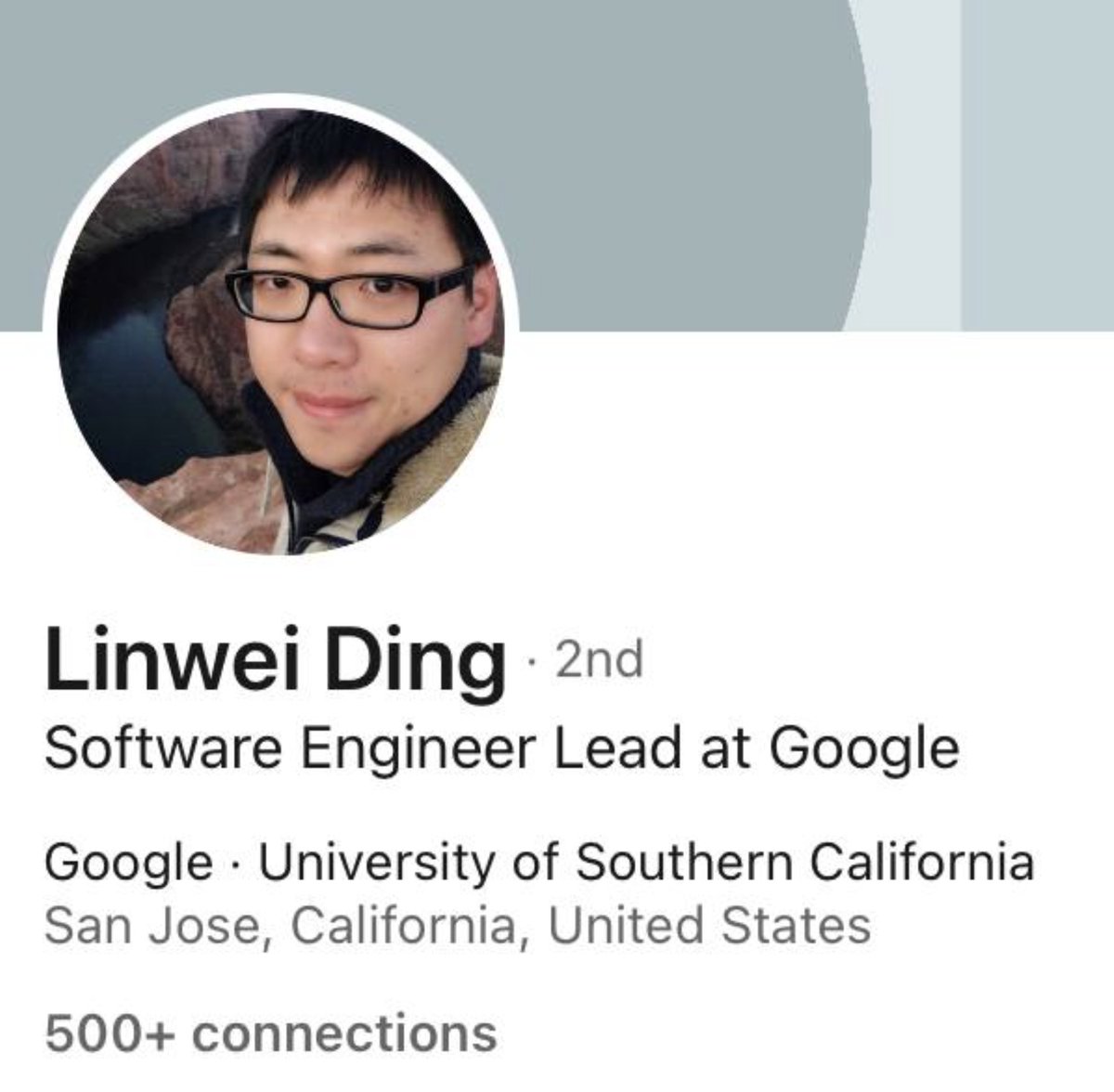
The leaker, Linwei Ding, now faces up to 10 years in prison.
This story is intense:
1. Google found out that its confidential information was getting leaked
2. On further investigation, Google found out Ding had been uploading hundreds of confidential files to his personal Google Cloud for over two years (lol)
3. Within weeks of the theft starting, prosecutors say, Ding was offered CTO at an early-stage AI startup in China
4. On top of that, Ding ALSO founded his own China-based startup focused on training large AI models powered by supercomputing chips
5. Another employee was scanning Ding's access badge at the Google building in the U.S. to make it look like he was there when he was actually in China
6. The FBI seized Ding's electronic devices and uncovered more than 500 unique files of confidential information stolen from Google...
Two main points stood out to me.
First, the lengths to which individuals and organizations will go to steal AI data are only going to get worse. Alarming to consider how much of this might already be happening behind the scenes, undetected.
Second, beyond headlines, we have limited insight into the advancements in AI R&D happening in China. From the research I've been following, their progress is becoming increasingly impressive and legitimate.
Take that for what you will, but China's AI scene is booming, and they're willing to go to great lengths to catch the US.