

Top Tweets for #InsureTech

@johlarss got you, not arguing with you. But why market would invest in an insuretech while the main point of investor day was promoting a OS? Why if founders just selling shares?

@FelixKern2 Insuretech is so far removed from lemonade it doesn’t surprise me ha

I was literally going to message the $LMND team and suggest they make this exact video, then they beat me to it.... https://t.co/ff03nI0tfx
It has very few views right now. I do not think that lasts.
Why?
Because everyone is looking at Corgi as the new insurtech kid on the block. But Corgi is not Lemonade.
I say that as a huge insurtech advocate, not as a biased $LMND bull. I would be very happy to be proved wrong. I have worked with and followed many insurtechs over the years, and I want more ambitious insurance companies to exist!!
Full transparency, I wanted to look into them in case they IPO'ed or had a private offering and if it was attractive and or if they could be a threat to LMND.
But insurance is not a normal SaaS category. The app is only the front door. The real diligence is.. who is the carrier, who owns the risk, who pays claims, who reinsures it, who regulates it, and what happens if things go wrong?
One key difference is that Corgi appears to lean into an RRG-style structure... I had never even heard of this, I had to spend a solid amount of time to understand it..
An RRG, or Risk Retention Group, is basically an insurance company owned by its members, usually businesses with similar risk. It can be a completely valid structure. But it is very different from a simple consumer-facing insurer story.
In plain English... when a company buys through an RRG, it may not just be “buying a policy” from a brand. It may also be entering a membership or ownership wrapper. In Corgi’s case, the structure I mapped includes Corgi, TRRG / TECHRRG, an ATC membership wrapper, Corgi Re, Dane, Bark, YRIG / Beagle transition material, and related finance/funds surfaces.. in a nut shell, Corgi can not sell renters HO4, they can only sell Liability cover at the moment, they claim to be full stack and while they do now own a risk bearing entity, 95-98% is ceded away to reinsurance captives in the Turks and Caicos, and there everything goes blind... I'm not even sure if they should be selling some of the lines of liability insurance they sell under the RRG framework.
before I go on, I need to call out.. RRG is not automatically bad. but...It is complex... and some of the historic stuff certainly raises eyebrows! I honestly can't understand why regulators are not all over this already?
but.. you know I love complexity 🤓 so have to admit, I loved digging into these guys.. because complexity is where diligence matters.
After 100+ hours digging into Corgi from bed over the past few weeks, it got so complex, I had to build a due-diligence platform just to keep track and map the legal structure, RRG flow, carrier/reinsurance questions, membership wrapper, finance overlap, policy questions, security concerns and the gaps I'm still missing which could clear everything up quickly.
The core risks I still care about are simple...(ish).
1. Are customers clearly told who the actual carrier is?
2. What rights do they get through any membership / Common Unit structure?
3. Who has claim-paying responsibility?
4. What statutory capital supports the risk?
5. What reinsurance, collateral, or captive layer sits behind it?
6. What happens in runoff? (what happens when an insurer or insurance programme stops writing new business but still has obligations under policies it has already sold.)
7. Who regulates each piece?
8. Are the policy forms, treaties, claims-authority documents, and member records available?
9. Are security claims matched by actual security controls?
I have tried to contact Corgi multiple times, including about website/security concerns. No response so far. I will not post vulnerability details publicly...responsible disclosure matters... and I'm not 15 anymore.
But the broader point stands.... if a passive pen-test finds serious questions quickly on a site that is pushing high enterprise class security for data storage... god knows what an active test would find!?
This is why I think $LMND making this kind of content matters... why.. because they actually provide the cover the customers need... in a clear and transparent manner.
Lemonade is not perfect. They also have offshore / Cayman-linked insurance and reinsurance structures, which can make full transparency harder. But because Lemonade is public, you still get far more visibility than with a private company... SEC filings, earnings disclosures, shareholder letters, carrier detail, governance records, and filed reinsurance exhibits.
With Corgi, I have some serious concerns. Those concerns may be 100% resolved with engagement from leadership and the right documents.
To be very clear, I am not saying this is fraud! I am not saying it's a Ponzi. I am not saying Corgi is operating an illegal or unregulated agent system.... 👀🧐 I have zero emperical proof of that.... but I know where I put my money, and I would not put it there until key questions have been answered!
Point is, based on public details and historic recordings of the past leadership of some of the entities now under their umbrella i.e. YRIG, I have real fears about who ultimately carries the risk if the structure is not exactly what customers, landlords, property managers, or startups think it is....
For renters, the fear is that they may think they are getting meaningful coverage for their own belongings, when the product may be more focused on protecting the landlord... they already had a court case here around this and I've read the policy wording that landlords were asked to include in their renters terms, it is not clear IMO. It makes it look like the renter is paying for insurance coverage for them, but in reality, they are paying for coverage for their landlord and their stuff.
For property managers, the fear is that they may think they are getting a risk-free income stream as a reinsurer or captive participant, when the underlying structures may be under-reserved or more exposed than expected.
For startups, the fear is that they may effectively be paying into a long-tail liability pool with other startups, many of which may not survive long enough to still be around when claims emerge.
It's a really simple question that anyone should be able to answer if you're investing in them, if you're a customer of theirs, if you're looking to setup a captive and act as a reinsurer with them to earn some dollar, I JUST WANT TO KNOW..... WHO PICKS UP THE BILL WHEN THE SH*T HITS THE FAN.
I watched my parents ruined by Lloyds, sat at the dinner table hearing about their friend that topped themselves because of the complex capital structures of reinsurance and liability clauses they were not aware of... that kind of stuff never leaves you when you hear it as a kid.. and its one of the reasons I dig SO hard and deep into stuff.
Because from what I can see, and I would welcome corgi leadership correcting this with transparency, my concern is that renters could be out of pocket, landlords could end up with encumbered reserves if loans are taken against captive assets, and startups could end up carrying long-tail claims for peers that disappeared a year or more earlier.
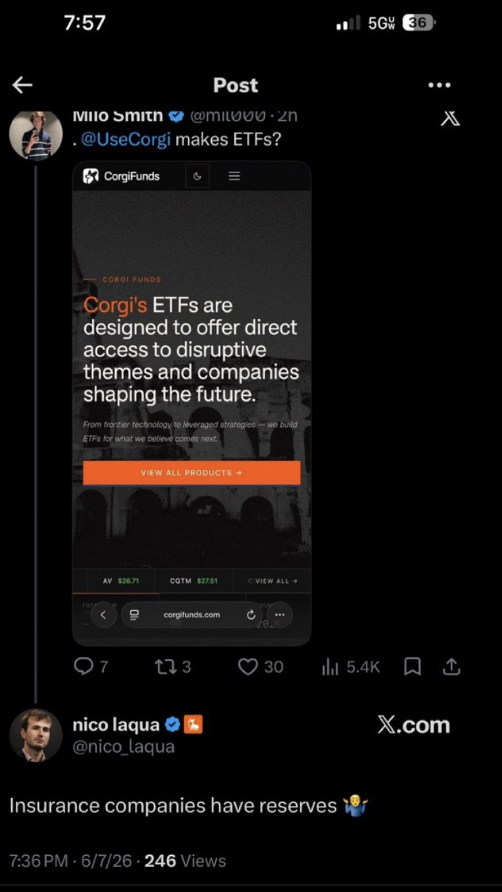
Or all of the above could be screwed if reserves are being invested into their own (high leverage, high BETA ETFS) and the market takes a turn.
Again, transparency could resolve this instantly... they may have some amazing incredibly well collateralised reinsurance that I've not seen / not able to see (god I really hope they do!)
With Corgi, the question is not whether the product is clever. It clearly is... and the leadership are no doubt seriously smart, incredibly hardworking and passionate, I actually love much of what they are doing, they are building a start up eco-system at a time when the whole world, anyone can suddenly will a business idea into existence with Ai... It's something I've wished $LMND had done / do.
But for Corgi... the question is whether the structure behind the product is as clear as the pitch. In insurance, the brand is not the balance sheet!
Follow the money. Follow the carrier. Follow the claims path. Follow the reinsurance. Follow the regulator. Follow the security controls.
That is where the real story lives... corgi looks shiny on the outside.. but (while I can't prove it yet) - my gut is telling me many people are going to get burnt here if they are not incredibly careful / have already setup the right reinsurance treaties / coverage... but as far as I can tell with MANY hours of effort... its impossible to know... you tell me... does this money flow look like a money flow from a two year old company? - could be absolutely fine (could be out of date too)... but without better transparency... even with 1300+ sources across more than 600 documents, regulator filings, state filings, T&C's, hours of video it's impossible to know...
This is not to throw shade on Corgi, nothing is financial advice, I could be wrong... and if I get a strongly worded letter from them (like others have), I'd guess I'm likely correct.... this is just to try and understand if their customers are protected, renters all over the USA NEED to understand that when they take out a policy via their property manager if its just covering the property managers stuff or if it actually coverers their stuff... If I was a renter in the US, I would be walking over and opening up my tenancy agreement to see if it's a real personal line insurance policy or not... and if they're in any doubt... message Lemonade to find out. ✌️
If Corgi leadership open up and become more transparent, I'd happily provide an update post.
In summary, I think the founders are ambitious, relentless, smart people.. I don't know for sure, but my gut tells me they got sold a dream around the YRIG acquisition and they are trying to make the best out of a bad buy... 🤷♂️ they may well pull it off, but damn is it going to be hard to reverse engineer it all and I think they underestimate the long tail nature of stuff like cyber liability in a world where Ai is going to dramatically increase the risk exposure...
I think they may find themselves in multiple law suits (something they are quite comfortable with) - defending IP as they expand start up software services that mimic the likeness of others companies platforms...
And without evidencing more on their legal, capital and regulatory setup... regulators are going to be up their arse fast... and IF that happens... and IF they are not able to fix it or show that they are all good... one of two things happen... the market freak out thinking all insure tech is high risk and the valuations of the whole sector take a temporary dip (which I'd happily buy) or the market looks and realises insurance is HARD and only one or two names in InsureTech have actually done it well, with $LMND arguably the world leader... and money flows into it to bring it to its FAIR price... and yes.. I have done the same or more DD on $LMND... and I'm happy to sit there with 70% of my holdings in it.



Extremely FRUSTRATING!! Not sure, what would help $LMND stock price? To go down it's part of everything (Insuretech, Fintech, SaaS, AI, growth/risky stock, etc), sadly, it doesn't go up when all those sectors go up. Sandbagged guides offsets the excellent ERs. I'm kind of lost🙁.

@m_MTG63 @byte8alchemist Root is going to be a great insuretech. Long term, I'd be willing to bet LMND will outperform... but let's see. https://t.co/3ubKW4Jl6u

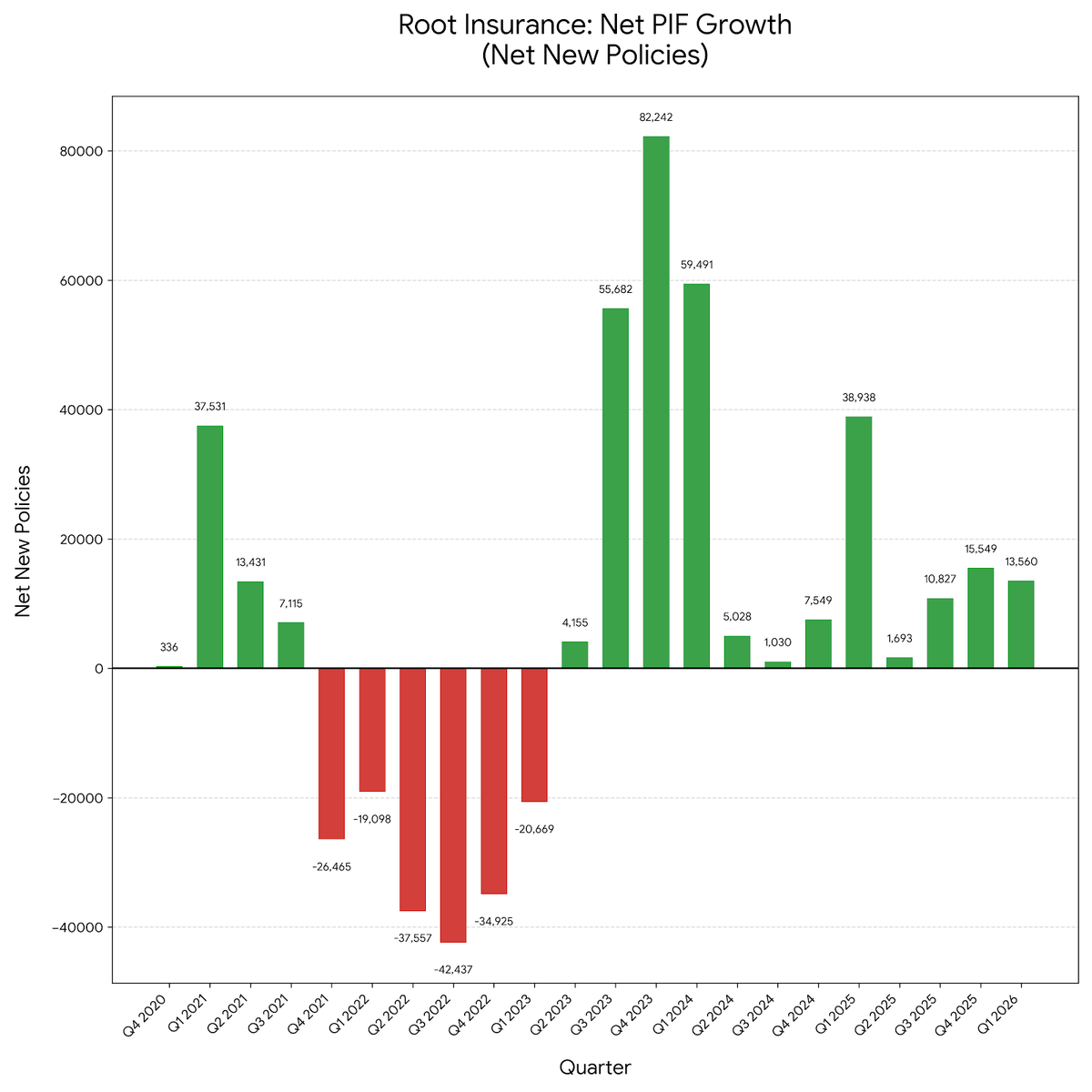
Updated chart of $ROOT net new policies by quarter

@bjmtweets @KabraxFX https://t.co/KAc56zHUHH sold $ROOT off during SaaSpocalypse
https://t.co/KAc56zHUHH sold it off when gas prices went up
https://t.co/v3nH3ieJws sold it off when they partered with Toyota
Mr. Market doesn’t like a profitable growing insuretech
https://t.co/KAc56zHUHH is right 🫡

@bjmtweets Not only is Root increasing spend, but they're not diluting stock nor taking on debt to do it.
Unlike its insuretech peers trading at expensive premiums.

@PaperBagInvest @katie34572764 Extra emphasis on the data part. Even if regulation catches up, the newer pure-play AI insuretech companies will need data to accurately price their insurance.
What happened yesterday is exactly what I was shouting about month or so ago. The market freaking out over a sudden realisation that unemployment is going to impact more than just developers and customer service.
The US pivoting to retain its capital (because they are going to need it)
The market adjusting rapidly (very much doubt it’s finished yet! - maybe a few relief bounces along the way)
The market buckets too may individual stocks together into groups - finding the counter plays hidden in each group is how wealth is created.
IMO - Capital, energy, entertainment, regulatory, Data and Infastructure moats will outperform long term.
The market selling off the companies that are best adapted to leverage this tech is a gift IMO and those with one or more of these moats will outperform.
$LMND has a capital moat to new entrants - they needed over $1bn to get here. Insurers require capital surplus to grow making it much harder for new entrants into the market - it took $LMND over $1bn and 10 years to get to the point they are today - they leveraged the most inovative capital light structure while doing so… literally reinventing the capital playbook for insurance in the process - any big investor looking at the InsureTech space should take note - you will have a long wait for ROCE putting your money in new InsureTech entrants… it will be nigh on impossible to replicate what they have built moving into tomorrow.. even more scrutiny will be placed on the new guys from regulators.
$LMND has a regulatory moat as it takes years to get licensed globally and regulators are SLOW!
$LMND have a data moat with 10 years of data (and not just unstructured sh*t) 10 years of structured data stored and built exclusively for the use with these types of tools being launched now. This is a tail wind for them!! 🤦♂️
$LMND not do have an entertainment edge directly but will likely benefit from it. Why? Because they have an incredible and differentiated brand and most of their acquisition is direct marketing on entertainment channels, as more people spend more time on screens (cos their not working) - their brand will reach a larger audience.
$LMND have an indirect Infastructure advantage- they get to benefit from all the billions of CapEx the AI companies invest without the huge CapEx cost and risk of depreciation - and their underlying ontology enables that Infastructure to be leveraged optimally…. I’ve said it many times before… chucking a web front end on a green screen terminal is NOT the same thing as having a modern Ai Native ready stack and culture.
The market is quickly waking up to the reality of what is going to happen and while I have no doubt it is going to get bumpy! - I still see no better long term risk adjusted play….
The market is irrational. The Market moves fast and then thinks. The market will realise the hidden gems that get a tail wind from this.
This is the only edge retail have. Use it.
And to your point - they are moving into value because it’s the quickest predefined bucket where all companies have at least one of the moats… Capital. IMO it’s just a defensive play to buy time before they can redistribute to the hidden gems. 🤷♂️

at these prices, not only is $root upside huge, but the downside longterm risk is as low as ive seen in a stock.
P/S is about 50% of legacy industry (even more if you include other insuretechs).
$root has many levers to pull for both growth and op leverage that legacy doesnt

Deze InsurTech is winstgevend én groeit als een raket... maar handelt op 0.7x P/S
Root Inc. ( $ROOT) noteert rond ~$1.02-1.08B marktkap, met trailing P/S ~0.75-0.8x (TTM revenue ~$1.2-1.45B).
Bedrijf is winstgevend op adjusted basis (YTD netto positief na non-cash items), adjusted EBITDA positief, groei sterk: premiums +18-27% YoY, loss ratio ~59%.
Vergelijk met peers:
- Progressive ($PGR) ~1.4-1.5x P/S
- Allstate ~0.8x
Bij conservatieve Progressive-multiple op Root's revenue-runrate: potentieel >$2B marktkap → ruim 2x upside.
Is insuretech de toekomst???
Auto-verzekeren is rijp voor disruptie: hoge kosten, beperkte data, cyclisch. Root's telematica + real-time pricing biedt betere risico's, lagere verliezen en schaalbare groei.
Toch: claims-volatiliteit, regelgeving en concurrentie van incumbents blijven risico's. Root toont dat het werkt, maar sectorbrede overname? Nog geen zekerheid, het hangt af van execution.
Markt lijkt de transitie nog niet vol te prijzen. Interessant moment.
Echte disruptie of lastig verhaal?


@Jbm_dev It’s an InsureTech enterprise software. Vary niche

Treasury management is essential for insurers, ensuring liquidity, mitigating risk, and supporting strategic growth. From claims payouts to regulatory compliance, a strong treasury function keeps operations running smoothly and positions companies to adapt in a changing market.
In this conversation with Curt Hess, Executive President of Vitesse, 🇺🇸 Nick & Curt discussed streamlining claims fund management for insurers, TPAs, and MGAs. The discussion focused on the challenges of managing external funds, the importance of real-time visibility, and how technology can help reduce reconciliation headaches and improve payment efficiency.
If you’re involved in claims, treasury, or payment operations, there are some actionable takeaways on how platforms like Vitesse are helping organizations manage liquidity and speed up claims payouts—especially during high-volume periods like hurricane season.
Worth a listen if you’re looking to optimize your claims payment processes and enhance transparency for your clients.
This interview took place at @insuretechnow in Las Vegas in October 2025
https://t.co/aoul6I1Pw3

Everyone needs to know that $Sora isn't just for prediction markets only. Its for many industries like Defi, Finance, Insuretech, RWA, Nfts, Gaming, Supply Chain, Logistics, Media, Entertainment, Healthcare, etc. Its a whole ecosystem. The Oracle market projected to hit $50B by 2030. If Sora nails integrations (watch for RWA or insurtech pilots), it could outpace pure prediction plays.
What the @soraoracle team is doing now is tackling the hard part of building. Everything else will be easy. These Silicon Valley devs know what they are doing. I see the vision. Be happy your invested in a game changing Oracle.
@BNBCHAIN @BNBChainDevs @cz_binance @farokh @imsongshu @BNBCHAINZH

@bjmtweets When the CEO gives the 🟢🚦, this rocket takes off 🚀. If you’re holding when it happens, the performance will be ludicrous. Few see it now, but it’s without a doubt a stellar #insuretech. $ROOT
I think $ROOT is also a great insuretech company, and I hope they succeed along with $LMND.
Remember: if they succeed, we all succeed, because we should all want “Insuretech” to become a hot investment theme.
Good luck to all $ROOT investors after the close today.
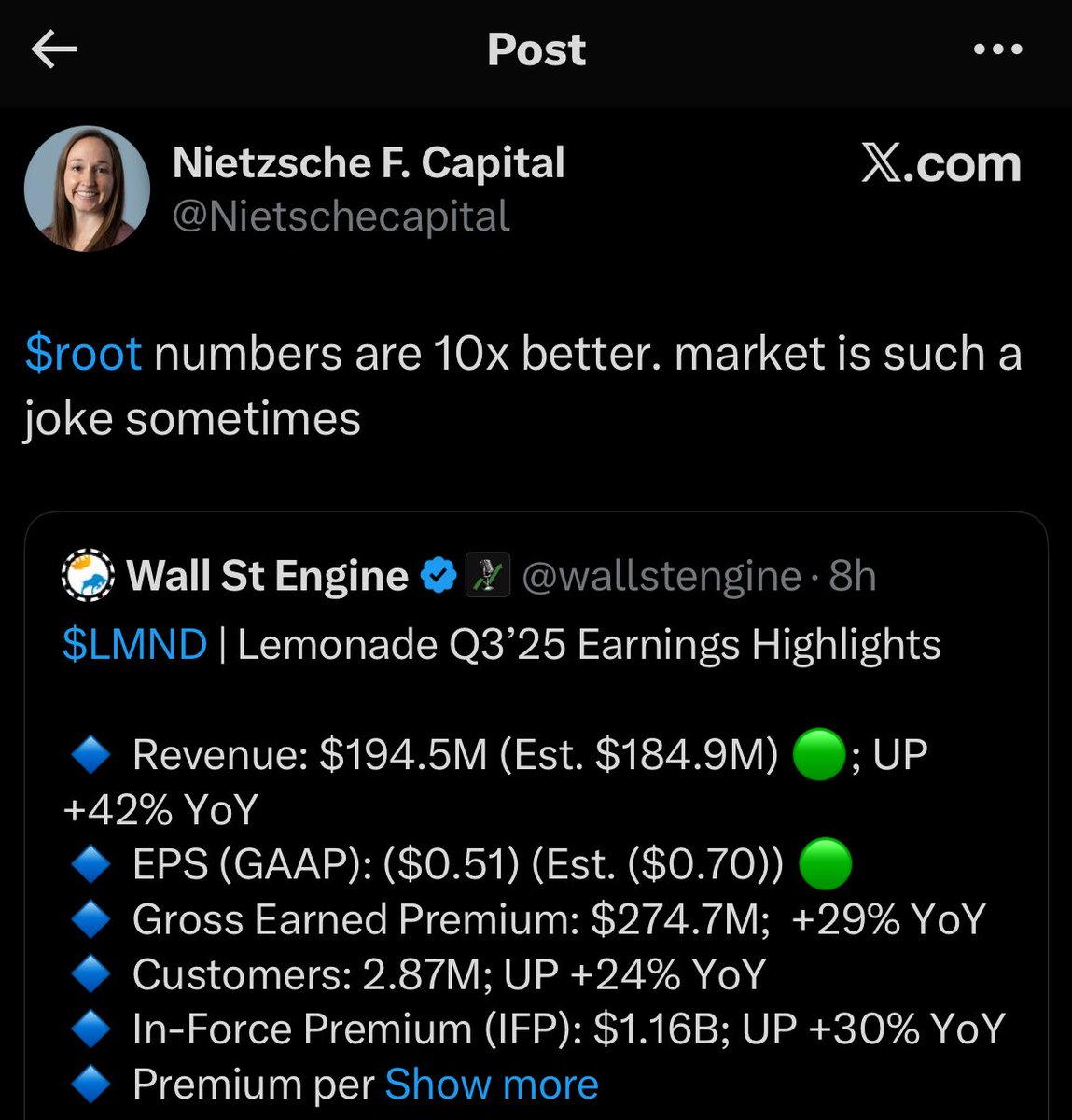
$LMND smashed it. Fingers crossed for $ROOT investors.
Insuretech investing for the win!
In this interview with Bob Frady, CEO and co-founder of @mypropertylens (conducted at the 2025 @insuretechnow conference in Las Vegas).
PropertyLens is a data company that provides detailed property reports, similar to a Carfax for homes. The company aggregates and analyzes around 2,000 data elements per property to help both consumers and B2B clients, such as insurers, make informed decisions about real estate. Their reports are designed to highlight potential issues and forecast future expenses, giving buyers and insurers a clearer understanding of a property's condition and associated risks.
The value PropertyLens creates for society lies in increasing transparency in real estate transactions, helping buyers avoid unexpected costs, and supporting insurers in their underwriting processes. By providing accessible and comprehensive property data, they aim to reduce financial surprises and improve decision-making for all parties involved. (ProperyLens is in the Finsure's Property Intelligence Category - subcategory: Data, Reports)
Bob Frady predicts that India will win the next Cricket World Cup and if you listen, Bob knows a lot about Cricket and the-long-ball
https://t.co/Mvgku7DZZZ
The cost of insurance at 30,000 feet = the cost of claims (+LAE), + the cost of capital (including reinsurance costs) + risk loads (to take into account concentration risk) + distribution + other expenses.
In catastrophe-prone areas, real rate reductions will occur if we address the primary driver of costs...the cost of claims. To do this, we must reduce the actual risk. For properties, that means building stronger and reducing vulnerability.
In this conversation at @insuretechnow 2025, @Nick_Lamparelli spoke with @faurausa co-founder and CEO, @valkyrieholmes. Faura is in the Finsure category of "Property Intelligence". Faura's scoring and reports highlights the risk a property has to 5 natural disasters and how hardening may affect those scores. The goal is to drive individual property owners to manage that risk, harden the property, which will reduce loss costs, and then be more attractive to insurance capacity.
$LMND co-founders dominate the top-50 insuretech influencers list (#1 & #7)
Expecting both at the #1 & #2 spots in the coming years as their success becomes undeniable.

The updated #50insurtech influencer list of October is out now. Check the complete list here ⬇️ https://t.co/u1qH3TXrZX
#insurtech #insurance
Congrats @daschreiber @MCins_ @rm_infinite @duavarun @seanharper @shai_wininger @mr_insurtech @saarsten @Broking_John

@mattscottcap It's weird to me there's animosity between the two. Insuretech in general will do really well over the next few years vs. legacy. IMO the more we promote this idea over 'in-fighting' the more likely the entire sector is to turn hot.

from insurance nerds to defi degens
meet the masterminds behind @re
every strong protocol starts with strong people
and re is built by those who spent years inside real insurance markets before diving into defi
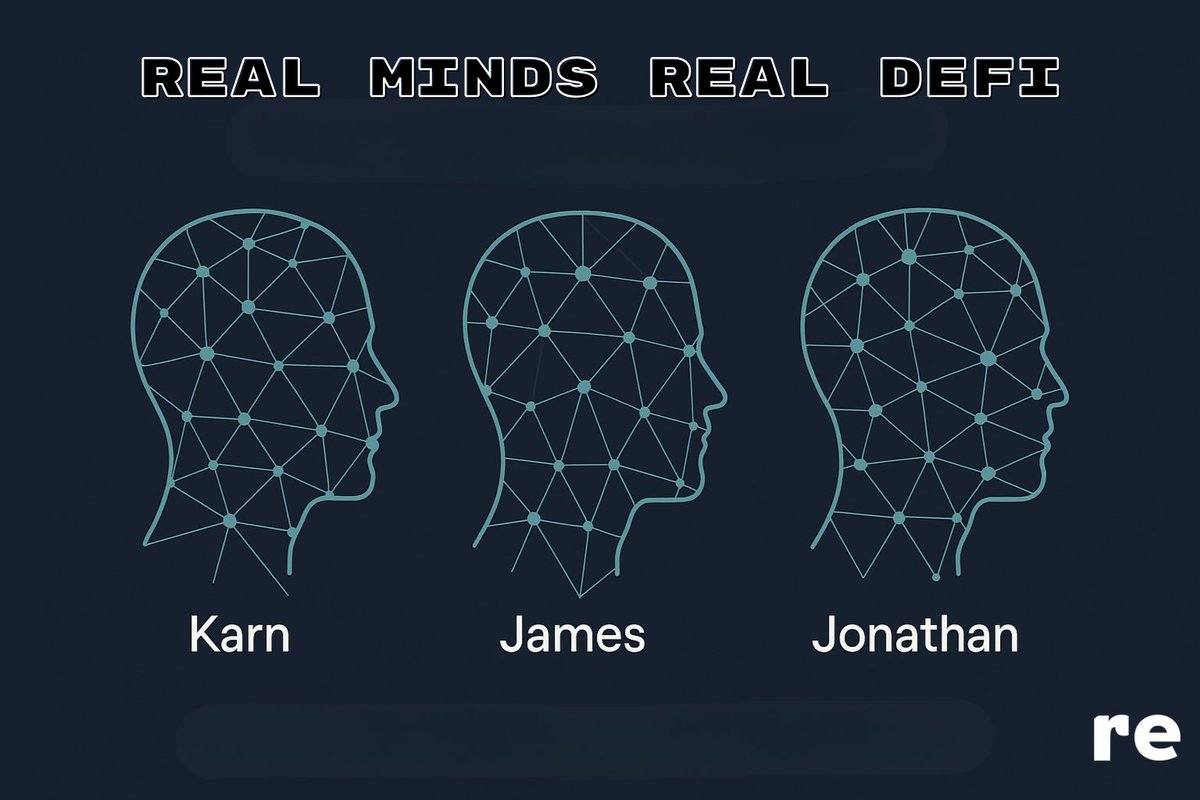
✘ karn saroya (@karnsaroya) - ceo and visionary
▹ serial founder with deep roots in insurance
▹ before re he founded cover, a digital insurance platform later acquired by intact financial
▹ he knows the mechanics of insurance from underwriting to claims
▹ with re he's building what no insuretech managed to do - bringing reinsurance fully onchain
his vision is simple
"insurance should be as transparent and composable as any defi protocol
we're building the decentralized transaction layer that will power insurance markets for decades"
karn is the kind of founder who can talk about risk models with the same energy people use to talk about gas fees
✘ james norris - chief underwriting officer
▹ industry veteran with decades of reinsurance experience
▹ previously at ec3 brokers where he structured large scale insurance and reinsurance programs
▹ understands how real world risk works and how to price it
▹ at re he bridges the gap between traditional insurance markets and defi capital
his mission is to turn complex risk models into simple onchain structures
so a degen doesn't need a 200 page whitepaper to know where their stables are working
✘ jonathan lim - head of underwriting
▹ formerly with aon, one of the world's biggest insurance groups
▹ specialized in loss modeling and reinsurance program design
▹ at re he leads the team responsible for risk assessment and deal quality
▹ his models make sure every onchain premium and payout aligns with real world data
jonathan is the person who turns risk into a formula
and the formula into a transparent smart contract
insurance pros turned defi degens
the @re team didn't come to web3 for hype
they came from a trillion dollar industry with strict risk controls and accountability
and that's why re feels more like an actual financial institution than a temporary farm
they know that boring doesn't mean bad
and that real alpha comes from resilience not noise
✘ the bottom line
karn saroya
james norris
jonathan lim
three people who proved that insurance and defi can speak the same language
@re isn't just a token project
it's a team turning decades of insurance expertise into a new layer of financial infrastructure
insurance nerds turned defi degens
building the bridge that connects both worlds

$ROOT is well on its way to making a billion+ in NI. they can buyout any product line they want, or create an equity partnership with other insuretechs for other lines. these partnerships that $ROOT will be creating will be FIRST of its kind, just like what they'll be doing with Hyundai, $GSHD & $CVNA. the market has no clue how to price something like this. this will transform the modern insurance industry.
also, @KabraxFX does point out that they have both renters & home.
if this isn't indicative of growth, i don't know what is.
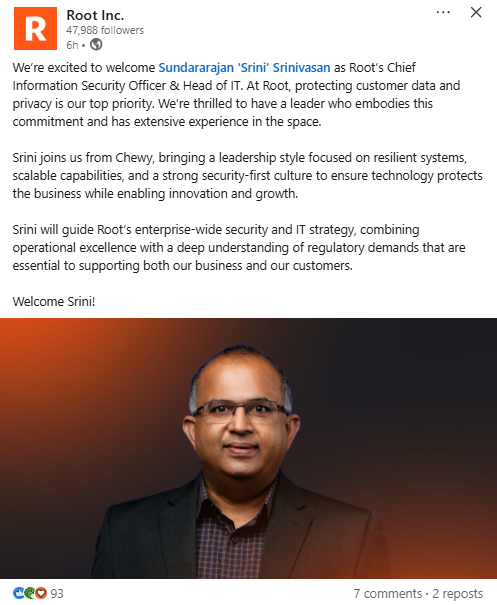
$ROOT hires a new CISO, stealing a talent from $CHWY. Srini left a 17B co to join a sub 1.4b insuretech
this is in addition to $ROOT looking to hire a "chief of staff". you don't hire a COS, unless you expect massive growth to come
this is what you call GROWTH MODE

Meet Sundararajan 'Srini' Srinivasan, $ROOT's new Chief Information Security Officer (CISO) & Head of IT! 🥳
Srini comes to $ROOT after six years at $CHWY, where he helped the company scale securely as it grew its active customer base from 13.5 mil to 20.5 mil customers, an increase of nearly 7 million users! 🤯
His leadership has been proven in building resilient systems at $CHWY and enabling rapid growth. Now he's bringing that same expertise to $ROOT, where his focus on security, scalability, and innovation should strengthen the company's foundation for future expansion! 🚀
How long before we see a chart like this for insuretechs like $LMND?
Last Seen Hashtags on Sotwe
Most Popular Users

Elon Musk 
@elonmusk
240.1M followers

Barack Obama
@barackobama
118.6M followers

Cristiano Ronaldo
@cristiano
114.4M followers

Donald J. Trump
@realdonaldtrump
111.7M followers

Narendra Modi
@narendramodi
106.9M followers

Rihanna
@rihanna
98.6M followers

NASA
@nasa
92.1M followers

Justin Bieber
@justinbieber
91.7M followers

KATY PERRY
@katyperry
89.9M followers

Taylor Swift
@taylorswift13
83.9M followers

Lady Gaga
@ladygaga
75.4M followers

Virat Kohli
@imvkohli
73.3M followers

Kim Kardashian
@kimkardashian
70.8M followers

YouTube
@youtube
68.6M followers

Neymar Jr
@neymarjr
66.3M followers

Bill Gates
@billgates
65.2M followers

Selena Gomez
@selenagomez
63M followers

The Ellen Show
@theellenshow
62.1M followers

CNN
@cnn
61.7M followers

X
@x
60.6M followers