

Top Tweets for #Multimodality

Lot of graph resources get shared here: https://t.co/xhuoCGvuWs including on their youtube channel.
This is another one with a rich set of materials: https://t.co/6fnaOsBHbb
We publish some blogs on foundational concepts like context graph, memory & cognition, multimodality: https://t.co/kTN8JBImdZ

Diagnosing MR requires more than one measurement.
Accurate assessment combines:
✅ Qualitative findings
✅ Semiquantitative parameters
✅ Quantitative measurements
Echocardiography remains central, while multimodality imaging adds further precision.


And if we see multimodality as ultimate why then are we not tackling it head on instead of beating around the bush?
I think we need to think outside the box this time
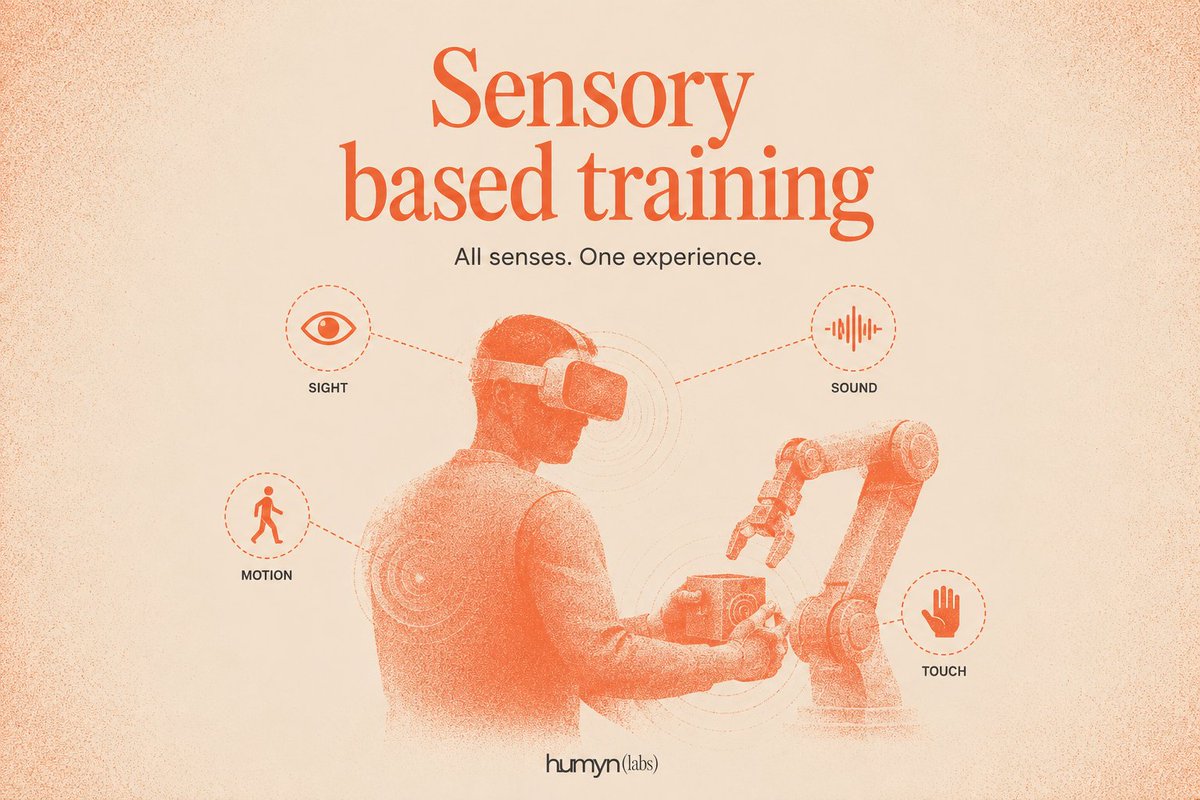
2. Collecting usable data is where the engineering begins.
Every modality inside @humynlabs runs through its own purpose-built pipeline before anything becomes training data.
Sound
• Audio quality validation
• Duplicate detection
• Language identification
• Emotion tagging
• Speaker separation
• Timestamp alignment
• Word Error Rate (WER)
• Character Error Rate (CER)
• Code-switching evaluation
Sight
• Camera calibration
• Lighting validation
• IMU synchronization
• Frame stability
• SLAM-based localization
• 21-point hand tracking
• Object detection
• Dense action annotation
Motion
• Full-body pose estimation
• Joint-angle reconstruction
• Trajectory tracking
• Human correction episodes
• Intervention labeling
Touch
• Force measurements
• Grip pressure
• Contact timing
• Tactile synchronization with motion
Only after every stream passes quality control does it become one fused training signal.
For Physical AI, quality isn't a nice-to-have.
It's the product!


📕 Gemma 4 primer
https://t.co/NaAsMZY3yL
- Gemma 4 is an important model family because it shows how frontier-level model design is shifting from simply scaling parameters toward making reasoning, multimodality, long context, and local deployment work together efficiently.
- I find its deployment-first architecture particularly interesting because the family spans compact edge models, a dense 31B model, and a sparse Mixture-of-Experts variant without treating efficiency as an afterthought.
- My primer on Gemma 4 covers the full architecture, including hybrid attention, Per-Layer Embeddings, Shared KV Cache, multimodal encoders, reasoning modes, MoE routing, training, evaluation, quantization, and deployment.
🔹 𝐌𝐨𝐝𝐞𝐥 𝐅𝐚𝐦𝐢𝐥𝐲 𝐚𝐧𝐝 𝐂𝐚𝐩𝐚𝐛𝐢𝐥𝐢𝐭𝐢𝐞𝐬
• E2B and E4B for edge and local inference
• 31B dense and 26B A4B MoE variants
• 128K to 256K context windows
• Text, image, audio, and video support
🔹 𝐂𝐨𝐫𝐞 𝐚𝐧𝐝 𝐋𝐨𝐧𝐠-𝐂𝐨𝐧𝐭𝐞𝐱𝐭 𝐀𝐫𝐜𝐡𝐢𝐭𝐞𝐜𝐭𝐮𝐫𝐞
• Decoder-only Transformer backbone
• Alternating local and global attention
• Dual RoPE for long-context stability
• Final global layer for full-context reasoning
🔹 𝐏𝐞𝐫-𝐋𝐚𝐲𝐞𝐫 𝐄𝐦𝐛𝐞𝐝𝐝𝐢𝐧𝐠𝐬 𝐚𝐧𝐝 𝐒𝐡𝐚𝐫𝐞𝐝 𝐊𝐕 𝐂𝐚𝐜𝐡𝐞
• Layer-specific token conditioning
• More capacity without equivalent compute
• KV reuse across compatible layers
• Lower memory and decoding cost
🔹 𝐌𝐮𝐥𝐭𝐢𝐦𝐨𝐝𝐚𝐥𝐢𝐭𝐲 𝐚𝐧𝐝 𝐑𝐞𝐚𝐬𝐨𝐧𝐢𝐧𝐠
• Unified text, image, audio, and video inputs
• Configurable visual token budgets
• OCR, charts, documents, and GUI understanding
• Thinking modes and native function calling
🔹 𝐌𝐨𝐄, 𝐄𝐯𝐚𝐥𝐮𝐚𝐭𝐢𝐨𝐧, 𝐚𝐧𝐝 𝐃𝐞𝐩𝐥𝐨𝐲𝐦𝐞𝐧𝐭
• 26B total with roughly 4B active parameters
• 128 experts with sparse token routing
• Reasoning, coding, and agentic evaluation
• Quantized deployment across local runtimes

𝗺𝗶𝗻𝗶𝗺𝗮𝘅 𝗺𝟑: 𝘄𝗵𝗮𝘁 𝗶𝘀 𝘁𝗵𝗶𝘀 𝗺𝗼𝗱𝗲𝗹 𝗮𝗻𝗱 𝘄𝗵𝗮𝘁 𝗱𝗼𝗲𝘀 𝗴𝗿𝗮𝗱𝗶𝗲𝗻𝘁 𝗵𝗮𝘃𝗲 𝘁𝗼 𝗱𝗼 𝘄𝗶𝘁𝗵 𝗶𝘁?
on june 1 the shanghai-based ai lab minimax released m3 and immediately became the first open-source project to combine three things simultaneously: frontier-level coding, a million context tokens and native multimodality
@gradient_hq wasnt left out
what is minimax?
minimax is a shanghai-based ai lab founded in 2021. it has been publicly traded on the hong kong exchange since january 2026. it builds a full stack: language models, audio, video and music. m3 is their flagship language model
what can @MiniMax_AI m3 do?
architecture: 229.9b total parameters, 9.8b active users per token, 256 fine-grained experts. moe with a new attention mechanism, minimax sparse attention (msa), reduces compute overhead by 20x compared to the previous generation at a full million tokens
the model was run on an independent replication of a research paper from iclr 2025, m3 ran for almost 12 hours, independently generating 18 commits and 23 experimental graphs
on swe-bench pro, m3 scored 59.0%, higher than gpt-5.5 and gemini 3.1 pro
what does gradient have to do with it?
minimax-m3 is officially supported in parallax as a sparse-attention model for coding, agentic work, long-context tasks, and multimodal input. m2.7 remains a supported child model
this means you run m3 through parallax on your own hardware, the data doesnt go to chinese or american servers.
a million context tokens, native video and images and frontier coding are all local.

Google’s **Gemini** is going all-in on agents & multimodality: Gemini 3.5 Flash, Spark (proactive assistant), and Omni video gen are stealing the spotlight at I/O.
**ChatGPT** keeps pushing real-world impact with GPT-5.6 previews and student innovation grants.
**Claude** drops Sonnet 5 and Claude Science for researchers, doubling down on coding & safety (with some regulatory drama around Fable/Mythos).
The race is heating up — agents, video, and ecosystem wars are in full swing!
Which model are you using most right now? 👇
#AI #Gemini #ChatGPT #Claude #GenerativeAI

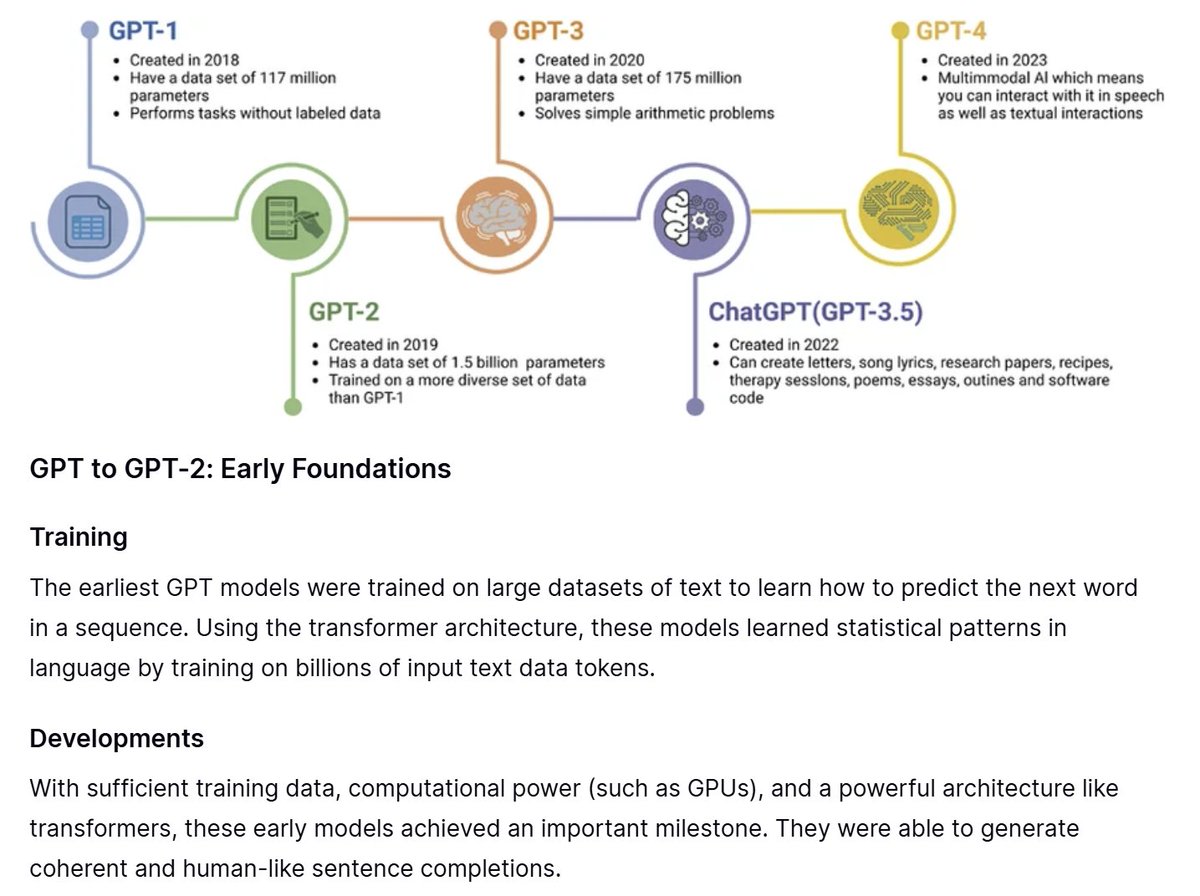
Day 41 of building an AI literacy course:
Added a part on the developmental timeline of ChatGPT, including:
✅ Supervised learning on text datasets
✅ How OpenAI used RLHF to train a reward model
✅ How GPT-4 expanded native multimodality
Thought it'd be good to add!

🤖 [𝐏𝐫𝐢𝐦𝐞𝐫] 𝐃𝐢𝐟𝐟𝐮𝐬𝐢𝐨𝐧 𝐋𝐋𝐌𝐬 • https://t.co/uvFILbE0jT
- Diffusion LLMs rethink language generation by replacing left-to-right next-token prediction with iterative denoising, allowing models to revise, refine, and generate text through globally aware masked-token reconstruction.
- This primer gives a practical end-to-end view of diffusion language models, covering denoising dynamics, LLaDA-family architectures, sampling and inference, RL and preference alignment, reasoning, scaling, multimodality, failure modes, and where diffusion LLMs may fit in production.
🔹 𝐎𝐯𝐞𝐫𝐯𝐢𝐞𝐰
• What Diffusion LLMs are
• Autoregressive vs. Diffusion Generation
• Training Objective
• Generation Process
• Advantages and Limitations
🔹 𝐃𝐞𝐧𝐨𝐢𝐬𝐢𝐧𝐠 𝐃𝐲𝐧𝐚𝐦𝐢𝐜𝐬
• Forward and Reverse Processes
• Iterative Refinement
• ELBO Formulation
• Confidence-based Remasking
• Continuous vs. Discrete Time
🔹 𝐑𝐋 𝐌𝐢𝐬𝐦𝐚𝐭𝐜𝐡
• Why Autoregressive RL Breaks
• The Likelihood Problem
• Mean-field Workarounds
• Trajectory-level and Sequence-level Views
• Variance Reduction
🔹 𝐋𝐋𝐚𝐃𝐀 𝐅𝐚𝐦𝐢𝐥𝐲
• LLaDA Core Design
• LLaDA Training Pipeline
• LLaDA 1.5 and VRPO
• LLaDA2.0
• LLaDA2.0-Uni
• AR-to-Diffusion Conversion
• Block Diffusion and MoE Scaling
🔹 𝐑𝐞𝐚𝐬𝐨𝐧𝐢𝐧𝐠 𝐚𝐧𝐝 𝐏𝐥𝐚𝐧𝐧𝐢𝐧𝐠
• Lateral Thought
• Unmasking As Policy
• D1 and Diffu-GRPO
• GDPO and ESPO
• Planning, Code, and Math Reasoning
🔹 𝐏𝐫𝐞𝐟𝐞𝐫𝐞𝐧𝐜𝐞 𝐀𝐥𝐢𝐠𝐧𝐦𝐞𝐧𝐭
• ELBO Preference Scores
• Variance Bottlenecks
• VRPO
• DPO vs. VRPO
• Alignment Lessons
🔹 𝐒𝐜𝐚𝐥𝐢𝐧𝐠 𝐚𝐧𝐝 𝐂𝐨𝐧𝐭𝐞𝐱𝐭
• Compute Scaling
• Long-context Failure Modes
• RoPE Adaptation
• Masking Strategies
• Frontier-scale Diffusion LLMs
🔹 𝐌𝐮𝐥𝐭𝐢𝐦𝐨𝐝𝐚𝐥 𝐃𝐋𝐋𝐌𝐬
• Why Multimodal Fits
• LLaDA-V
• Visual Grounding
• LaViDa
• Unified Generation
🔹 𝐅𝐚𝐢𝐥𝐮𝐫𝐞 𝐌𝐨𝐝𝐞𝐬
• Likelihood Gap
• Estimator Variance
• Sampler Dependence
• Latency Tradeoffs
🔹 𝐃𝐋𝐋𝐌𝐬 𝐢𝐧 𝐏𝐫𝐚𝐜𝐭𝐢𝐜𝐞
• When to Use DLLMs
• Key Takeaways
Primer written in collaboration with @VinijaJain.
#AI #LLM

DeepSeek is working on multimodality
"We are also working on incorporating multimodal capabilities to our models."

Claude 4 Architecture:
> Claude 4 represents Anthropic's latest advancement in large language models, building on transformer foundations with hybrid reasoning tailored for complex tasks. Its architecture balances rapid responses and deep deliberation, making it excel in coding, agentic workflows and multi-step reasoning.
--> Core Structure
> Claude 4 uses a dense transformer backbone, similar to predecessors but scaled massively for frontier performance. Key layers include multi-head self-attention for contextual relationships, feed-forward networks for pattern recognition and layer normalization for stable training. It supports a 200K-token context window (up to 1M in beta), enabling processing of vast codebases or documents without truncation. Unlike pure autoregressive models, it incorporates optimizations for sustained long-horizon tasks, like hours-long autonomous work.
--> Hybrid Reasoning Engine
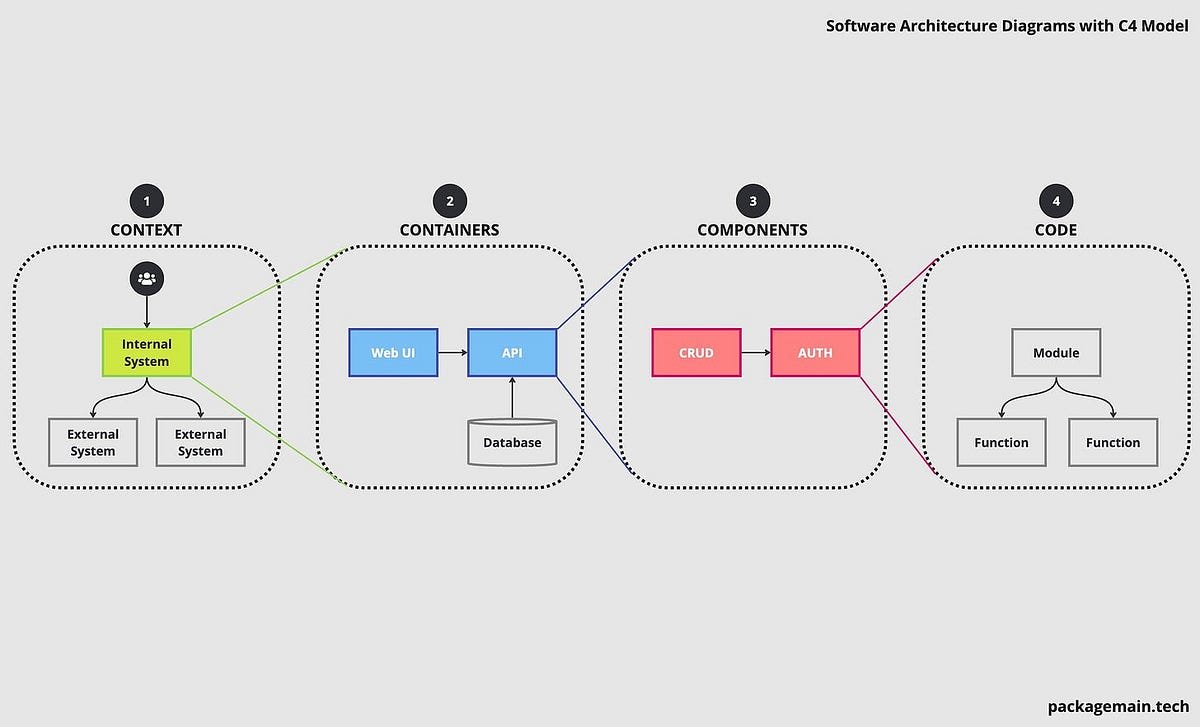
> C4 Model Diagram
The standout innovation is a dual-mode system: "fast mode" for instant replies via standard decoding and "extended thinking mode" for chain-of-thought deliberation. In thinking mode, the model generates internal reasoning traces visible as structured blocks before final output. This hybrid setup interleaves reasoning with parallel tool calls (e.g. web search or code execution) allowing dynamic strategy shifts based on intermediate results. It enhances transparency, letting users inspect logic paths for debugging or refinement.
> This diagram illustrates a layered architecture flow, from input embedding through attention and reasoning modules to output generation, mirroring Claude 4's stacked transformer blocks with added hybrid paths.
> Key Components
> Attention Mechanism: Grouped-query attention reduces compute while preserving quality, focusing on relevant tokens across long sequences.
> Memory Augmentation: Extracts and persists key facts across sessions when given file access, building "tacit knowledge" for agents.
> Tool Integration: Native support for parallel tools in thinking loops, boosting accuracy on benchmarks like SWE-bench (72.5% for Opus 4).
> Vision Multimodality: Processes multiple images alongside text for tasks like diagram analysis or UI review.
> Training and Scale
> Trained on diverse, high-quality data with constitutional AI for safety alignment, Claude 4 emphasizes post-training for instruction following and reduced hallucinations. Opus 4 leads in coding, Sonnet 4 balances speed/intelligence. Exact parameter counts remain proprietary but it's denser and more efficient than Claude 3.5, prioritizing agentic reliability over raw scale.

april 10
- Coding Agents: The first category of agent to hit product market fit, with billions of dollars in revenue created in 2025. Somehow instead of feeling threatened, AI Engineers are embracing coding agents en masse, from @cursor_ai to VS @code and @badlogicgames' Pi. They're all here.
- MCP: MCP is now the most successful and widely adopted standard in AI Engineering, but has also beat OpenAPI, GraphQL, grpc and trpc in general API integration popularity. AI Engineer was the first conference to bet big on MCP, and we're proud to finally bring our MCP track to @dsp_'s home turf, where Anthropic has a beautiful new office.
- AI Architects: OpenAI chairman @btaylor coined this role ahead of AIE World's Fair last year — Our most senior AI leaders whohave to design the system that builds systems - the larger AI Engineering organization and the teams, principles, and agents that funnel the slop machine into productive ends. Meet your peers and discuss the best AI Architect trends of 2026.
- Generative Media & Hallway Track: Our second multimodality track has everything to do with image and video diffusion and creative usecases thereof, and in the second half we give attendees a chance to propose talks. Highest voted talks get to take the stage!
- GPUs & LLM Infra: The "hardware" complement to Evals/Observability in production is the rock solid Agent infrastructure for inference, auth, sandboxing, Reinforcement Learning, and more. Learn from the beest in the business from @NVIDIA to @WorkOS!
- @GoogleResearch: Gemma 4 is the most successful GDM open model launch yet - and today we have great perspectives from devrel experts and researchers on @NanoBanana, as well as Open Office hours from the GDM team - bring your projects and questions!


4/5 Qwen3.5-Omni is here.
Alibaba is pushing further into native multimodality: text, image, audio, and video in one system, with stronger real-time interaction. The standout angle is “audio-visual vibe coding” — describe something through voice and camera input, and it turns that into a working app or game.

you're building saas and staring down ai model choices like a deer in headlights been there felt that the jargon can be a whole other language.
let's cut through the noise here's the real deal on what matters, no fluff:
• tokens (input & output): think of these as the tiny building blocks of language the ai uses. everything you feed it, and everything it spits back, is measured in these. the key? most apis charge by the token. so, the more your users jabber, the more you pay. simple as that.
• context window: this is the ai's short-term memory. it's how much text it can actually chew on at once for any given request. a tiny window means it forgets the beginning of the conversation fast. crucial for chatbots, summaries, anything with a dialogue flow.
• token pricing: yeah, i mentioned it with tokens, but it's so important it gets its own shout. are you looking at $0.001 per 1k tokens, or $0.05? it adds up. fast. understand this before you launch.
• temperature: this one's wild. low temp = the ai plays it safe, predictable. high temp = it gets weird, creative, maybe even wrong. need factual answers? keep it low. need brainstorming or creative text? crank it up. but be warned, high temp can spit out nonsense.
• embeddings: imagine turning words into numbers (vectors). these vectors capture meaning. this is how you do clever search – finding similar articles, not just exact keyword matches. it's the secret sauce for smart retrieval.
• multimodality: this is the future, people. the ai can see images, hear audio, watch video, not just read text. if your saas needs to understand pictures or sound, this is non-negotiable.
• model size (parameters): the bigger the brain (more parameters), generally the smarter, more capable the model. but also... more expensive to run and slower. it's a trade-off. you don't need a brain surgeon for a paper cut.
• rag (retrieval-augmented generation): this is how you make an ai not sound like a generic know-it-all. you connect it to your specific data (your company docs, your product catalog). it then uses that real data to answer questions.
accuracy boost = customer trust.
stop picking models based on hype.
pick them based on these. seriously.

Multimodality + Autonomy = The Main AI Trend Right Now. 🚀
While everyone was discussing which language model is best for writing texts, the focus has shifted to AI agents. These are systems that can:
1️⃣ Perceive the world multimodally (text, photos, videos, code).
2️⃣ Independently break down a complex task into subtasks.
3️⃣ Use the browser and APIs of other services to perform actions.
We're at the point where AI is transforming from an advisor into a true performer. 🤯
What routine task would you like to delegate to an autonomous agent today? Share your thoughts in the comments!
#AI #ArtificialIntelligence #TechTrends #Automation

Important AI model terms everyone building SaaS should know before choosing a model:
• Tokens (Input & Output) – The units of text a model reads and generates; most AI APIs charge based on tokens.
• Context Window – The maximum number of tokens the model can process in one request.
• Token Pricing – The cost per 1K / 1M tokens when using the model API.
• Temperature – Controls randomness; lower = more deterministic, higher = more creative.
• Embeddings – Vector representations of text used for search, similarity, and semantic retrieval.
• Multimodality – Ability of a model to understand images, audio, video, or text.
• Model Size (Parameters) – Number of parameters in the model; often linked to capability and compute cost.
• RAG (Retrieval-Augmented Generation) – Connecting models with external data sources to improve accuracy.

Imagine Notion and ChatGPT had a baby.
Say goodbye to endless chat threads when learning with AI.
Introducing First Principle, an AI that helps you think like a scientist.
It all started with a problem I had when cramming for a midterm using ChatGPT.
• You paste all your notes, and ask it to teach you something from scratch.
• Then halfway through the response, you get confused.
• So you ask a follow up.
• Then another one. Soon the chat becomes long, messy, and you lose context of where you left off.
Modern LLM interface sucks for in-depth learning, so we decided to change that.
Instead of a linear interface, we built a block interface.
Your questions branch out to the right like a tree, so you can always track progress and never lose context of where you left off.
We also brought in multimodality, tailoring learning format to each person with over 20 block types (eg. charts, diagrams, animations…etc.).
And adaptive learning. Every chat adds to what you have learned, so the next session adapts to your current knowledge and level.
We believe the future is shaped by polymaths, who use cross-domain expertise to create new things.
We're giving out free AI credits (GPT 5.2 and Gemini 3.1 Pro) for the first 100 users in the first few months.
If you use ChatGPT, Gemini, or Claude to learn or study for exams, comment "First Principle" and you'll receive direct access.

@SeemabLatif1 Nice drop.
If native multimodality + RL reasoning actually holds in real workloads, this is a big shift.

Alibaba just dropped Qwen3.5 small models, 0.8B to 9B parameters, built for edge devices.
The interesting part is not the size. It is the architecture.
Native multimodality, not adapters. Scaled RL for reasoning, not just fine tuning.

Subagent use was an emergent capability in Opus 4.5. Explains the instant explorers at session start. I wonder how much this capability influenced the roadmap.
Teams for example.
If this is the case, there are a couple capabilities Claude is yet to develop that will be crazyy.
Ny fave: Native multimodality. In, out.
How will that influence the roadmap? 👀


https://t.co/nKTDfC7zMm

Most AI agent projects don’t stall because teams lack ambition but they stall because all the budget goes into the wrong model...
PoCs slow down.
Latency creeps up.
Costs get out of hand.
And then AI takes the blame.
Until AGI is real, no single model is great at every job.
The teams that ship focus on model task fit, not model loyalty.
The teams that actually ship don’t chase brand names.
They design systems around model–task fit.
Good agents come from alignment not allegiance.
The teams that succeed don’t chase brand names
they design systems around model–task fit.
Effective agents are built through alignment and not allegiance.
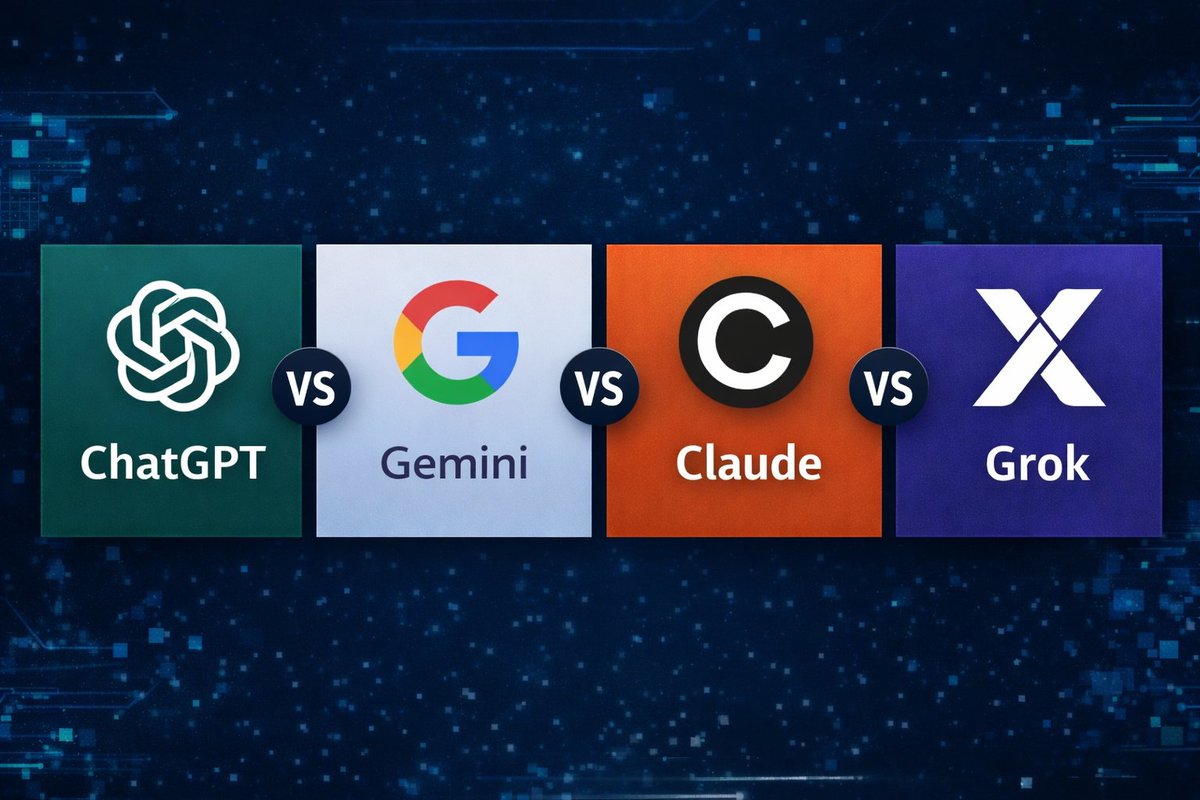
Below is how I view and break down the current AI model landscape !!
1. ChatGPT (OpenAI)
Strengths:
- Advanced reasoning capabilities for complex problem-solving.
- Best-in-class tool and function calling support.
- Multimodal flexibility across text, images, and code.
Use Cases:
- GPT-5.2 Instant: Everyday chats and quick info-seeking.
- GPT-5.2 Pro: Scalable agentic workflows.
- GPT-5.2 Thinking: Deep reasoning for complex analysis.
- GPT-5.2 Codex: Deep context coding and development.
Limitations: Prompt sensitivity, costly scaling for high-volume, shallow persistent memory.
2. Gemini (Google)
Strengths:
- Massive ecosystem integration with Google services
- Superior multimodal processing across text, image, video.
- Fast parallel processing for concurrent tasks.
Use Cases:
- Gemini 3.0 Pro: Coding and development agents.
- Gemini 3.0 Flash: FAQ bots and coding agents.
- Gemini 3.0 Thinking: Documentation and technical writing.
- Gemini 2.5 Pro: Multimodal apps with large context windows.
Limitations: Uneven tool-calling reliability, weaker unfiltered reasoning, inconsistent projects and gems.
3. Claude (Anthropic)
Strengths:
- Superior coding accuracy with minimal hallucinations
- Minimal biases in outputs.
- Best-in-class long-form reasoning chains.
Use Cases:
- Sonnet 4.5: Development and code refactoring.
- Haiku 4.5: Query rewriting and intent classification.
- Opus 4.5: Best for Agentic workflows but expensive.
- Sonnet 4: Production-grade development workflows.
Limitations: Lower response times compared to competitors, strict content policies, weaker multimodality processes.......
4. Grok (xAI)
Strengths:
- 2M-token context window for massive inputs.
- Multi-model variants for flexibility.
- Strong function calling capabilities.
Use Cases:
- Grok 4 Heavy: Deep research and analysis.
- Grok 4: Multi-model apps with cheaper tokens.
- Grok 4 Fast: Normal everyday chats and QNA bots.
- Grok Code Fast 1: Faster and cheaper coding agents.
Limitations: Newer SDK ecosystem with fewer integrations, availability tied to X platform, less mature multimodality features....
My Thumb Rules for Selection Guide :
- ChatGPT → Agentic workflows needing robust tool integration.
- Gemini → Multimodal tasks with Google ecosystem requirements.
- Claude → Code-heavy agents requiring precision and minimal bias.
- Grok → Research agents handling massive context windows.
If you find this useful feel free to do repost ♻️ to help others in your network.
The latest work from IRCCS Gruppo MultiMedica by Dr. Andrea Sonaglioni and from Policlinico San Giorgio by Prof. Gian Luigi Nicolosi is now featured in RCM!
Welcome to read this article 👉: https://t.co/KL378QLTqf
Article Highlights:
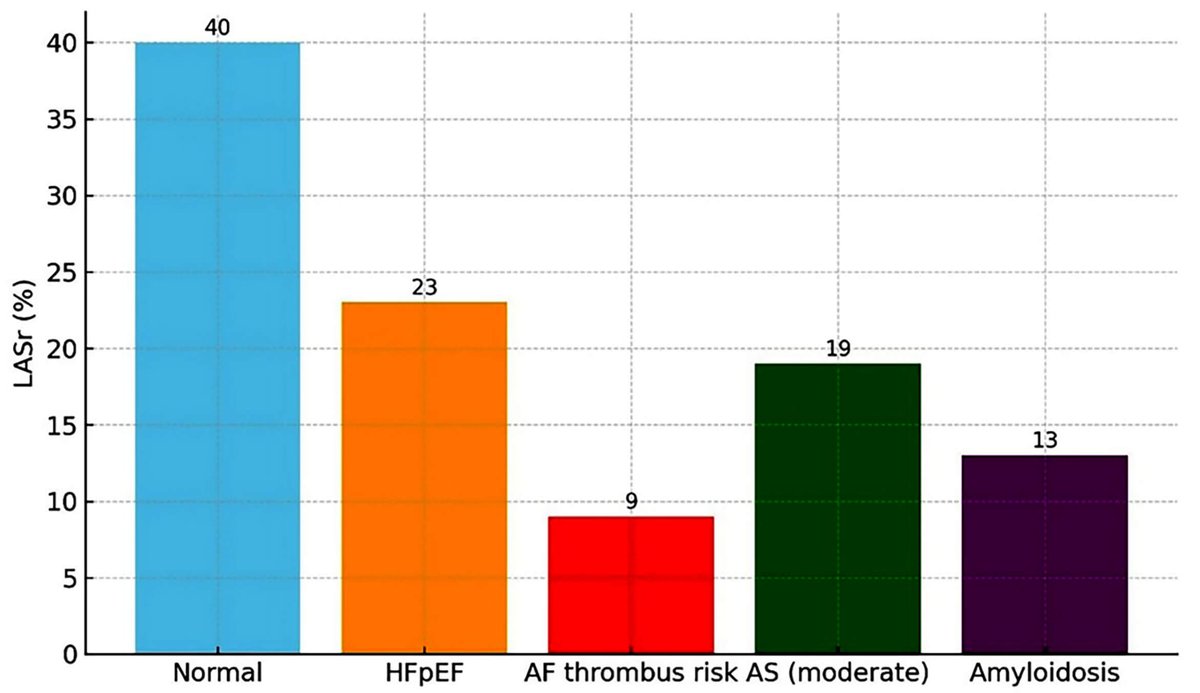
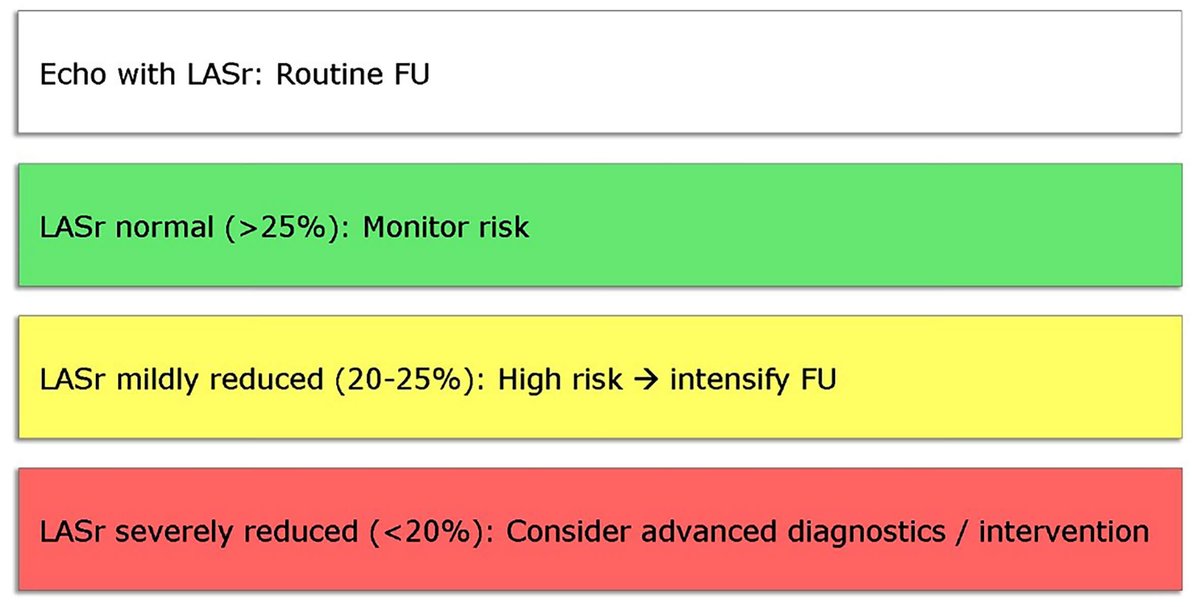
💡 How can #leftatrial reservoir strain (#LASr) detect #atrialdysfunction before structural enlargement occurs?
This review explores LASr as a sensitive, dynamic #biomarker for early detection, risk stratification, and prognostic assessment across heart failure with preserved ejection fraction, atrial fibrillation, #valvulardisease, and #systemic disorders. It also discusses advances in multimodality #imaging and #artificialintelligence that enhance clinical application.
📖 Don’t miss this citable reference for your future research!
Citation format:
Sonaglioni A, Nicolosi GL. Left Atrial Reservoir Strain in Cardiovascular and Systemic Disease: Advances and Clinical Applications From Physiology to Practice. Rev. Cardiovasc. Med. 2025, 26(12), 46198.
Welcome to submit your work via our submission link 👉: https://t.co/0im2Ul0zPy
#RCM welcomes review papers, research articles and other types of research in both #cardiovascular medicine and cardiovascular disease.
📖 Click here for author guidelines:
https://t.co/tKLwCKyDww
#Echocardiography #HeartFailure #AtrialFibrillation #LASr #RCMPaper #Cardiology


Trends for you
Most Popular Users

Elon Musk 
@elonmusk
240.1M followers

Barack Obama
@barackobama
118.6M followers

Cristiano Ronaldo
@cristiano
114.4M followers

Donald J. Trump
@realdonaldtrump
111.7M followers

Narendra Modi
@narendramodi
106.9M followers

Rihanna
@rihanna
98.6M followers

NASA
@nasa
92.1M followers

Justin Bieber
@justinbieber
91.7M followers

KATY PERRY
@katyperry
89.9M followers

Taylor Swift
@taylorswift13
83.9M followers

Lady Gaga
@ladygaga
75.4M followers

Virat Kohli
@imvkohli
73.3M followers

Kim Kardashian
@kimkardashian
70.8M followers

YouTube
@youtube
68.6M followers

Neymar Jr
@neymarjr
66.3M followers

Bill Gates
@billgates
65.2M followers

Selena Gomez
@selenagomez
63M followers

The Ellen Show
@theellenshow
62.1M followers

CNN
@cnn
61.7M followers

X
@x
60.6M followers