

Top Tweets for #Multiscale

FoldMapper: Protein Inverse Folding Model with Structure-Derived Evolutionary Profiles and a Multiscale Graph Encoder
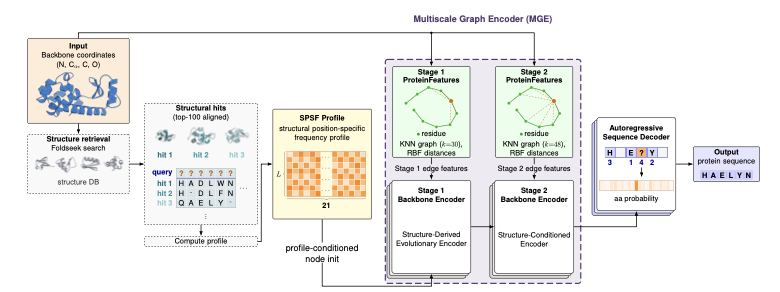
1. FoldMapper tackles a long-standing circular dependency in inverse folding: evolutionary statistics usually come from MSAs built from a query sequence, but inverse folding must design that very sequence. The model breaks the loop by retrieving structural homologs using shape-only search, then converting them into an evolutionary-like profile.
2. The key idea is an SPSF (structural position-specific frequency) profile: Foldseek retrieves up to 100 structural hits without using amino-acid identity during search, their alignments are stacked, and per-residue amino-acid frequencies are computed (bit-score weighted). This becomes a structure-derived analogue of a PSSM, encoding fold-specific sequence preferences without sequence-homology search.
3. Architecture: a Multiscale Graph Encoder (MGE) with two k-NN graphs over the same backbone. Stage 1 (k=30) is a profile-conditioned “evolutionary encoder” that locally mixes SPSF signals into node embeddings; Stage 2 (k=48) is a structure-conditioned MPNN that propagates longer-range geometric context and autoregressively decodes sequences.
4. Benchmarks introduced: TEDMonoBench (10,000 TED domains from AlphaFold DB plus 2,126 PDB chains, leakage-controlled via clustering and PAE-based selection) and PPIBindBench (576 leakage-controlled recent heterodimers, split into 197 non-peptide and 379 peptide binders, with ≤30% identity to training).
5. Sequence recovery vs diversity: FoldMapper reports best-of-100 recovery of 60.0% on TED and 64.9% on PDB, while keeping moderate diversity (20.1% on TED; 13.8% on PDB). Across datasets it sits on the recovery–diversity Pareto front, avoiding the low-diversity regime seen in some high-recovery baselines.
6. Multimer/binder design: on PPIBindBench, FoldMapper reaches 51.3% best-of-100 recovery for non-peptide binders (second-best) and 53.1% for peptide binders (best), while maintaining higher diversity than methods that achieve recovery via tighter sequence collapse.
7. De novo backbone foldability (self-consistency): on RFdiffusion experimentally tested backbones, FoldMapper shows strong refolding consistency under AlphaFold 3 (and consistent rankings under Boltz2). Reported success rates (fraction with scTM ≥ 0.8 among 100 samples) reach 91–95% on monomers and ~71–78% on binder complexes, with best-of-100 scTM around 0.986–0.987 for monomers and >0.95 for binders.
8. Profile quality analysis: recovery correlates more with the best structural hit quality than with profile depth. Max Foldseek bit score shows the strongest association with recovery (Spearman ρ ≈ +0.281), while the number of hits contributes little once at least one hit exists. When no hit is found, recovery drops sharply (~25%), indicating reliance on having at least one structural neighbor.
9. Ablations clarify where gains come from: removing SPSF hurts especially on PDB (64.9% → 52.2% recovery), while removing the Stage 1 encoder hurts more on predicted domains (TED: 60.0% → 53.8%). Peptide binders show minimal changes, consistent with short fragments often lacking informative structural homologs.
10. Practical considerations and limitations: FoldMapper requires a pre-inference structural search to build SPSF (reported ~4–5 seconds per structure on 8 CPU threads), and performance depends on retrieving at least one homolog. The authors suggest domain-focused structural databases (e.g., Ig-only for antibodies) as a direction to improve task-specific evolutionary signal.
💻Code: https://t.co/DdDEiLEKLd
📜Paper: https://t.co/onBgM06P6g
#ProteinDesign #InverseFolding #ComputationalBiology #DeepLearning #GNN #ProteinEngineering #StructuralBioinformatics #Foldseek #RFdiffusion #AlphaFold3
GLOM–TGITO: Multiscale protein modelling and multiview landscape-guided sequence discovery
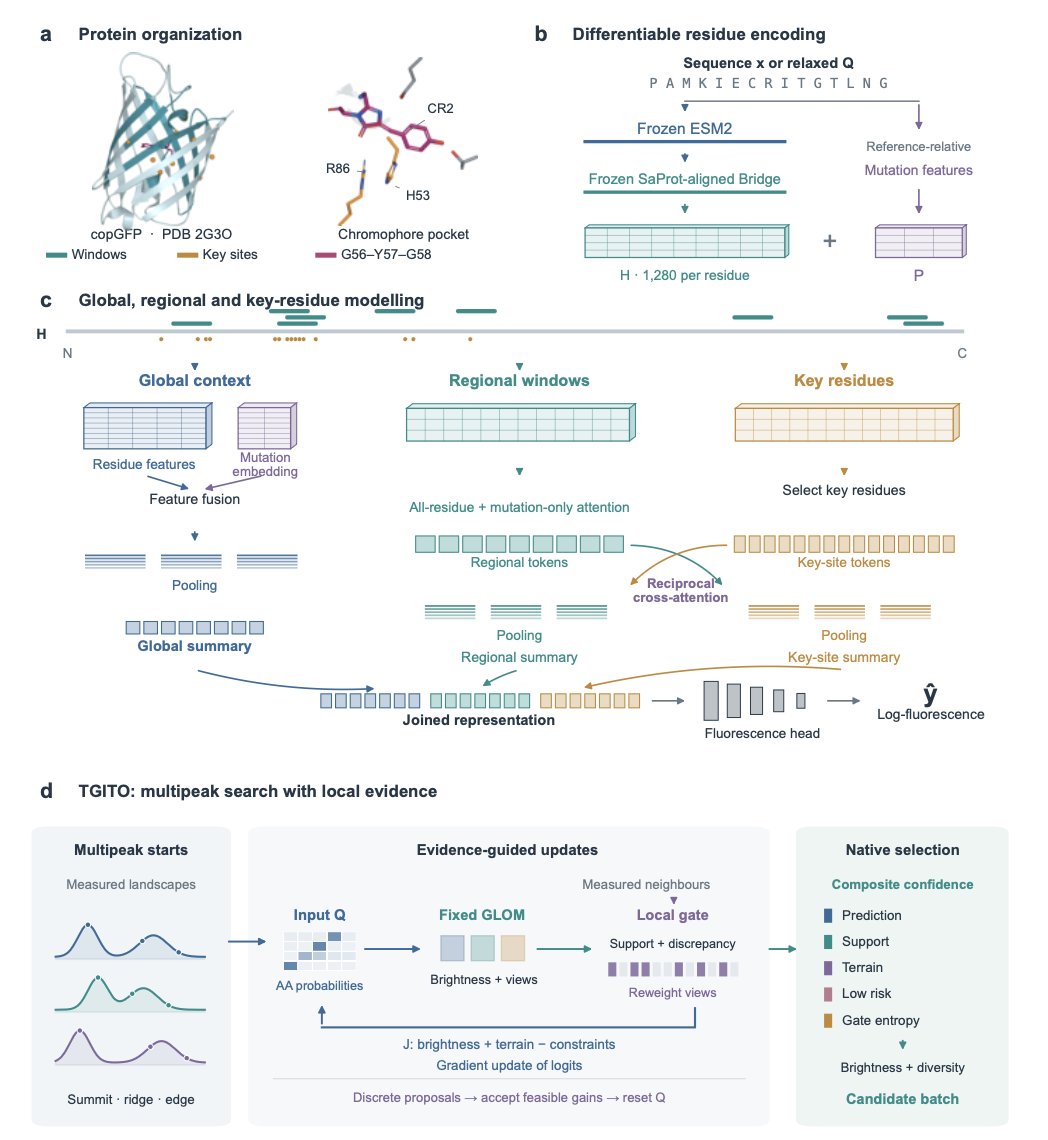
1. The paper introduces GLOM–TGITO, an offline protein design framework that explicitly targets a common failure mode in model-based optimization: chasing sequences with high predicted fitness but weak experimental support. It couples a global–local fluorescence predictor with “terrain-gated” inference-time optimization that consults nearby measured variants during search.
2. On the ppluGFP2 dataset (31,434 unique 221-aa sequences with measured log10 fluorescence), the predictor (GLOM) improves generalization on both random and mutation-depth holdouts. Reported RMSEs are 0.170 (random) and 0.247 (depth), compared with 0.247 and 0.324 for the strongest SaProt-650M controls used in this study.
3. Beyond average error, GLOM is evaluated as a screening model: among prediction-ranked Top 100 measured test variants, 96.3% (random split) and 97.3% (depth split) are experimentally bright (log10 fluorescence ≥ 4.2), averaged across three training seeds—substantially higher than the SaProt control rankings in the same benchmark.
4. Architecturally, GLOM is multiscale: it fuses (i) whole-protein global context, (ii) regional windows (nine 10-residue windows with mutation-masked attention), and (iii) a key-site branch (15 selected residues near functionally relevant regions). Regional and key-site tokens exchange information via reciprocal cross-attention, and the combined representation feeds a fluorescence head.
5. A key implementation detail is the differentiable residue encoding used for both prediction and optimization: frozen ESM2-150M residue states are combined with a frozen “Bridge” that predicts Foldseek 3Di structural tokens and is trained to align with SaProt residue embeddings. Explicit reference-relative mutation channels are added to help the model represent substitution effects.
6. TGITO (Terrain-Gated Inference-Time Optimization) turns intermediate representations into multiple “views” of the measured landscape: 12 memories (11 intermediate feature views plus a fixed projected-sequence view) store the same 22,003 training sequences. During optimization, each query retrieves nearest neighbors (cosine similarity in the original feature spaces) to estimate local measured support and local overprediction risk.
7. The “dynamic gate” is the core novelty in the optimization loop: at each step it selects 6 of the 12 views to contribute, reweighting them based on calibration quality, bright-neighbor support, and prediction–measurement disagreement in the local neighborhood. Optimization then updates amino-acid probabilities through the frozen predictor while being guided by this gated, locally interpolated evidence.
8. The search is explicitly multipeak: initialization consolidates 900 peak regions (with summit/ridge/edge roles), creating 2,700 optimization tasks from 1,308 distinct starting sequences. With a final budget of two substitutions relative to each start, TGITO returns 2,594 distinct candidate sequences (2,593 not present in the measured catalogue).
9. Candidate selection emphasizes reliability and diversity, not only predicted brightness. A “representation deviation” score (distance to the 32nd nearest training neighbor in the learned representation, normalized by a calibration Q95 threshold) is used as a support metric; deviation also correlates with real error on measured test variants (AUROC 0.773 for identifying abs error > 0.1).
10. Compared to four end-to-end discovery baselines (GLOM–AdaLead, GLOM–random, GLOM–ProtHMSO, ESM650–ProtHMSO), GLOM–TGITO’s selected Top 100 has lower mean representation deviation (2.9–8.2% lower) and yields more candidates passing joint novelty–reliability filters (38 vs 11–16), while maintaining high predicted brightness and enforcing diversity (pairwise Hamming distance ≥ 2).
11. As a post hoc mechanistic check, short explicit-solvent MD simulations on the selected Top 30 suggest two recurring design “routes”: (i) reduced non-interface hydrophobic surface patch area in 20/30 candidates vs their starts (mean ~5.2% reduction), and (ii) altered chromophore microenvironment dynamics, including more persistent phenolate hydrogen-bonding in some variants and reduced chromophore torsional fluctuations in others.
💻Code: https://t.co/3I302iVCJY
📜Paper: https://t.co/Vc4JVyDnWD
#ProteinDesign #MachineLearning #ComputationalBiology #ProteinEngineering #FluorescentProteins #OfflineRL #Optimization #ProteinLanguageModels #FitnessLandscapes #MolecularDynamics
GLOM–TGITO: Multiscale protein modelling and multiview landscape-guided sequence discovery
1. The paper introduces GLOM–TGITO, an offline protein design framework that tries to avoid a common failure mode in model-based optimization: drifting toward sequences that look great to the predictor but lack nearby experimental support.
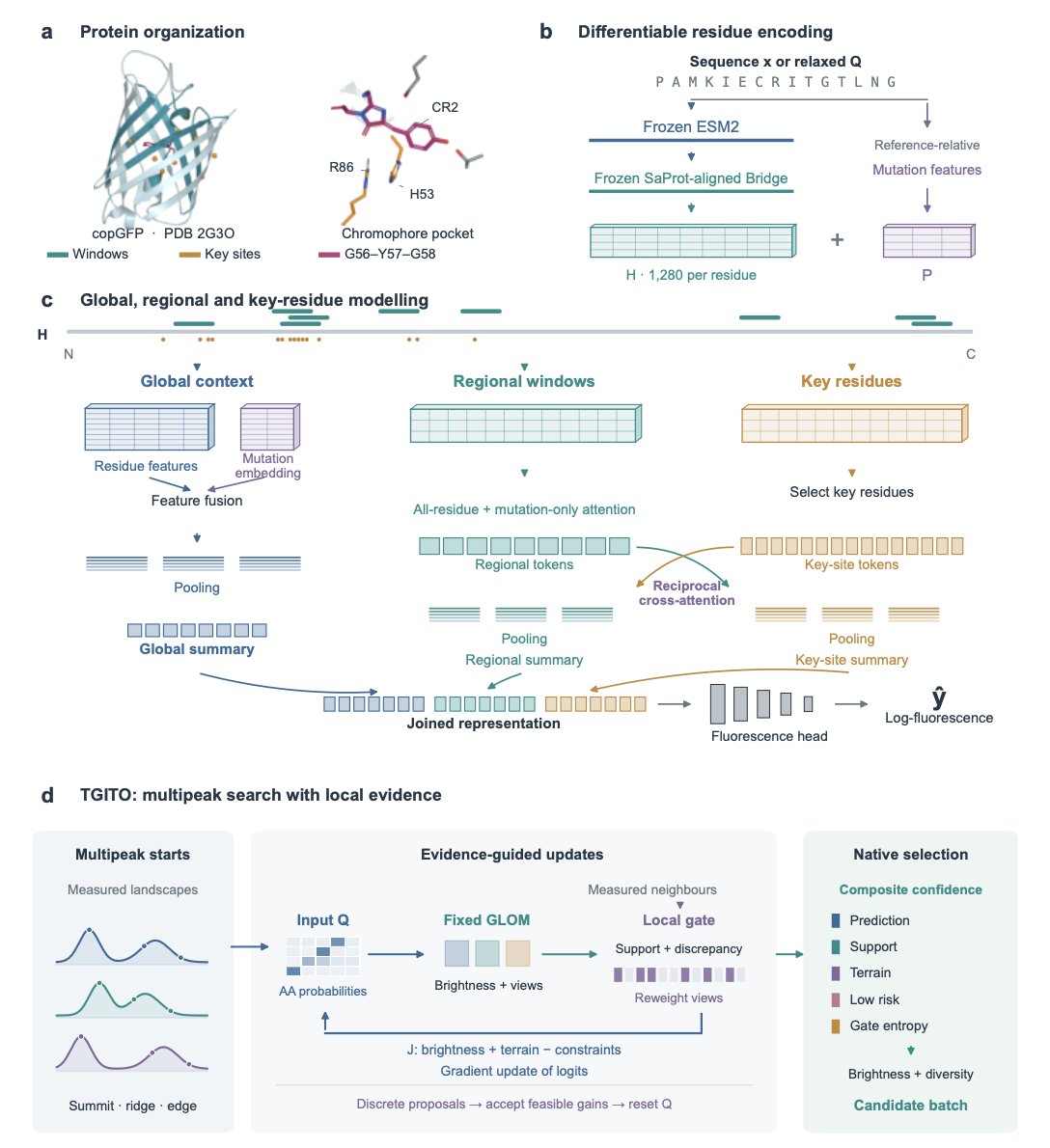
2. Core idea: link a global–local fluorescence predictor (GLOM) with multiview, evidence-aware inference-time optimization (TGITO), so sequence search is guided by both predicted brightness and locally interpolated measurements from the training landscape.
3. GLOM’s architecture is explicitly multiscale: a global whole-protein branch, a regional window branch, and a key-site branch, coupled by reciprocal cross-attention. This aims to capture both local chromophore-pocket effects and broader scaffold interactions relevant to GFP brightness.
4. Input representation is designed to be differentiable for optimization: frozen ESM2-150M residue states are combined with a frozen “Bridge” that predicts Foldseek 3Di structural tokens and aligns to SaProt residue embeddings, plus explicit reference-relative mutation channels.
5. On ppluGFP2 (31,434 unique 221-aa sequences), GLOM improves fluorescence prediction accuracy vs strong SaProt-650M baselines: RMSE 0.170/0.247 (random/depth holdouts) vs 0.247/0.324 for the best SaProt controls. Screening yield is also high: 96.3%/97.3% of prediction-ranked Top 100 test variants are measured bright (log10 fluorescence ≥ 4.2).
6. TGITO performs multipeak optimization: it selects 900 experimentally supported peak regions across multiple representation “views,” launches 2,700 constrained search tasks (≤2 substitutions from each start), and updates amino-acid probabilities via gradients through the frozen predictor.
7. The “terrain-gated” component dynamically chooses which representation views to trust at each step. It uses nearest-neighbour retrieval from measured training memories to compute local support, local risk, and prediction–measurement discrepancy, then gates the optimization objective to emphasize views with stronger empirical backing.
8. Candidate reliability is assessed with representation deviation: distance from a candidate’s learned representation to the observed training neighbourhood (normalized by a calibration Q95 boundary). Deviation flags measured test errors >0.1 with AUROC 0.773, connecting “how far from known territory” to real prediction failure risk.
9. In full discovery-pipeline comparisons (same forward evaluation budget), GLOM–TGITO returns 2,594 distinct candidates and selects Top 100 with lower mean representation deviation than AdaLead/ProtHMSO/random baselines (2.9–8.2% lower). Under joint novelty–reliability filters, it retains 38 candidates vs 11–16 for comparators.
10. Biophysical follow-up (MD on Top 30) suggests two mechanistic routes the selected sequences may exploit: reduced surface hydrophobic patches (20/30 smaller vs their starts) and altered chromophore environment (e.g., more persistent phenolate H-bonds or reduced chromophore torsional fluctuations), offering interpretable hypotheses for brighter reporters.
📜Paper: https://t.co/Vc4JVyDVMb
#ProteinDesign #ComputationalBiology #MachineLearning #ProteinLanguageModels #GFP #OfflineOptimization #FitnessLandscapes #MolecularDynamics #SequenceDesign

More waste glass, less sand but not too much.
A multiscale study finds weaker interfaces at high glass content, so replacement should stay within 20%.
Explore the study: https://t.co/qAdix4yE0q
#SciOpen #TUP #WasteGlass #AcademicResearch🧵👇

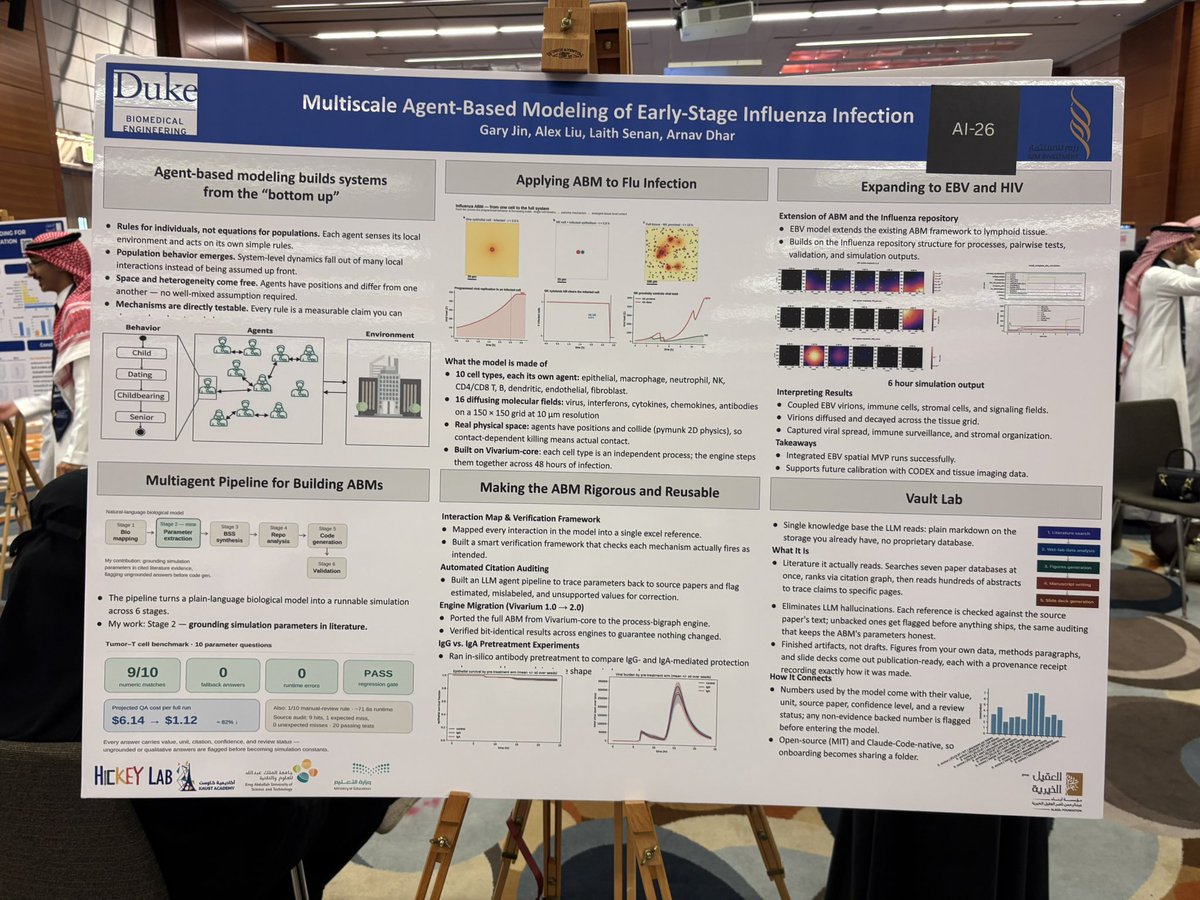
▫️Multiscale Agent-Based Modeling of Early-Stage Influenza Infection
▫️Deepfake & AI-Generated Image Detection with Visual Explanation using Visual-Language Models
▫️OnKith: What Happens at Home, Stays at Home
▫️An automated tiered-evidence toolkit for cybersecurity compliance assessment in Saudi SMEs




Solvent Effects in Organic Reaction: From Empirical Scales to Multiscale Modeling and Data-Driven Optimization

Solvent Effects in Organic Reaction: From Empirical Scales to Multiscale Modeling and Data-Driven Optimization
https://t.co/aqVhgJXtsT
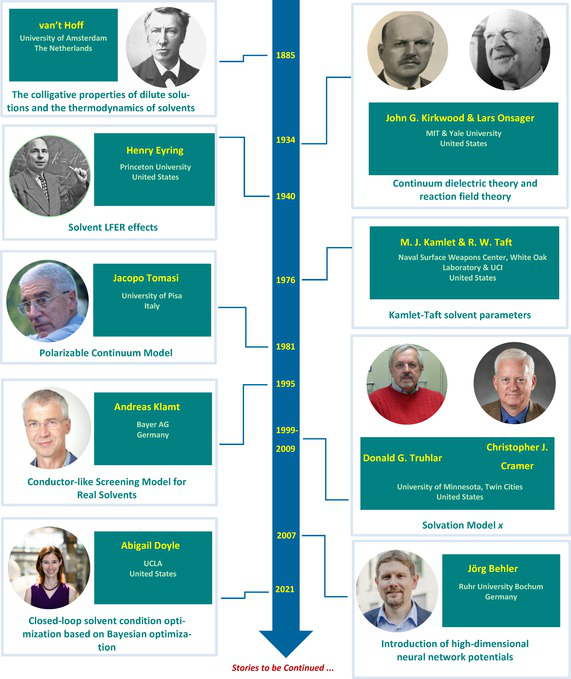
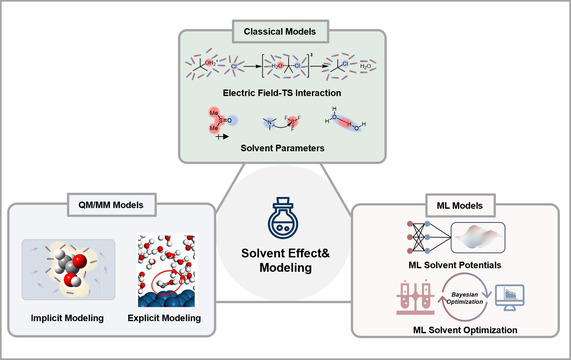

Solvent Effects in Organic Reaction: From Empirical Scales to Multiscale Modeling and Data-Driven Optimization
Solvent Effects in Organic Reaction: From Empirical Scales to Multiscale Modeling and Data-Driven Optimization
https://t.co/aqVhgJXtsT
Solvent Effects in Organic Reaction: From Empirical Scales to Multiscale Modeling and Data-Driven Optimization
Solvent Effects in Organic Reaction: From Empirical Scales to Multiscale Modeling and Data-Driven Optimization
https://t.co/aqVhgJXtsT

Solvent Effects in Organic Reaction: From Empirical Scales to Multiscale Modeling and Data-Driven Optimization
Solvent Effects in Organic Reaction: From Empirical Scales to Multiscale Modeling and Data-Driven Optimization
https://t.co/aqVhgJXtsT
Solvent Effects in Organic Reaction: From Empirical Scales to Multiscale Modeling and Data-Driven Optimization
Solvent Effects in Organic Reaction: From Empirical Scales to Multiscale Modeling and Data-Driven Optimization
https://t.co/aqVhgJXtsT
Solvent Effects in Organic Reaction: From Empirical Scales to Multiscale Modeling and Data-Driven Optimization
Solvent Effects in Organic Reaction: From Empirical Scales to Multiscale Modeling and Data-Driven Optimization
https://t.co/aqVhgJXtsT

📜 FINALLY OUT! 📜
In @ImagingNeurosci (@mitpress),
Myself, with Thomas Andrillon, Olivia Carter, @LionelBarnett2, and @anilkseth, advance approaches of #multiscale #emergence and it's application to EEG across #conscious #states.
https://t.co/Gu3Lzk9FoJ
Buckle up 👇 1/n
Solvent Effects in Organic Reaction: From Empirical Scales to Multiscale Modeling and Data-Driven Optimization
Solvent Effects in Organic Reaction: From Empirical Scales to Multiscale Modeling and Data-Driven Optimization
https://t.co/aqVhgJXtsT
Solvent Effects in Organic Reaction: From Empirical Scales to Multiscale Modeling and Data-Driven Optimization
Solvent Effects in Organic Reaction: From Empirical Scales to Multiscale Modeling and Data-Driven Optimization
https://t.co/aqVhgJXtsT
Solvent Effects in Organic Reaction: From Empirical Scales to Multiscale Modeling and Data-Driven Optimization
Solvent Effects in Organic Reaction: From Empirical Scales to Multiscale Modeling and Data-Driven Optimization
https://t.co/aqVhgJXtsT
Solvent Effects in Organic Reaction: From Empirical Scales to Multiscale Modeling and Data-Driven Optimization
Solvent Effects in Organic Reaction: From Empirical Scales to Multiscale Modeling and Data-Driven Optimization
https://t.co/aqVhgJXtsT
Solvent Effects in Organic Reaction: From Empirical Scales to Multiscale Modeling and Data-Driven Optimization
Solvent Effects in Organic Reaction: From Empirical Scales to Multiscale Modeling and Data-Driven Optimization
https://t.co/aqVhgJXtsT
Solvent Effects in Organic Reaction: From Empirical Scales to Multiscale Modeling and Data-Driven Optimization
Solvent Effects in Organic Reaction: From Empirical Scales to Multiscale Modeling and Data-Driven Optimization
https://t.co/aqVhgJXtsT
Solvent Effects in Organic Reaction: From Empirical Scales to Multiscale Modeling and Data-Driven Optimization
Solvent Effects in Organic Reaction: From Empirical Scales to Multiscale Modeling and Data-Driven Optimization
https://t.co/aqVhgJXtsT
Solvent Effects in Organic Reaction: From Empirical Scales to Multiscale Modeling and Data-Driven Optimization
Solvent Effects in Organic Reaction: From Empirical Scales to Multiscale Modeling and Data-Driven Optimization
https://t.co/aqVhgJXtsT
Solvent Effects in Organic Reaction: From Empirical Scales to Multiscale Modeling and Data-Driven Optimization
Solvent Effects in Organic Reaction: From Empirical Scales to Multiscale Modeling and Data-Driven Optimization
https://t.co/aqVhgJXtsT
Solvent Effects in Organic Reaction: From Empirical Scales to Multiscale Modeling and Data-Driven Optimization
Solvent Effects in Organic Reaction: From Empirical Scales to Multiscale Modeling and Data-Driven Optimization
https://t.co/aqVhgJXtsT
Solvent Effects in Organic Reaction: From Empirical Scales to Multiscale Modeling and Data-Driven Optimization
Solvent Effects in Organic Reaction: From Empirical Scales to Multiscale Modeling and Data-Driven Optimization
https://t.co/aqVhgJXtsT
Solvent Effects in Organic Reaction: From Empirical Scales to Multiscale Modeling and Data-Driven Optimization
Solvent Effects in Organic Reaction: From Empirical Scales to Multiscale Modeling and Data-Driven Optimization
https://t.co/aqVhgJXtsT
Solvent Effects in Organic Reaction: From Empirical Scales to Multiscale Modeling and Data-Driven Optimization
Solvent Effects in Organic Reaction: From Empirical Scales to Multiscale Modeling and Data-Driven Optimization
https://t.co/aqVhgJXtsT
Solvent Effects in Organic Reaction: From Empirical Scales to Multiscale Modeling and Data-Driven Optimization
Solvent Effects in Organic Reaction: From Empirical Scales to Multiscale Modeling and Data-Driven Optimization
https://t.co/aqVhgJXtsT
Solvent Effects in Organic Reaction: From Empirical Scales to Multiscale Modeling and Data-Driven Optimization
Solvent Effects in Organic Reaction: From Empirical Scales to Multiscale Modeling and Data-Driven Optimization
https://t.co/aqVhgJXtsT
Solvent Effects in Organic Reaction: From Empirical Scales to Multiscale Modeling and Data-Driven Optimization
Solvent Effects in Organic Reaction: From Empirical Scales to Multiscale Modeling and Data-Driven Optimization
https://t.co/aqVhgJXtsT
Solvent Effects in Organic Reaction: From Empirical Scales to Multiscale Modeling and Data-Driven Optimization
https://t.co/aqVhgJXtsT
Multiscale Tendon–Mimetic Hydrogel Structures Via the Cascading Synergy of Chemical Microphase Separation and Mechanical Twisting–Weaving
Multiscale Tendon–Mimetic Hydrogel Structures Via the Cascading Synergy of Chemical Microphase Separation and Mechanical Twisting–Weaving
https://t.co/VGJcnT7aiN
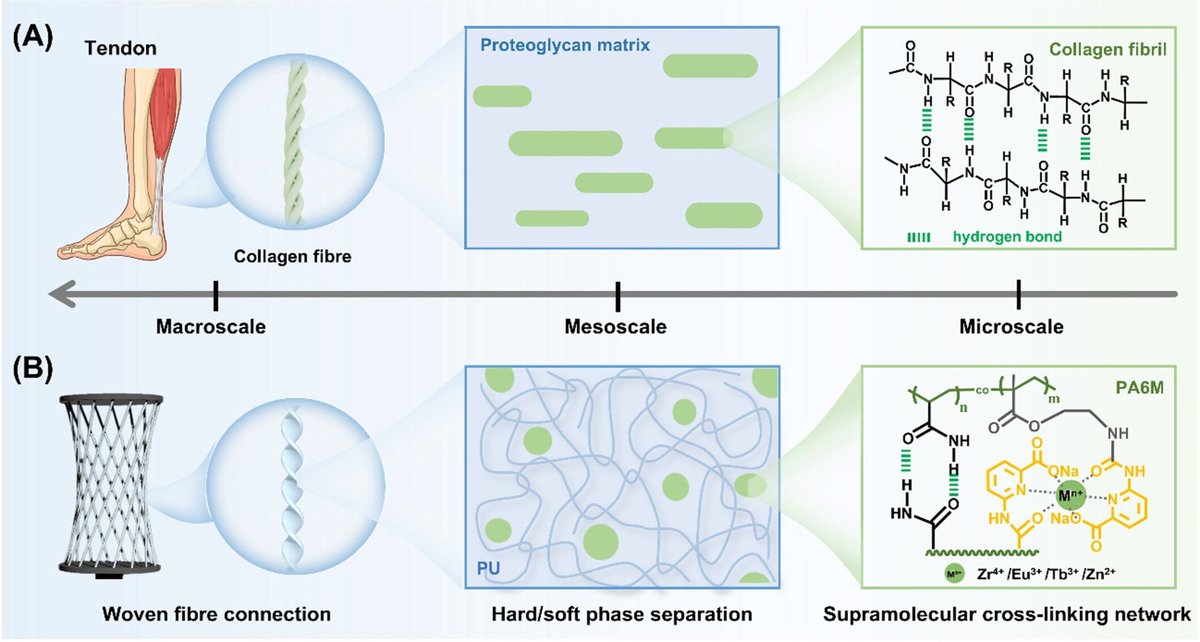
Multiscale Tendon–Mimetic Hydrogel Structures Via the Cascading Synergy of Chemical Microphase Separation and Mechanical Twisting–Weaving
Multiscale Tendon–Mimetic Hydrogel Structures Via the Cascading Synergy of Chemical Microphase Separation and Mechanical Twisting–Weaving
https://t.co/VGJcnT7aiN

We have a fully funded PhD position (UK students only) at @UoBChemistry to work on #multiscale #modelling and #ML of organic #materials! Details https://t.co/RhgoAVv6aO #PhDjobs #chemPhD Please spread the word!


We will present a #multiscale #virtualtwin by coupling @BlowMouldingTec advanced material modeling & #PET bottle stretch-blow moulding #simulation, to automated #simulation of PET bottle pallet transportation using @3DSCATIA and @3DS_SIMULIA empowered @Dassault3DS #3DEXPERIENCE!

This year the 11th Multiscale Materials Modeling (MMM) conference is in Prague 🤩 (CZ), Sept. 22-27! Join us at Symposium (I.) on "#Multiscale and #coarse-#grained #models of #surfaces and #interfaces" (https://t.co/B99uyInXNd - submission deadline 15.03). It will be great!

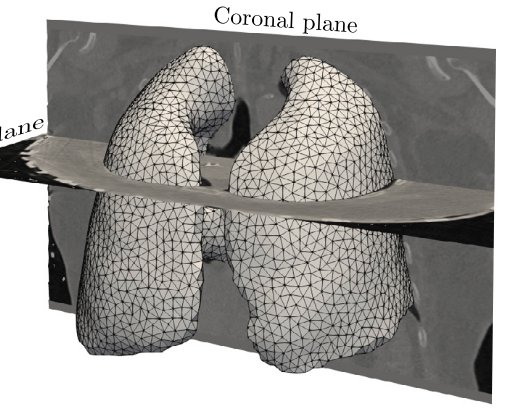
🫁#lungmechanics🫁 is crucial for managing #mechanicalventilation patients, and it's dictated by alveolar structure, but exactly how? Don't miss our latest #hotoffthepress paper on #multiscale #modeling of #lungfunction 👉 https://t.co/GRHV9QTFaS #structurefunction

Friends, Im excited to share my work linking #GRNs with dynamic #signals via #agents. The #multiscale GARMEN showed how a master GRN can lead to different #tissue structures. We successfully tested signal and transcriptomic perturbation outcomes in vitro
https://t.co/Q4ZUwOZ3sc

Today at @GyMIC_youngESMI #Imaging #Symposium in Leipzig, join our PhD students Gina and Vera @verajoe11 at their talks on #multiscale #microscopy and #NASH during oncology session! Tomorrow, make sure you see Adrian’s talk on #machinelearning during Neuroimaging session!


Congrats to @Chris_Tossas on his 1st #PAH paper! Ventricular-vascular 🫀🫁coupling in a prospective pediatric study with #MRI, #cath, and #multiscale models.
https://t.co/jeSe4ZSbtR
🙏 to @MottChildren @nationwidekids @UMBME @umichCVC @Nathan8421 @dnordslet
More to follow!
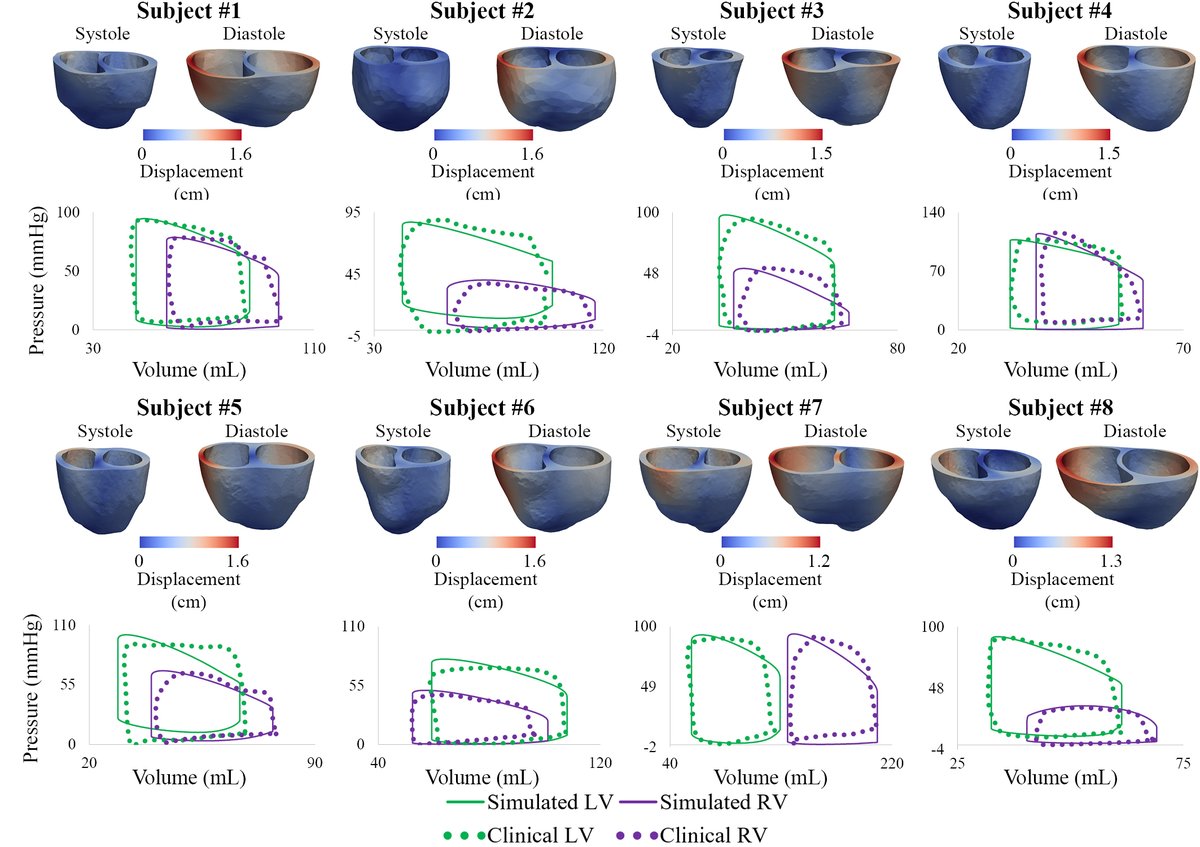
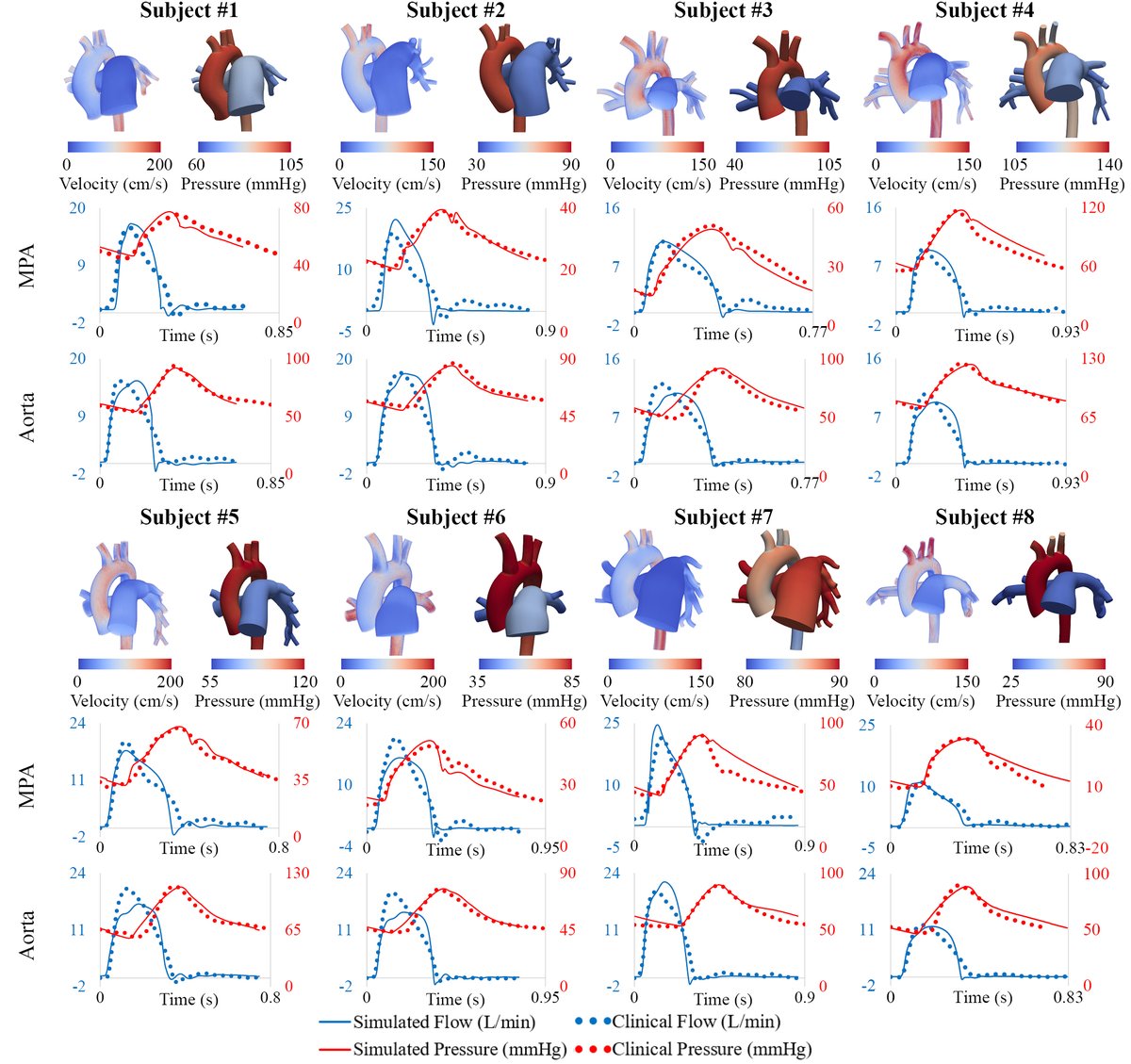

New Research: Data-driven computational models of ventricular-arterial hemodynamics in pediatric pulmonary arterial hypertension https://t.co/aaKx3Q39a1 #Physiology

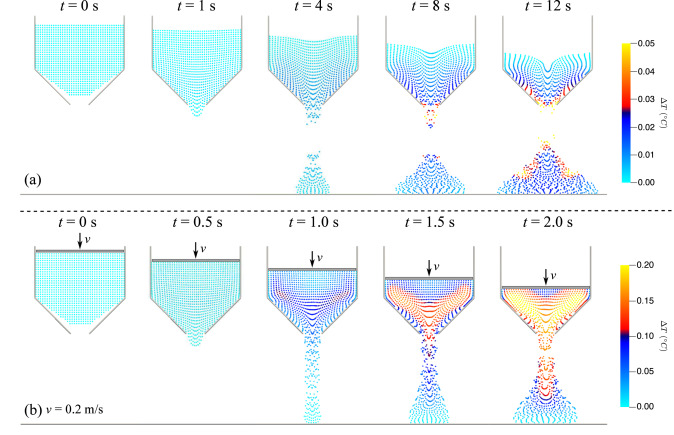
Weijian's new paper accepted by C&G on multiscale modeling of footing, showing how anisotropy dictates failure patterns and the capacity of combined hierarchical (near field, #DEM x #MPM) and concurrent (far field, pure #MPM) #multiscale modeling of #GranularMedia

Excited to be soon @cecamEvents for the workshop in #multiscale #simulations!! Outstanding speakers & talented young scientists together to face the current challenges & inspire future innovations!!
https://t.co/FoQK9IlTPR


#multiscale #modeling di #reinforcedRubber con @eXDigimat: influenza dell’orientamento delle fibre e #anisotropia, ne parla Matteo Giugno di @MSCSoftware al seminario “When simulation gets real-focus on materials”

Trends for you
Most Popular Users

Elon Musk 
@elonmusk
239.7M followers

Barack Obama
@barackobama
118.6M followers

Cristiano Ronaldo
@cristiano
114.3M followers

Donald J. Trump
@realdonaldtrump
111.7M followers

Narendra Modi
@narendramodi
106.9M followers

Rihanna
@rihanna
98.6M followers

NASA
@nasa
92.1M followers

Justin Bieber
@justinbieber
91.7M followers

KATY PERRY
@katyperry
89.9M followers

Taylor Swift
@taylorswift13
83.9M followers

Lady Gaga
@ladygaga
75.4M followers

Virat Kohli
@imvkohli
73.3M followers

Kim Kardashian
@kimkardashian
70.8M followers

YouTube
@youtube
68.6M followers

Neymar Jr
@neymarjr
66.3M followers

Bill Gates
@billgates
65.1M followers

Selena Gomez
@selenagomez
63M followers

The Ellen Show
@theellenshow
62.1M followers

CNN
@cnn
61.7M followers

X
@x
60.6M followers