

Top Tweets for #NITINOL

@AI_in_LEO Testing it now. There's a few different nitinol releases. This one seems to wear out pretty quick. Might need to go wider bend arms next time.
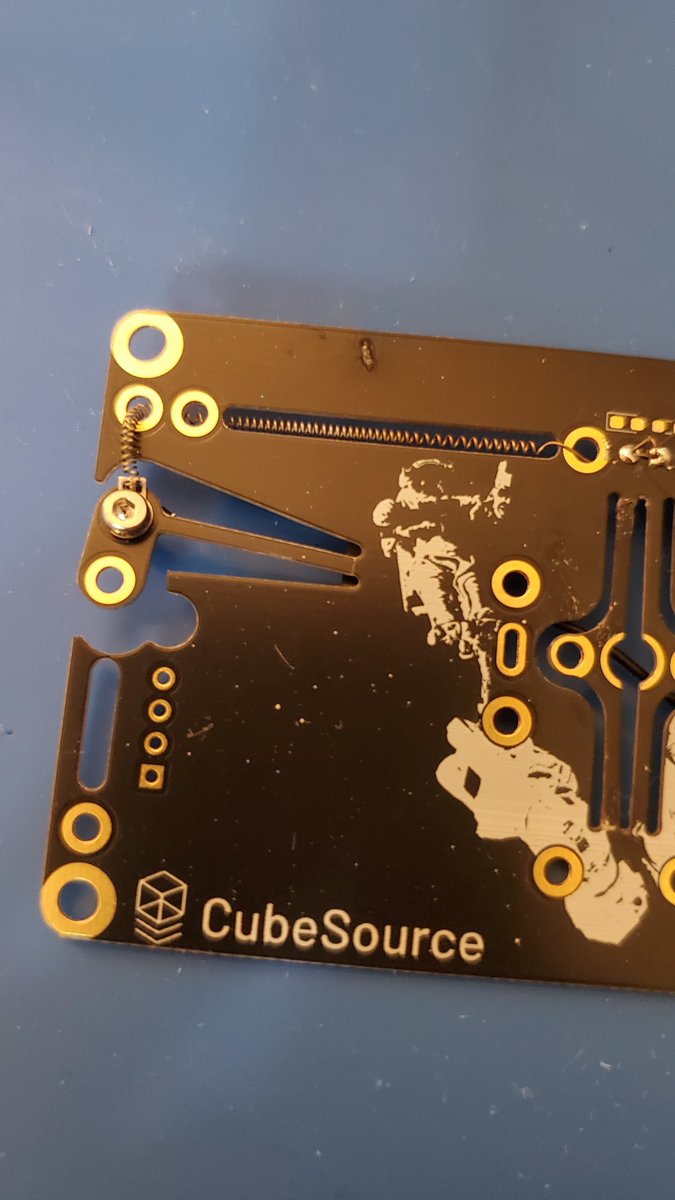


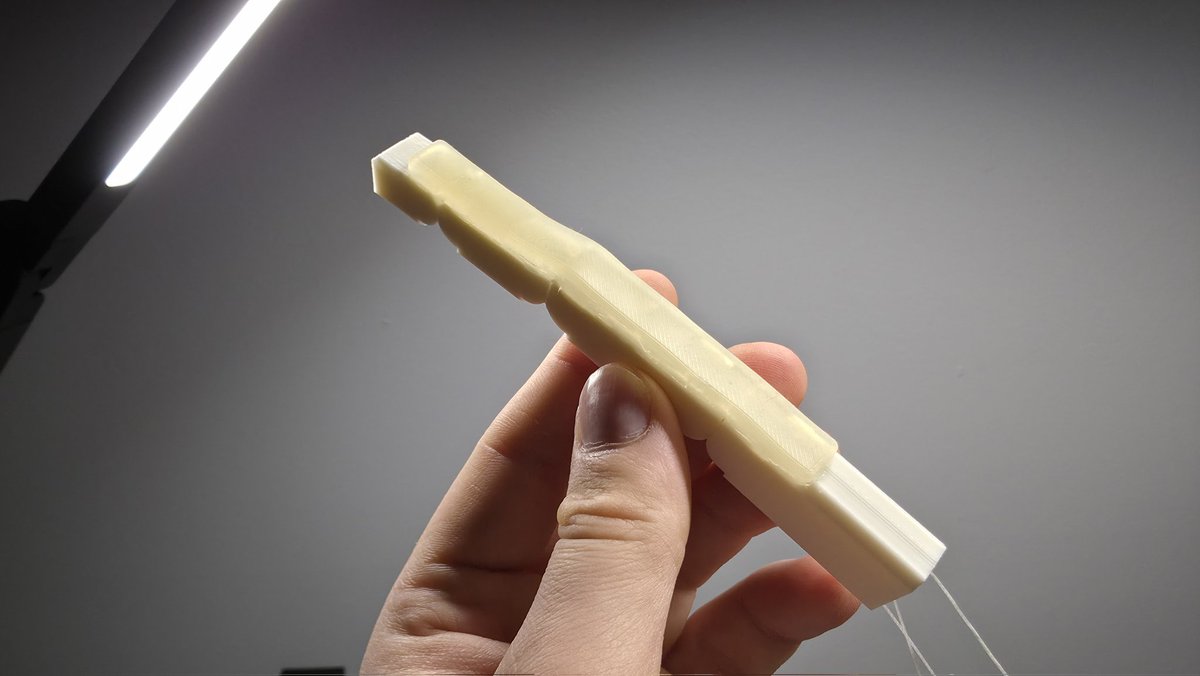
Robotics Journeymen update! The latest finger design for my humanoid now contains ZERO metal components. No more nitinol springs.
I'm locked tf in right now.

Optimus Gen 3 在手部與前臂設計上,已徹底告別傳統機器人的老路。它捨棄「鐘錶式精密調整」的思維,轉向車輛與航太產業的高集成做法,並充分運用 Tesla 和 SpaceX 多年累積的工程經驗。
傳統機器人習慣用大量機械零件堆疊出每個動作:銷軸、滑輪、專��馬達越多,手臂就越重、越容易故障,組裝與維護也越麻煩。Optimus Gen 3 則反其道而行,盡量簡化硬體,把複雜度交給先進材料、巧妙幾何設計與控制軟體,目標是打造可靠、易量產、接近零維護的機器人手臂。
1. 關節設計:用材料代替機械零件
Optimus 捨棄傳統鋼製銷軸,改用航太材料改良的「複合柔性構件」。它像一塊小三明治,兩層柔軟彈性材料中間夾著高強度的 Vectran 纖維或 Nitinol 合金。
核心在於材料的「方向性」:只允許手指自然彎曲握拳,其他方向(側移、扭轉、拉伸)幾乎完全鎖死。不僅消除摩擦與間隙,手指動作更接近真人,還能自動彈回伸直位置,無需額外彈簧。
雖然柔性材料有彈性,快速動作或抓重物時可能產生輕微震動,但 Tesla 透過前臂 25 個線性致動器與控制軟體即時補償,將彈性轉化為可控優勢。
2. 電纜傳動:讓力量走最乾淨的路徑
傳統肌腱式機器手最頭痛的問題,是手腕轉動時電纜容易拉扯、變長或產生摩擦。Optimus 的解法很巧妙:電纜在前臂側排成橫排,穿過手腕時轉成直排,並用兩個隨手腕轉動的支撐件,將電纜牢牢壓在旋轉軸中心。
這樣不管手腕怎麼擺動,電纜長度幾乎不變,大幅減少干擾與摩擦,也省掉複雜的張力補償裝置。力回饋則靠前端電流感測搭配視覺系統,預期達到高觸碰靈敏度,能穩穩拿起易碎物品。
3. 前臂高密度整合與散熱
前臂是整個設計中最具 Tesla 特色的部份。它把 25 個線性致動器做成細長同軸結構,像一捆整齊的筷子,以同心圓方式緊密塞進人類手臂大小的圓柱空間。
這種佈局讓手臂更輕、動作更快,並降低轉動慣性。散熱上則將控制板貼在外殼內壁,利用鋁合金前臂當大型散熱片,針對中心熱區還會採用微通道冷卻或高效導熱材料,確保長時間高強度作業也不易過熱降頻。
4. 真正的產品思維
Optimus Gen 3 的設計哲學很簡單:零件越少越好,維護越簡單越好。它不再追求單一零件易修,而是把整個前臂做成模組,壞了直接換總成,這正是汽車與航太產業的可靠做法。
當然,高集成也帶來挑戰,例如柔性材料的長期耐久性,以及軟體如何精準補償非線性彈性,都還需時間驗證。但整體而言,Tesla 已將機器手從實驗室精密儀器,轉變成適合大量生產的工業級組件。當硬體足夠簡單可靠,Tesla 在軟體與系統整合上的優勢將真正發揮,這才是 Optimus Gen 3 最值得關注的地方。
感謝 SETI Park 對這些專利的說明貢獻

Boom! @Tesla_Optimus 의 3세대 구조로 추정되는, 로봇 팔 및 관절에 대한 특허가 공개되었습니다.
아티클 작업에 들어가겠습니다.
1년 넘게 기다려 온, 정말 귀한 특허인데, 조회수 100만대로 터져줬으면 좋겠네요. 😉
@herbertong
@SawyerMerritt
@GoingBallistic5
@TheHumanoidHub
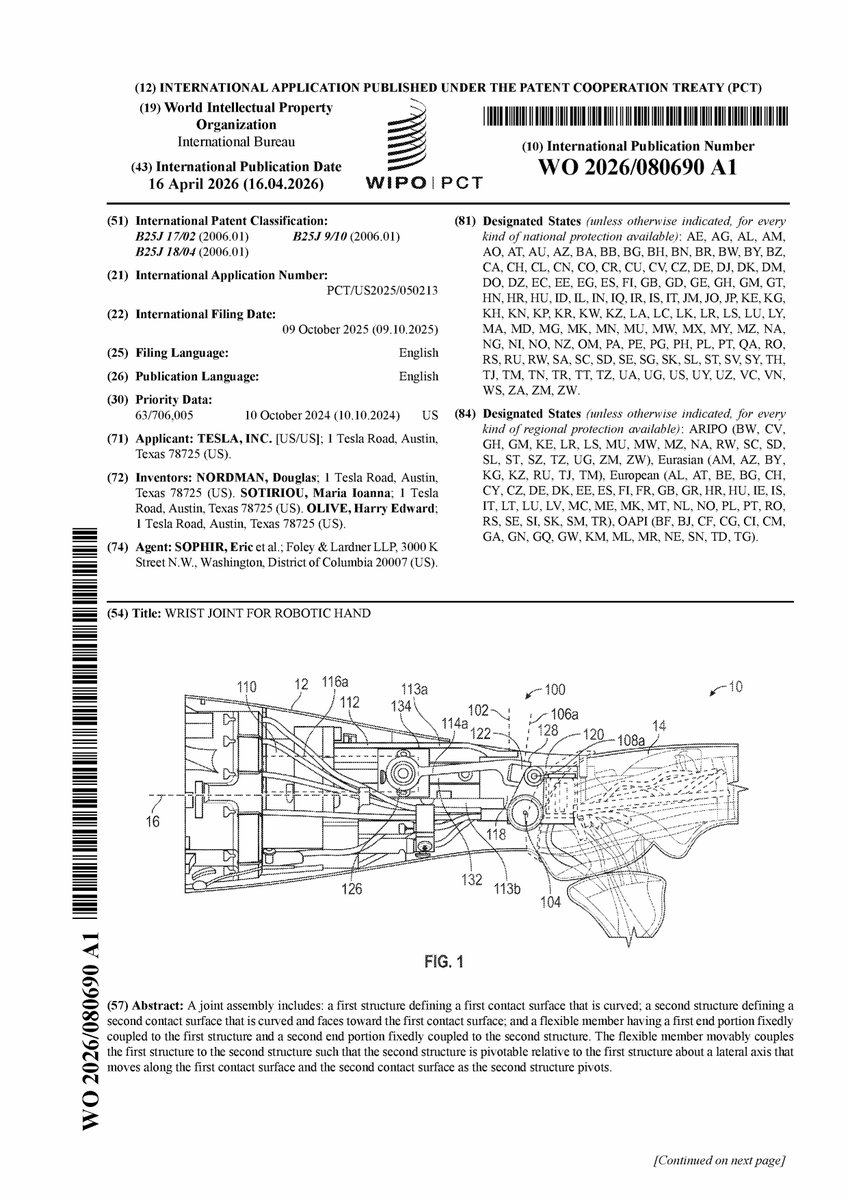

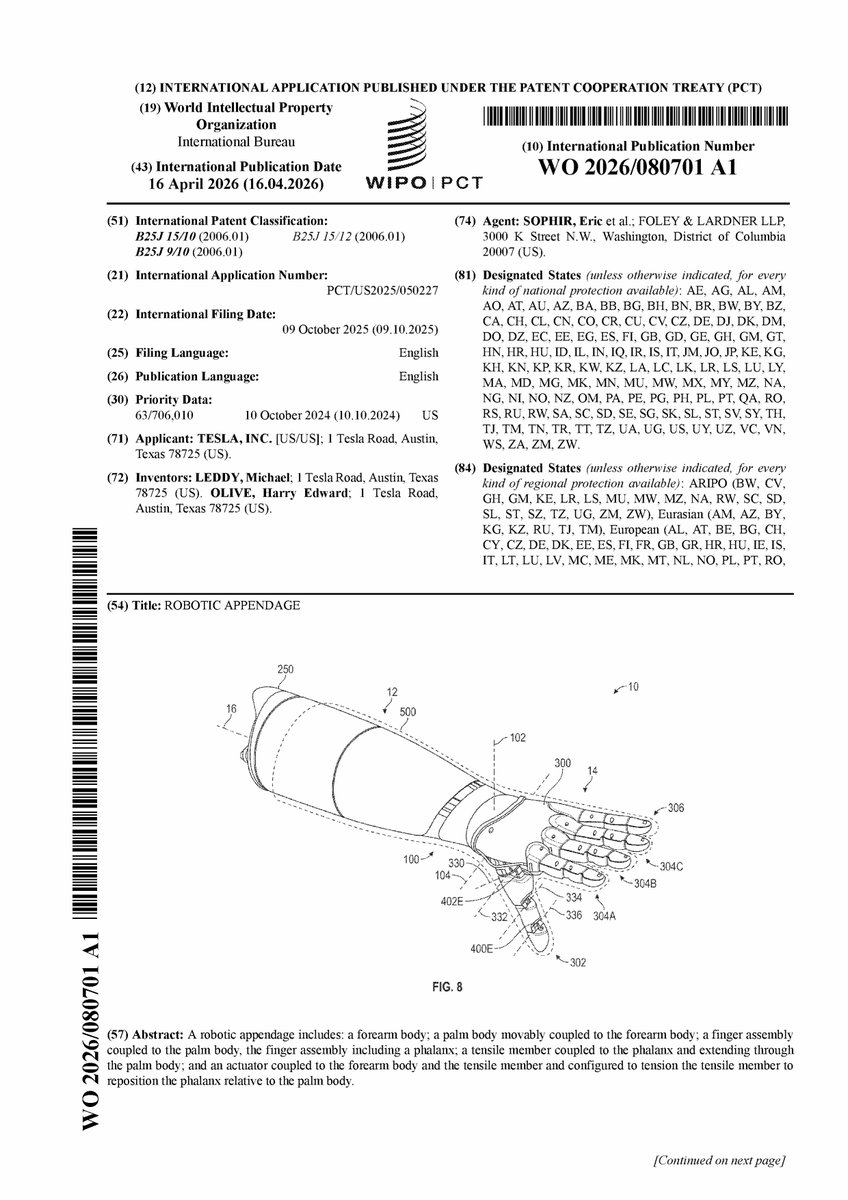
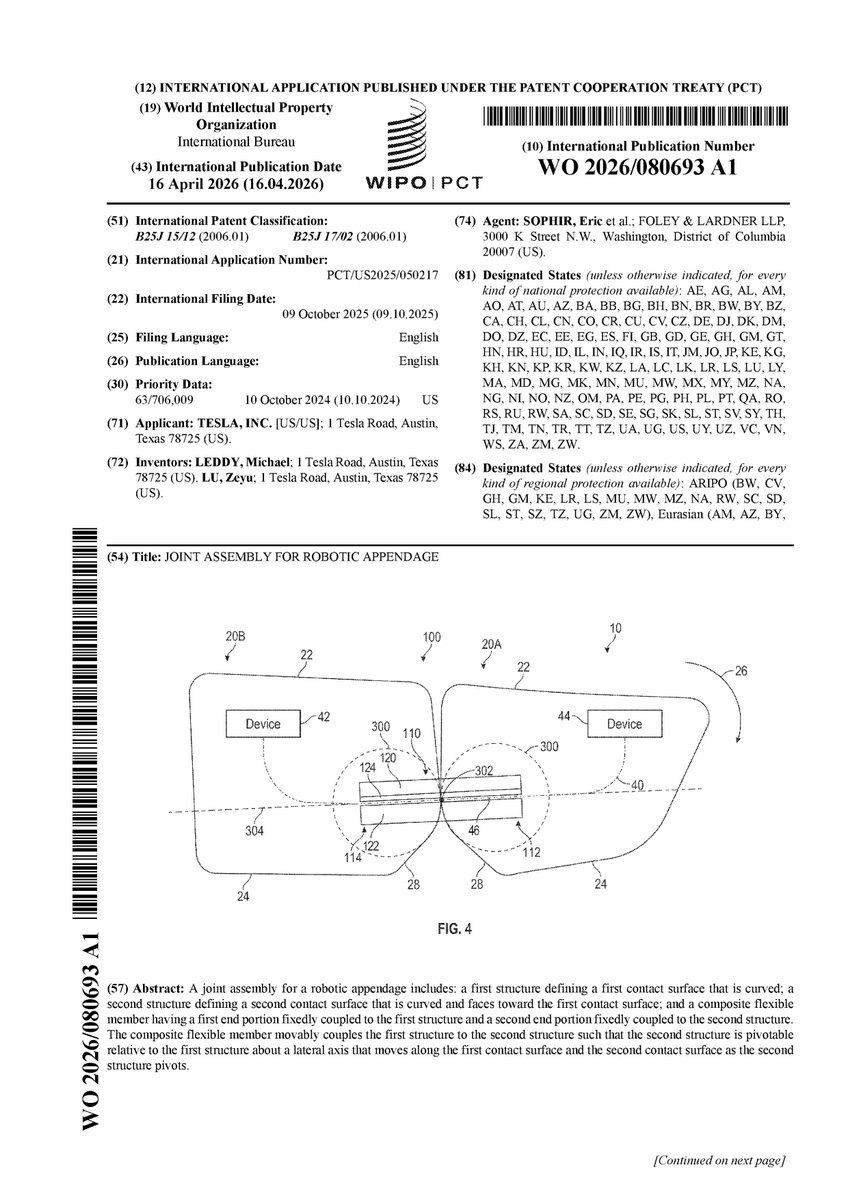

特斯拉Optimus第三代(V3)手部设计的核心亮点:2026年4月16日,Tesla公布了一��列国际专利(包括WO 2026/080687等),详细揭露了这种仿生拉线(tendon-driven)结构,确实可以说是Optimus的“杀手锏”。
为什么这个设计这么牛?
•不把电机��进手指:传统机器人手常把小型电机直接装在手指或手掌里,导致手部笨重、力矩有限、散热难、容易损坏。Optimus V3把所有执行器(约25个线性执行器,其中23个控手、2个控腕)全部后置到前臂,就像人体前臂肌肉控制手指一样。
•缆线如人体肌腱:每根手指用3根细柔控制缆线(tendons)从前臂拉动,穿过一个精心设计的空心腕关节(hollow wrist),进入手指骨节内的通道。缆线在关节前后绕行,实现独立弯曲控制。
•自由度接近人类:每根手指约4个DoF(degrees of freedom),加上腕部2个DoF,一只手总计约22个自由度(人类手约27个)。这让它既能精细操作(如磕鸡蛋、穿针、叠衣服),又能有力抓握(如挥锤子)。
•腕关节巧妙路由:缆线在前臂侧水平堆叠,到手侧转为垂直堆叠,通过过渡区最小化摩擦、拉伸、扭矩和串扰。即使手腕做pitch/yaw动作,缆线也不会被夹住或过度疲劳。
这种设计直接继承了人类手部数亿年进化的优势:手指本身几乎没肌肉,主要靠前臂肌腱拉动,保持轻盈灵活。马斯克多次强调,手(和前臂)是Optimus整个机器人最难的工程问题,远超其他部分——不是简单做一个夹爪,而是要重建人类手的复杂结构。
专利还提到使用柔性复合材料(如Nitinol形状记忆合金 + 高强度纤维 + 弹性层)做“人工韧带”,加上被动弹簧回位机制,大幅降低零件数、成本和重量,同时提升耐用���,明确瞄准大规模量产(目标低至2万美元级别)。
这对Optimus意味着什么?
•手轻 = 更快、更安全、更省电:手部重量大幅降低,惯性小,移动更快,也不容易压坏物体。
•真正通用性:从工厂精细装配、家务,到潜在的医疗/假肢应用,都更接近人类水平。结合Tesla的端到端神经网络和AI5芯片,Optimus才能真正“理解”并执行复杂任务。
•制造优势:这套设计不是实验室玩具,而是为高产量优化的——前臂变成“发动机舱”,手部结构简化,适合机器人规模化生产。
当然,专利是机械蓝图,实际性能还需看力反馈传感器、控制算法和耐久测试。但这确实是特斯拉在硬件上的一次重大迭代,比很多竞争对手的“电机塞��手”的方案更接近生物最优解。
你觉得这个设计最亮眼的地方是哪里?是仿生理念,还是量产潜力?或者想看更多专利细节/渲染图?🚀

@SUDOSCORPNATION You know that if you have the original particle baseline superfluid helium 4 which will sinc you to the vacuum and then use a hull made of nitinol shape memory alloy and pulse that along with the nitinols resonate frequency into the hull with pulsed Lazer the nitinol

@Mavmetax Is Nitinol the metal from the crash?
Over the past month, I've analysed, compared and narrowed-down several different materials for the structure and heating elements of the thermally-actuated fluid-based artificial muscles.
These muscles must be low-cost, flexible, durable and resistant to high operating temperatures associated with boiling water. I've also made it a goal to have as many materials sourced from within the US and Canada as possible. However, I'll be testing foreign materials as well, and seeing how they rank for longevity, cost, and logistics (shipping, tariffs, and accessibility).
The soft body of the muscles will be constructed of platinum-cure silicone and a soft expandable PET braided sleeve. The hardness of the silicone directly affects the performance of the muscle with regards to max contraction, max pressure, and the lifespan of the actuator. Smooth-On Ecoflex 00-35, 00-30, and 00-20 have been selected for testing (USA-made). I've also selected BBDino 30A, 20A and 00-30 for testing foreign-supplied silicone.
Expanding PET sleeves are very easy to obtain from local or commercial electronics suppliers, but they should be closed (without a slit down the length). As the actuator’s maximum displacement is proportional to the extensibility of the sleeve, different configurations of sleeves will change the actuator's operation. I've taken care to select braided sleeves with tight cells between the individual strands of the sleeve, to reduce the chances of the silicone body bubbling through and rupturing the actuator.
Constructing the heating elements requires careful selection of materials. I've narrowed it down to three: Nichrome (NiCr with some Si), NiTiNOL (NiTi), and Kanthal (FeCrAl alloy). All three materials have corrosion resistance, making them suitable for a water-based actuator. Nichrome and Kanthal are both strong contenders, are widely available, and I have sourced them from the USA (Master Wire Supply). I do have NiTiNOL on hand from overseas, but I feel it's much better suited for use in flexible "spring tendons" rather than as a heating element in the muscles. That, and NiTiNOL is much more expensive compared to Nichrome and Kanthal.
The next steps will be assembling two heating elements from Nichrome and Kanthal. I'll coil them on a 4 mm mandrel using the original MyoFab muscle fabricator I've built this year with @SlimActualX1. Once complete, I'll test both inside of a small softbody actuator.
If anyone has suggestions for alternative materials, suppliers in North America, or braiding or coil winding devices, let me know! This will be a long and complex project, so I'll be working on it alongside spooling up an Alberta-based PCB fab, and building tendon-driven humanoids.


@ianpritchard Nitinol wires also do pretty cool stuff

@_Stocko_ nitinol

Nitinol is an alloy of nickel and titanium. It can return to a preset shape when heated and shows high flexibility. It is used in stents, eyeglass frames, and other engineering applications.
Nitinol is an alloy of nickel and titanium. It can return to a preset shape when heated. It is used in stents, eyeglass frames, and other engineering applications.

@snekboiboop Nitinol cable, it flexes and moves when stimulated with electricity.

Nitinol engine: fun with shape memory alloy

We built this nitinol engine for fun in 2021. Nitinol is a shape memory alloy. With proper design, you can convert heat energy to mechanical energy. Shape memory alloys get back to their original shape once heated. Lots of opportunities for such materials.
Nitinol engine: fun with shape memory alloy
We built this nitinol engine for fun in 2021. Nitinol is a shape memory alloy. With proper design, you can convert heat energy to mechanical energy. Shape memory alloys get back to their original shape once heated. Lots of opportunities for such materials.

@toankaka16 Memory metal,
Probably Nitinol, NiTi
Last Seen Hashtags on Sotwe
Most Popular Users

Elon Musk 
@elonmusk
239.7M followers

Barack Obama
@barackobama
118.6M followers

Cristiano Ronaldo
@cristiano
114.3M followers

Donald J. Trump
@realdonaldtrump
111.7M followers

Narendra Modi
@narendramodi
106.9M followers

Rihanna
@rihanna
98.6M followers

NASA
@nasa
92.1M followers

Justin Bieber
@justinbieber
91.7M followers

KATY PERRY
@katyperry
89.9M followers

Taylor Swift
@taylorswift13
83.9M followers

Lady Gaga
@ladygaga
75.4M followers

Virat Kohli
@imvkohli
73.3M followers

Kim Kardashian
@kimkardashian
70.8M followers

YouTube
@youtube
68.6M followers

Neymar Jr
@neymarjr
66.3M followers

Bill Gates
@billgates
65.1M followers

Selena Gomez
@selenagomez
63M followers

The Ellen Show
@theellenshow
62.1M followers

CNN
@cnn
61.7M followers

X
@x
60.6M followers