

Top Tweets for #RealWorldContext

Massive thank you to @banconhomes and @DYW_NorthEast for giving our Practical Woodwork pupils a taste of what it’s like being onsite and all the potential avenues involved in the Construction Industry! #realworldcontext




The mobile S-curve ends and that means it is less about customer acquisition but working successfully with your user base = NPS! Create better app experiences = better engagement, less churn, +LTV, ... For getting there think of #realworldcontext signals with @context_sdk 🤩

The mobile S-curve ends, and the AI S-curve begins
There’s never been a bigger contrast between mobile and AI — it’s the end of one technology curve, and the start of the other. It’s been 15 years since the App Store was launched; while the generative AI revolution started merely 18 months ago. Mobile is now dominated by a duopoly of two giants, administering a collection of <100 apps that never seem to leave the charts (and a long tail that doesn’t matter much). This duopoly’s only true opponents are world governments. The brand new AI ecosystem, on the other hand, is in a state of utter chaos with new startups, technologies, and papers launched every week. One generative AI startup looks to be in the lead one week, and a few weeks later, their entire approach is in crisis — just look at AI video, recently! New approaches like open source, new types of hardware, regulation, and much more threaten to upend the stack rank every few quarters — isn’t that existing!?
Every startup is building on top of an existing S-curve. Perhaps you’re building in mobile, which is near the tail end of the curve. Or perhaps you’re working on spatial computing, web3, AI, or something near the beginning. This will color your product approach, how they take their startup to market, how investors think about funding in the sector, and so on.
THE "IT WORKS" FEATURE
When startups are early to an S-curve, as we’re seeing with AI right now, the act of building a product is often hard, but the growth can be easy. In the early days of the web, developers did not have the benefit of open source, cloud computing, high-level programming languages, and on. The sheer act of building something like eBay (something that we would now consider relatively simple), was a miracle in itself. The most important feature that a website needed to have was the “It Actually Works” feature. That is, the technology was difficult enough and the developer base small enough that delivering an actual working product was enough to attract users without much marketing or growth. You might know that today's AI landscape is perhaps not that different. You’ve now seen new startups posting a demo video or some test output and immediately there are thousands of users on their waitlist ready to try their product. In the age of social media, I think this has been accelerated for AI products that generate visual output — whether video, photos, 3D assets or otherwise — because it’s so easily shareable.
In the early days of mobile, it was often said that apps competed with boredom. Apps competed with waiting in line, sitting on the toilet, and all the other boring bits of time we’d rather be doing something else. But 15 years later, a new app has to compete with the most engaging experiences ever built — whether that’s an infinite stream of short videos, or an endless scroll of beautiful travel photos, or something else. As mobile hits the plateau of its S-curve, it’s not enough to simply “work.” In fact, mobile apps, have to be very very different than anything that has come before it to have a chance of success. Early S-curve products can fast follow and exercise Steve Jobs’s famous quote “good artists copy, great artists steal.” Late S-curve products have to contend with significantly higher user expectations of what constitutes a minimum viable product. Late S-curve startups are better off trying to create new categories, rather than fast-following, because at least new product categories might invent a small minimum viable product.
THE NOVELTY EFFECT
Novelty fuels early S-curve products. This desire for novelty means that whenever there are major new features or upgrades to underlying AI models, you see a rush of new users without much marketing effort. While all of this novelty drives high-level growth numbers, I will also argue that in the early phase of an S-curve, there is both high growth and high churn. During this phase, growth is easy because of word-of-mouth from highly enthusiastic early adopters. However, I would warn you that eventually low retention will catch up to even the fastest growing products as novelty effects start to die down.
Novelty effects kick in because, well, humans are kind of dopamine fiends. When we see an amazing AI-generated image for the first time, it’s like WOWWOWOW — followed by sharing, commenting, and forwarding to friends. But do show people a cool AI photo a few dozen times, and we get used to it. We need even more, to be entertained. Thus, sharing goes down, and so down overall engagement. Every product on an S-curve in a rapid ascent up the middle of the S, but as the plateau starts to hit, then the novelty effects start to unwind. At some point, retention will be king, and only the most retentive products will survive.
Investors focus on the early part of the S-curve because the first few years should usher in big upticks simply by being in the market. It’s easier to deliver an “it works” feature than to compete in red oceans of established products, and founders can get new users, plenty of growth, while trading off the fact it might be a big harder to build a v1. This is why venture capital money often pours into a new sector like AI, causing many startups to follow the money and pivot into the category. Is this opportunistic? Yes. Is it smart? Probably also yes. The best markets often have tons of competition, are hot and very dynamic, and this is often seen as a good thing. If you’re in a market by yourself with no competition, then perhaps it’s not that great of a market after all?
THE LATE S-CURVE
The skills needed to succeed in a late S-curve market, in contrast, are very different. And they translate to a different set of dynamics that investors will evaluate.
The product thesis has to be along the lines of “It’s radically different” than “It works.” After 15 years the mobile apps market has had, literally, millions of different forms of experimentation. Every photo app that people could have imagined during this time has probably been tried. Radical new innovations are needed, or at least innovations that are counter to dominant narratives. (An example here is the “anti-Instagram thesis” that products like BeReal have been able to ride lately)
If an older market no longer from a novelty effect, then growth will be slower and more efficient from day one. Often the growth channels that dominate at this point, our saturated by establish players. For instance, this is true in mobile where mobile ads are saturated by gaming/travel/ecommerce companies. Startups often find it hard to compete in the saturated channels, and instead have to discover novel ones which is difficult. Investors tend to seek efficient growth, rather than expecting, or seeing wildly exponential curves.
WHEN DESIGN RULES
This doesn't mean that late S-curve startups aren’t possible, or that they can’t be successful. This is where design-oriented teams can thrive. It's been noted that while Apple didn't invent the GUI operating system, the MP3 player, the laptop, the smartphone, they arrived at the middle/end of the S-curve and often perfected the product. This is last-mover advantage, rather than first-mover. But it’s a very different type of team that does this versus the ones that create the first practical instantiation of something.
Today, founders find themselves at a crossroads. Those who have hard-earned secrets in mobile apps will still find opportunities to use those secrets, but need to be mindful of the stage of S-curve they reside. They will have to be even more clever, do even more what’s new, in order to break out. And for those who stand at the beginning of the AI revolution, it’s easy to get started. But it’s hard to ride the chaos and stay on top. And even harder when the novelty inevitably stops, as only the best products will win.
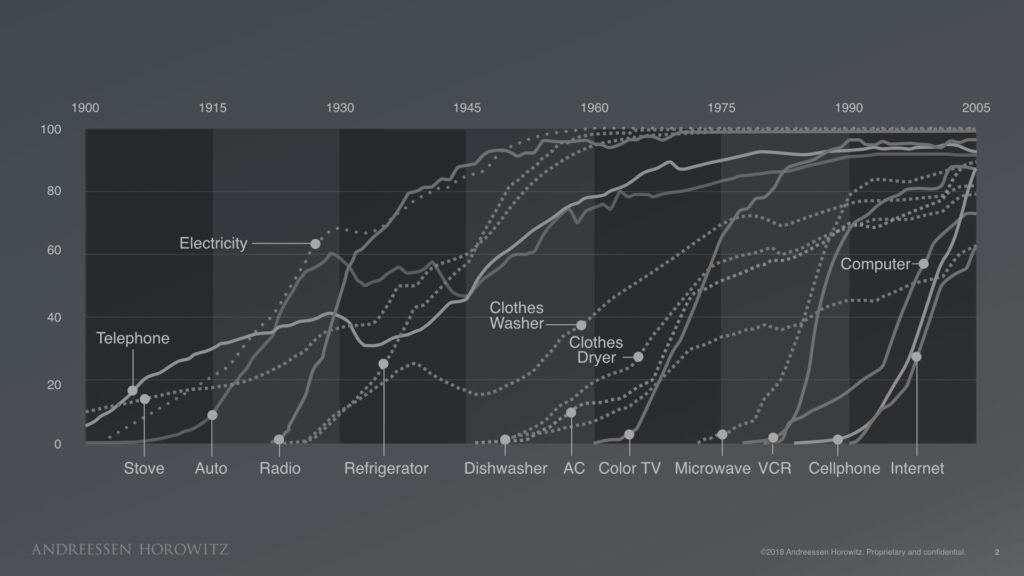
Final thought - I leave you with a chart of many of the technologies that have emerged, ascended rapidly, and then slowed down over the past few years. You'll notice that as modern communication/publishing/computing has taken hold, technology adoption is getting faster and faster. Get ready to ride the S-curve.

Higher and National Geographers using The Financial Times Climate Change Game to consolidate learning on impacts and strategies! @SocialsubSMA #climatechange #realworldcontext


Errol Toulon, Jr., @Suffolk_Sheriff, recently visited Gary Travers' Law Enforcement classes at #BixhornTech. He spoke about his career experiences and explained the requirements for becoming a deputy sheriff and a corrections officer. #RealWorldContext #IndustryPro


A level business students - supply chain management (unit 4), changes in economic and political environments (unit 7), and international strategy (unit 9) all in one! #BusinessGold #RealWorldContext

Brilliant article in the @thesundaytimes on the process of de-globalisation. Well worth a read on how Covid, Ukraine conflict, disrupted supply chains and high energy prices have encouraged a more localized strategy of manufacturing #geography #geographyteacher



Perfect analogy for the age of #algorithms. The dad is #AI. The kids are us. And we are not doing much better then them. #AIEthics

P6 pupils @CorntonS who have been working with @MuseumsGalScot have some questions for our business community linked to the skills they have been learning. Read the thread 👇and feel free to leave a comment for them 🙂 #RealWorldContext

This was such a great introduction to their next unit in science as there were many questions being asked! It’s also not everyday that you get to work with your brother in law! #RealWorldContext #Science6 @rdcrs

Year 8 PBL collaborating with AQWA to find ways of increasing market share in the 12-25 age bracket. #realworldcontext #designthinking #innovation #aqwa #collaboration @SHC_WA @WiesiaCollins @LucieMc80 @mjchiera

A Level business students - Unit 4.5: managing inventory... #realworldcontext 🧻 🍝
https://t.co/8od13nuWAR
#FlashbackFriday
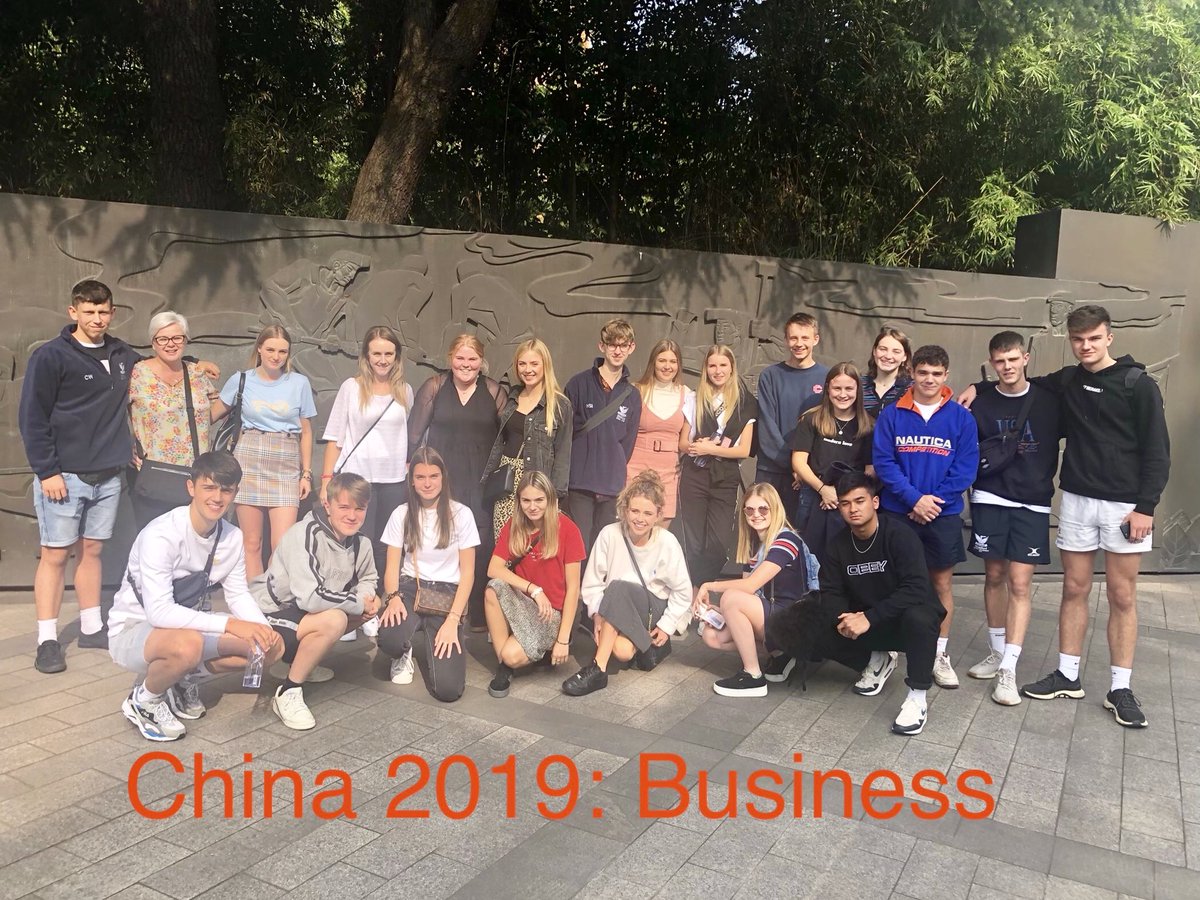
2019 saw an AMAZING business trip, combined with @SES_Geography and @rochonomics, for Y13. It was amazing to see first hand how the cultural differences, compared to the UK, impact business management and buyer behaviour 🇨🇳
#realworldcontext @SESSixthForm



Changes in the social environment (unit 7): what opportunities and threats might different businesses face as a result of this change in consumer behaviour? #aqabusiness #realworldcontext https://t.co/1VYCs60IIB
Y12 A Level students, having just studied Unit 6 (HR), this is an example of a company needing to consider diversity in their Human Resource objectives #AQABusiness #realworldcontext

John Lewis criticised for lack of diversity in top ranks https://t.co/OWEIR9NxlW

@cecigomez_g @watnunu @AppleEDU My sign off will be to share this composition from one of my yr 11 students.The creative collaboration was done mostly remotely by means of @noteflight & @MicrosoftTeams #AppleEDUChat #realworldcontext https://t.co/gntrFRsPr8

This is crazy inappropriate but how exciting to be teaching exponential functions during a global novel virus outbreak! #realworldcontext anyone?!?

I’m excited to see and hear the solutions our kindergarten scholars devise to help our planet! #sharingtheplanet #realworldcontext @THRIVE_SLC @philiphammonds @parents4edu_SF

What a program of brilliance out of Seaton State High School. Entrepreneurship, #stem #digitaltechnologies #realworldcontext @WoDCongress @DrCatherineBall


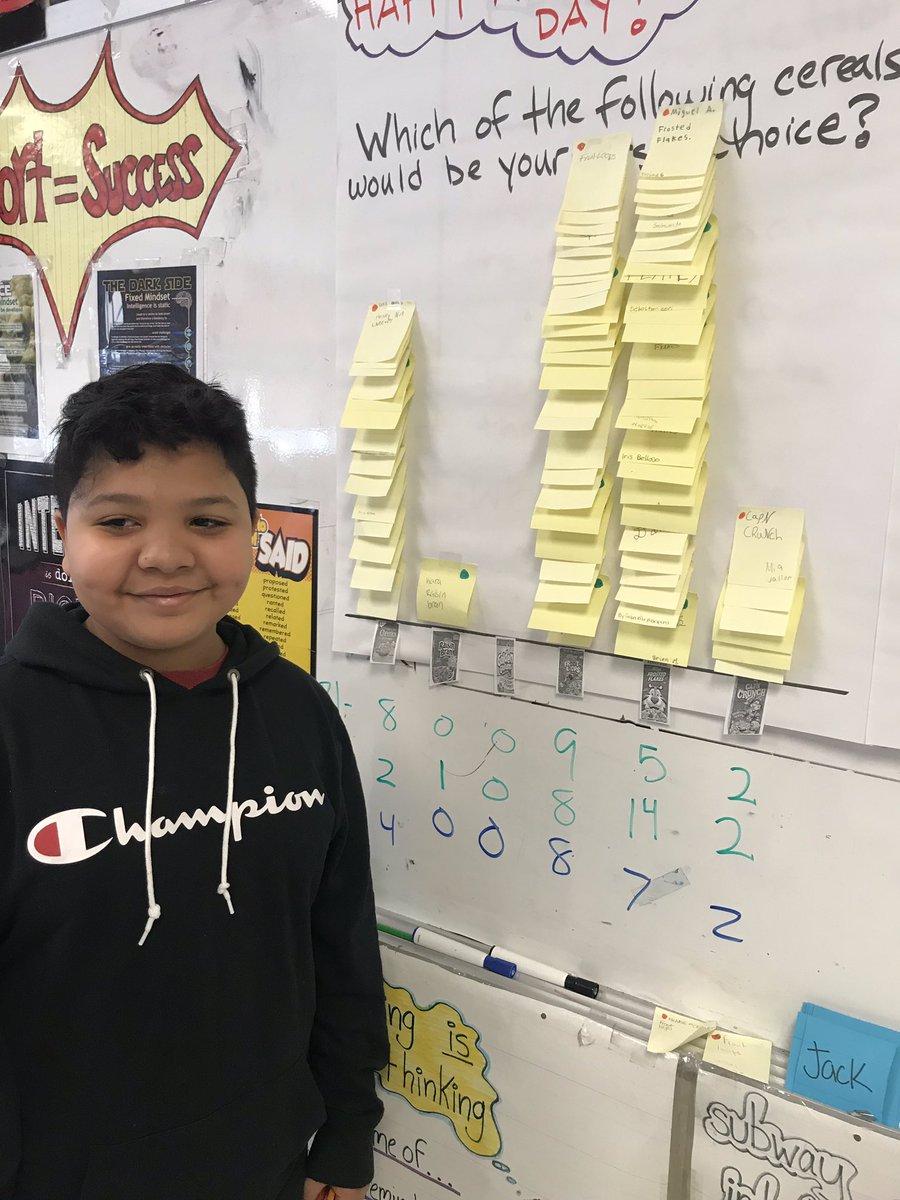
That was a fun ratio lesson. Still in shock that none of the students selected my favorite cereal...#GOLDENGRAHAMS!!! #OPride #amdrocks #math #realworldcontext

Students created a data set of their favorite cereal for National Cereal Day. Today, students are collaborating to solve for different ratios and to create their own based on the data they collected. #opride


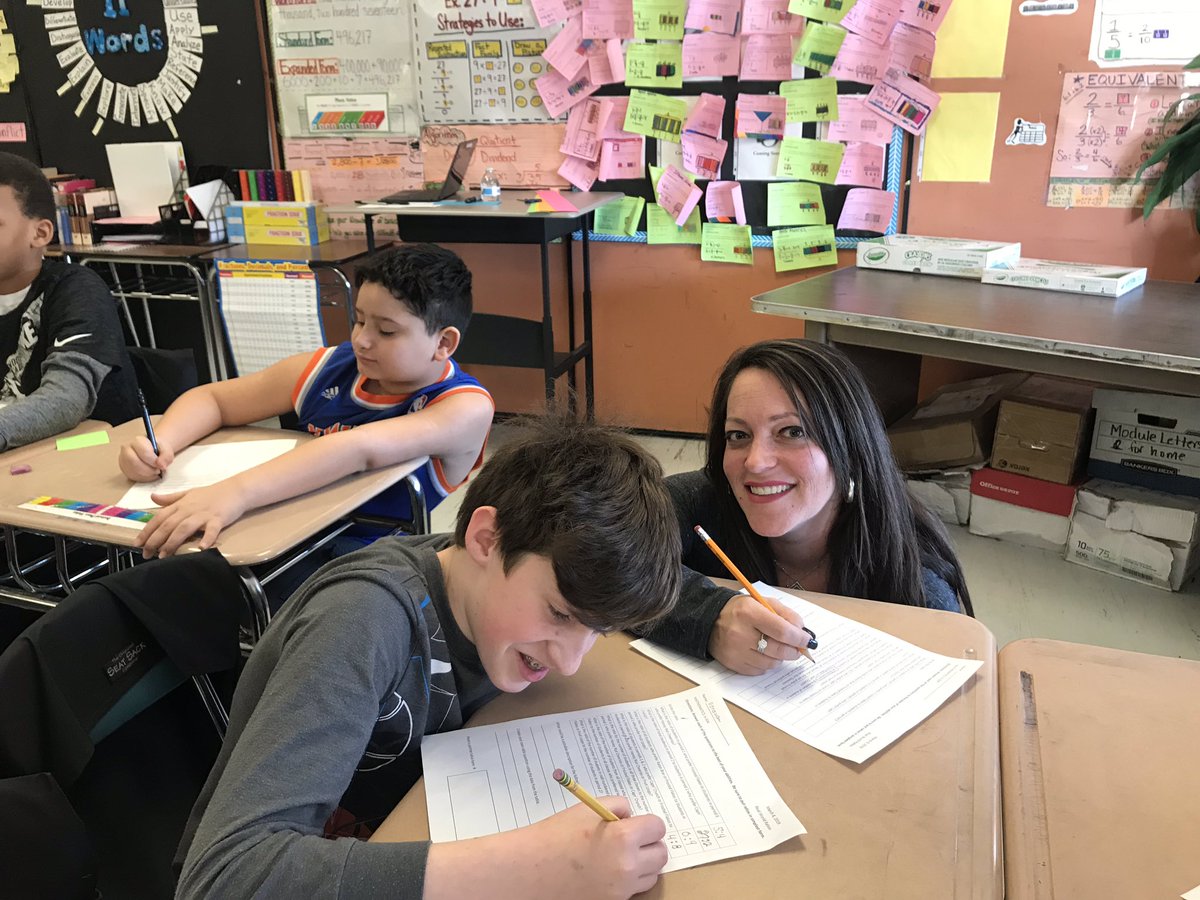
Good luck @kabercrombieLHS a fantastic role model who brings the creative industry into the classroom to develop pupil skills & knowledge #RealWorldContext #EverythingCrossed #GoScotland 🎥

And of course, @kabercrombieLHS up for #ukteacheroftheyear at @intofilm_edu awards in London on Monday. Wish her luck with a RT - only Scottish finalist. @NicolaSturgeon @JohnSwinney @FionaHyslop

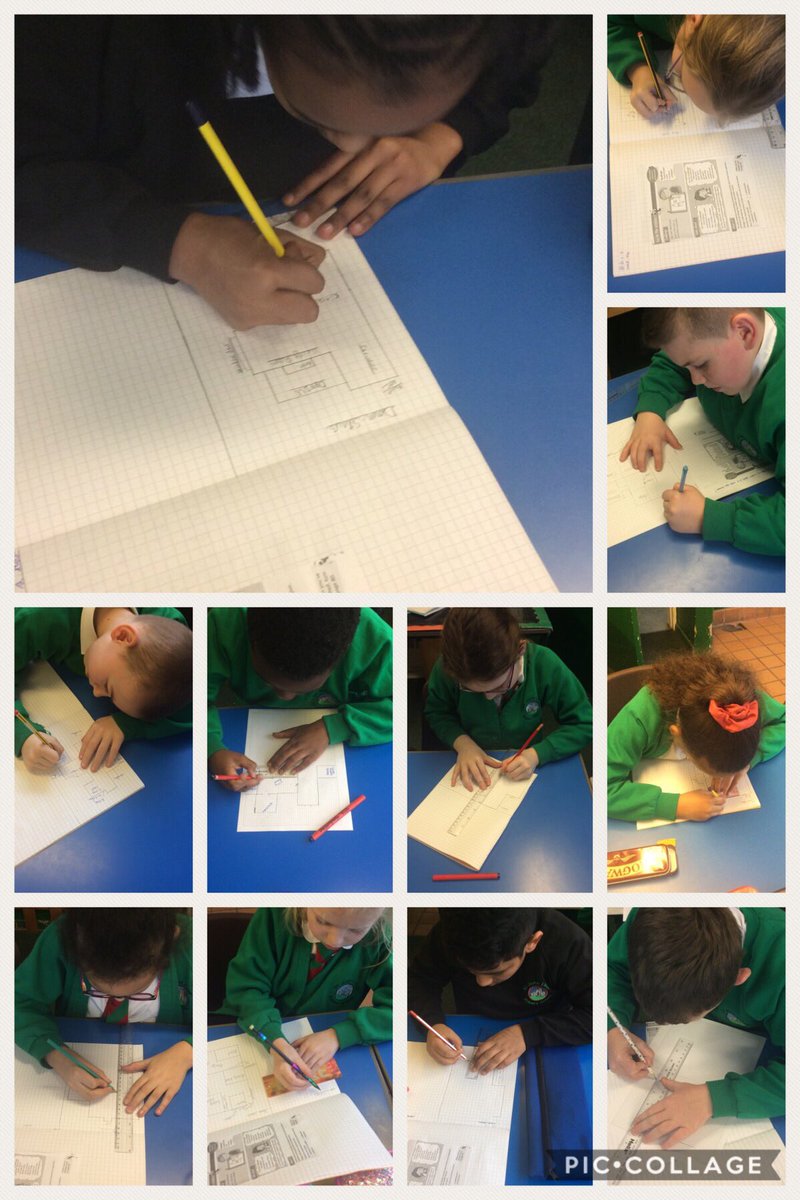
In Maths we became architects, we used our Area and Perimeter knowledge to design floor plans for our ideal homes! #realworldcontext #mathsineverydaylife
Last Seen Hashtags on Sotwe
mommyboy
Seen from Netherlands
teenage #momson #nolimit #teenage
Seen from Jordan
AIモデル
Seen from Indonesia
daddydaugther
Seen from United States
monkeyapp
Seen from Turkey
หีดารา
Seen from Indonesia
wkplayoffs
Seen from Brazil
batanglelaki
Seen from Indonesia
dirtypanties #discharge
Seen from United Kingdom
مبادل_القصيم
Seen from Switzerland
Most Popular Users

Elon Musk 
@elonmusk
240.6M followers

Barack Obama
@barackobama
119.2M followers

Donald J. Trump
@realdonaldtrump
111.7M followers

Cristiano Ronaldo
@cristiano
110.5M followers

Narendra Modi
@narendramodi
107M followers

Rihanna
@rihanna
97.6M followers

NASA
@nasa
92.2M followers

Justin Bieber
@justinbieber
90.9M followers

KATY PERRY
@katyperry
87.6M followers

Taylor Swift
@taylorswift13
81.4M followers

Lady Gaga
@ladygaga
73M followers

Virat Kohli
@imvkohli
69.8M followers

Kim Kardashian
@kimkardashian
69.8M followers

YouTube
@youtube
68.7M followers

Bill Gates
@billgates
63.9M followers

Neymar Jr
@neymarjr
62.5M followers

The Ellen Show
@theellenshow
62.4M followers

CNN
@cnn
61.9M followers

X
@x
60.8M followers

Selena Gomez
@selenagomez
60.7M followers