

Top Tweets for #hypercoagulation

@HouseLyndseyRN @KevinMcCairnPhD @CharlesRixey @CoyoteSanctuary , Double Filtration Plasmapheresis (#DFPP) , Stem Cells Growth Factor (#SCGF),
McCairn Protocol.
It's the first coherent integrative model attacking the root biochemistry - #Fibrin- #Amyloid #hypercoagulation, as a unifying lesion.

« L'inflammation et, dans certains cas, la génétique contribuent à une augmentation de la production de fibrine dans le sang. Un taux élevé de fibrine entraîne #hypercoagulation et la production de biofilm, provoquant des symptômes et contribuant à la chronicisation des infections.
Les affections et maladies associées à l’hypercoagulation :
• Encéphalite myalgique / Syndrome de fatigue chronique (EM/SFC) – la diminution de l’apport d’oxygène et de nutriments aux cellules affecte les voies de production d’énergie dans les mitochondries
• Infections chroniques – dues à la formation de biofilm - Maladie de Lyme, Babesia et Bartonella
- COVID long
-PANS/PANDAS
-Infections chroniques des sinus
-Et plus :
• POTS/Dysautonomie – diminution du flux sanguin
• Démence d'Alzheimer »
Source : https://t.co/XyYTyb6Jqd

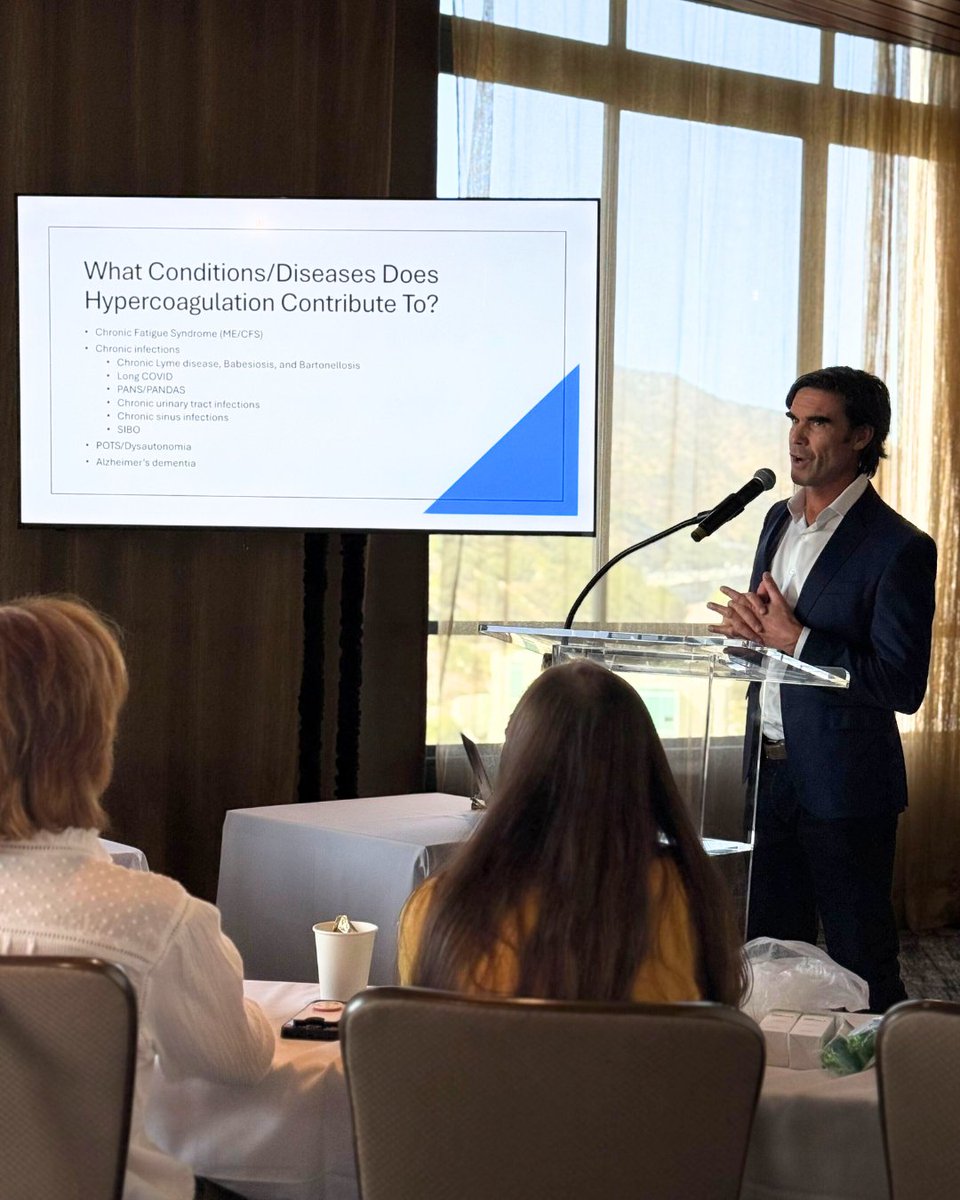
Inflammation and, in some cases, genetics contribute to increased fibrin production in the blood. Elevated fibrin leads to #hypercoagulation and biofilm production, causing symptoms and contributing to infections becoming chronic.
The conditions and diseases that are associated with hypercoagulation:
• Chronic fatigue syndrome (ME/CFS) – decreased oxygen and nutrients delivery to cells affects energy production pathways in the mitochondria
• Chronic infections – due to biofilm formation
-Lyme disease, Babesia, and Bartonella
-Long COVID
-PANS/PANDAS
-Chronic sinus infections
-And more
• POTS/Dysautonomia – decreased blood flow
• Alzheimer’s dementia
Source: https://t.co/ckd4jsNf6p
Inflammation and, in some cases, genetics contribute to increased fibrin production in the blood. Elevated fibrin leads to #hypercoagulation and biofilm production, causing symptoms and contributing to infections becoming chronic.
The conditions and diseases that are associated with hypercoagulation:
• Chronic fatigue syndrome (ME/CFS) – decreased oxygen and nutrients delivery to cells affects energy production pathways in the mitochondria
• Chronic infections – due to biofilm formation
-Lyme disease, Babesia, and Bartonella
-Long COVID
-PANS/PANDAS
-Chronic sinus infections
-And more
• POTS/Dysautonomia – decreased blood flow
• Alzheimer’s dementia
Source: https://t.co/ckd4jsNf6p

@Eerrnn Nos publications suivent strictement les données issues des études scientifiques.
Si certains sujets (#Lupus, #SAPL, #Alzheimer, #Hypertension, #Hypercoagulation) sont moins abordés, c’est parce que la littérature actuelle se concentre davantage sur ⬇️

Heu...
"Un flux sanguin anormal et un dysfonctionnement autonome peuvent avoir des racines plus profondes dans les déséquilibres de coagulation.
#Hypercoagulation est un état où le corps produit un excès de fibrine, la protéine qui forme des caillots sanguins. Cela peut entraîner une circulation atone et une diminution de l'apport d'oxygène, en particulier au cerveau et aux membres, ce qui augmente les symptômes tels que la fatigue et les étourdissements.
Ce qui est le plus remarquable (et ce que les gens, y compris les médecins, ne savent pas), c'est qu'il existe des variantes génétiques qui contribuent à l'hypercoagulation.
La connexion à la dysfonction autonome
Dans #POTS et autres #dysautonomias, les preuves indiquent :
🧬 Activité élevée de la fibrine
🧠 altération de la circulation contribuant au brouillard cérébral et aux vertiges
💓 Augmentation de l'activation du système nerveux sympathique
Cela suggère qu'une altération du flux sanguin peut être un facteur, pas seulement un symptôme.
L'influence génétique -
Certaines variantes génétiques peuvent prédisposer une personne à l'excès de fibrine :
🧬 Les mutations du facteur II (prothrombine) et du facteur V augmentent la formation de fibrine
🧬 Les variantes du gène PAI-1 réduisent la capacité du corps à décomposer la fibrine
Ensemble, ces changements créent un environnement pro-coagulant qui peut avoir un impact sur la régulation autonome.
Symptômes qui peuvent être liés -
Lorsque la fibrine s'accumule et n'est pas éliminée efficacement, le résultat peut être :
🧠 Perfusion cérébrale réduite
🖐️ Extrémités froides ou décoloration
⚡ Fatigue, intolérance orthostatique et réponses accrues au stress
Le traitement commence par le test-
Un traitement efficace dépend de la clarté.
Il commence par des tests de laboratoire appropriés pour déterminer si la priorité est :
✅ Réduire la production de fibrine
ou
✅ Amélioration de la dégradation de la fibrine
Sans cette idée, les interventions pourraient passer à côté de la cible.
Que pouvez-vous faire ?
Cliquez sur le lien ci-dessous pour accéder à un article que j'ai écrit sur l'hypercoagulation pour savoir quels tests de laboratoire vous pouvez faire pour déterminer si vous produisez trop de fibrine, ne décomposez pas efficacement la fibrine, ou les deux - et si vous avez une variation génétique qui influence cela."
Ce post est intéressant à remettre en perspective avec les fibrinaloides... pourquoi ? Les fibrinaloides sont des amas amyloides, induits par la Spike, sur la paroi des vaisseaux sanguins. Cela peut donc aussi, en rétrécissant le calibre du vaisseau, induire un flux sanguin anormal... c'est de la biophysique !
Et les fragments de style "camalary clots" du Dr. Kevin McCairn, @KevinMcCairnPhD, quelles sont les influences sur la viscosité sanguine, le flux sanguin et l'impact sur les plaquettes ?
Merci 💯
Abnormal blood flow and autonomic dysfunction may have deeper roots in coagulation imbalances. #Hypercoagulation is a state where the body produces excess fibrin, the protein that forms blood clots. This can lead to sluggish circulation and reduced oxygen delivery, particularly to the brain and limbs, increasing symptoms like fatigue and lightheadedness.
What’s most remarkable (and what people, including physicians, do not know) is that there are genetic variants contribute to hypercoagulation.
The Connection to Autonomic Dysfunction
In #POTS and other #dysautonomias, evidence points to:
🧬 Elevated fibrin activity
🧠 Impaired circulation contributing to brain fog and dizziness
💓 Increased sympathetic nervous system activation
This suggests that impaired blood flow may be a contributor, not just a symptom.
The Genetic Influence-
Certain genetic variants can predispose someone to fibrin excess:
🧬 Factor II (prothrombin) and Factor V mutations increase fibrin formation
🧬 PAI-1 gene variants reduce the body’s ability to break fibrin down
Together, these shifts create a pro-coagulant environment that can impact autonomic regulation.
Symptoms That May Be Related-
When fibrin builds up and is not efficiently cleared, the result can be:
🧠 Reduced cerebral perfusion
🖐️ Cold extremities or discoloration
⚡ Fatigue, orthostatic intolerance, and heightened stress responses
Treatment Starts with Testing-
Effective treatment depends on clarity.
It starts with appropriate laboratory testing to determine whether the priority is:
✅ Reducing fibrin production
or
✅ Enhancing fibrin breakdown
Without this insight, interventions may miss the mark.
What can you do?
Click the link below to access an article I wrote about hypercoagulation to learn which lab tests you can do to determine if you produce too much fibrin, do not effectively break down fibrin, or both – and if you have a genetic variation that influences this.
https://t.co/ckd4jsNMVX

Abnormal blood flow and autonomic dysfunction may have deeper roots in coagulation imbalances. #Hypercoagulation is a state where the body produces excess fibrin, the protein that forms blood clots. This can lead to sluggish circulation and reduced oxygen delivery, particularly to the brain and limbs, increasing symptoms like fatigue and lightheadedness.
What’s most remarkable (and what people, including physicians, do not know) is that there are genetic variants contribute to hypercoagulation.
The Connection to Autonomic Dysfunction
In #POTS and other #dysautonomias, evidence points to:
🧬 Elevated fibrin activity
🧠 Impaired circulation contributing to brain fog and dizziness
💓 Increased sympathetic nervous system activation
This suggests that impaired blood flow may be a contributor, not just a symptom.
The Genetic Influence-
Certain genetic variants can predispose someone to fibrin excess:
🧬 Factor II (prothrombin) and Factor V mutations increase fibrin formation
🧬 PAI-1 gene variants reduce the body’s ability to break fibrin down
Together, these shifts create a pro-coagulant environment that can impact autonomic regulation.
Symptoms That May Be Related-
When fibrin builds up and is not efficiently cleared, the result can be:
🧠 Reduced cerebral perfusion
🖐️ Cold extremities or discoloration
⚡ Fatigue, orthostatic intolerance, and heightened stress responses
Treatment Starts with Testing-
Effective treatment depends on clarity.
It starts with appropriate laboratory testing to determine whether the priority is:
✅ Reducing fibrin production
or
✅ Enhancing fibrin breakdown
Without this insight, interventions may miss the mark.
What can you do?
Click the link below to access an article I wrote about hypercoagulation to learn which lab tests you can do to determine if you produce too much fibrin, do not effectively break down fibrin, or both – and if you have a genetic variation that influences this.
https://t.co/ckd4jsNMVX

Check out my recent talk with Darren Schmidt, DC on "Metabolic Vulnerability Index"
To catch the full show, visit:
https://t.co/SqU4uscHqU
#MVX #infections #inflammation #hypercoagulation #kidneys #eGFR #malnutrition #lacticacid #keto #longevity #mortality

#AudioVisualAbstract : Absence of #Hypercoagulation Status after #NeoadjuvantTreatment is Associated with Favorable Prognosis in Patients Undergoing Subtotal #Esophagectomy for Esophageal #SquamousCellCarcinoma
https://t.co/6mSvn6lA40
@ZaidAbdelsattar
@SyedAAhmad5

An outstanding podcast episode with Dr. Jordan Vaughn about #microclots. #teamclots #hypercoagulation https://t.co/j5f6UNiuZs

Reduced hypercoagulation in Tocilizumab-treated COVID-19 patients vs. standard care or anakinra treatment. Verified by Rotational Thromboelastometry (ROTEM) and conventional coagulation tests. https://t.co/u8bimSNBMs
#COVID19 #Hypercoagulation #Thromboelastometry #medRxiv

@JuliaColemanMD @TomVargheseJr @OhioStateSurg Congratulations! You’re speaking my language with coagulation. My hereditary condition is Hyper-coagulation. So I wish you much success in your new lab ✨
#hypercoagulation #chronicillness
Check out my recent talk with Dr. Kelly McCann, MD and Beth O'Hara, FN on the Latest Insights on MCAS
https://t.co/bmI11DwdYg
#MCAS #mastcells #Lyme #Bartonella #EMFs #hypercoagulation #biofilms #limbicsystem #salicylates #oxalates #benzodiazepenes #LDI #LDN #mold #mycotoxins

Se, hvordan mikroblodpropper hos LongCovid ramte afsløres med ny metode med flowcytometri 👇👇. Flere forsøg er på vej, bl.a. på Harvard.
Følg også @dbkell og @doctorasadkhan, og søg på videnskab. artikler om emnet.
#Hypercoagulation #forskning #senfølger #blodplader #hypoxia

4) As we have an imaging flow cytometer, we can actually also visualize the clots! Similar to our microscopy

- Capillaries are 8-10 microns in diameter (hair is 50-100 microns)
- Red blood cells are 7 microns wide
In #hypercoagulation, fibrin deposition decreases capillary width reducing oxygen exchange time from 2 seconds to over 5 minutes

Does #hypercoagulation affect #breastcancer progression? Check it out! 👇
#CancerAssociatedThrombosis
@jeroen_buijs @HenriVersteeg @ThrombosisRese1

Happy to share that our paper is accepted by
@ThrombosisRese1
https://t.co/Vha9XKDNdI
Studying effects of a #hypercoagulable state on breast #cancer growth and metastasis in a xenograft model.
Thanks to team!
@betulunlu86, EH, dr.Heestermans, dr.van Vlijmen,
@versteeglab


Fibrinaloid microclots may contribute to many #MECFS symptoms, such as fatigue, via the (temporary) blockage of microcapillaries and ischemia. Furthermore the microclots might damage the endothelium.
#platelets #hypercoagulation #MyalgicEncephalomyelitis
https://t.co/kWqplL3iRP
Professor Resia Pretorius fik tid til et foto sammen med det arbejdsomme
team af forskere fra Harvard 💙
#MicroClots #platelets #Hypercoagulation #fluorescence #microscopy #LongCovid


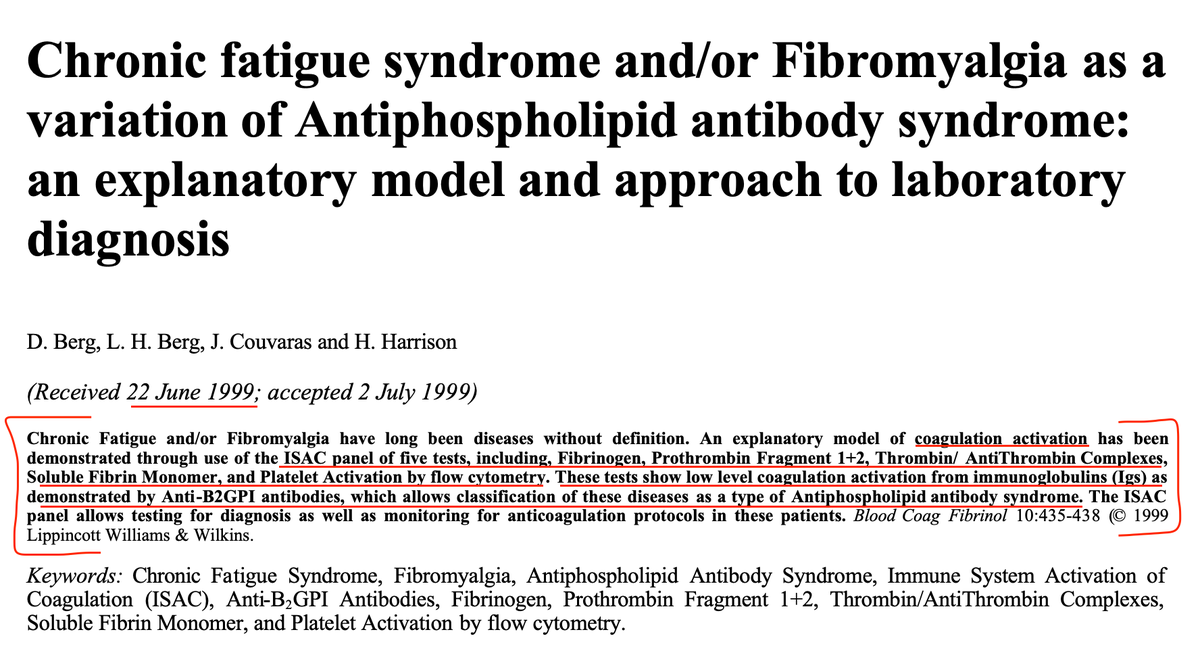
Study from 1999 (‼️) showed an association b/t hypercoagulable states in ME/CFS & FM.
Elevated fibrinogen & blood viscosity were most common in this population vs normal levels in controls.
Lumbrokinase & Nattokinase have been shown to reduce fibrinogen & blood viscosity.🤔

Lung doctor @BinitaKane shares #LongCovid patient case;
VQ scan showed extensive
clots.
"There is mounting evidence that COVID19 infection is a pro-thrombotic, vascular/endothelial disease".
#Hypercoagulation #thrombi #emboli #senfølger #MedTwitter

Dr Beate Jaeger needs help! Jobs open. Amazing German doc working with #LongCovid patients treating #microclots and #hypercoagulation with HELP apheresis. @resiapretorius @doctorasadkhan
Last Seen Hashtags on Sotwe
Most Popular Users

Elon Musk 
@elonmusk
240.2M followers

Barack Obama
@barackobama
119.3M followers

Donald J. Trump
@realdonaldtrump
111.6M followers

Cristiano Ronaldo
@cristiano
109M followers

Narendra Modi
@narendramodi
107M followers

Rihanna
@rihanna
97.3M followers

NASA
@nasa
92.1M followers

Justin Bieber
@justinbieber
90.6M followers

KATY PERRY
@katyperry
86.8M followers

Taylor Swift
@taylorswift13
80.6M followers

Lady Gaga
@ladygaga
72.2M followers

Kim Kardashian
@kimkardashian
69.4M followers

YouTube
@youtube
68.6M followers

Virat Kohli
@imvkohli
68.6M followers

Bill Gates
@billgates
63.4M followers

The Ellen Show
@theellenshow
62.5M followers

CNN
@cnn
61.9M followers

Neymar Jr
@neymarjr
61.1M followers

X
@x
60.9M followers

Selena Gomez
@selenagomez
59.9M followers