

Top Tweets for #lasius

About the phenomenon of #pleometrosis in #ants, specifically in #Lasius #niger. It's also about ant nests as habitats for #phoretic #mites.
A young #ant #queen faces a great deal of work to successfully establish a colony. However, #evolution has given rise to a behavior known as pleometrosis: multiple young queens spontaneously join forces to #found a #nest together. This increases the likelihood of a successful #colony establishment, even if only one queen ultimately survives.
According to S. Aron et al. (2009) and S. Aron & J.-L. Deneubourg (2020), cooperation between the queens ceases shortly before or after the first workers hatch. One queen assumes a #dominantrole over the others. Initially, she spends more time tending the brood, while subordinate queens retreat to the periphery of the brood chamber. Usually, the dominant queen #attacks her #rivals, potentially with the assistance of the first #workers. The subordinate queens are usually killed in the process.
Which queen wins these battles? The dominant queen manages her limited energy reserves more efficiently. She exhibits a higher rate of egg-laying and emits chemical signals via her cuticle that signal dominance. Furthermore, she is usually the one to initiate the final #competitive clashes.
Authors S. Stukalyuk and T. Czaczkes (2024) report on a #hyperdense #population of Lasius niger in Ukraine, an unusual phenomenon. This refers to a situation where numerous individual nest mounds are situated close together, maintaining contact and exchanging resources, with workers showing no aggression toward one another. Laboratory experiments involving young queens from this area under #pleometrotic conditions revealed that a significantly higher number of queens survived until the emergence of the first brood compared to control groups of queens from other origins. After 227 days, 75 percent of these queens were still alive, whereas only 20 percent survived in the control groups. The authors interpret this lack of aggression as an indication of a genetically determined, generally reduced level of aggression within this hyper-dense population. They hypothesize that this could represent an initial #evolutionarystep toward #unicoloniality. Unicoloniality describes areas where individual ant nests are interconnected without #biologicalbarriers, allowing queens and workers to move freely between them. However, the hyper-dense population in Ukraine has not yet fully developed into such a #supercolony, as all individual nests remain #monogynous, a trait that appears to stem from ecological rather than genetic causes.
Ant nests typically harbor a large number of #myrmecophilous #organisms. These include mites that often enter the nest via #phoretictransport on worker ants or young queens. Deutonymphs of the mite e.g. #Histiostoma #myrmicarum (#Histiostomatidae, #Astigmata) are frequently found on Lasius niger workers; however, according to my own studies, they are absent or very rarely found on young queens. Furthermore, the mite can also be found in the substrate outside of ant nests. Thus, the mite acts as a #vector capable of transferring #microorganisms, such as fungi, between the external #environment and the ant nest. In contrast, other mites, such as deutonymphs of the Uropodina (Mesostigmata), are indeed found on young queens.
© #StefanFWirth, August 2026, #Berlin
Please support my research and science writing articles:
https://t.co/4nN4eRHB6I
References:
S. Aron et al. (2009):
https://t.co/7VDXLeYj6W
S. Aron & J.-L. Deneubourg (2020):
https://t.co/uYJEIHm3v2
S. Stukalyuk and T. Czaczkes (2024):
https://t.co/GZjnaglrlv
Further Reading:
H. Klompen & K. U. Campbell (2024)
https://t.co/5ySUUXcUGJ
#Photos:
1) - 3) young Lasius niger queens, during pleometrosis conditions in my #experimentalnest, August 2026, Berlin © Stefan F. Wirth
4) Young Queen of Lasius niger with #phoreticmite (seemingly Uropodina, Mesostigmata), July 2026


明日は予定通り、 #東京Saxobongo🎷
川崎駅東口ストリートやります(๑•̀ㅂ•́)و✧
14時開始枠を狙います⌖♡
その後15時枠では、独りよがりステージやります🔥
バリトンとソプラノかなぁ。
お散歩かがてら、川崎駅までどうぞぉぉ•*¨*•.¸¸♬︎
#Lasius
#らしうす
【予告】
20日(土)14時開始目標で
東京Saxobongo川崎駅東口ストリートやりまーす🎷•*¨*•.¸¸♬︎
今も前回同様4人:ATTBだけ!
ルフロン・ラゾーナ界隈にお買い物来られる方々、是非お立ち寄りくださいませ🍀
その後一人でやろかな。
バリトンとソプラノにしよかな🎷
NuRadも良いんだよなぁ🤔
いやぁ、昨日は楽しかったなぁ🎷
東京Saxobongoにも私の1人よがり演奏にも立ち止まって下さった方、本当ありがとうございます!
まぁ、ピロッてたりしますが少しだけ上げておきます🤪
サックス吹き女子高生3人組もありがとう🙏🏻✨
そして打ち上げ飲みすぎた🍶🍶´-
#川崎駅東口ストリート
#Lasius

New Short Communication! 📄
Rathery et al. quantified nest excavation in Lasius flavus across 15-30°C using 2D clay arenas, finding excavation accelerated at higher temperatures. 🌡
🔗 https://t.co/7uGScYjIOx
#SocialInsects #Ecology #NestArchitecture #Ants #Networks #Lasius


トビイロケアリの結婚飛行シーズンが始まりました!
#Lasius

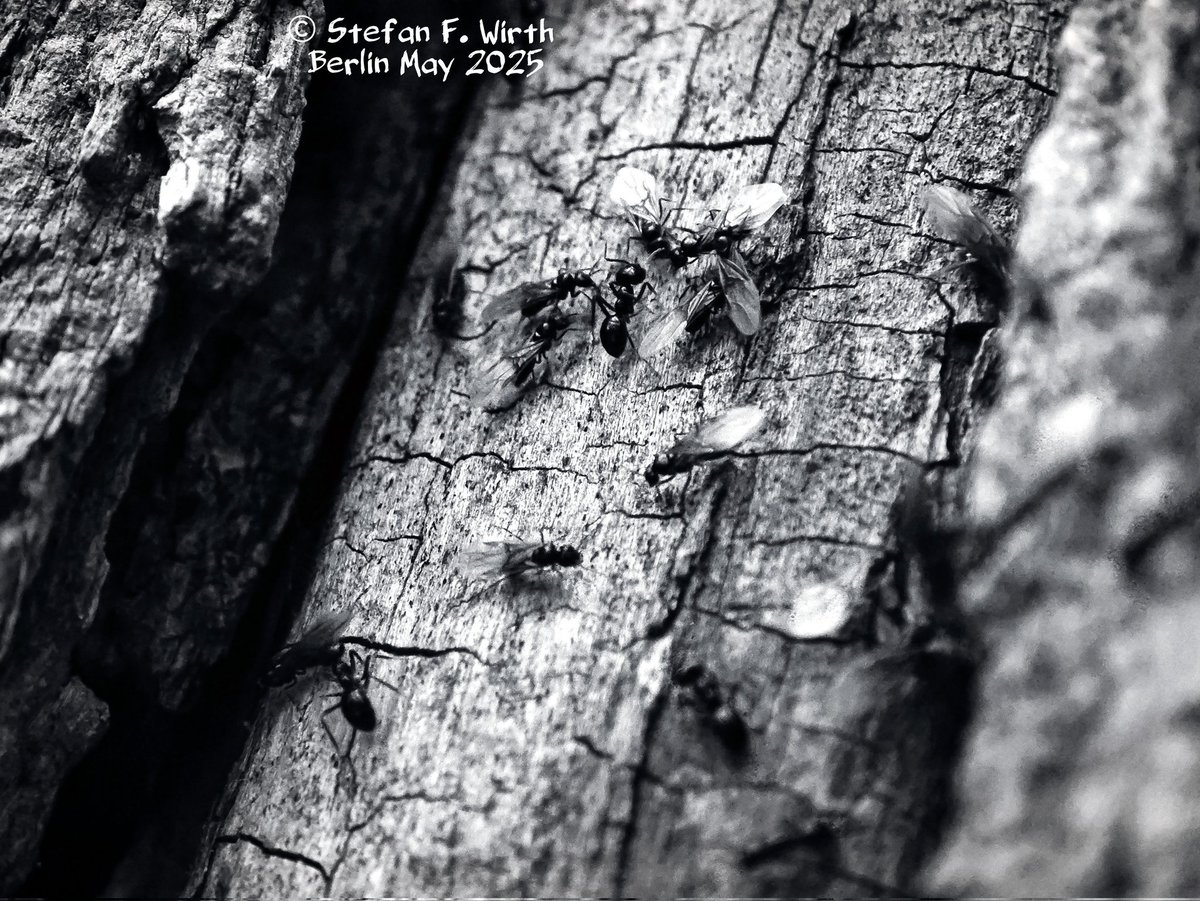
About the jet #blackant #Lasius #fuliginosus, its #biology and its #nest construction, about #myrmecophilous cohabitants and about current research on this ant species regarding their effects on other ant species nearby and regarding the for human purposes potentially useful extracts from the L. fuliginosus #cartoon nest walls.
The jet black ant Lasius fuliginosus (Myrmicinae) can be commonly found in Central Europe. This species builds its nests in dead wood and, in some cases, still living #trees, being harmed as a result. Regarding its #nutritional requirements, L. fuliginosus is not particularly flexible. Nearby aphid colonies, where they can obtain the highly sugary honeydew, are ideal conditions for the colony's prosperity. However, insects can also be preyed upon and other sugary sources can serve as a food source if necessary.
The ant nest is secured and stabilized with #cardboard-like #walls. Chewed wood, which is covered with secretions, is used as building material. Additionally, the #fungus #Cladosporium #myrmecophilum colonizes the walls, stabilizing the cardboard-like construction. However, unlike leaf-cutting ants, the fungus does not serve as a source of nutrition for the ants.
L. fuliginosus nests are usually #polygynous, meaning they have multiple active queens. The usual path of establishing her own colony is complicated for a young queen. This is because L. fuliginosus is a #socialparasite. The young queen is dependent on finding a nest of the #yellowlawn ant #Lasius #umbratus. Gradually, the L. umbratus workers die off and are replaced by the offspring of the young queen. The workers of L. fuliginosus defend their nest against invaders and unwanted intruders by secreting a chemical component as an alarm signal and #allomone for enemy #defense. being clearly detectable even by humans.
Nevertheless, the nest of L. fuliginosus can contain a variety of myrmecophilous #organisms that have #evolved various ways to survive in ant nests. The #beetle #Amphotis #marginata (Nitidulidae) is often found with L. fuliginosus. As an adult, it mimics the behavior of ants on the ant trails and thus successfully begs for food. The #cricket #Myrmecophilus #acervorum (Grylloidea) can also be found in and around the nests. The cricket is not considered a parasite, but rather an #inquiline; its biology is largely unknown, but it primarily uses the ant nests as a safe haven, for which it can adopt the ants' scent. #Mites, nematodes, and, for example, the fungus mentioned above also occur in these ant nests (my YouTube video with these cohabitants is linked under References).
The authors G. K. Wagner et al. (2021) were able to obtain six water #extracts from the cardboard walls of L. fuliginosus nests, which they #biochemically analyzed. They are interpreted to have suitable potential for human use. Accordingly, they have both #antioxidant and #anticancer effects.
The authors P. Ślipiński et al. (2014) examined the ecological influences of L. fuliginosus on its environment, asking how this species is able to form local #antassemblages. The authors point to the hierarchical order between ant species that occur in the same habitat. Accordingly, there are top #competitors and subordinate competitors. The former include species of the genus Formica in open and arboreal areas. However, the authors also attribute a dominant position to L. fuliginosus. According to their research results, the species affects subordinate ant species qualitatively (reducing #speciesrichness) and quantitatively (decreasing their #nestdensities).
© #StefanFWirth Berlin, May 2025
References:
G. K. Wagner et al. (2021), Int. J. Mol. Sci. 2021, 22(9), 4392; https://t.co/k2AZlMChCh
P. Ślipiński et al. (2014), North-Western Journal of Zoology 10(2):404-412, https://t.co/CTexmCmYgg
Video S.F. Wirth 2020): https://t.co/XdzWFvBFFl
Photos:
© S.F. Wirth, urban park Rehberge in #Berlin, on trunk of a Black locust #Robinia pseudoacacia, May 2025



Graphical abstract for a study about ant diets!
Urban diet as potential cause of low body fat content in female ant sexuals.
Trigos-Petral, G., Witek, M., Csata, E., Chudzik, P. & Heinze, J
@gema_trigos @MyrmecolNews
.
#myrmecology #abstract #ants #lasius


Königinnen und Männchen der gelben Wegeameise verlassen das Erdnest................................ #Lasiusflavus #Flugameise #Lasius #Ameisen #Ameise #Wegeameisen #gelbeWegeameise #Tiere #Insekten #Hautflügler #Natur


Yellow meadow ant, fourmi jaune, Gelbe Wiesenameise, Gele weidemier (#Lasius flavus)
also known as the yellow hill ant, is a species of ant occurring in Europe, Asia, and North Africa. Populations in North America are now considered to be Lasius brevicornis.
#SmallerThingsInLife
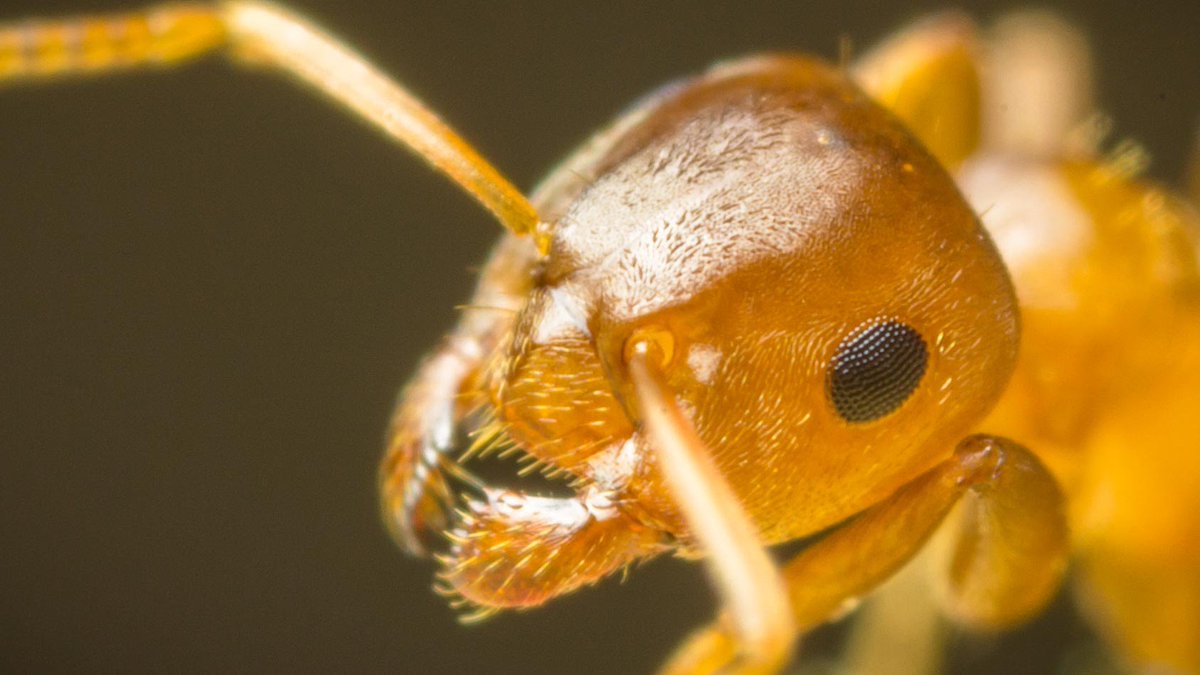
Smaller things in Life
Will be my photo project I will start this year. The goal is to show you the small things in the macro/micro world. For this project I will only use 1:1 and up to 1:5 photography. So no subject can be bigger as 35 x 24mm
⬇️Thread⬇️
#SmallerThingsInLife


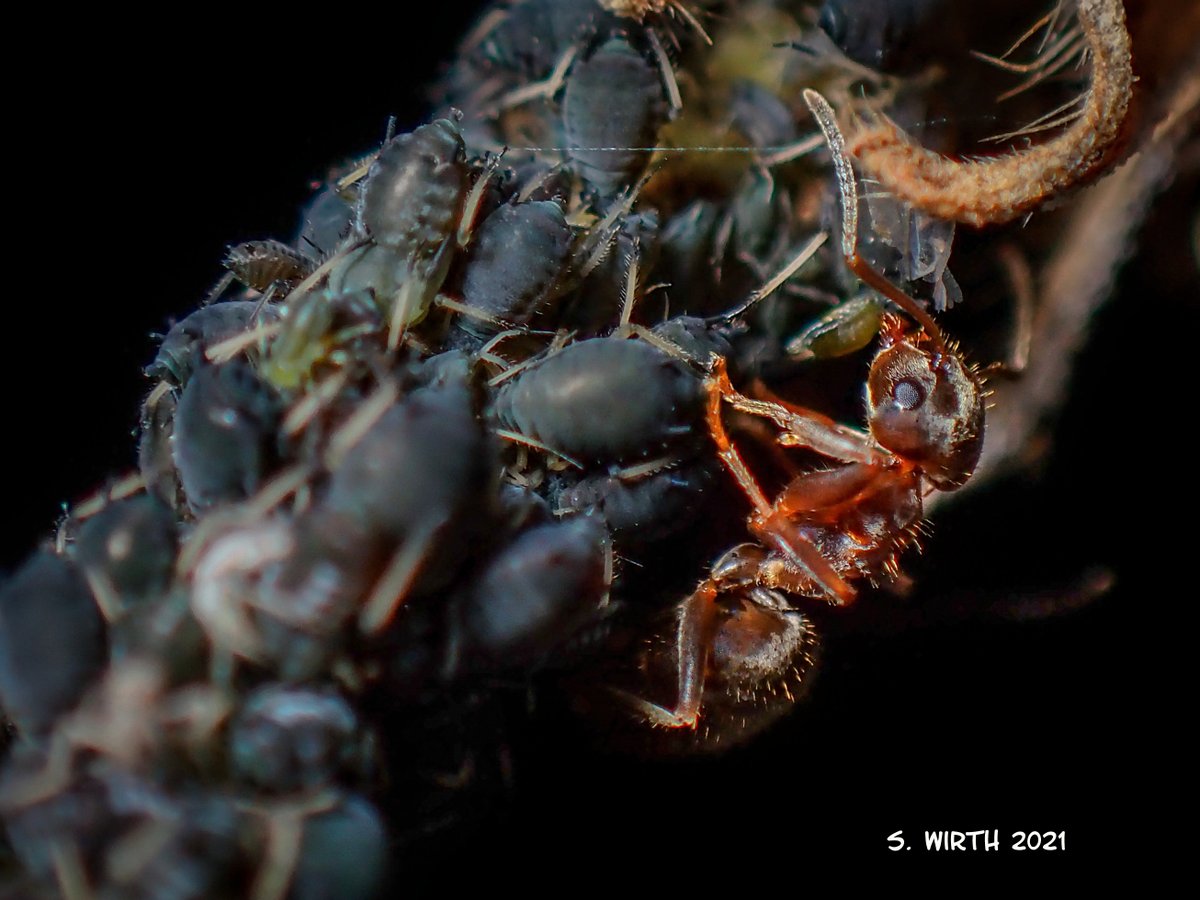
#Lasius #niger🐜and #aphids?
In the formicarium, you can simply put a few aphid-infested branches in a vase and watch the animals 🐜milking the aphids.
#antshop #antstore #ants #ameisen #hormigas #steglitz #berlin #formicarium #fourmis #antfarm #antkeeping #antscolony

Lasius Niger (Common Black Garden Ant - Europe) worker crawling along my binoculars
#lasiusniger #lasius #ants #blackant #binoculars #insects #commonblackgardenant #europe

A #myrmecophilous #beetle: #Amphotis #marginata (#Nitidulidae, #Coleoptera) is primarily tied to the #ant #Lasius #fuliginosus (#Formicinae), which makes cardboard-like walls in its nests in which a symbiotic fungus grows. #Honeydew plays an important role here, as it is, among other things, food for the ants and their larvae, but also serves as an adhesive for the cardboard-like nest construction and as a food base for the symbiotic #fungus.
The nests are built in deadwood and reach down from there. A special feature of the nests of L. fuliginosus is that #foraging #trails are particularly conspicuous compared to other Lasius species and show a lot of traffic with forager worker activities. This is due to the fact that in addition to bringing in the ants' food, as explained above, larger amounts of honeydew are also required for nest design purposes.
The presence of these conspicuous #foragingtrails is used by various myrmicophile organisms such as #mites or beetles and even the #antcricket #Myrmecophilus #acervorum (with a still sparsely studied life style) to either get into the nest or, for example, to elicit prey from the forager ants on their trails.
The beetle Amphotis marginata has specialized in the latter. It can #imitate the #begging behavior of ants so well that it is recognized as a conspecific and usually receives the desired food. These connections were unknown for a long time and were specifically investigated for the first time by B. Hölldobler and C. L. Kwapich (2017). Paper: https://t.co/NCvAr8By6e
Further details on the #lifecycle of the beetle could not be finally clarified by the authors. It is assumed that the beetle's habitat is always close to the nest and the larvae develop in the deadwood near the ant's nest or even inside the ant's nest.
If one makes the effort to spend time near a L. fuliginosus nest there is a good chance of spotting myrmecophilous species such as Amphotis marginata. In 2020 I observed a nest in #Berlin's Rehberge #Park and made two #videos about it. In #video 1, in addition to the beetle, you can also see the ant cricket mentioned above. In the case of my footage of A. marginata, it can be seen that begging is by no means always successful. If the ants show undesired interest in the beetle itself, A. marginata will lie down close to the ground.
The wide ridges on the thorax and abdomen efficiently close off the sensitive underside of the beetle so that the beetle remains protected. In video 2 you can see beetle #larvae, in particular one of the Nitidulidae, which I discovered under a mushroom near the trail. It could belong to A. marginata. You can see how ants react as soon as the larva is presented to them by me. I also took samples and found two species of #Astigmata mites, namely the species #Histiostoma #dryocoeti (#Histiostomatidae) in addition to an #Acaridae. However, there was a suspicion that the mites were leftover #phoretic passengers of a #barkbeetle resident from times before or during the ant nest was built.
© #StefanFWirth Berlin 2023
My video 1: https://t.co/Evo4GngPxw
My video 2:
https://t.co/cgexulxRH1


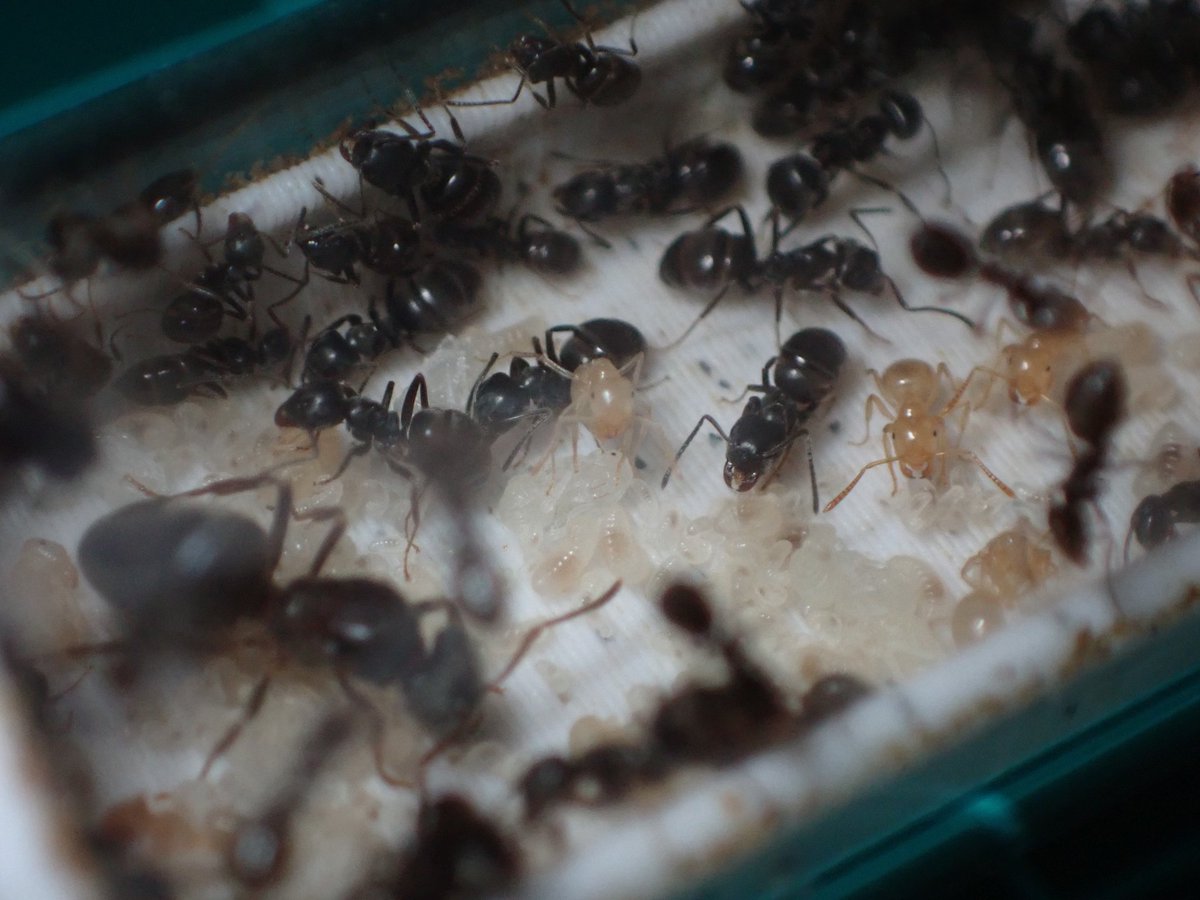

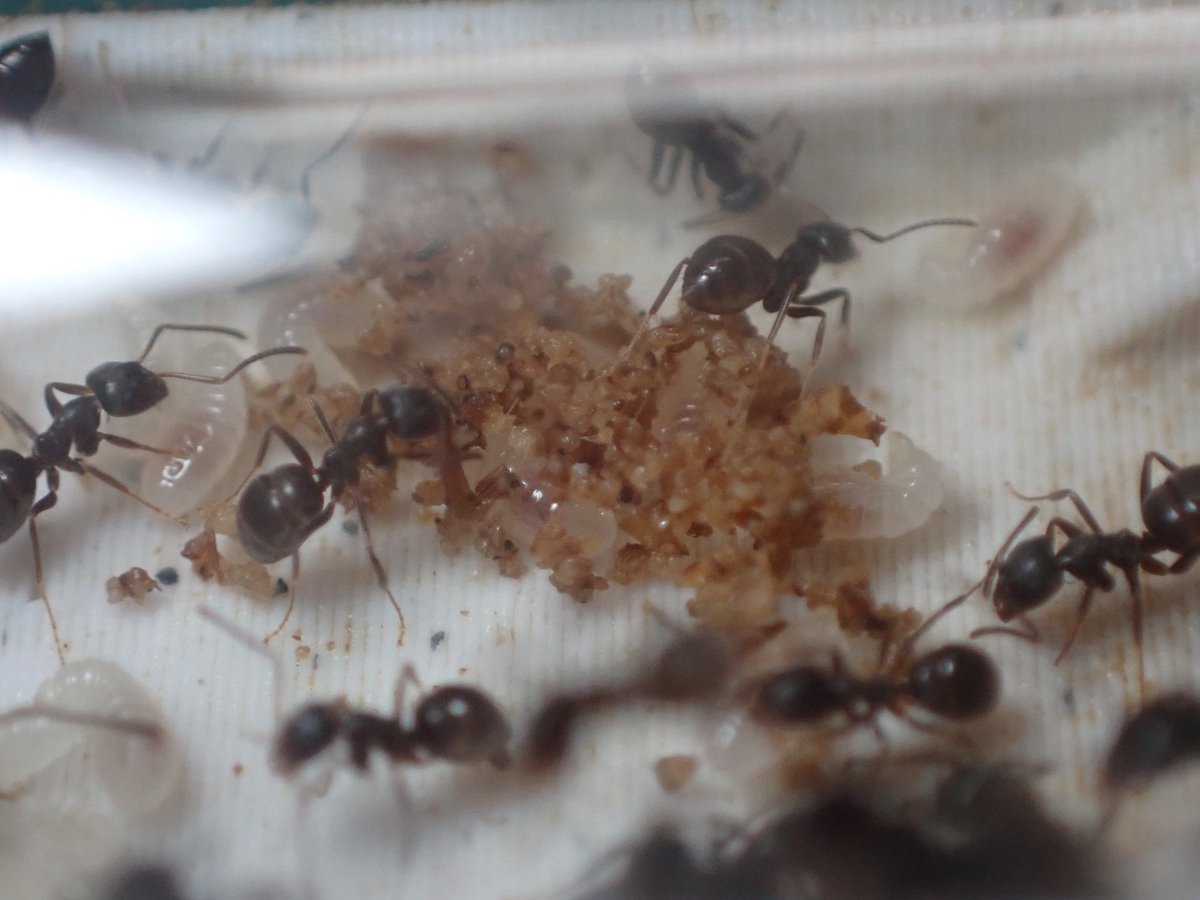
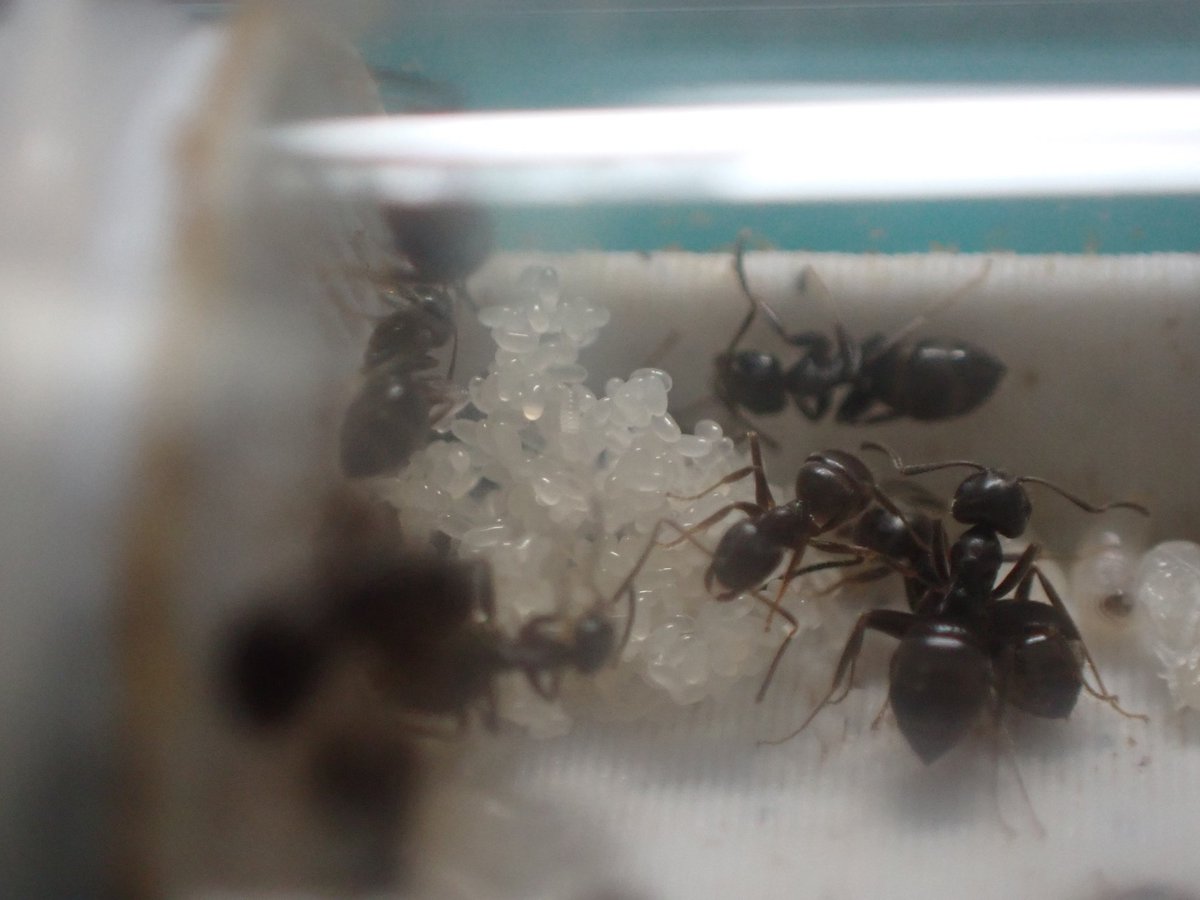
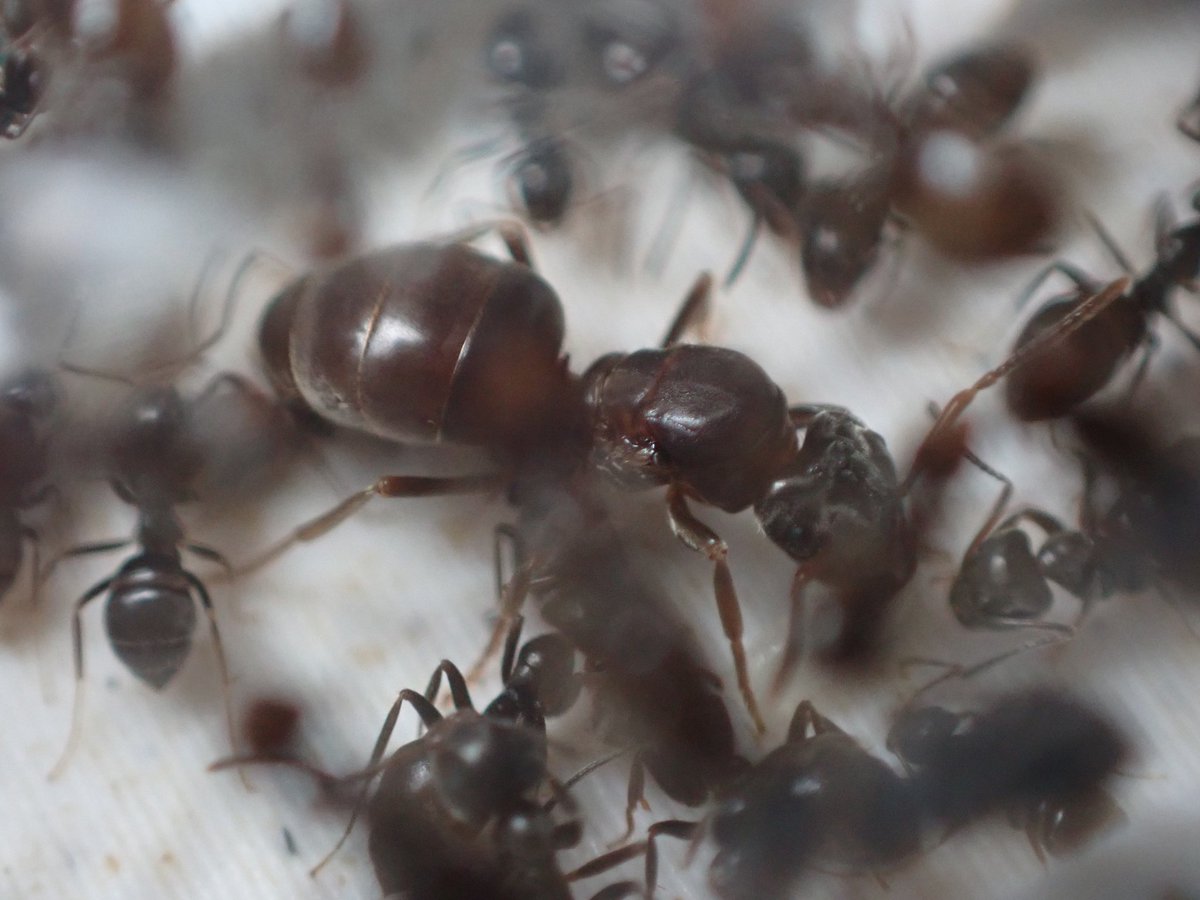


#Microworlds not only live under our feet, here the ant #Lasius #brunneus, but also our #air #lives in the form of fungal and bacterial spores, but also mites, for example, which are spread by the wind. My philosophical photo project about life,© SFWirth : https://t.co/9zKKLrldWv



Last Seen Hashtags on Sotwe
Derive
Seen from United States
einfachtoll
Seen from United States
SummerdownStables
Seen from United States
舔肛
Seen from United States
GameParadiso
Seen from United States
somno nolimit
Seen from United States
ShadowsofDesire
Seen from United States
incestkink
Seen from Turkey
TheObsessed
Seen from Thailand
yaoi
Seen from Germany
Most Popular Users

Elon Musk 
@elonmusk
241.5M followers

Barack Obama
@barackobama
118.9M followers

Cristiano Ronaldo
@cristiano
114.6M followers

Donald J. Trump
@realdonaldtrump
111.8M followers

Narendra Modi
@narendramodi
107.1M followers

Rihanna
@rihanna
98.7M followers

NASA
@nasa
92.3M followers

Justin Bieber
@justinbieber
91.8M followers

KATY PERRY
@katyperry
90M followers

Taylor Swift
@taylorswift13
84M followers

Lady Gaga
@ladygaga
75.5M followers

Virat Kohli
@imvkohli
73.5M followers

Kim Kardashian
@kimkardashian
70.9M followers

YouTube
@youtube
68.8M followers

Neymar Jr
@neymarjr
66.5M followers

Bill Gates
@billgates
65.2M followers

Selena Gomez
@selenagomez
63.1M followers

The Ellen Show
@theellenshow
62.2M followers

CNN
@cnn
61.8M followers

X
@x
60.7M followers