

Top Tweets for #technuggets


Trophy trucks have what might be the most marvelous suspension in motorsport.
A car fire blanket can isolate a car fire in less than 20 second and avoid the risk of heavy smoke or fire spread.

Those pressure waves are nuts

You cannot out smart facts #technuggets

Fascinating post on the differences between Aero and Industrial grade SC Turbine blades.

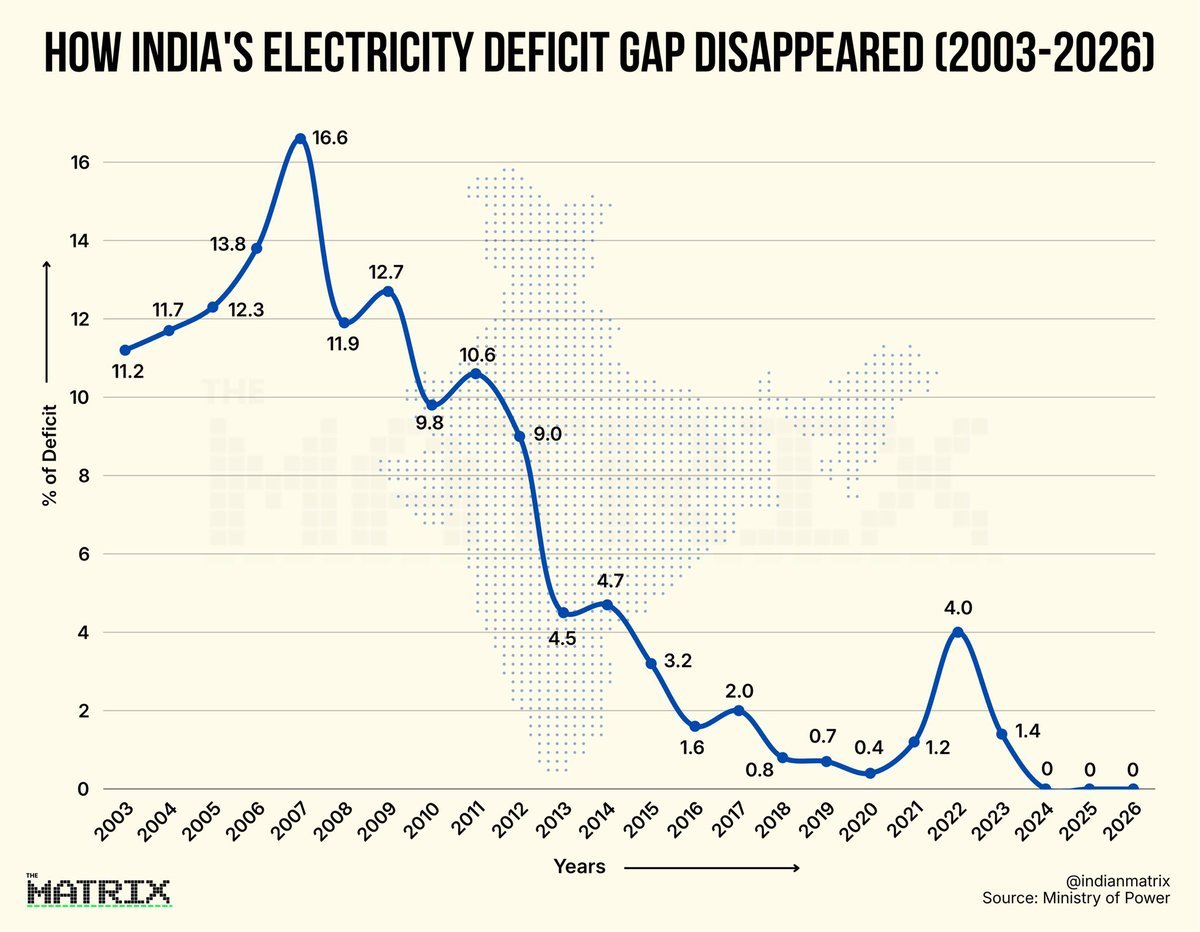
The West built its power grids on Copper. But India is Copper-Poor & Aluminium-Rich. Indian scientists perfected the AL-59 Aluminium Alloy conductors, a material that carries up to 30% more power than traditional cables while sagging far less under extreme heat & load.
While the West battles decades-old copper infra, India quietly built the world’s most advanced 800 kV Ultra High Voltage Direct Current (UHVDC) corridors, engineering marvels that move massive power across 1000s of KMs with unmatched efficiency.
Also, through the UJALA scheme, India distributed 36.8 crore+ (368M) LED bulbs. This single initiative slashed peak electricity demand by ~9500 MW & saved 48 billion units of electricity every yr. 9500 MW is equivalent to the output of ~20-25 large coal-fired power plants/the entire generation capacity of several states... achieved w/o burning a single extra tonne of coal.
Data Source: @indianmatrix

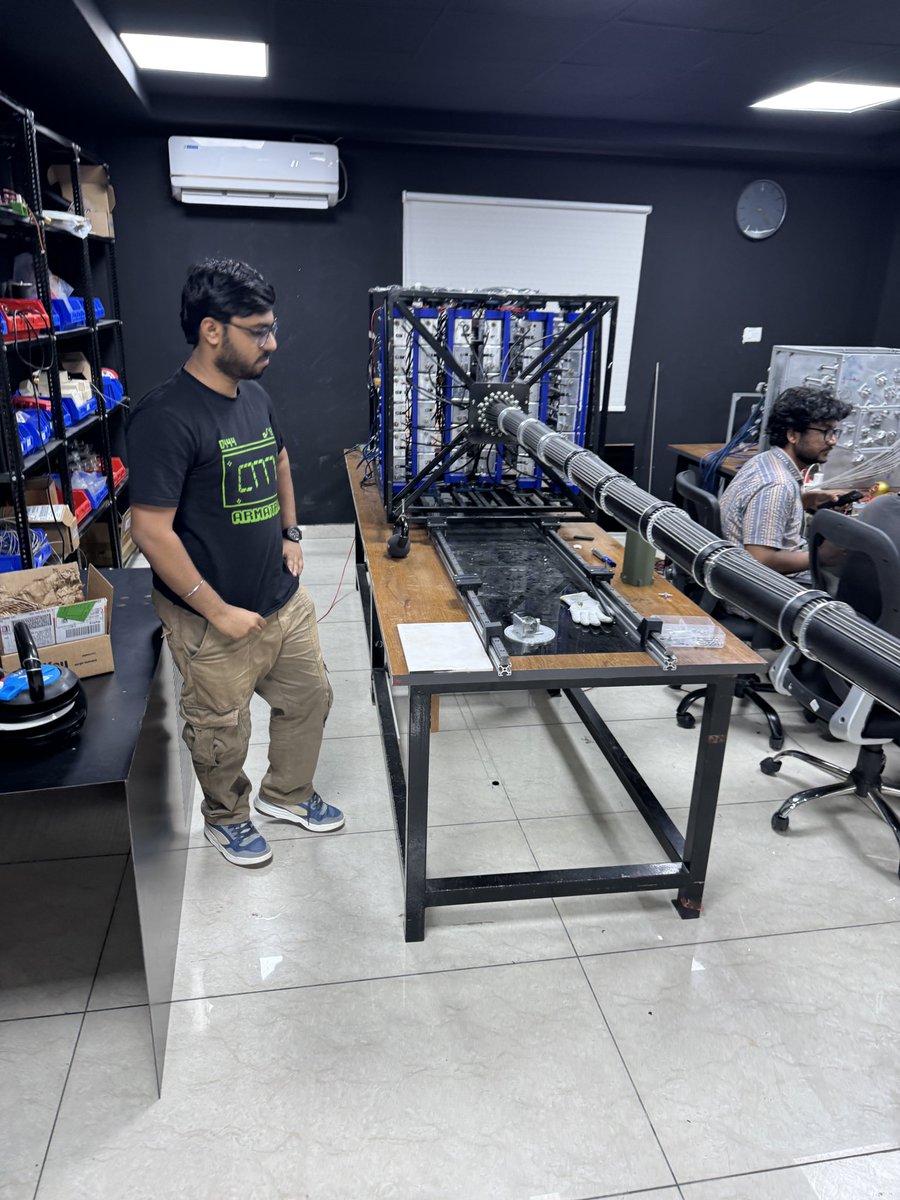
The Spherical Induction Motor (SIM), is a unique omnidirectional electric drive that use EM induction to create motion into a spherical rotor.
Unlike standard motors that only rotate around one fixed axis, a SIM can move in any direction without mechanical linkages or connected parts.
The primary force is provided by a traveling magnetic wave.
The stator is composed by six curved inductors positioned around the central rotor ball with a tiny air gap between the stator's inner surface the rotor’s outer shell.
The rotor is a precisely machined hollow ball made in copper with an iron core.
The motion is generated by a magnetic field that moves along the ball’s surface inducing eddy currents in the copper layer. The interaction between these currents and the magnetic field creates the torque that spins the sphere.
A processor steers the ball in the wanted direction by adjusting the magnitude and frequency of the currents in each inductor.
🔗 https://t.co/vPqV1gYfCY

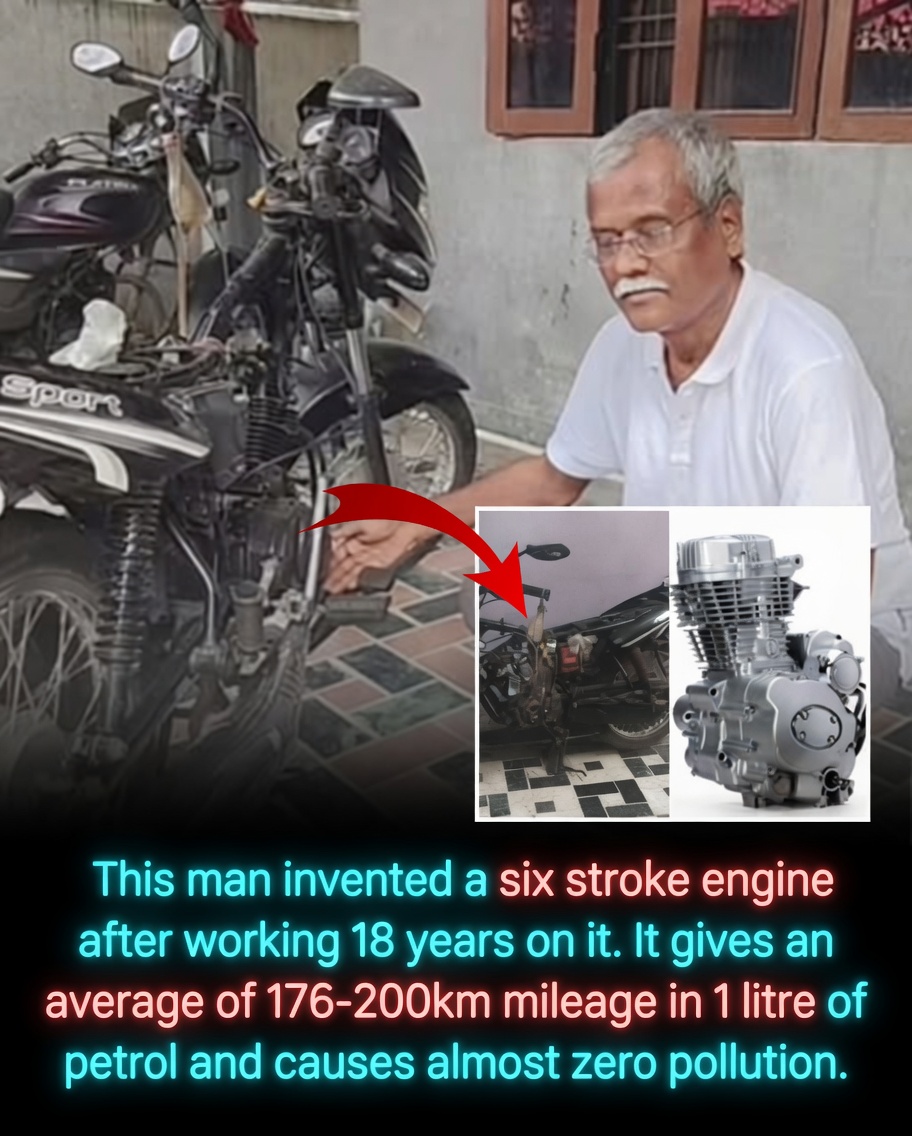
An inspiring story of perseverance has emerged from Prayagraj, India, where an alumnus of Allahabad University has developed a highly efficient six-stroke engine after nearly two decades of dedicated work.
Shailendra Singh Gaur, who graduated in 1983, spent 18 years refining his invention, often at great personal cost. He sold his land, shop, and even his house to fund the project, converting a rented space into a makeshift workshop. Drawing on technical experience gained at institutions such as Motilal Nehru National Institute of Technology and IIT (BHU), he created a prototype that he claims delivers an extraordinary 176 to 200 kilometers per liter of petrol on a modified 100cc motorcycle.
Unlike conventional four-stroke engines, Gaur’s six-stroke design aims to extract significantly more energy from the same amount of fuel. In one demonstration, the modified bike reportedly ran for 35 minutes on just 50 milliliters of petrol. The inventor states that the engine achieves up to 70% thermal efficiency, runs on multiple fuels, and produces near-zero pollution.
Gaur has already secured two patents for the technology, with more pending. If successfully scaled and independently validated, this innovation could dramatically reduce fuel consumption and emissions for motorcycles, cars, and other vehicles across India and beyond.
While the claims are remarkable and have generated significant excitement, further rigorous testing and peer review will be essential before widespread adoption. Nevertheless, Gaur’s story stands as a powerful example of individual determination and grassroots innovation in Indian engineering.

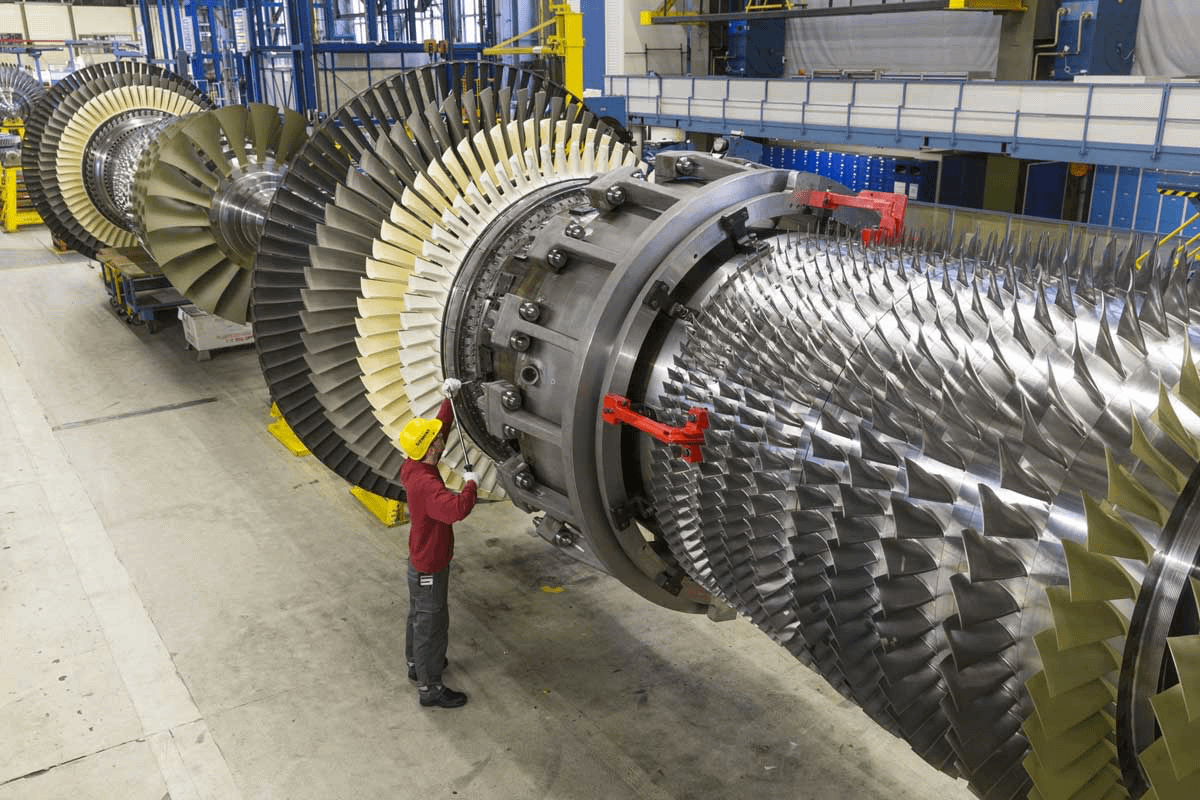
You cannot buy a new gas turbine until 2030. Order books at GE, Siemens, and Mitsubishi stretch to 2029. Turbine prices have nearly tripled since 2019. Every AI data center needs power and every gas plant needs a turbine. And every turbine has one part that bottlenecks the entire industry: The blade. It has to survive in gas 500°C above the melting point of the metal it's made from and spin at up to 20,000 RPM under 10,000 g of centrifugal force. Each blade is grown as a single crystal of nickel superalloy, pulled through a vacuum furnace at 3 mm per minute. A set of blades costs $600,000 and takes 90 weeks to grow. The same metallurgy powers modern jet engines. Only 3 companies on Earth can build one. China spent $42 billion trying to catch up. They bought a Russian fighter engine, took it apart, and copied every part. Their copy ran 30 hours between overhauls versus 400 for the original. Modern Western engines run 4,000. You can reverse engineer the shape of a turbine blade. You cannot reverse engineer 60 years of metallurgy.

#ISRO has launched 230+ American satellites since 2014.

Robotic arm with 22 degrees of freedom for maintenance and repairs in confined space. Amphibious plane to eliminate containers for short distance logistics. Dynamic soaring drones for 417 days of continuous flight time. It’s crazy to see what Gen Z founders are building on the outskirts of North Bengaluru.
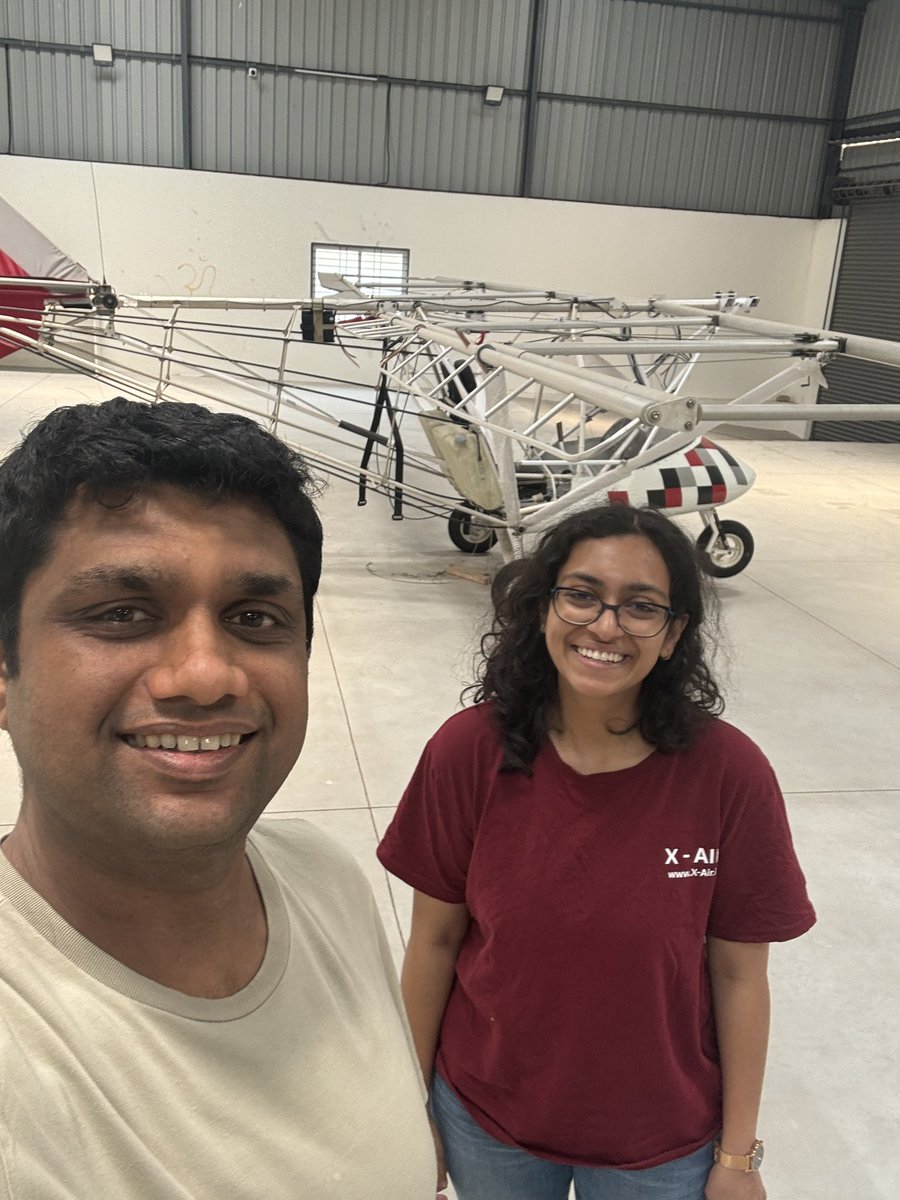
Wow
#TechNuggets

Researchers in China are investigating whether bamboo could help reduce our reliance on petroleum-based plastics. Bamboo is drawing attention because it grows extremely quickly, requires relatively few agricultural inputs, and absorbs carbon dioxide as it matures. Its fibres are naturally strong, making them suitable for reinforcing plant-based polymers.
In laboratory settings, bamboo fibre composites have demonstrated mechanical strength comparable to certain conventional plastics, particularly in applications such as packaging and lightweight components. Some bamboo-based biopolymers also break down more readily than traditional plastics under controlled composting conditions.
However, moving from promising lab results to large-scale manufacturing presents challenges. Scientists are still studying long-term durability, resistance to moisture and heat, production costs, and how these materials perform outside controlled environments. While bamboo-based plastics are not yet a complete replacement for conventional plastics, ongoing research suggests they could become part of a broader shift toward more sustainable materials.


Battery major CATL claims 6-minute charge and 1,500km range for new electric vehicle batteries

Meet Pawan Kumar Chandana!
(ISRO Scientist turned Entrepreneur)
Man who's behind launching India’s first private rocket to space.
> He Grew up as a middle-class kid in Vizag
> Was a student who once struggled in academics
> Went from that to cracking IIT in his first attempt
> He did his Btech in Mechanical Engineering from IIT KGP in 2007
> While others chased high-paying jobs, he chose rockets
> And Joined ISRO as a scientist right after college
> Low pay, but high purpose
> He loved the work so much that he could’ve spent his life there
> But the entrepreneurial spark didn’t fade…
> And he Quit ISRO to build a space startup from India in 2018
> No policy support, no funding ecosystem, no exposure to business
> Just Cold DM Mukesh Bansal, who writes a $1.5M check
Then Came real struggles:
> COVID hits and capital was running out
> Faced repeated rejections while raising funds
> Eventually backed by founders of Greenko Group
As we have heard, luck favors those who are prepared
> In 2021, the space sector opened up for private players
> And Skyroot became the first company to sign an MoU with ISRO
> They Raised $51M, one of India’s largest deeptech rounds
> And by Nov 18, 2022: launched Vikram-S
> India’s first privately built rocket to reach space (~90 km)
> Built one of India’s largest private rocket facilities (~200,000 sq ft)
Today, they are Building the Vikram series for affordable satellite launches with a team of 1000+ passionate people
We talk a lot about Elon Musk and SpaceX But imagine doing this with No prior wealth
> In a developing country with no ecosystem
> Getting rejected again and again
> And still choosing to build for space.
From a middle-class kid to launching rockets,
Pawan Chandana’s journey isn’t just inspirational. it redefines what’s possible.
Just excited for their future and the first orbital launch of Vikram-1


How a car differential works, 1937

Dry ice spilling out the back. Extreme measures taken for cooling to do the marathon. This is part of why I am confident this sort of event leads to real innovation

🇨🇳 Este robotín ganó el premio al más cuqui de la media maratón de hoy de Beijing, en China.
The first submarine used in war
[🎞️ simple.history_]
Last Seen Hashtags on Sotwe
প্রভা
Seen from Bahrain
Backagain
alohalocoSTUDIO
Seen from Japan
doublefedora
Seen from United States
femboy porn
Seen from United States
gooner
Seen from Norway
ديوث_الرياض
Seen from Saudi Arabia
ReputationTourMNL
Seen from Malaysia
فطوم_سلطانة
Seen from United States
rodrigolaviña
Seen from United States
Most Popular Users

Elon Musk 
@elonmusk
240.1M followers

Barack Obama
@barackobama
119.3M followers

Donald J. Trump
@realdonaldtrump
111.6M followers

Cristiano Ronaldo
@cristiano
108.7M followers

Narendra Modi
@narendramodi
106.9M followers

Rihanna
@rihanna
97.2M followers

NASA
@nasa
92.1M followers

Justin Bieber
@justinbieber
90.5M followers

KATY PERRY
@katyperry
86.7M followers

Taylor Swift
@taylorswift13
80.5M followers

Lady Gaga
@ladygaga
72.1M followers

Kim Kardashian
@kimkardashian
69.3M followers

YouTube
@youtube
68.6M followers

Virat Kohli
@imvkohli
68.4M followers

Bill Gates
@billgates
63.3M followers

The Ellen Show
@theellenshow
62.5M followers

CNN
@cnn
61.9M followers

Neymar Jr
@neymarjr
60.9M followers

X
@x
60.9M followers

CNN Breaking News
@cnnbrk
59.9M followers