Hi, I'm Wyatt Thompson, a member of the Human Data team at OpenAI.
We recently had the chance to chat privately with Tyler Cowen and Alex Tabarrok about the impact of AI on the future of labor. One theme stood out: economic growth matters. It drives opportunity, innovation, and human flourishing.
Here's the conversation:
@SMB_Dan@jrhartman131 Mostly 5 axis will be the same again. The cam software does the hard work. You just point the plane in the direction you want make chips and and click the green tick. Many props to you for getting this far!
I built an interactive tool to map the relationships in CAD modeling software, their underlying geometry kernels, and the companies that own them.
try it out at https://t.co/MxN68obAvA
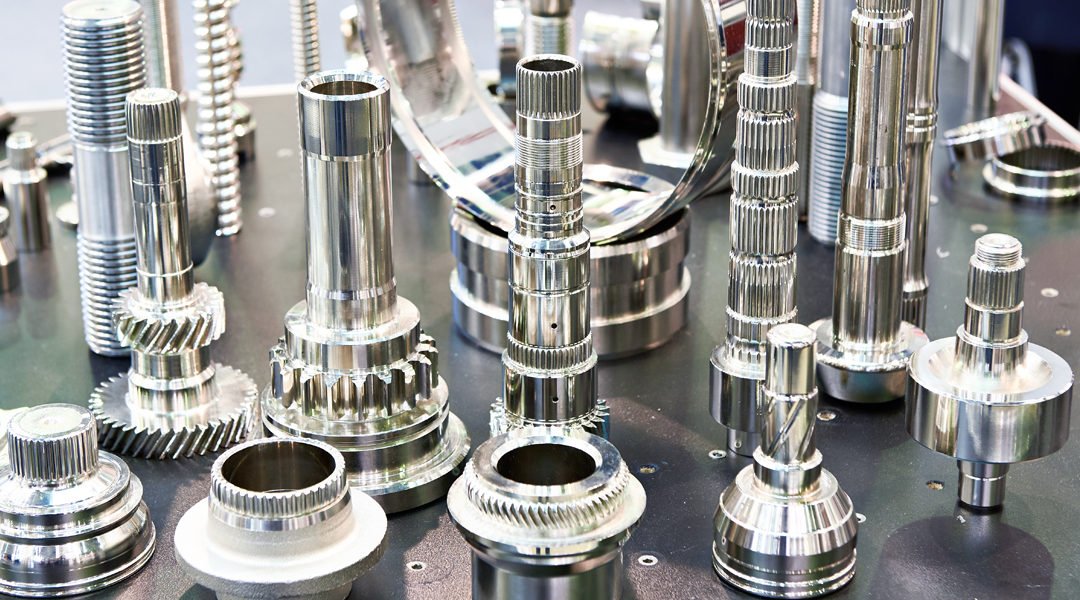
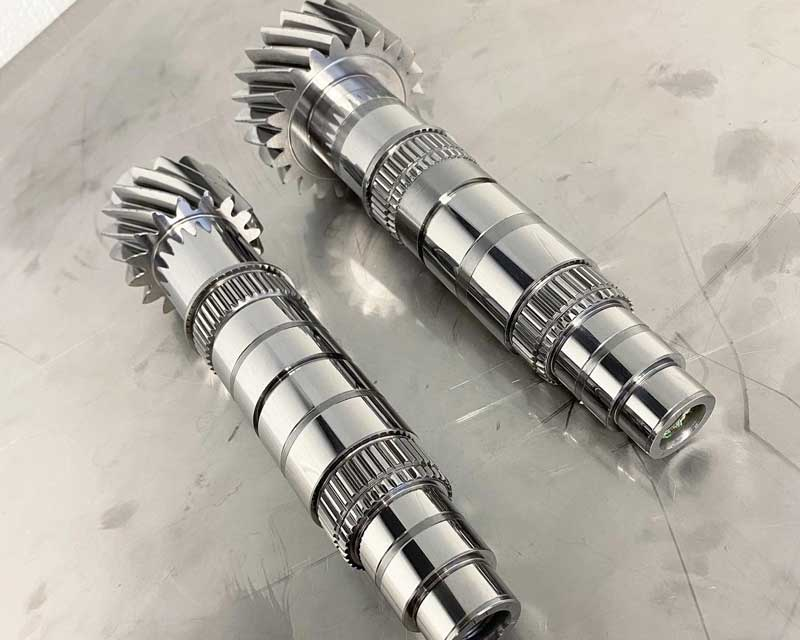
We've discussed electropolishing & tumbling before to achieve better part surface finishes, but there's another process that yields incredible results:
Isotropic Superfinishing
Ever heard of it?
Ever used it?
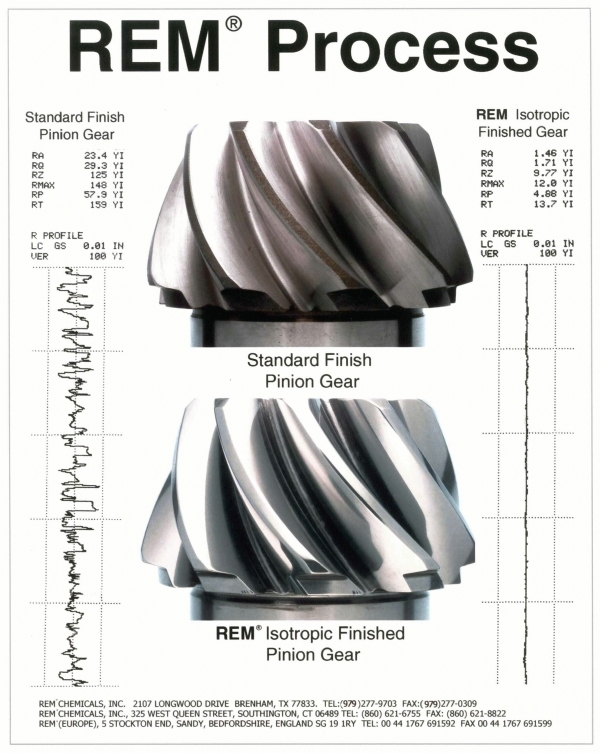
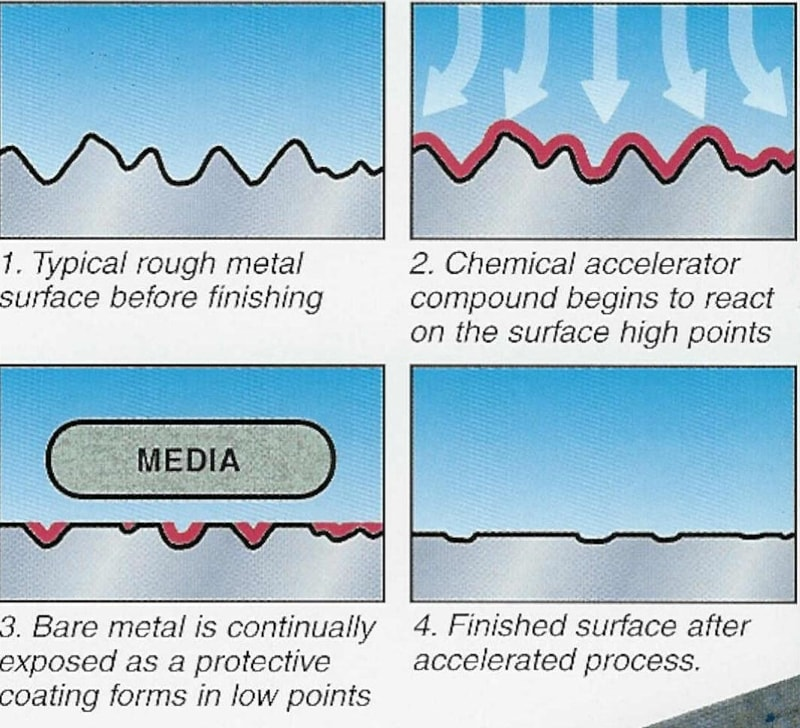
Also known as Chemically Accelerated Surface Finishing, it's performed by placing your parts into a tumbler with ceramic media & a chemical additive.
The chemical compound creates a conversion film which softens the peaks / high spots on the metal surface, allowing the tumbling media to knock them down easily.
This coating continuously reforms, ensuring only the peaks get removed, and allows the final surface finish to get extremely smooth.
A surface roughness of 2–4 µin Ra (0.05–0.10 µm) is typically achievable, with even lower values possible. This is mirror finish territory. With almost no dimensional change (we're talking a few microns here).
I need to try this out for myself...
how i CAD -- engineers don't really talk about their CAD workflows much, so i thought i would spell mine out. i hope it's useful
i don't default to "parametric" (what should really be called feature based history) modeling, and i think that's ok. i think it has its place (<10% of cases imo) and i rarely think it useful in R&D or mass manufacturing. i find it's great for people who have standardized assets that follow strict rules (furniture, truss or framing companies, etc.)
i use a direct modeling approach that avoids sketching when possible. how do i do this without sketches? NX lets you generate curves without sketches. autocad and plasticity operate through this paradigm by default
i do not care about feature history length and either ignore it, or purposely use tools like remove parameters (NX) to wipe the history periodically. i never use assembly functionality or assembly constraints and all of my parts live in a single file as bodies
these files are by proxy "assemblies". i instantiate bodies within them (blocks in autocad, components in NX) when required -- i have various workflows for turning these parts into something the system can understand for drawings and PDM. those most familiar with fusion360 or NX are already aware of this paradigm
some organizations don't like this. for example, one forced feature history based models ("parametric") or models would be rejected in the ECR process
in other orgs, they've mimicked almost 100% my direct modeling workflow and it was actually frowned upon to have a feature based modeling histories. what i've learned is that for really complex assemblies, you need to not parametrically link variables that define geometry and reduce feature history as much as possible. i understand this is indirectly calling some startups out (like flow engineering), but i have not yet seen this to be untrue
why?
1. dependencies break. think of each dependency (parameter, feature, etc.) as an attack vector. native CAD files are not source code. each CAD company has created their own "source code" (features) and they do not necessarily all compile to the same result. in the software paradigm, you should actually think of BREPs (.stp exports) as the source code, and everything before that as an abstraction that could cause issues. almost every employer i've had disagrees with me on this, so if your blood is boiling, it's OK, you're not alone
2. it's fast. it doesn't matter what i started with, i don't have to think about the history of the part. if i don't like a part, i can push/pull faces and slice geometry to get what i want. the ability to totally disconnect the future state of a geometry from its previous state is, and i don't think this is an exaggeration, almost 10x faster than having to grok what you were thinking months or years ago
3. to further the point in 2 -- you can comment code. that's a reason source code can live for decades and its intent can still be understood later. you can't comment feature histories
4. if you go with the direct modeling approach, the CAD cartel loses. if you can easily export your step file, and rely on direct modeling approaches, then you're never locked into a CAD system. period. feels pretty good. by the way, this is what enables open source hardware
Aerospace parts are not 100x overpriced because of paperwork or crazy high standards or any of the reasons folks often think they are.
This is a part that would be $50 if it was an aftermarket dingus for your car’s oil pan, if made to the same tolerances/QC and with the same material. In fact, most OE car parts are held to exceptionally tight dimensional tolerances and quality standards.
Aerospace shops - with all the QC gear and ISO certs and paperwork automation - typically have an hourly rate 1.75x - 2.0x comparable non-aerospace shops. No, QC and documentation do not 100x a part’s cost to make.
What makes aerospace parts expensive are 3 main drivers:
1. Volume. Boeing builds 458 copies of the 737 every year. If you get the contract for the inconel de-icing bleed air manifold (2x per hull), that is fantastic! You are also making only 1000 parts per year. Not huge scale to get automotive industry efficiency (which is usually 7 figures annually).
2. Design For Manufacturability. Aerospace engineers are perhaps (as a group) the worst in the world at designing their parts with any consideration to manufacturing. While one understands for this for power plants and some critical sub-systems, my gut feeling is that 90% of the parts on an aircraft could have a 50% coat reduction with a single round of DfM. I’ve seen some totally stupid things out of Boeing and Airbus on parts- either could save $1B annually if they just had CATIA/NX disable the fillet command.
3. Distribution. Aero has a pile of Persian rug salesman in the parts business. Nobody wants to do the work, so everything has layers of useless “service” middlemen who each mark up 300%. For example- none of my Boeing customers ever work with Boeing, they work with a contractor, who is working for a supplier, who sells to Boeing. Boeing is “saving money” by paying 3x for every nut and washer and valve… Airbus is apparently worse. (my customers making SpaceX parts deal directly with SpaceX, often with access to the engineers for a tight DfM feedback loop).
TL;DR- Aero parts are expensive because of low volume and a sclerotic industry filled with lazy MBA parasites who drag value, not because they are exceptionally hard to make or “the paperwork.”
1. The Santa Barbara school of evolutionary psychology holds that a universal set of complex psychological adaptations evolved in Pleistocene Africa. In no particular order, here are few folks on here doing research in this tradition, highlighting one paper/thread each:🧵
The largest series of fossil modern human remains dating to the Pleistocene are about to be destroyed please help stop this madness and sign the attached
https://t.co/EOgpz4oDcy
The second half of this short video, on how people sometimes answer quantitative questions qualitatively, blinding them to obvious opportunities, is something which I would like to triple underline for e.g. startup founders.
Try a little bit of rigor! See where it gets you.
How Boom Supersonic's @bscholl recruited a world class team
"If you can wave a magic wand and get anybody on the planet to come work with you on this, who would your top five people be?
Forget whether they're available.
Forget whether they're interested.
And it turns out, you don't need too many levels of recursion before I was actually talking to the best people on the planet."
Source: @ycombinator@snowmaker