MASSIVE UPGRADE PROPOSED FOR ETHEREUM.
The Ethereum community has proposed ERC-8092:
a new “associated accounts” identity standard.
Accounts will be able to:
- Publicly link & verify relationships via signatures
- Create sub-accounts
- Delegate authority securely
- Build portable, on-chain reputation
- Work seamlessly across chains and L2s
No more fragmented identities scattered across ecosystems.
Ethereum isn’t just scaling transactions.
It’s scaling identity itself.
One standard to unify them all: verifiable, revocable, and fully on-chain.
The proposal is live on Ethereum Magicians and GitHub.
Discussion is heating up.
This isn’t a minor tweak.
It’s the foundation for the next wave of adoption.
While others chase speed,
Ethereum is quietly building the identity layer of the internet.
Watch this space.
Great question @ant_sabado -- I didn't watch all of the presentations from yesterday but I was there for most of today. @theobtl created a thread on today's research presentations: https://t.co/4V3vHJvBNi
I would say (maybe @bbeats1 and @theobtl can help me here):
1) DAOs and decentralization in web3 are at a turning point -- main issue is lack of voter participation, and several ecosystems in recent months have actually downsized their decentralization initiatives or made it more centralized. It's going to be very interesting how the space itself evolves from here, but I'm optimistic and take this as a sign of maturing: we are overall as a space thinking more towards governance as a means to an end (e.g. resilience, sustainability, growth), instead of decentralization for the sake of decentralization.
2) Relevant to your work, there's an increased focus on privacy in governance to prevent prevent coercion, retaliation, vote buying, last minute whales butting in, and social pressure. @john_guilding presented the State of Private Voting Report: https://t.co/7x3Vx64aiK
3) To that point, I've also seen a lot more though put into governance systems to (try to) make them actually work -- two years ago when I first presented on Neural Quorum Governance, not many people were thinking about anything other than completely completely public, token-weighted and essentially plutocratic governance, but today there are a lot of folks that have either experimented with or integrated more intricate systems to involve key stakeholders in the right way and prevent collusion and gaming. As an example, @hatsprotocol and few others are recently making great moves towards this -- looking forward to seeing how that unfolds.
4) Security and capture risk in DAOs is more important than ever. @anticapture presented on how they were nearly able to capture a seat on @arbitrumdao_gov's security council by buying votes, showcasing there's lots to be done on that front -- many DAOs on their site are listed as "High Risk": https://t.co/qihcIh7Q69
I have to go to dinner now but I'll list more later!
AI agents can extend human capacity in organisations by automating coordination and decision-making, enabling individuals and teams to focus on higher-value, creative, and strategic contributions while lowering the cost of organising by Spencer Graham and Nick Naraghi, co-founders of @hatsprotocol.
#HatsProtocol #DecentralizedOrganizations #DAO #OrganizationalDesign #AIinOrganizations #DigitalOrganizations #AIAgents #FutureOfWork
Full episode: https://t.co/12k2P1PrnL
🔥 DAO tooling is hitting a breaking point.
What do builders actually need, and what is just adding noise?
Introducing our panel: “DAO Stack Essentials: Where tooling is needed most?” ⚙️⚖️
A deep dive into the DAO stack to identify which tools solve real pain points and where we should draw the line.
🎤 Speakers:
@0xGonzacolo (@wakeuplabs)
@0xCallme_t (@PowerhouseDAO)
@0xNN2 (@hatsprotocol)
@JordanImran2 (@AragonProject)
👏 Host: @v3eth (@Curia_gov)
I really enjoyed this conversation with @meedabyte about the future of organizations!
We were really inspired by their post about the future of AI-enabled firms:
"How AI Transforms the Logic of Value Creation in Markets – and Organizations"
This was our dive deep on it together. Take a look!
@byobu4@nounsdao You can share any governance structure with gardnr (paste into text box) and have it analyze the existing trust zones!
https://t.co/6PKldy7j0h
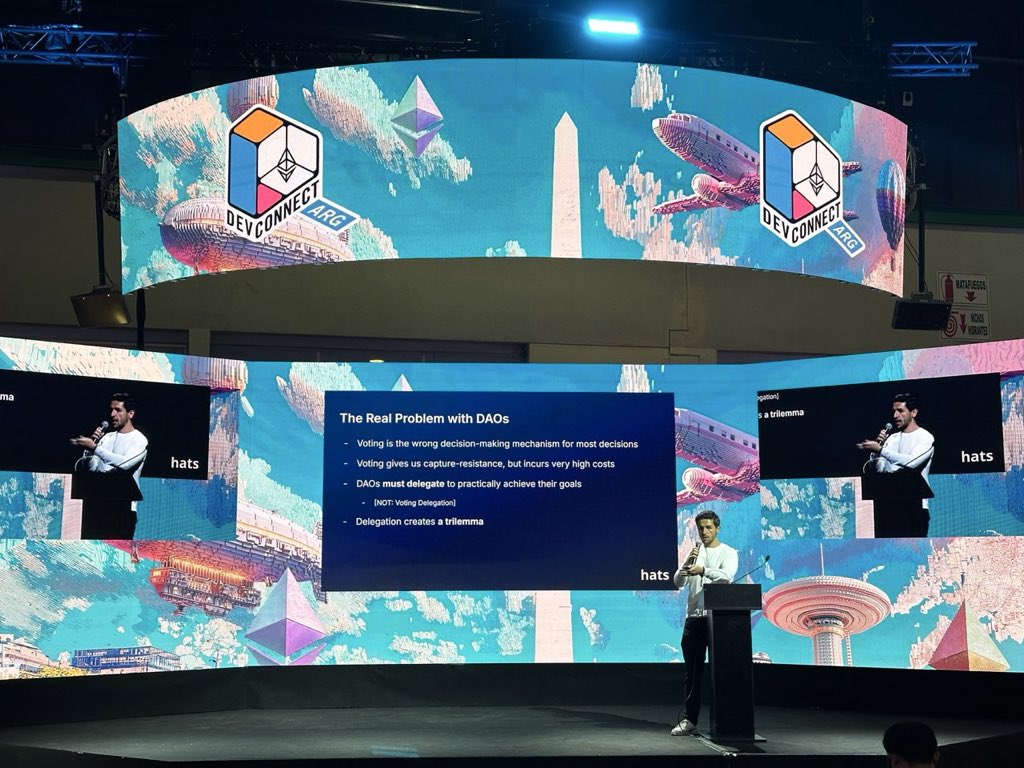
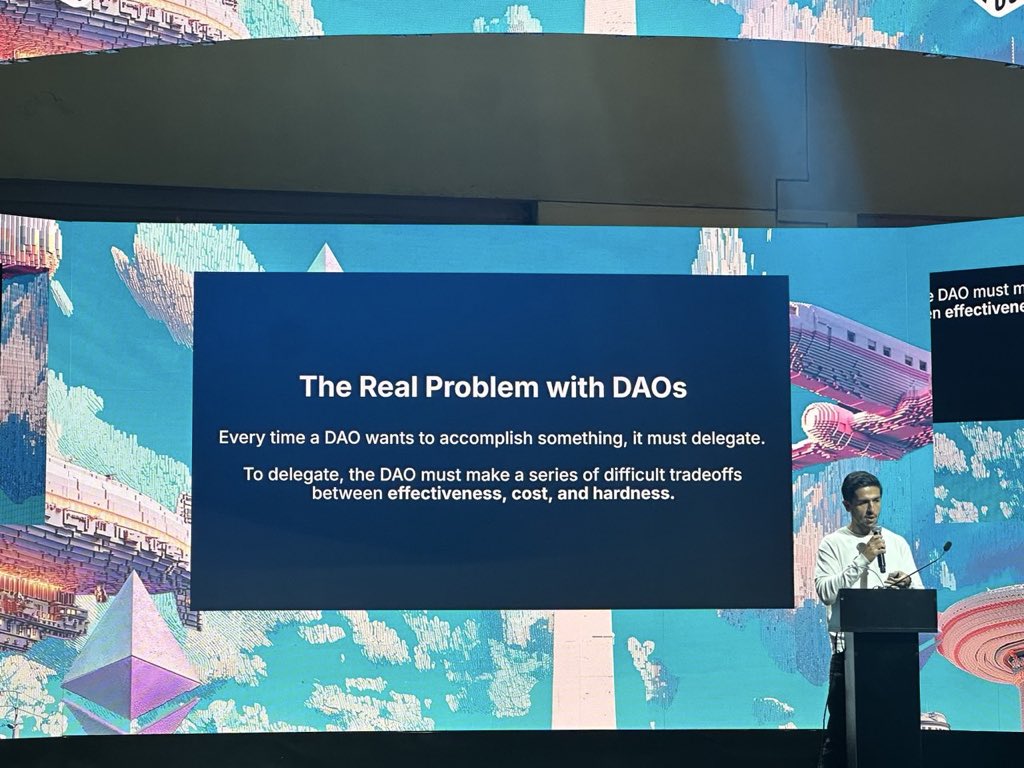
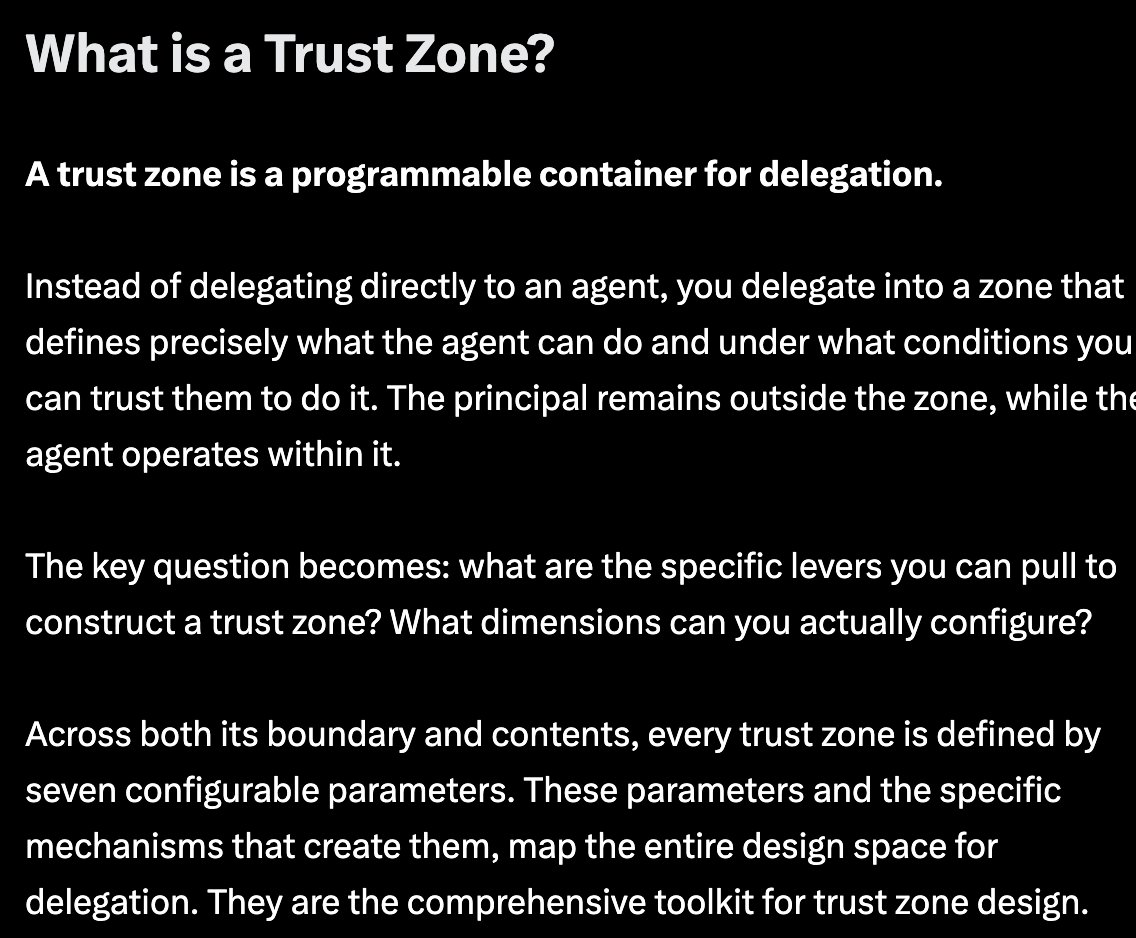
If I understand this, trust zones are a programmable way to address the
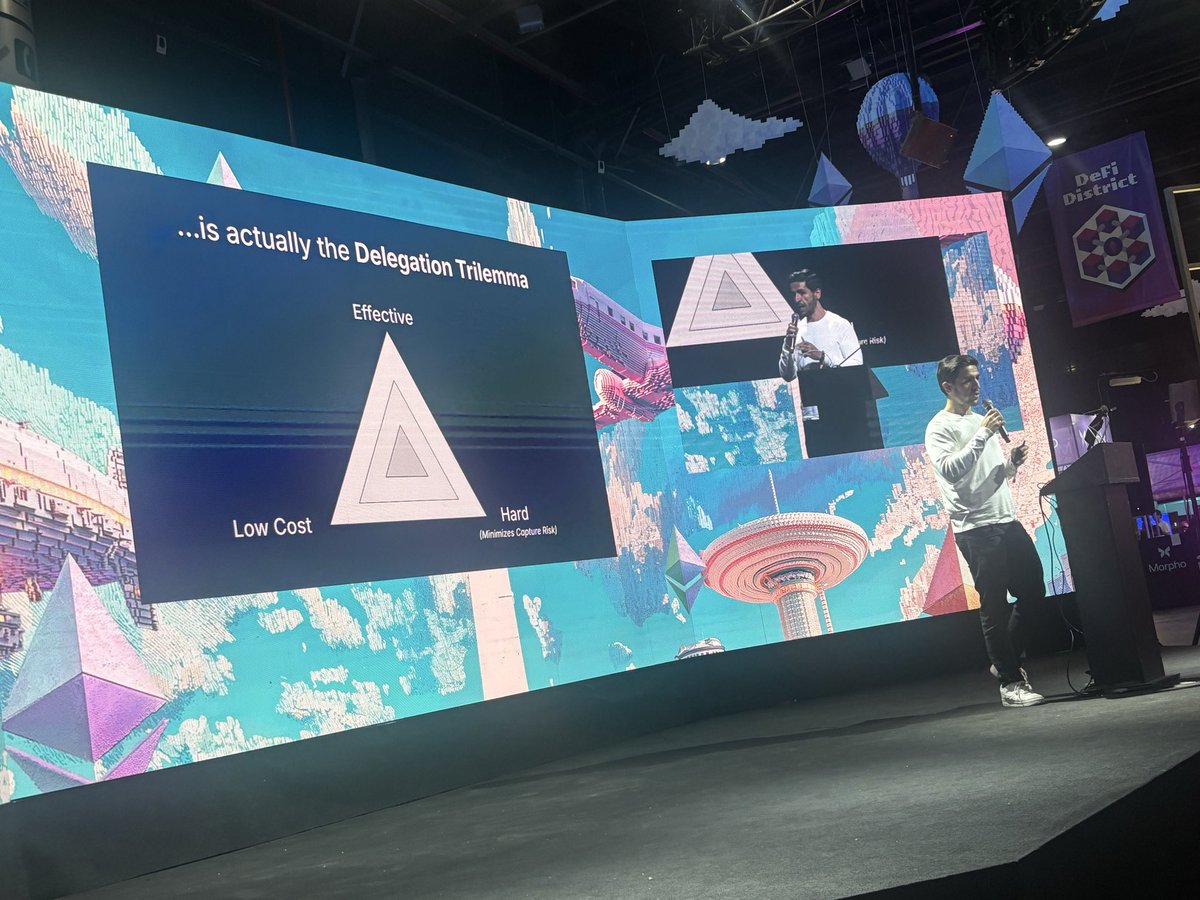
effectiveness, cost-efficiency, and hardness trilemma.
This feels like disaggregating governance into distributed operations, which I really like.
I think I want to learn more about it, and see it working and maybe design a trust zone architecture, before I ask an AI to design one.
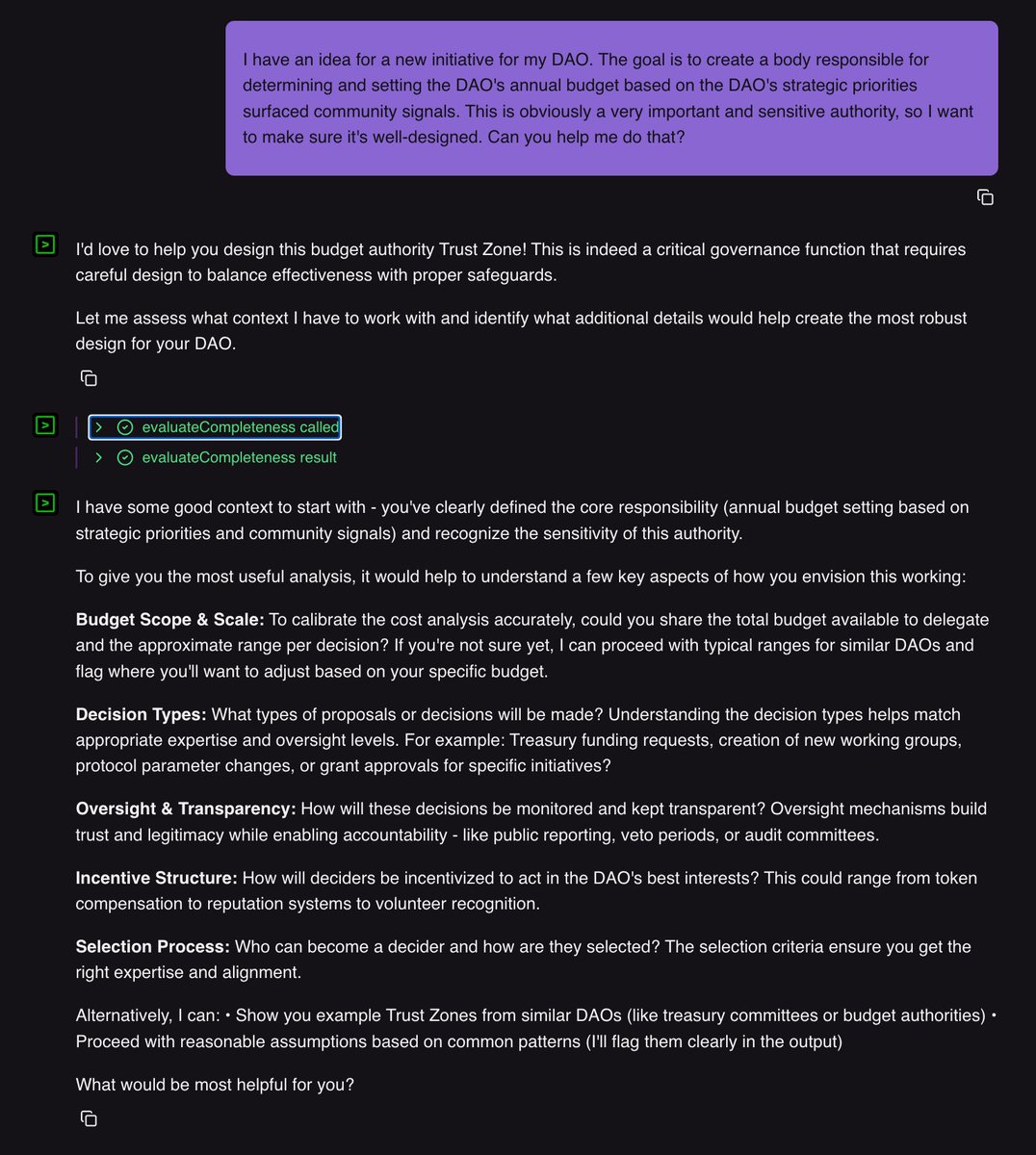
here's a great example of the Gardnr agent operating as a super sharp governance consultant / co-designer
I brought a fairly vague initiative to Gardnr and its questions are helping me get more specific about what exactly I'm trying to accomplish and how to do it
https://t.co/CxI7WvgMBt
It's been a while since a new DAO experiment really got me excited
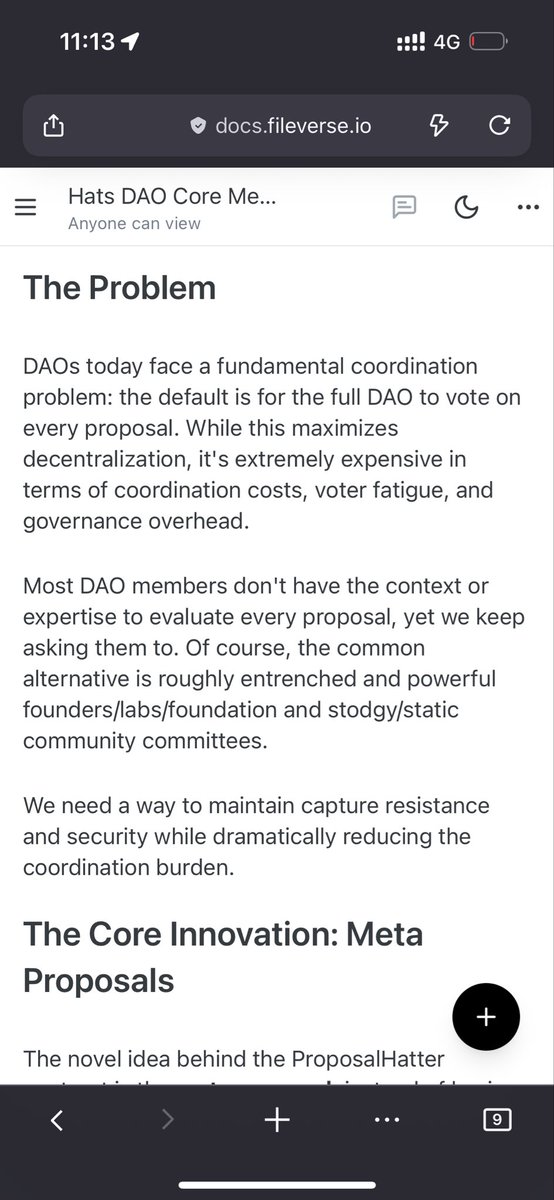
Hats has the brains and experience to make this one work right, the main challenge imo will be to abstract the complexity of it
HatsDAO is the right experiment for us to learn how to make it as easy as possible